
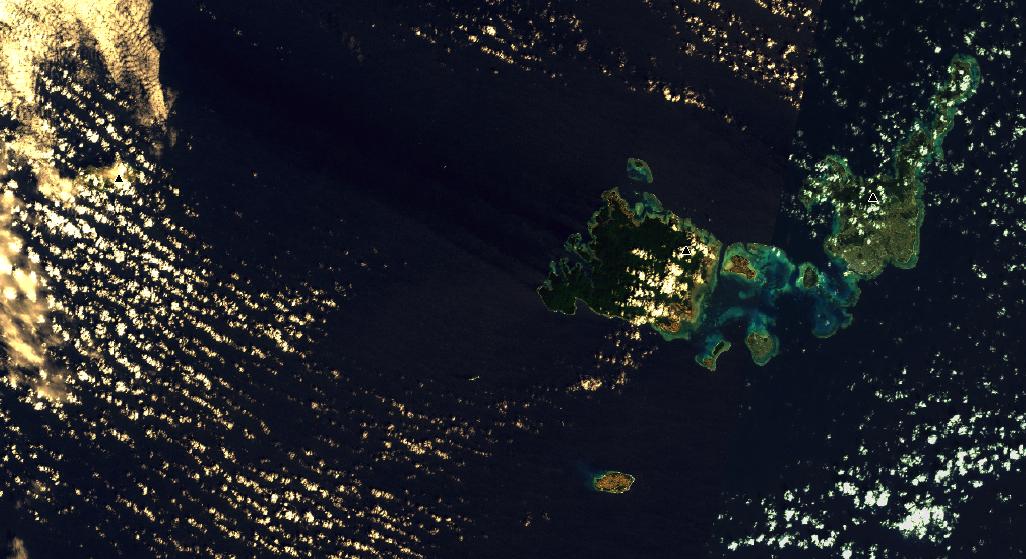
The Yaeyama Islands (八重山諸島, Yaeyama Shotō) are the southernmost inhabited islands of Japan — a scatter of 12 islands in the East China Sea, 400 kilometres southwest of Okinawa’s main island and closer to Taiwan than to Tokyo. The group forms a distinct cultural and geographic zone: subtropical forest, coral-reef lagoons, mangrove estuaries that harbour the last of Japan’s endemic wildcat, and Ryukyuan village architecture that’s been continuously preserved since before the 1879 Japanese annexation of the Ryukyu Kingdom. The islands have their own language (Yaeyama-go, distinct from mainland Japanese and from the Okinawan of the main island), their own music, their own food traditions, and — increasingly — their own tourism scene as international visitors discover that Japan extends substantially further south than the Tokyo-Kyoto-Osaka guidebook mentions.
In This Article
- Quick facts
- Ishigaki: the gateway
- Iriomote: the jungle island
- Taketomi: the photogenic village
- The outer islands: what else exists
- Getting to the Yaeyama Islands from mainland Japan
- The Yaeyama food scene
- Where to stay
- Is Yaeyama worth a dedicated trip?
- FAQ
- Is it too hot to visit in summer?
- How many days do I need?
- Can I do it without Japanese?
- Is the Iriomote wildcat genuinely visible?
- Can I visit Taiwan from here?
- Are the beaches safe for swimming?
- What about diving certification?
Three islands do most of the tourism work: Ishigaki (石垣島, Ishigaki-jima, the biggest and the transit hub), Iriomote (西表島, the jungle island), and Taketomi (竹富島, the photogenic village island). Beyond those, a further dozen smaller islands each have a specific character — Kohama (旅) for the resort-hotel scene, Kuroshima (黒島) for the cattle farms, Hateruma (波照間島) for Japan’s southernmost inhabited point, Aragusuku (新城島) and Hatoma (鳩間島) and Yonaguni (与那国島) for progressively deeper isolation. This guide walks the main islands and maps the connections so you can plan a realistic Yaeyama trip.

Quick facts
- Where: Southernmost island group of Okinawa Prefecture. Centred on Ishigaki City, 400km SW of Okinawa main island, 270km east of Taiwan.
- Getting there: Fly Tokyo/Osaka direct to Ishigaki Airport (3h15min / 2h45min). From Naha (Okinawa main island): 1-hour flight or 14-hour ferry. No Shinkansen / no rail.
- Hours: Most attractions and ferry terminals 8:00-18:00. Remote-island ferries run until ~17:30 last return; check before committing to a day-trip.
- Cost: Ferry Ishigaki→Taketomi ¥1,560 return. Ishigaki→Iriomote ¥4,950 return. Day-trip tours ¥5,000-12,000 per person. Ishigaki→Hateruma ¥8,240 return and weather-dependent.
- When to go: October-November is ideal — dry season’s tail, sea temps still warm for swimming, typhoon season ending. Avoid August-September (typhoon peak, flights cancelled regularly). Avoid January-March if you want to swim (water drops to 22°C).
- Official: Taketomi-cho Tourism Association (Yaeyama), Yaeyama Islands Access Portal.

Ishigaki: the gateway
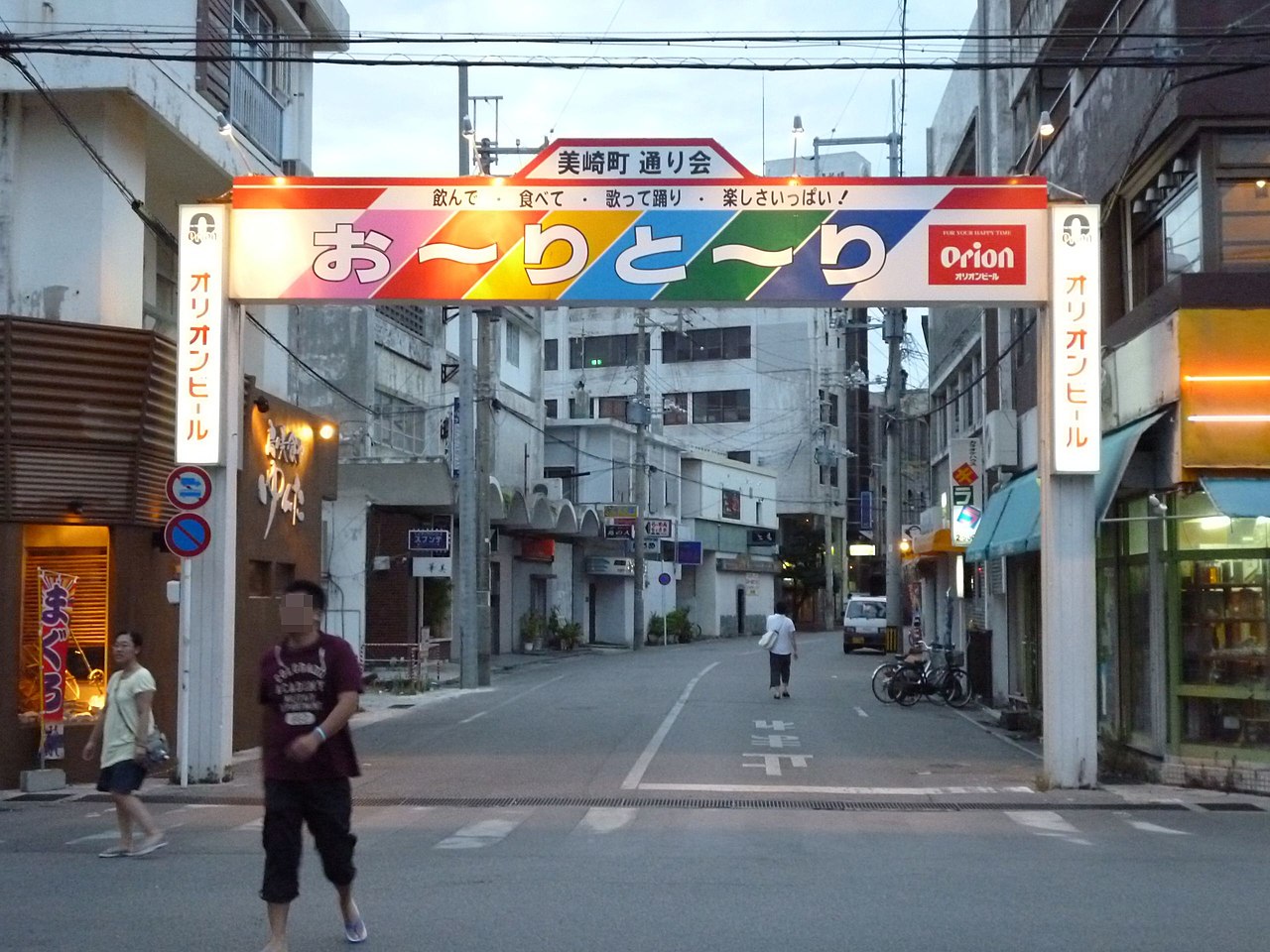
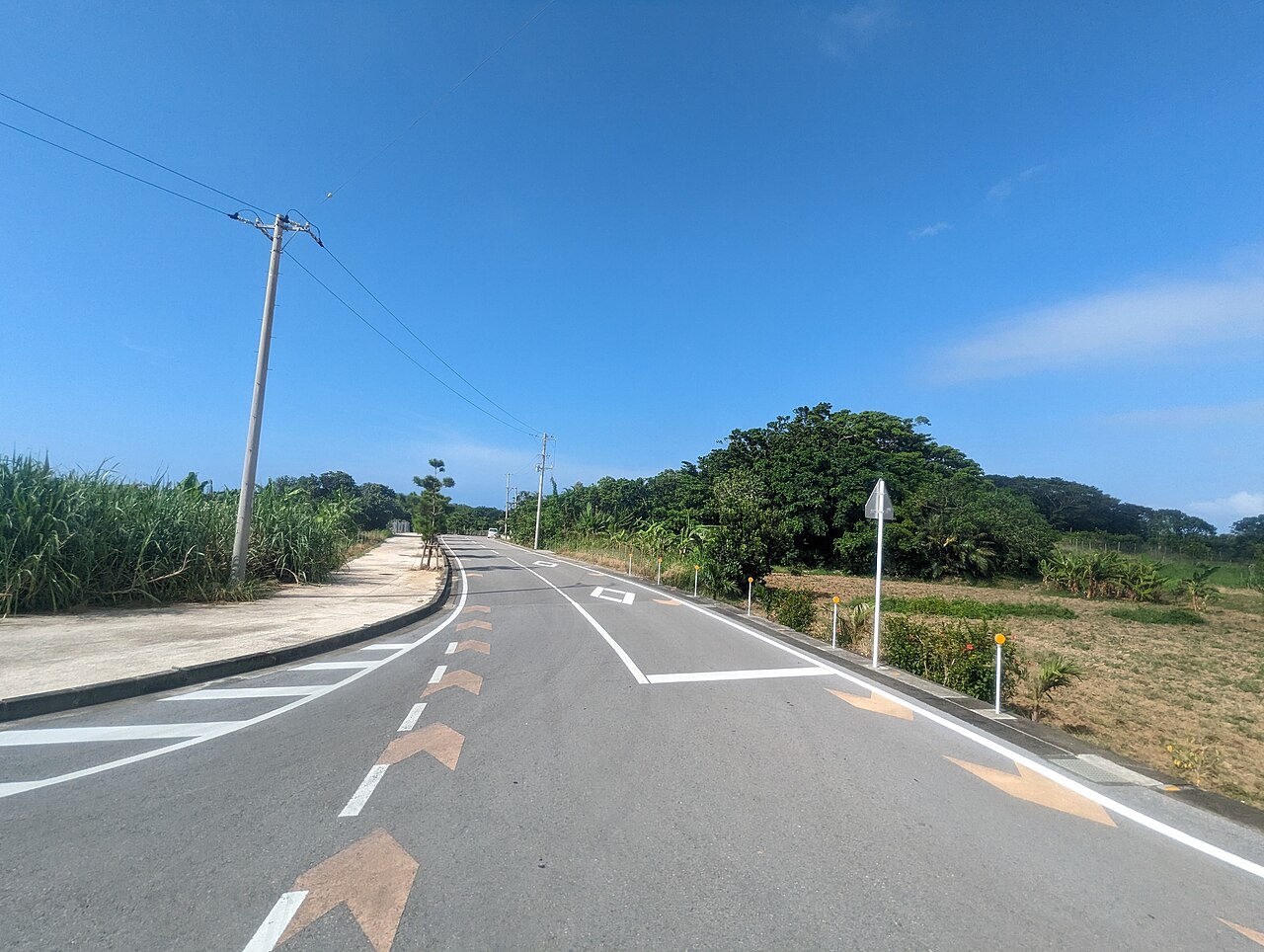
Ishigaki Island is where you land, where the main ferry terminal sits, and where most Yaeyama infrastructure lives. Population 48,000. The island is roughly 30km long north-to-south with a central mountain range (Mt Omoto at 526m is the highest peak in Okinawa Prefecture) and coral-reef coastline on both sides. You can circle it by car in about 3 hours; most tourists stay 2-3 nights at the start or end of a Yaeyama trip and use the island as a dive/snorkel base.
What to actually do on Ishigaki:
- Kabira Bay (川平湾) — the island’s signature view, a sheltered north-coast lagoon with glass-bottom boat tours. Swimming prohibited (strong currents), viewing essential.
- Yonehara Beach — the island’s best snorkel reef, shallow coral gardens accessible from the beach without a boat.
- Mt Omoto trail — 2.5-hour round trip hike, jungle path, summit view over the whole Yaeyama group on clear days.
- Ishigaki Port terminal — where you depart for the outer islands. Has a reasonable food court, tourist info, and the ferry-company ticket offices. Budget 30 minutes’ walk from most Ishigaki city hotels.
Iriomote: the jungle island
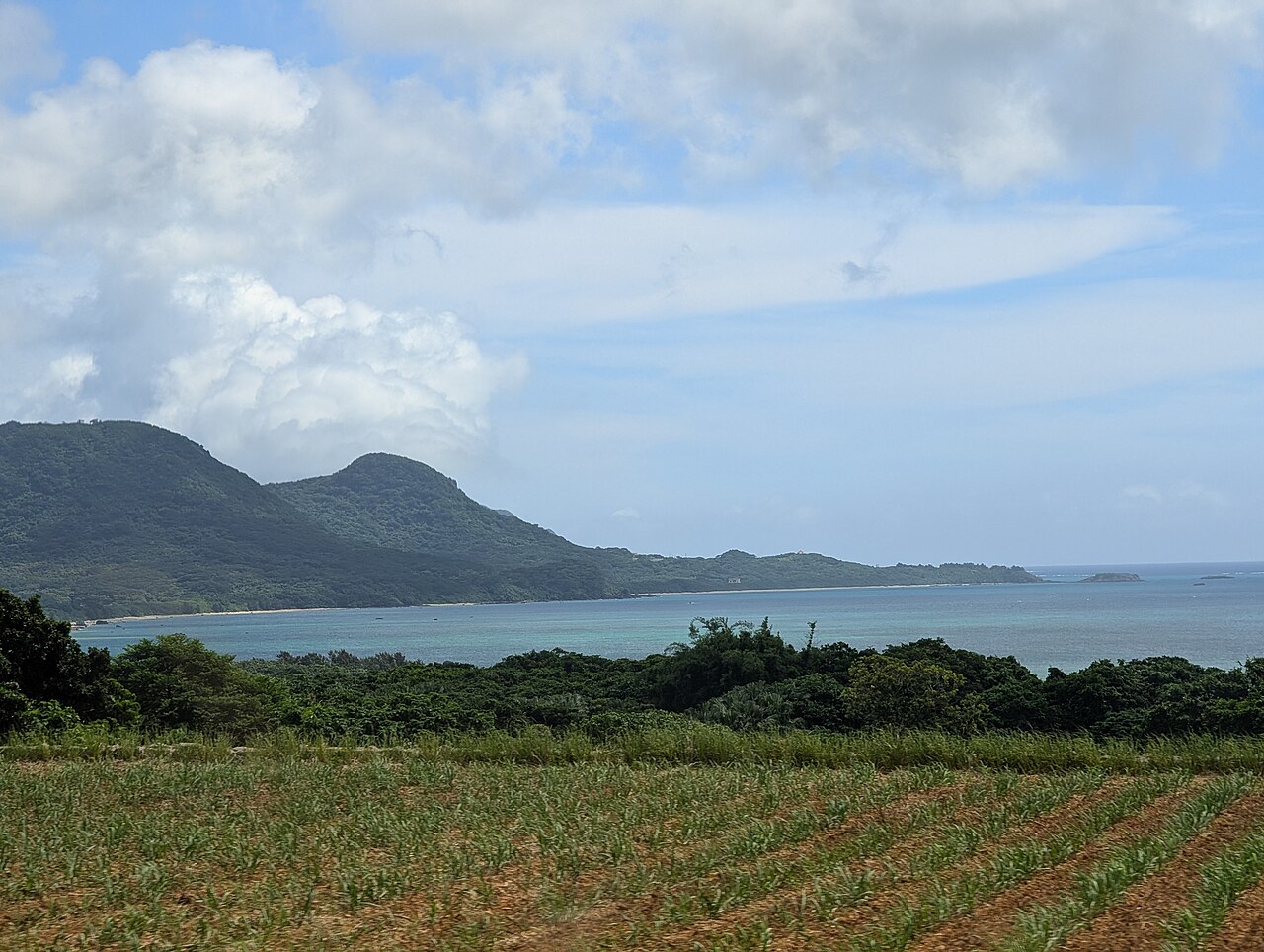
Iriomote Island (西表島, Iriomote-jima) is 25% bigger than Ishigaki but has only 2,400 residents — 90% of the island is subtropical virgin forest protected as Iriomote-Ishigaki National Park. It’s the closest thing Japan has to a wild equatorial jungle, complete with mangrove estuaries, crocodile-sized river fish, endemic wildcat (the Iriomote yamaneko, 100-odd individuals surviving), and some of the country’s more dramatic waterfalls.
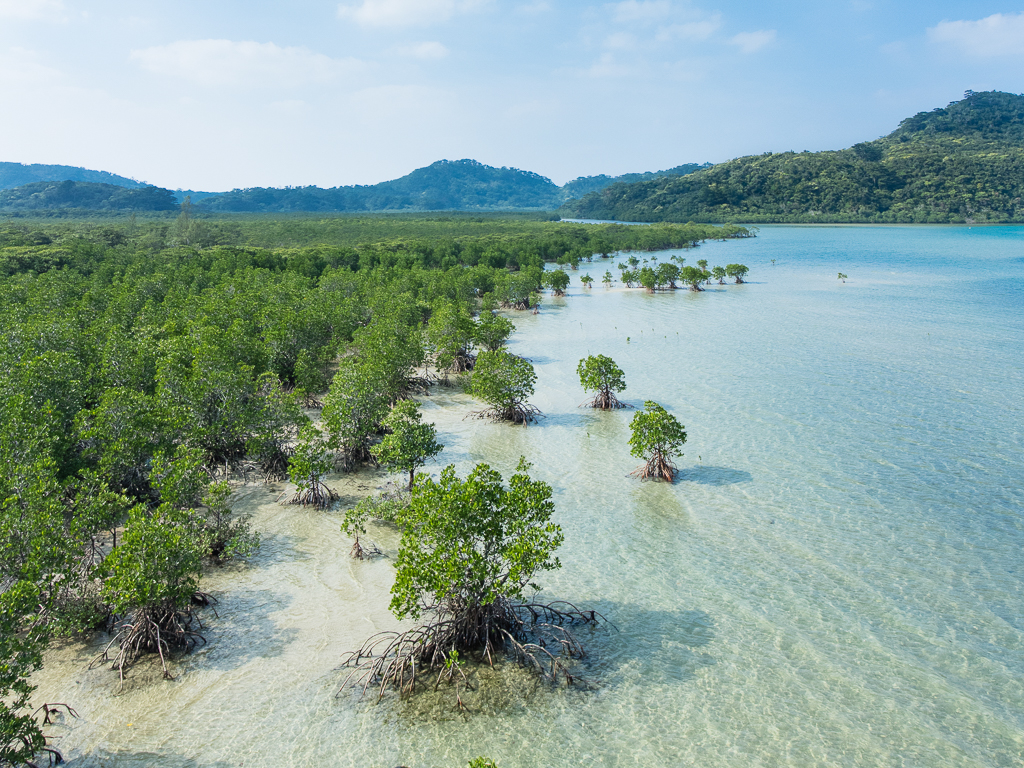

Access is via ferry from Ishigaki Port. Two main landing points:
- Uehara Port (上原港) — north side, closest to the Urauchi River (biggest mangrove cruise area) and the Pinaisara Waterfall.
- Ohara Port (大原港) — south side, closer to Nakama River, Yubu Island cable-drawn water-buffalo cart crossing, and the Haimida Observatory.
The crossing takes 40-50 minutes depending on port and sea conditions, ¥2,475 one way to Uehara, ¥1,570 one way to Ohara. Ferry cancellation for weather is genuinely common in typhoon season and mid-winter; the rule on Iriomote day trips is “first ferry out, be back by the 14:00 return, never commit to the last boat.”
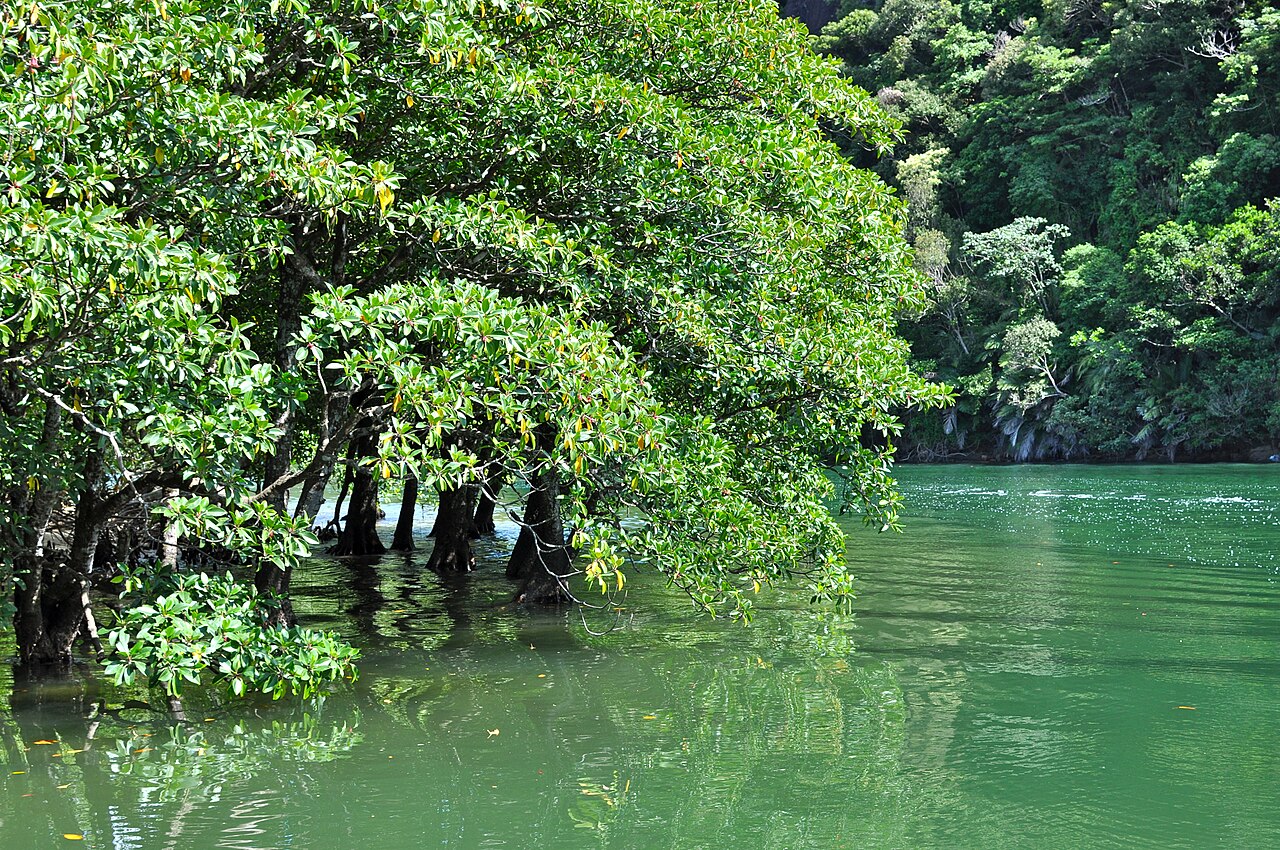

What you actually do on Iriomote:
- Mangrove cruise or kayak tour — ¥5,000-8,000 per person for 2-3 hour guided river trips. Standard set-piece experience.
- Pinaisara Waterfall hike — Japan’s tallest waterfall (55m), 3-hour jungle trail from Funaura, mildly challenging. Guide recommended.
- Yubu Island water-buffalo cart — a weird, specifically-Yaeyama experience where a wooden cart pulled by a water buffalo crosses a shallow lagoon to a small ornamental garden island. ¥1,800 per person.
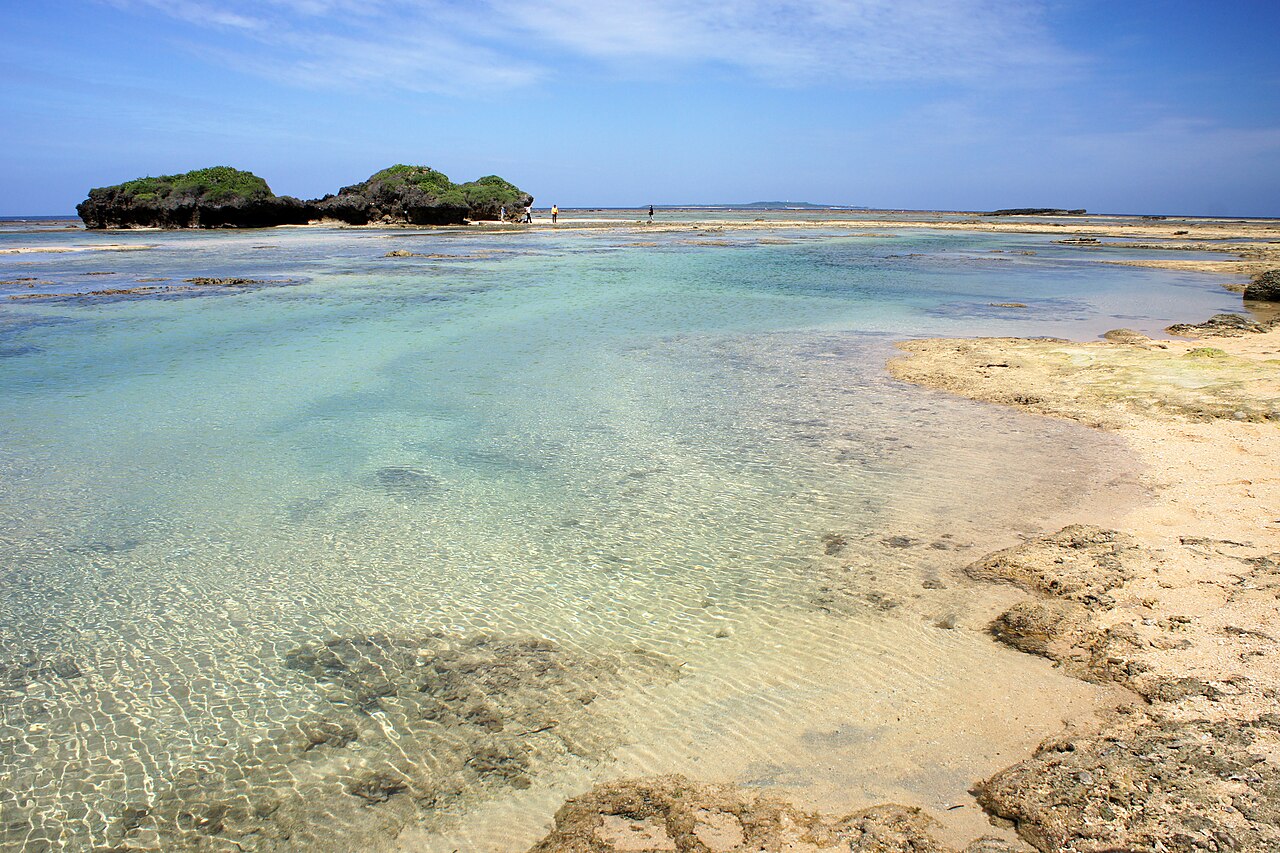
- Hoshizuna-no-hama (星砂の浜, “star sand beach”) — a specific beach where the sand is actually the skeletal remains of protist foraminifera, shaped like tiny stars. Sift through a handful and you’ll see them; the Yaeyama tourism industry runs on the image.



Taketomi: the photogenic village
Taketomi Island (竹富島, Taketomi-jima) is small — 5.4 square kilometres, population 360 — and has a specific, almost museum-perfect preservation of traditional Ryukyuan village architecture. Walking its sand-paved streets feels like walking a film set, except the film set is real, inhabited, and running on local ordinances that have preserved the red-tile roofs and white coral-chip walls for over a century.
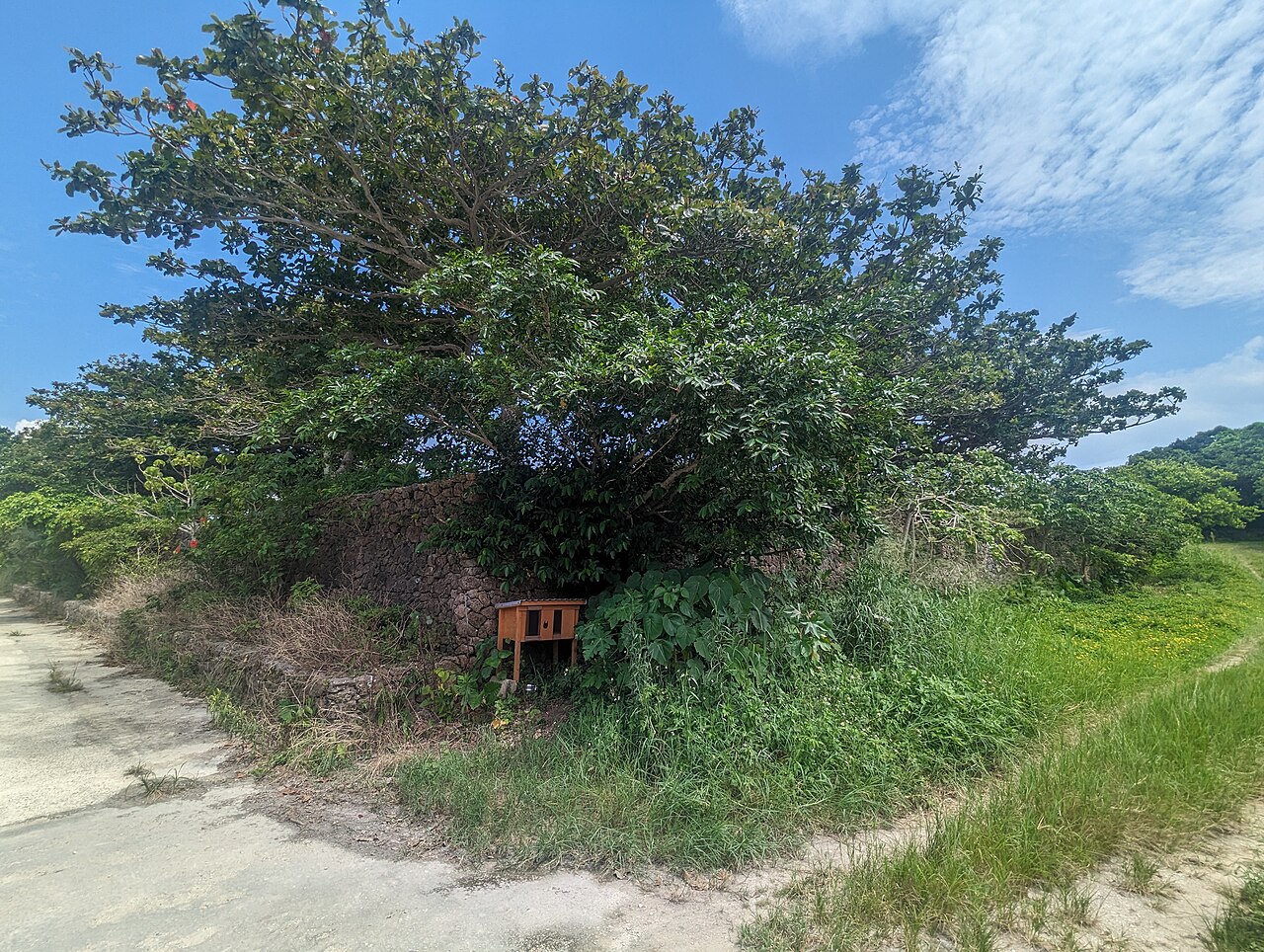
Access is a quick 15-minute ferry from Ishigaki, ¥780 one way. The standard day-trip: take the 09:00 ferry out, rent a bicycle at the port (¥300 per hour), spend 3-4 hours doing a full island circuit, take a water-buffalo cart ride, eat lunch at one of the village’s traditional restaurants, return on the 15:00 ferry. Cars are strongly discouraged on the island — bicycles and a handful of ox-drawn carts are the only real transport.
Specific things to do on Taketomi:
- Kondoi Beach — the island’s main swimming beach, clear turquoise water, shallow enough to wade out 200m before the coral drops off.
- Hoshizuna Beach (Taketomi’s version, different from Iriomote’s) — another star-sand beach, eastern side of the island.
- Nagomi Tower observation deck — free, panoramic view over the red-tile roofs toward Ishigaki on the horizon.
- Water-buffalo cart tour — 30 minutes, ¥1,500 per person. The guide plays sanshin (three-stringed Okinawan lute) and sings traditional work songs while the buffalo plods at 4 km/h through the village. Touristy but genuinely charming.
- Kihoin Museum — a small private collection of Yaeyama textiles and household objects. ¥300 entry. 15-minute visit.
The outer islands: what else exists
Beyond Ishigaki, Iriomote, and Taketomi, the Yaeyama group has another nine inhabited islands, each with its own character. Brief notes:
Kohama Island (小浜島) — 15-minute ferry from Ishigaki, ¥1,400 one way. Home to the Haimurubushi resort and the signature NHK-drama beach scenes. Sugarcane farms, cycling, one proper resort hotel. Best for couples.
Kuroshima Island (黒島) — 30-minute ferry, ¥1,300 one way. Heart-shaped (literally, from the air) and devoted entirely to beef-cattle farming — there are 10x more cows than humans here. Worth a half-day if you’re interested in Ryukyuan agriculture; otherwise skip.
Hateruma Island (波照間島) — 60-minute ferry, ¥4,120 one way. Japan’s southernmost inhabited point. A single working village, one unpaved observation platform, the country’s clearest star-viewing skies. Ferry is weather-cancelled 30-40% of days. Overnight stays highly recommended because of the cancellation risk.
Yonaguni Island (与那国島) — not reached by Yaeyama ferry; requires a separate short flight from Ishigaki (¥11,000 one way, 30 min). Famous for the “Yonaguni Monument” (an underwater rock formation that divers interpret either as a natural formation or as a submerged ancient pyramid depending on who you ask) and for being Japan’s westernmost point. Two-night minimum.
Hatoma, Aragusuku, Yubu, Hatsuma — very small islands, mostly visited as half-day extensions from Iriomote or Ishigaki. Worth for completionists; otherwise skip.
Getting to the Yaeyama Islands from mainland Japan
Everything transits through Ishigaki. Flight options:
From Tokyo: Direct flights from Haneda and Narita to Ishigaki, roughly 3 hours 15 minutes. ANA, JAL, Peach (budget), and Solaseed all run routes. Round-trip fares ¥35,000-80,000 depending on season and how far out you book. Peak-season peak (August, Golden Week) can hit ¥100,000+.
From Osaka: Direct flights from Kansai to Ishigaki (2h45min). Similar fare structure, slightly cheaper on average.
From Naha (Okinawa main island): The hub connection — 1 hour by air, flights every 90 minutes. ¥15,000-25,000 round trip. If you’re doing a broader Okinawa trip with Naha included, this is the standard way to add the Yaeyama cluster.
By ferry from Naha: 14-hour overnight ferry, about ¥9,000 for a basic berth. Only worth doing if you specifically want the experience; flights are much faster and not much more expensive.
Within the Yaeyama group, the Ishigaki Remote Island Terminal is the departure point for all ferry services. Two companies (Yaeyama Kanko Ferry and Anei Kanko) run 15-20 daily departures to the various islands; tickets are bought at the terminal counters or online at yaeyama.co.jp.
The Yaeyama food scene
Yaeyama cuisine is its own thing — Okinawan influences, Chinese and Southeast Asian influences via Taiwan, and some specifically local dishes you won’t find anywhere else. The key things to eat:
- Yaeyama soba (八重山そば) — thick wheat noodles in a pork-based broth, topped with shredded pork and spring onion. ¥600-900 per bowl at village restaurants.
- Ishigaki beef (石垣牛) — Wagyu-grade beef from the Ishigaki and Kuroshima farms. A good ribeye steak runs ¥4,000-7,000; the Ishigaki-produced yakiniku is better value at ¥2,500-4,000 per person.
- Sea grape (海ぶどう, umibudō) — small seaweed clusters that pop on the tongue, served with sesame oil and ponzu. Yaeyama specific.
- Awamori (泡盛) — Okinawan distilled rice spirit, about 30% ABV, served straight or on the rocks. Each Yaeyama island has its own distillery.
- Shimabuta (島豚) — island-raised pork used in everything from noodles to slow-braised rafute.
Where to stay
The standard base pattern: 2-3 nights on Ishigaki (as the transit hub and for its own beaches), then either a 1-2 night overnight on Iriomote or a day-trip to Iriomote and Taketomi.
Ishigaki City has the broadest hotel inventory — from business-hotel budget options near the ferry terminal (¥7,000-10,000 per night) up to the Club Med Kabira Beach and the ANA Intercontinental at the premium end (¥30,000-60,000+). Booking.com’s Ishigaki listings cover the spread.
Iriomote has about 20 accommodation options — mostly small pensions and a couple of mid-sized resort hotels. Nirakanai Iriomote Resort is the flagship (¥22,000-40,000 per night including meals); the Jungle Hotel Pai-no-Sato is the mid-range atmospheric option.
Taketomi has a handful of tiny minshuku (¥10,000-15,000 per person half-board). Seriously limited inventory — book 2-3 months ahead for overnight stays. Many people day-trip instead.
Hateruma and Yonaguni each have 4-5 minshuku and one small hotel. Book ahead specifically; walk-up accommodation is essentially never available.
Is Yaeyama worth a dedicated trip?
For beach / snorkel / dive travellers — yes, unambiguously. Yaeyama’s coral reefs are the best accessible in Japan and comparable to popular Southeast Asian diving destinations at similar or lower cost.
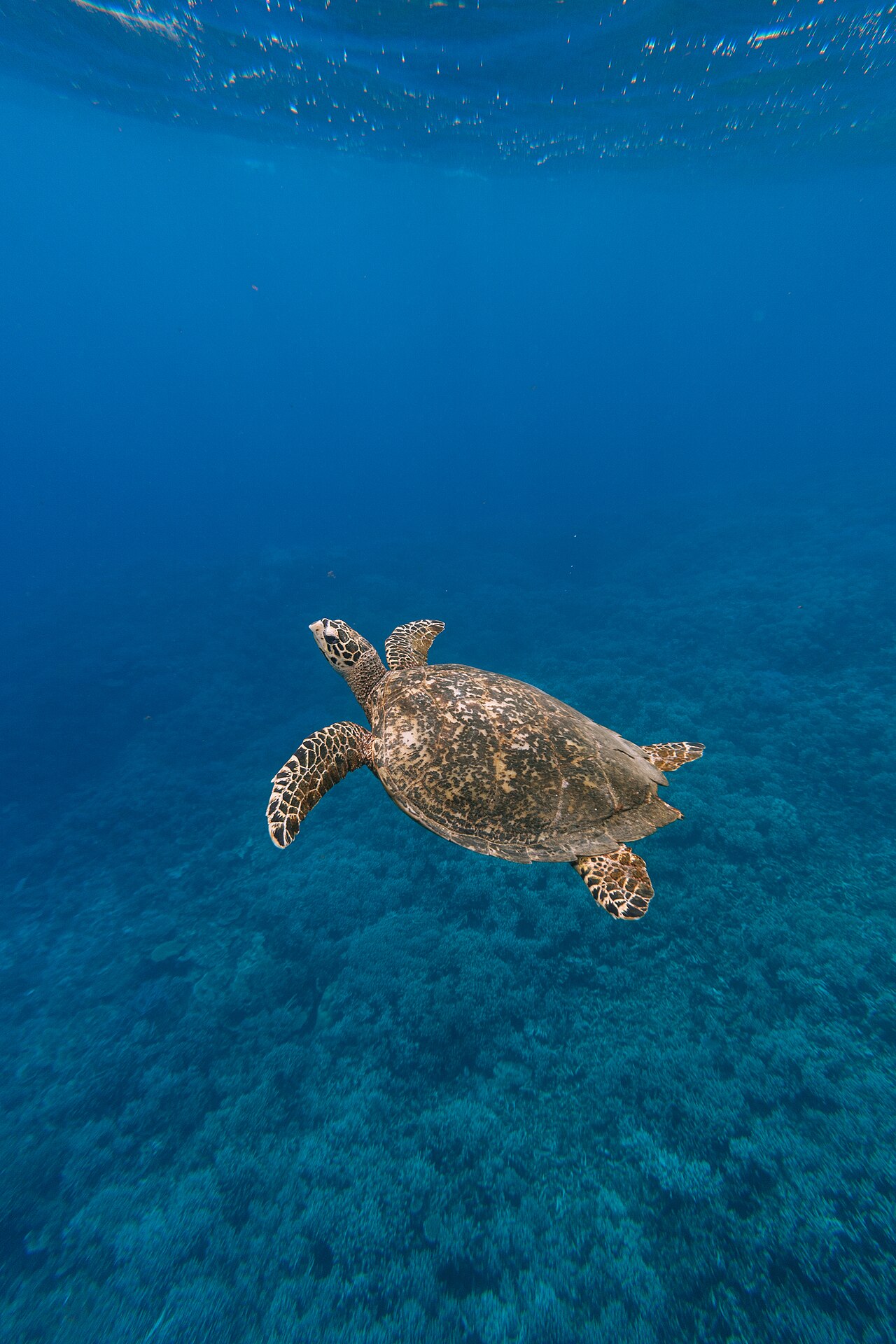
For nature travellers — yes. Iriomote’s jungle, mangroves, and wildlife (wildcat, sea turtles, fruit bats) are unlike anything in mainland Japan.
For culture travellers — yes, specifically for Taketomi’s architectural preservation and the broader Ryukyuan cultural survival. This is genuinely different Japan.
For first-time Japan visitors — probably not, unless you have a dedicated beach/island interest. The transit time from Tokyo is substantial (one full day out, one full day back), which makes Yaeyama a commitment. Second-trip territory for most travellers.
For anyone doing a serious Okinawa exploration — essential. The Yaeyama islands are where Okinawan tourism’s deep-interest travellers go, and the cultural and natural richness rewards the effort to get there.
FAQ
Is it too hot to visit in summer?
June-September is technically swimmable but the heat and humidity are genuinely extreme (32-36°C daily highs, 85%+ humidity). Add the typhoon risk (peak August-September) and the crowds (Japanese domestic holiday period). October-November is the sweet spot; April-May is the second-best window with milder weather and fewer tourists.
How many days do I need?
Minimum 4 nights for a quick taste (2 Ishigaki + 1 Iriomote + day trip to Taketomi). Ideal is 7 nights (3 Ishigaki + 2 Iriomote + 1 Taketomi + 1 Kohama or Hateruma). Serious multi-island explorers can easily spend 10-14 days.
Can I do it without Japanese?
Yes. Ishigaki is well-established as an international destination and most hotels, restaurants, and ferry services have English materials. Iriomote and Taketomi are more Japanese-dominated but the basic tourist infrastructure works with pointing and Google Translate. Yonaguni is harder.
Is the Iriomote wildcat genuinely visible?
Realistically no, unless you’re extremely lucky. There are about 100 wildcats left and they’re nocturnal, forest-dwelling, and actively avoid humans. Most tourists see one through a camera trap display or a taxidermied specimen at the Iriomote Wildlife Conservation Centre. The occasional car-strike fatality is a source of real local concern; the island has night-driving speed limits specifically to protect them.
Can I visit Taiwan from here?
Historically yes; currently no direct ferry service. Yonaguni is 111km from Taiwan and on a clear day you can see the Taiwan coast from there, but the pre-pandemic Yonaguni-Keelung ferry service hasn’t resumed. Most travellers fly via Tokyo/Okinawa if doing a Japan-Taiwan combination.
Are the beaches safe for swimming?
Mostly yes, but with specific hazards: strong currents in some sections of Ishigaki’s north coast (Kabira Bay is a no-swim zone), box jellyfish (habu-kurage) in June-October, and the occasional sea snake (venomous but very shy). Use designated swimming beaches with posted warning systems; wear a rash guard for UV and jellyfish protection; rinse off after swimming. Most hotels have basic first-aid kits with jellyfish vinegar.
What about diving certification?
Ishigaki is a major PADI Open Water training location, with roughly 20 dive schools. Full Open Water certification takes 3-4 days and runs ¥55,000-80,000 including gear. Certified divers can book day boats to Manta Scramble (a manta ray cleaning station near Kabira Bay) for ¥12,000-16,000 per 2-tank day, which is one of the better manta-ray dives in the world.