
The 1998 Winter Olympics in Nagano were the last of the pre-digital Games and the first to be financed on the model the IOC has used ever since — a dispersed venue map, private-public partnerships, and a deliberate push to make the infrastructure survive as civic property once the torch went out. Twenty-seven years on, most of the venues are still standing, still in use, and in one specific case still ranked among the fastest speed-skating ice sheets in the world. The umbrella for all of it is the Minami-Nagano Sports Park (南長野運動公園, Minami-Nagano Undō Kōen), also signposted in English as Nagano Athletic Park. It’s the single most visited piece of 1998 Olympic legacy in the prefecture, and if you only have half a day in Nagano city, it’s arguably a better use of your time than the central castle district.
The park itself is laid out as a stylised sakura (cherry blossom), with five curving petals radiating out from the Olympic Stadium cauldron plaza. Across those petals sit the stadium, a full athletics track, an indoor 50-metre pool, two gymnasiums, a football stadium (home of J2 side AC Nagano Parceiro), a children’s playground, and acres of cherry trees that turn the whole park into a pink cloud for about two weeks every April. It’s also the home of M-Wave, the speed-skating oval that was the signature venue of the ’98 Games and which now doubles as a museum, a training rink, and a concert hall.

Quick facts
- Where: 2850-1 Kitanagaike, Nagano City, Nagano 381-0025. The park spans about 52 hectares on the east bank of the Susobana River.
- Getting there: 15 min by bus from JR Nagano Station (Kawanakajima line, ¥250) or 8 min by local train on the Shinano Railway Kita-Shinano Line to Kita-Nagano Station + 10 min walk. By car: 10 min from Nagano IC on the Jōshin-etsu Expressway.
- Hours: Park grounds free and open 24/7. M-Wave open 9:00-21:00 (museum 9:00-18:00, last entry 17:30). Olympic Stadium open during baseball matches or by arrangement.
- Cost: Park free. M-Wave museum ¥500 adult / ¥300 child. M-Wave public skating session ¥1,600 adult / ¥800 child (season: mid-November to mid-March). Pool ¥520 per swim.
- When to go: Early to mid-April for the cherry blossoms (late by Tokyo standards, so the sakura window is one of the latest in Honshu). Winter for the ice rink. Summer weekday afternoons for running and pool access with the fewest crowds.
- Official sites: Nagano Sports Park (Japanese), M-Wave.
M-Wave: the Olympic centrepiece
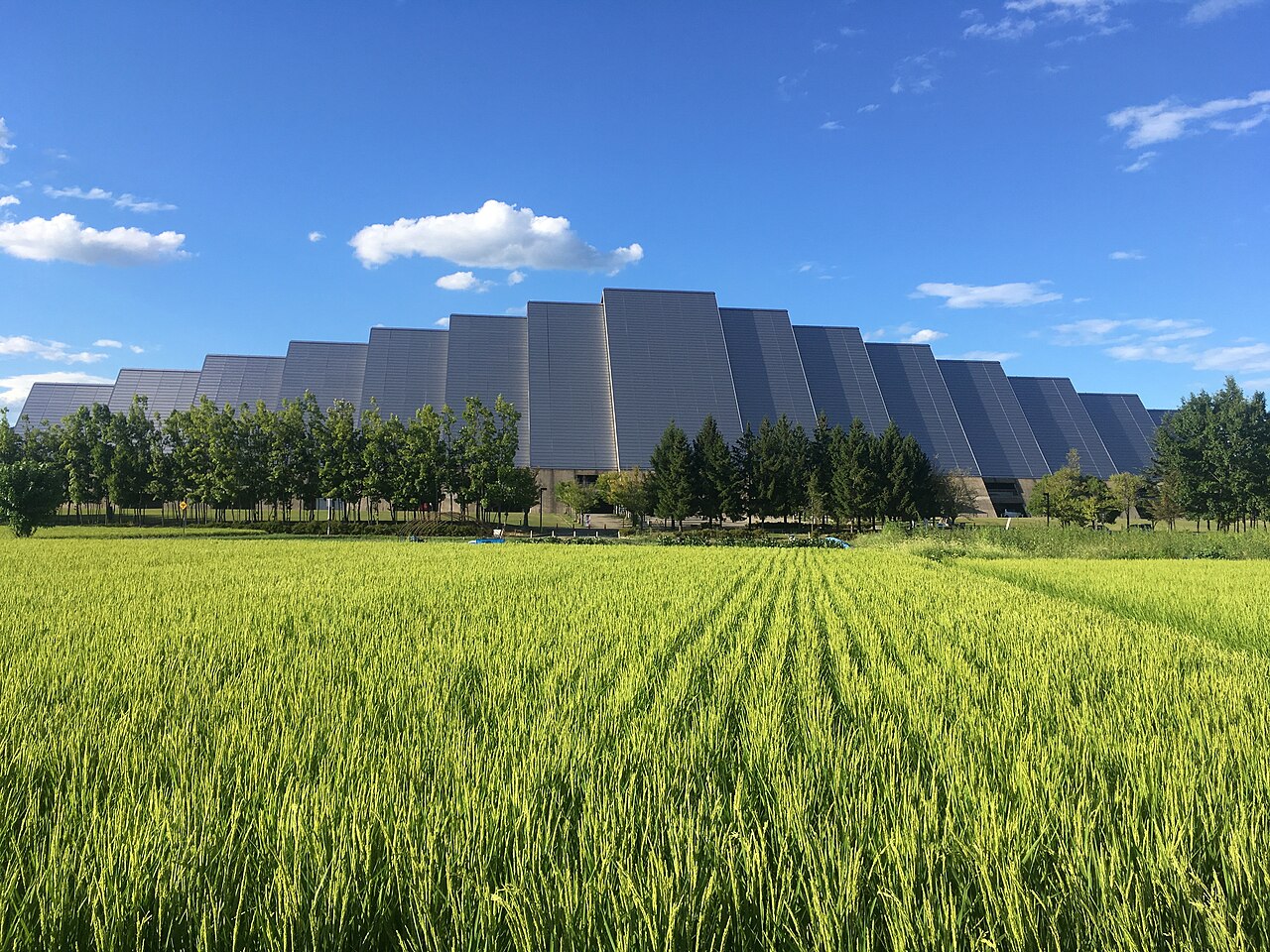
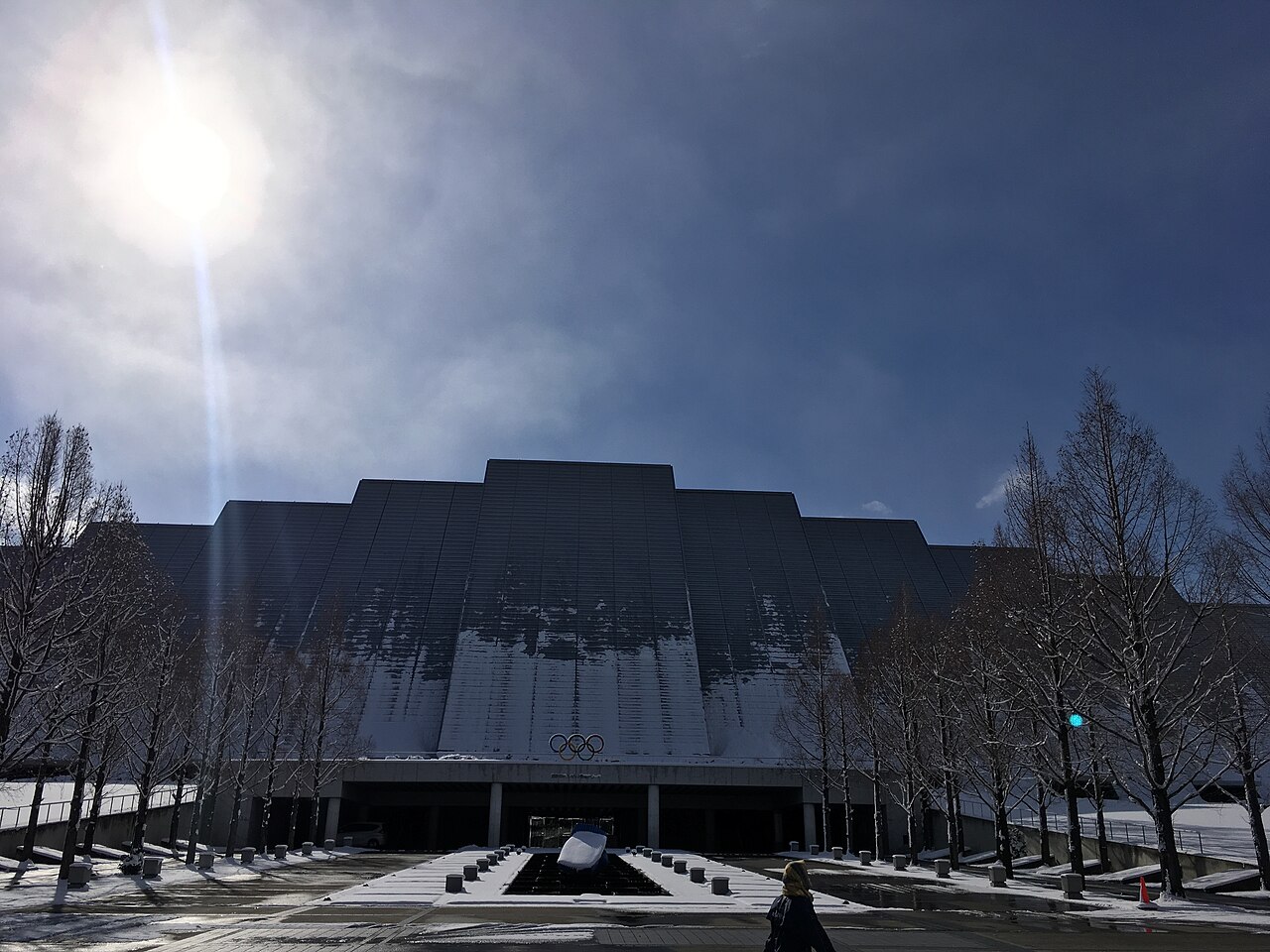
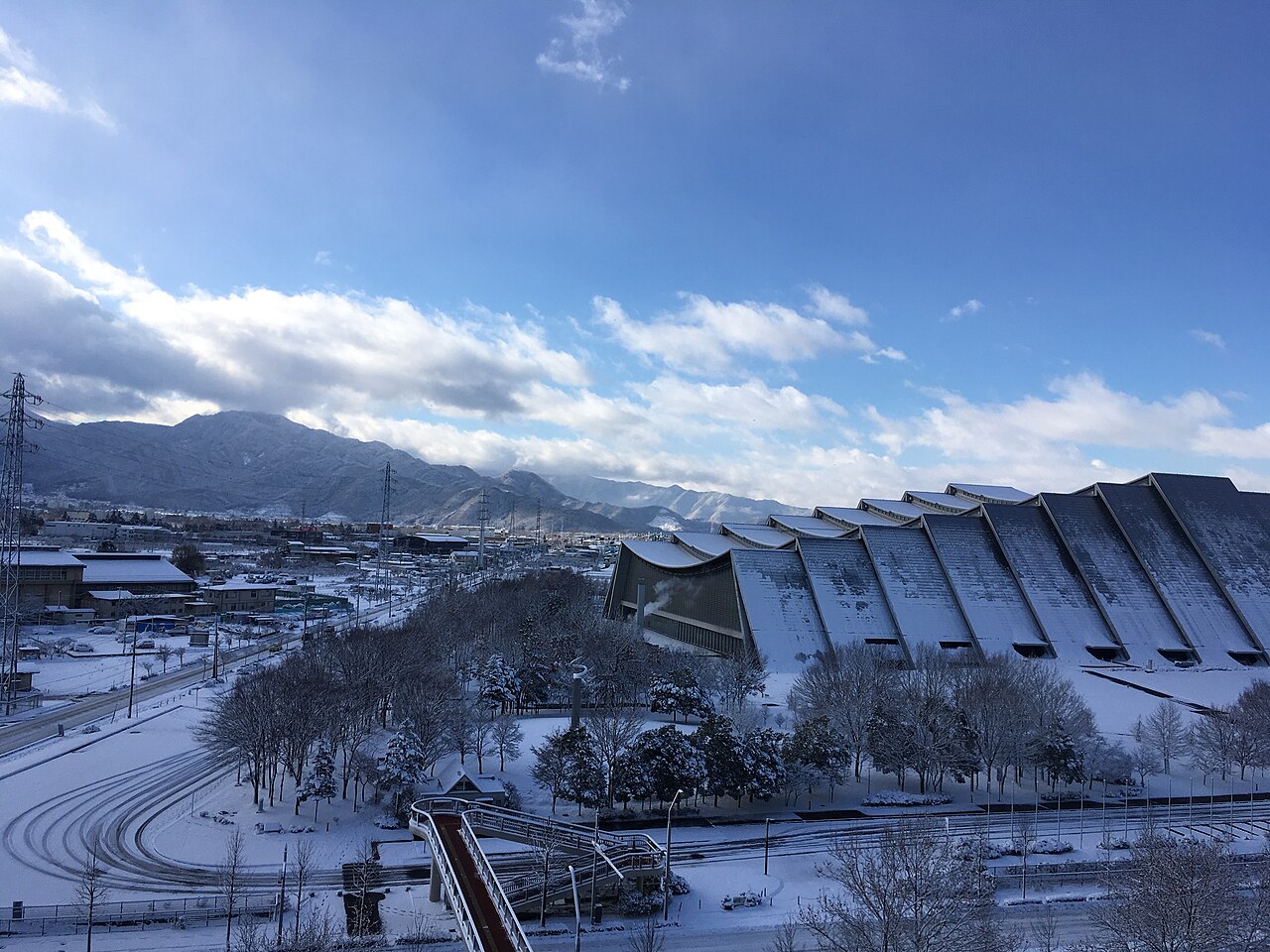
If you have exactly one hour in the park, spend it inside M-Wave (エムウェーブ). The building was commissioned in 1993, designed by Kazuo Shinohara and completed in 1996 for about ¥34.8 billion yen (roughly US$350 million at the period exchange rate). The “M” is for “Memorial” and the wave is for the undulating roof — officially modelled on the alps, architecturally it also functions as a structural solution, because the curved form meant the builders could span the 400-metre oval without any central columns.
A note on Shinohara, because it’s relevant: he was one of Japan’s most significant postwar architects, a Tokyo Institute of Technology professor whose career ran from small wood-frame houses in the 1950s to late-career public buildings like M-Wave and the Centennial Hall. The arena was one of his last completed works — he died in 2006 — and it’s arguably the most accessible point of entry to his architectural theory, because you can walk in, look up at that laminated hinoki ceiling, and understand in about five seconds why his peers called his work “the poetry of geometry.” Worth the ¥500 museum fee for the building alone, even if you don’t care about the Olympics.
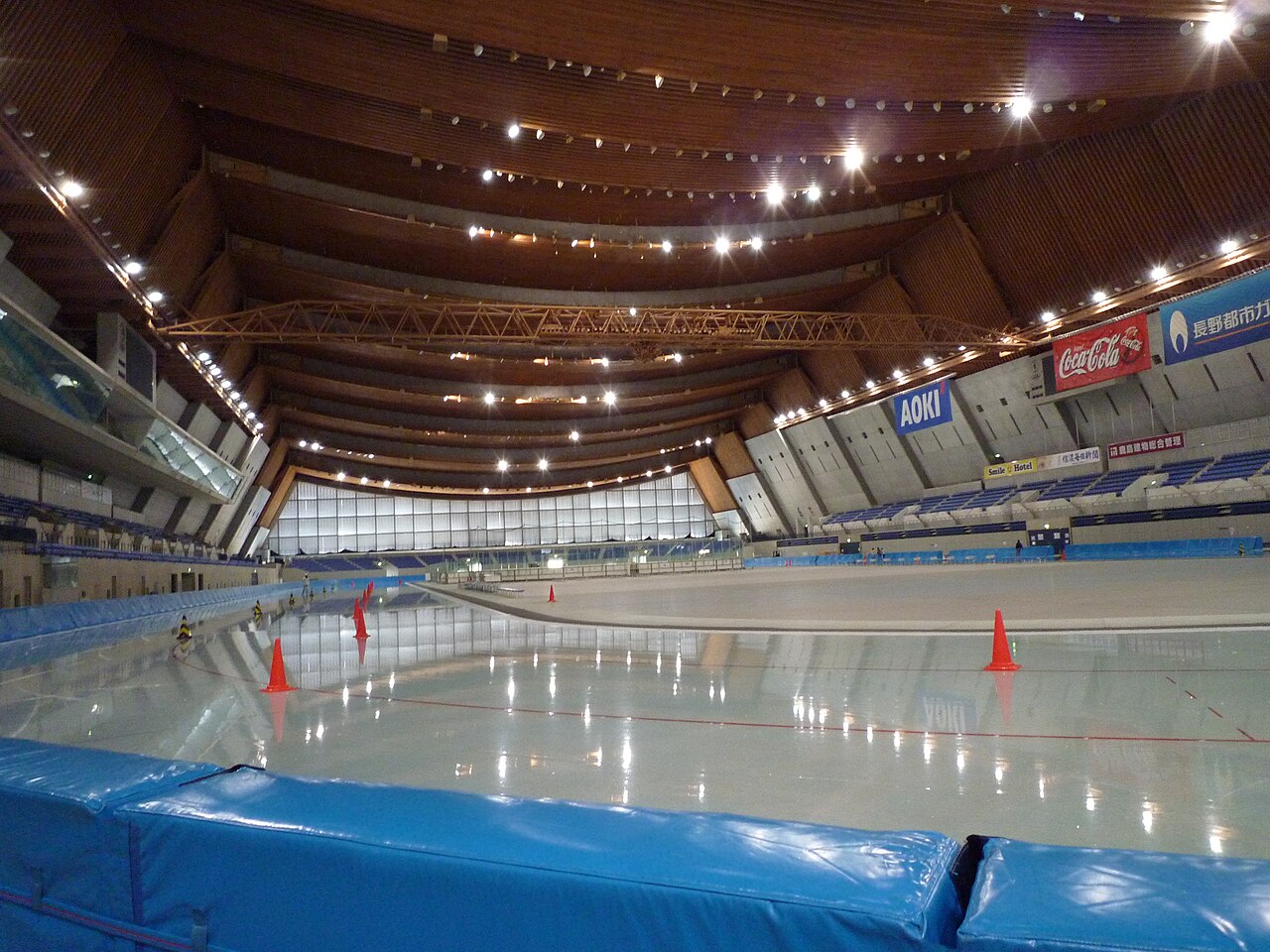
What the roof covers is a 400-metre double-track speed-skating oval, an inner 30m × 60m ice hockey rink, and a wraparound stand with 7,300 seats. At Nagano ’98, this is where Hiroyasu Shimizu won Japan’s first speed-skating gold and where the Dutch team set two world records. The ice itself was considered — and in some quarters still is — the fastest sheet in the world, because the rink sits at 370m above sea level and the arena has a dehumidification system that was state-of-the-art for its decade.
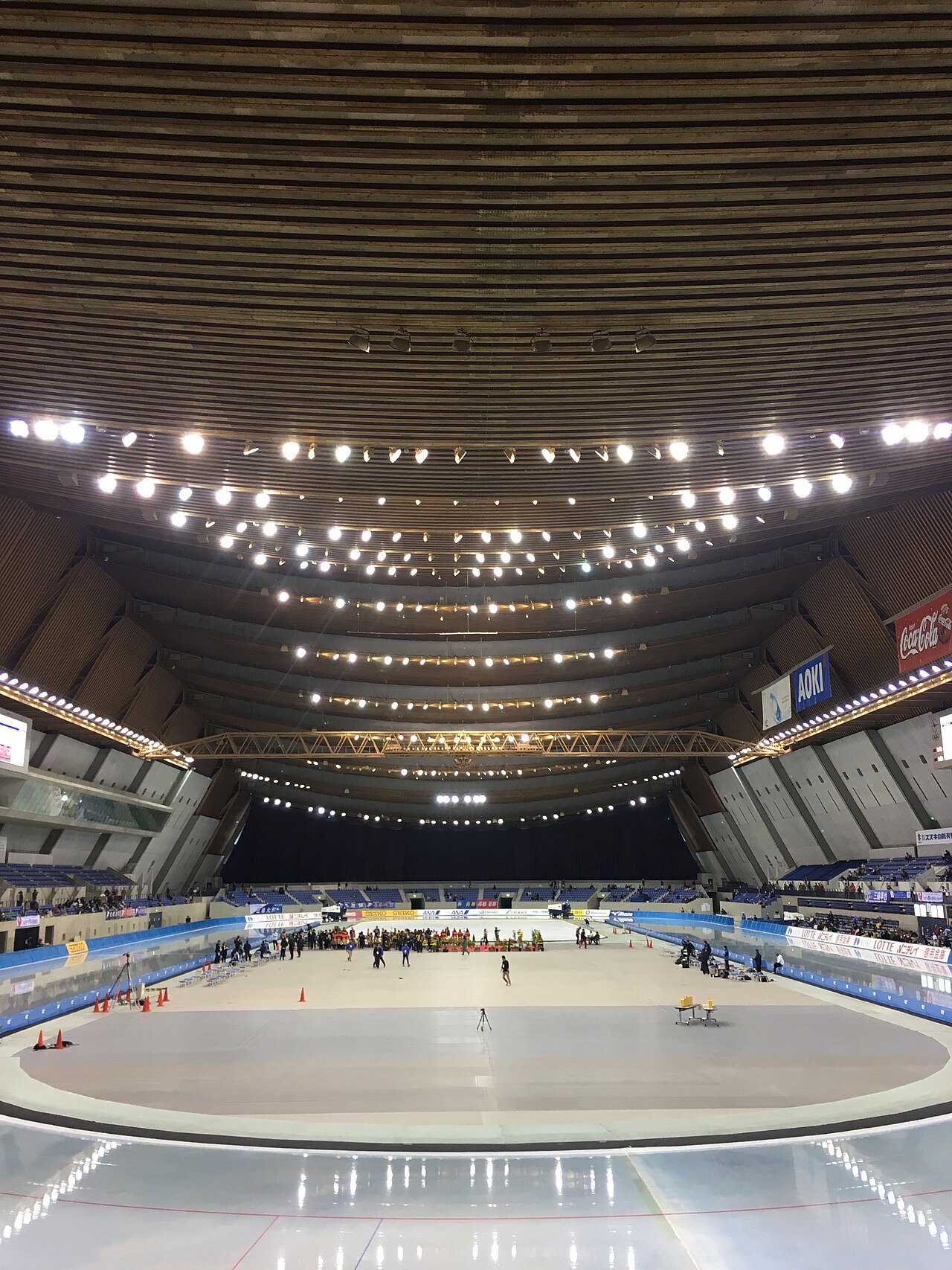

Today M-Wave has three lives. In winter (mid-November to mid-March), the ice is laid and the arena operates as a public skating rink and a national-team training base. In the shoulder seasons, the ice comes off and it becomes a multi-use arena — concerts, exhibitions, trade shows. In the gap between those uses, a small but seriously well-curated Nagano Olympic Museum operates in the south concourse, displaying the 1998 torch, Shimizu’s gold medal, the opening-ceremony ice-dancer costumes, and a video wall running rolling highlights of Tara Lipinski, Tony Nieminen, and the rest of the ’98 cast.

The Olympic Stadium (the ground that now hosts baseball)
The opening and closing ceremonies of Nagano 1998 were held at the Olympic Stadium on the north side of the park — a 35,000-seat open-air venue designed specifically for the ceremonial events. The stadium’s post-Olympic life is pure Japanese civic pragmatism: it’s now the home of the Shin-Etsu region’s amateur baseball circuit, and you can find a game most Sundays between March and November, for the price of zero. Entry is free for spectators, concession stands open for the big matches, and the 35,000 seats are almost never more than a tenth full.
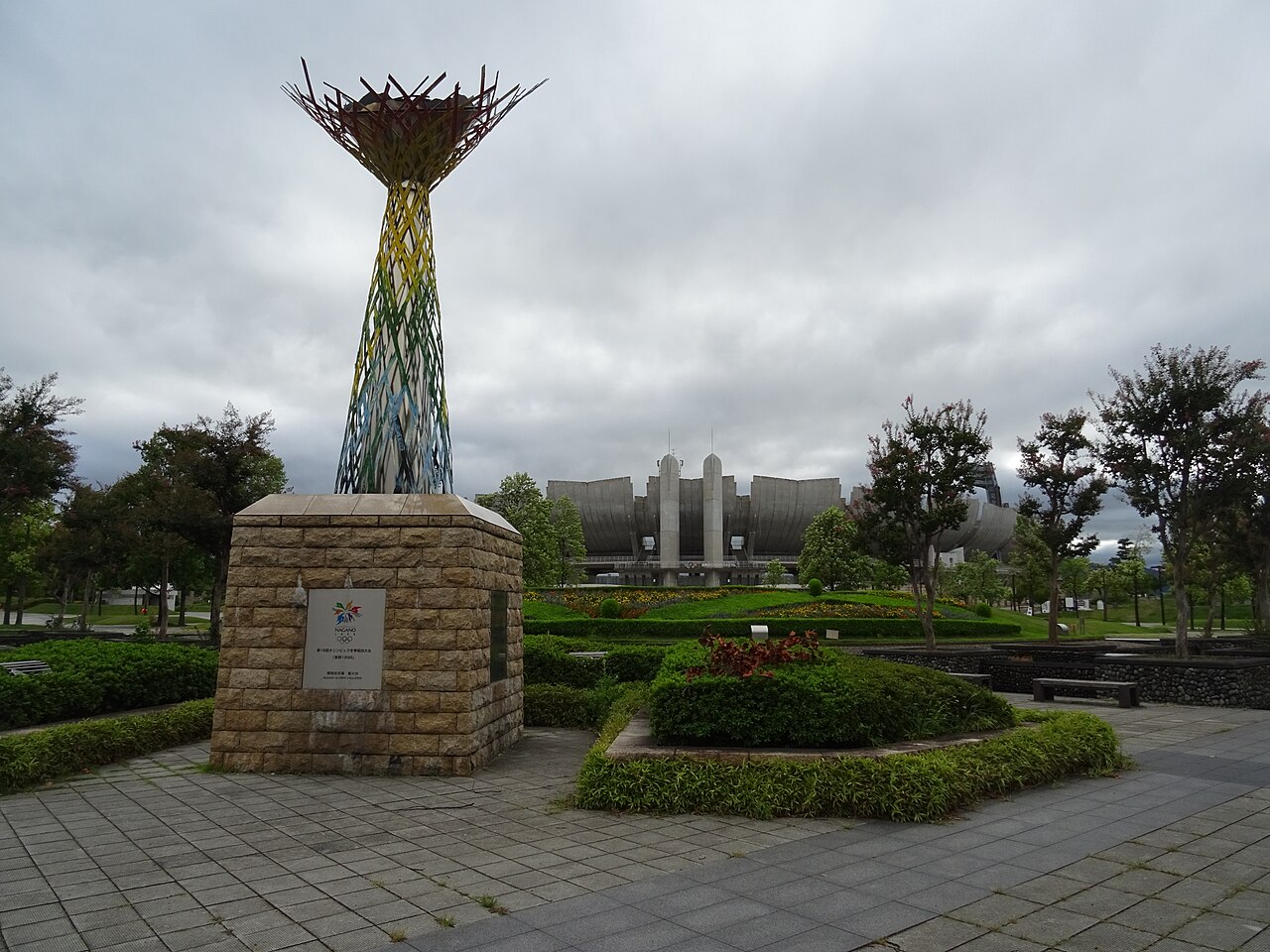

If you’re visiting outside baseball season, you can still enter the stadium’s perimeter walk and take photos at the cauldron. The cauldron itself sits on a stone base at the northeast corner and is one of the few pieces of the site that isn’t functional — it was lit for the ceremonies in February 1998 and has not been lit since. The base carries a bronze plaque in Japanese and English listing the 72 participating nations.
The Park itself: cherry blossoms, pool, football
Most Nagano residents treat Minami-Nagano as their civic park in a way that’s quite separate from its Olympic identity. You come for the running tracks — there’s a soft-top 2.1km loop around the outer perimeter — for the football stadium to catch an AC Nagano Parceiro home game, for the indoor Olympic-spec 50m pool (¥520 drop-in, lane swim session, no tattoos), or for the cherry blossoms.
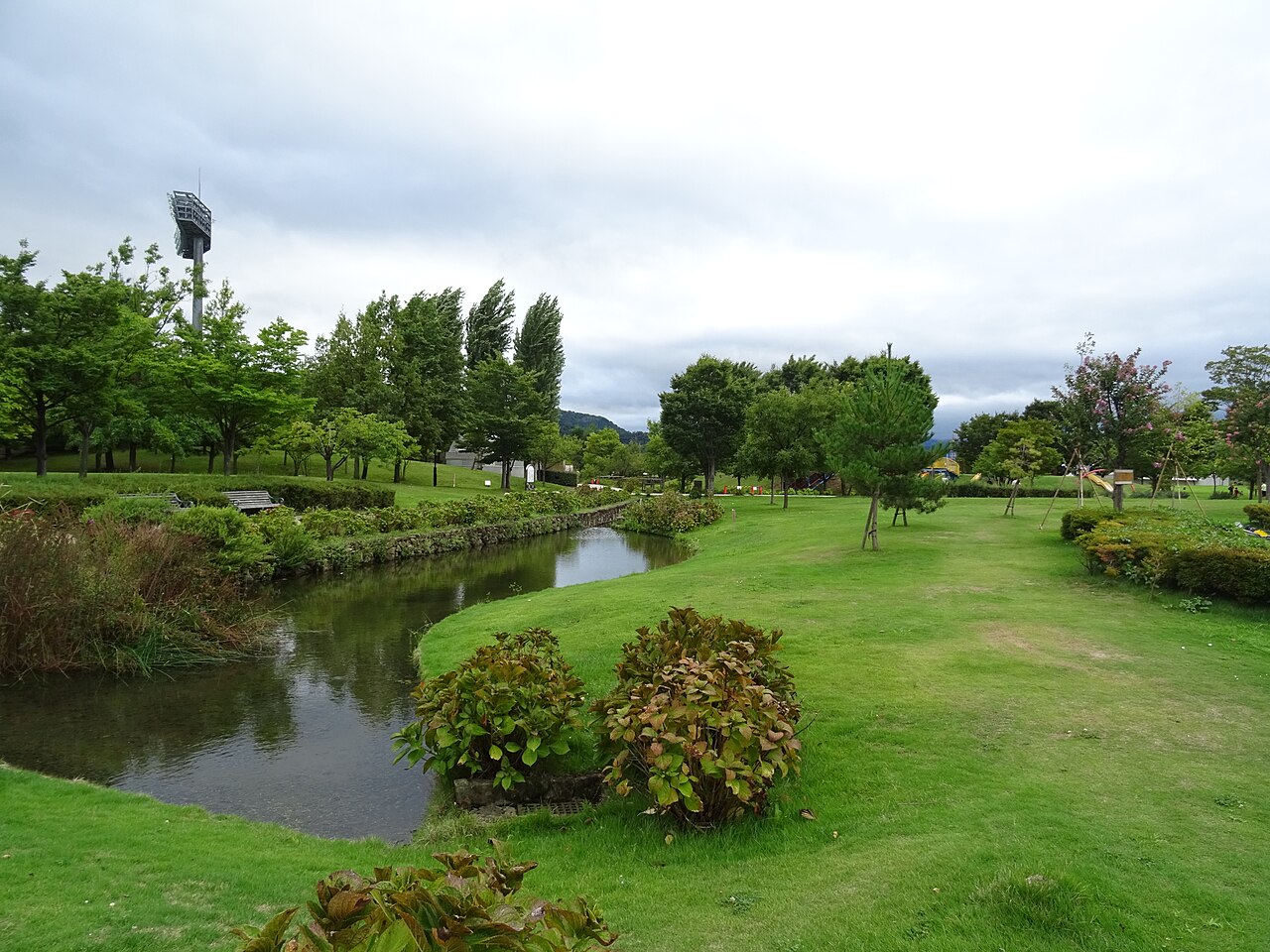

The cherry blossom timing deserves its own note (see our Nagano four-seasons calendar for the full prefecture-wide bloom wave). Nagano’s elevation (362m) and more northerly latitude mean the sakura peak is 2-3 weeks after Tokyo’s — usually the second week of April, sometimes as late as April 20th. For travellers whose itinerary missed the Tokyo blossom window by a couple of days, this is a genuinely useful gift: you take the shinkansen to Nagano, you get the blossom season back. The Minami-Nagano park has around 600 trees including some unusual varieties (Ukon-zakura with its green-tinged flowers, a line of Yoshino-zakura along the football stadium approach), and the whole park stays free and open 24 hours during the bloom. Night illumination runs for the two peak weekends only.
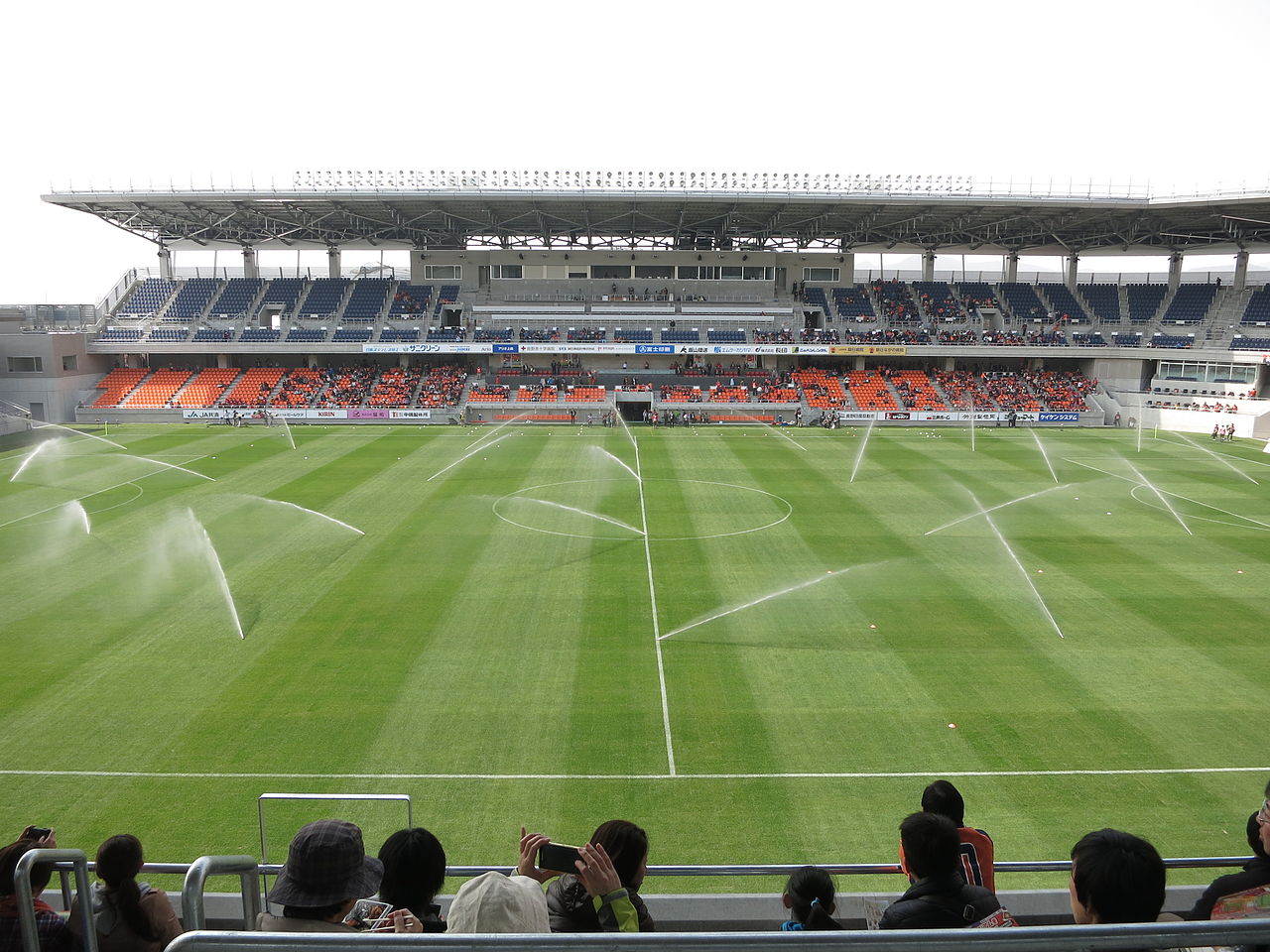
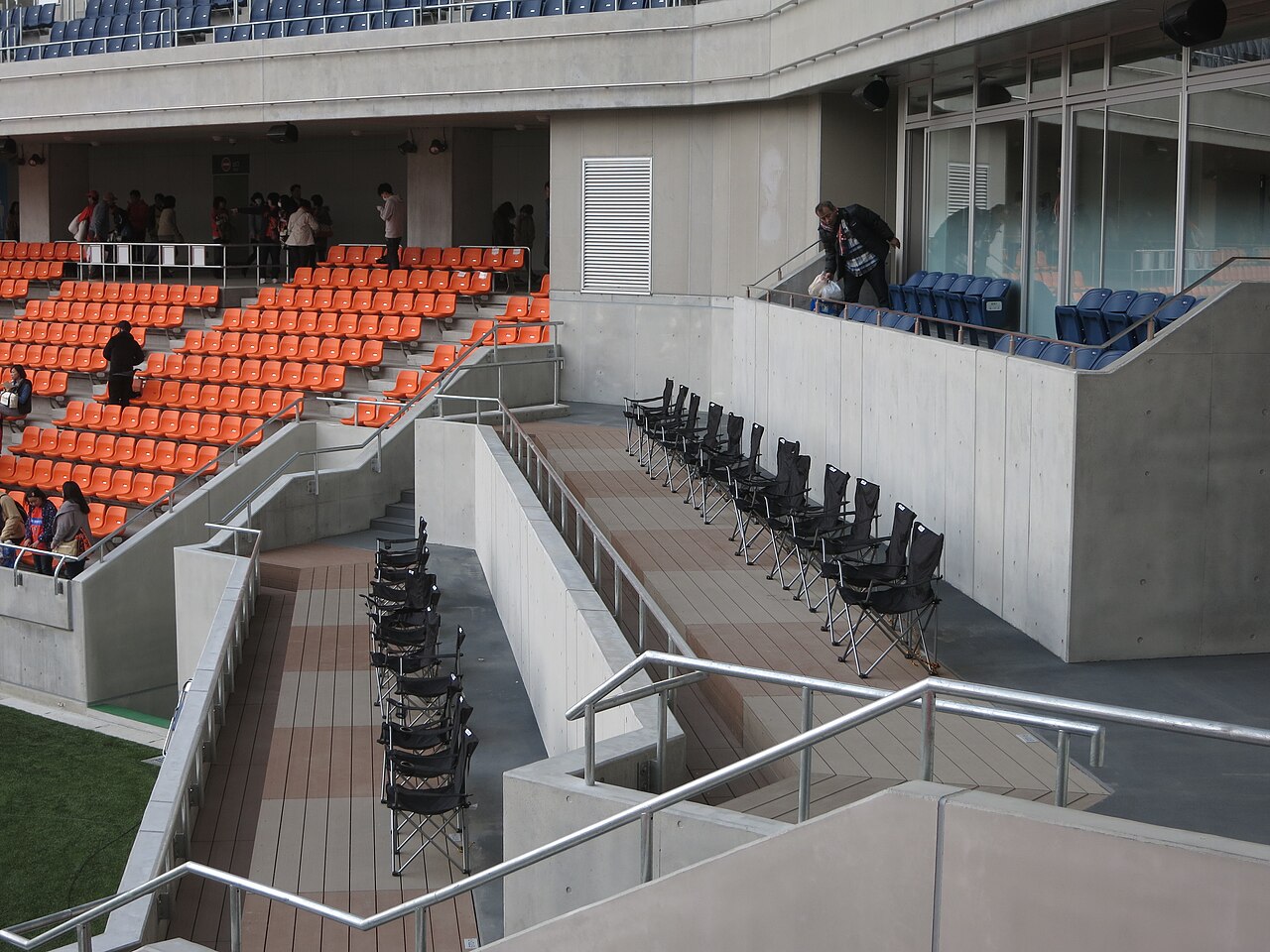
The football stadium, Nagano U Stadium, is a 15,500-seat venue that opened in 2015. It’s the home ground of AC Nagano Parceiro (currently J3 League), and games run most weekends from March to November. Tickets start at ¥2,000 unreserved and the atmosphere is proper J-League — ultras in one stand, families in another, a brass band on the halfway line. An under-appreciated Saturday afternoon in Nagano.

The Olympic Museum (and why you should go in)
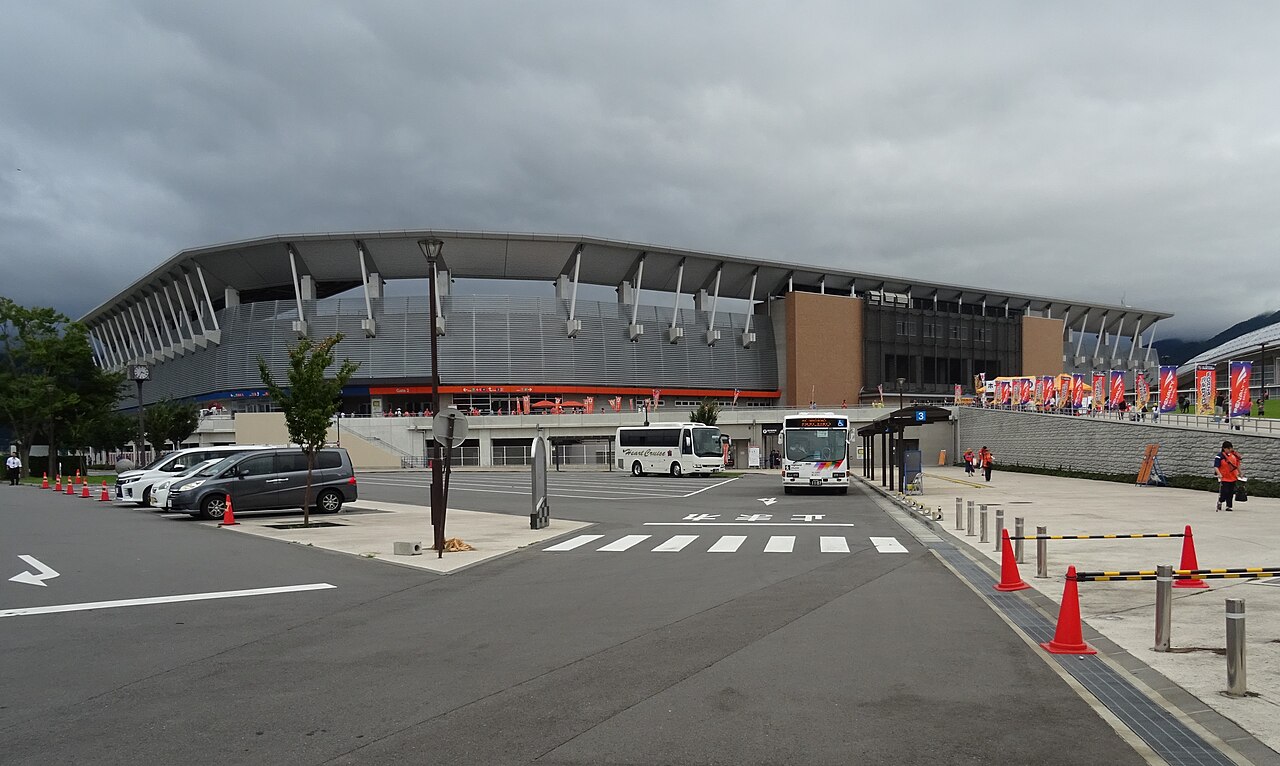
Inside M-Wave, accessed from the south concourse, the Nagano Olympic Museum is a compact but genuinely well-done exhibition that most visitors walk past on their way to the rink. ¥500 for adults, and for the money you get: the 1998 torch, the Olympic flag from the opening ceremony, Hiroyasu Shimizu’s gold medal in a clean display case, the speed-skater Koss’s autographed Klap skates, the Nagano Paralympics torch (separate, lit a month later), a wall of opening-ceremony costumes, and a five-minute looping highlight video of the ’98 Games on three large screens.

The museum runs short guided tours in Japanese only twice a day, but the exhibits are self-explanatory and most of the interpretive panels are bilingual. Allow 45 minutes. If you’re specifically interested in the ice-sport events, the museum also has a small simulator that lets you try to match Shimizu’s 500m line on a virtual curve — it’s old 2010s-era tech but fun for kids.
Getting there and around
From Tokyo: Hokuriku Shinkansen to Nagano, 80 min (¥8,340 reserved). From Nagano Station’s east exit, bus bay 2 runs the Kitanagaike Line every 15 minutes to the M-Wave stop, 15 minutes, ¥250. Or take the Shinano Railway Kita-Shinano Line one stop north to Kita-Nagano Station, then 10 minutes on foot. Both are easy; the bus is the more direct option if you’re loaded with bags.
By car: 10 minutes from Nagano IC on the Jōshin-etsu Expressway. Huge free car park (1,200 spaces at M-Wave alone, plus 800 at the Olympic Stadium side). Even during cherry blossom weekend you can usually find parking.
Once you’re there: the park is walkable end-to-end in about 20 minutes, and all the major facilities are linked by signed paths. M-Wave and the Olympic Stadium are about a 10-minute walk apart across the cherry blossom lawn. Bring comfortable shoes; the park’s outer loop is a proper 2.1km run, and worth doing if you want to see the cherry variety diversity in one pass.

Combining with the rest of Nagano city
Minami-Nagano Sports Park fits naturally into a Nagano city itinerary as a morning or afternoon half-day. The natural combines are:
- Zenkō-ji Temple (7th-century, 3km north of Nagano Station) — usually the priority for a first-time Nagano visitor. Plan it as morning (Zenkō-ji) + lunch + afternoon (Sports Park + M-Wave museum) for a tight one-day city stop.
- Matsushiro samurai district (Sanada clan castle town, 15 min south of the city) — a bigger, culture-heavy side trip that works with an overnight Nagano stay.
- Jigokudani Snow Monkeys (90 min northeast) — this is the other half-day for most overnight Nagano stays, especially in winter. Combining Snow Monkeys morning + Sports Park afternoon is a good Nagano day 2.
- Hakuba ski resort area (1 hour west, site of the 1998 Alpine events) — if you’re already tracking the Olympic venues, Hakuba has the downhill, slalom, and ski-jump sites. The complete ’98 Olympic grand tour is Minami-Nagano (ceremonies, speed skating) → Nozawa Onsen (biathlon) → Hakuba (alpine and jump) → Iiyama (cross-country).
Further afield, Nagano pairs well with Tochigi’s Nikko on a Tokyo-Nagano-Tochigi triangle, or with Fukushima for travellers heading north into Tohoku.
Where to stay
Most Nagano city accommodation is clustered around JR Nagano Station (a 15-minute bus ride away from the Sports Park), with the standard business-hotel range of ¥7,500-14,000 for a twin. Hotel Metropolitan Nagano (JR-owned, directly above the station) is the convenient option; Toyoko Inn and Dormy Inn branches are the budget defaults.
If you want to be walking distance from the park itself, the Kita-Nagano area has a handful of small business hotels and minshuku (family-run lodgings) in the ¥6,000-9,000 range — less polished than the station-area options but more peaceful and 5 minutes from M-Wave. Booking.com’s Nagano city listings cover both clusters.
For ryokan/onsen experience, the better move is to base yourself at nearby Yudanaka Onsen (45 min by local train) — a 1,300-year-old hot spring village that also serves as the jumping-off point for the Snow Monkeys. Day-trip to Nagano city and the Sports Park from there if the Olympic heritage is the draw.
Is it worth visiting?
If the 1998 Winter Olympics mean anything to you — yes, without hesitation. This is the most concentrated Olympic heritage site in Japan, preserved far better than most post-Games venues elsewhere in the world (compare with the state of the 2004 Athens facilities or the 2014 Sochi complex). The M-Wave museum alone justifies the bus ride; the active speed-skating training adds an unexpected “you might see a national team session” dimension.
If you’re visiting during cherry blossom season — yes, especially if your Tokyo window for the sakura missed by a week. The park is one of the better city parks in central Honshu for blossom viewing, and free.
If you’re a first-time Japan traveller on a tight Kyoto-Tokyo itinerary — probably not. Nagano city needs a dedicated day, and that day is more obviously rewarded by Zenkō-ji and Matsushiro than by the Olympic venues. The sports park is a deep-cut attraction, not an essential.
If you’re a sports or architecture enthusiast — this is an under-rated fixture. The Shinohara M-Wave is a significant piece of late-20th-century Japanese architecture, the largest wooden single-span roof of its era, and still operating. It rewards the hour you put into it.
FAQ
Can I skate on the Olympic ice?
Yes — public skating sessions run on the inner rink of M-Wave most weekends from mid-November to mid-March, ¥1,600 adult. The 400m Olympic oval itself is mostly reserved for the national team, but there’s one public window per month (check the M-Wave calendar for dates). Skate rental ¥700.
How long should I allocate?
Minimum 90 minutes (M-Wave museum + quick walk of the park). Two hours if you want to do the full cauldron-and-stadium loop as well. Half a day if it’s cherry blossom season and you want to do the running loop. A full day only if you’re also going to a baseball game or a football match.
Is there food in the park?
Thin. M-Wave has a café on the north concourse (seasonal menu, typical arena pricing) and there’s a 7-Eleven and a FamilyMart near the north gate. For a proper meal, head back toward Kita-Nagano Station — the area around the small Shinano Railway station has a handful of casual restaurants (ramen, teishoku, a reliably good udon shop called Kitanaga) at normal Nagano prices.
Can I drive onto the site?
Yes, with caveats. The main car parks (M-Wave, Olympic Stadium) are free and open 24/7. The service roads inside the park are closed to private vehicles except event staff. On baseball and football match days, the parks fill fast from two hours before kickoff — aim to arrive either early or use the overflow parking at Kita-Nagano Elementary School (signposted).
Is there a combined ticket?
No — the park is free, the M-Wave museum is ¥500, the skating session is ¥1,600, and these are sold separately. Nagano Pass (the city tourism card) does not cover any of them. If you’re going in summer, the only ticket you’ll buy is the museum.
How does it compare to the Tokyo 2020 Olympic Park?
Different proposition. Tokyo 2020’s main venues are spread across Greater Tokyo rather than centralised in a single park, and the legacy infrastructure is still finding its civic rhythm. Minami-Nagano, at 27 years old, has completely integrated into local life — it’s not an Olympic museum pretending to be a park, it’s a working civic park that happens to contain an Olympic museum. If you have time for both in Japan, Tokyo 2020 is the more recent and the more spectacular; Nagano is the more interesting.
Is it worth it for kids?
Yes, surprisingly so. The cherry blossom lawn has a full playground, the pool (outdoor portion in summer) is a proper lap-and-leisure facility, and the M-Wave museum has enough hands-on exhibits to hold a seven-year-old’s attention for a decent stretch. The football stadium is family-friendly for an AC Nagano home game.
The big reason most travellers come to Nagano is the snow monkeys — TheAbroadGuide.com lays out a customisable private day tour, and the official Go Nagano site has the park’s seasonal access.