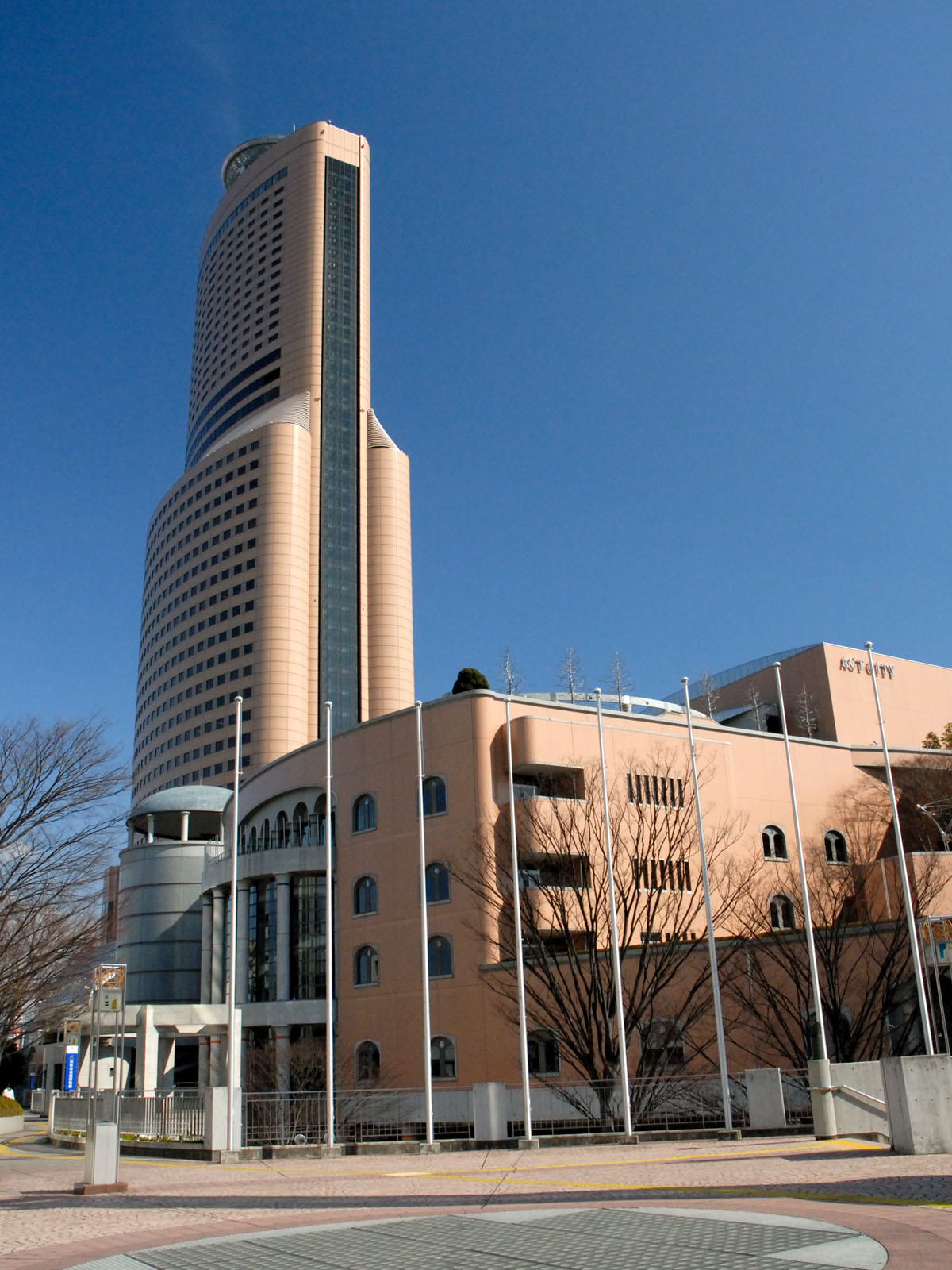
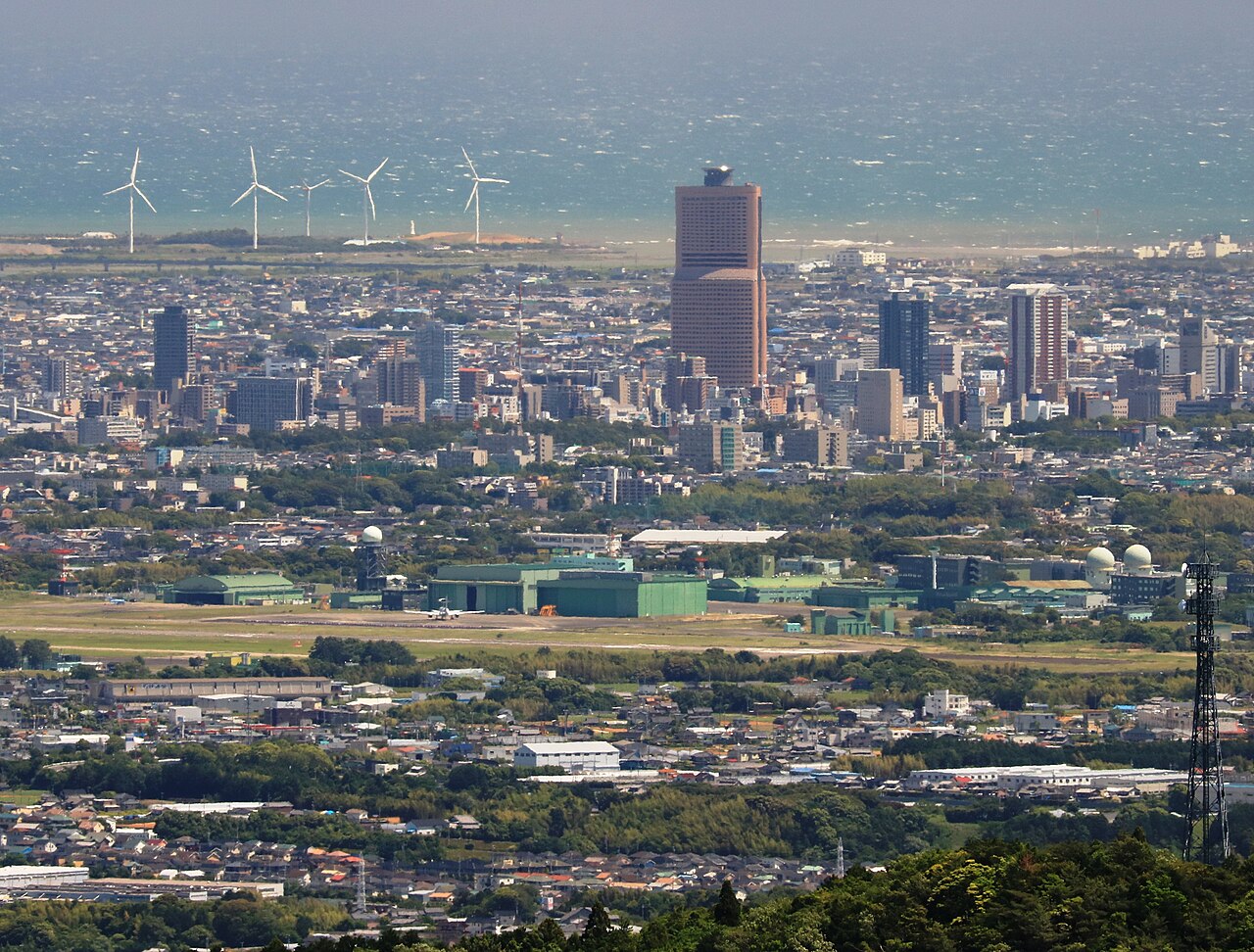
Hamamatsu (浜松, Hamamatsu) is Japan’s musical-instrument capital. Yamaha started here in 1887, Roland is still headquartered here, Kawai built its factory ten minutes from the main train station, and half the pianos on half the world’s concert stages were built in a thirty-kilometre radius of the city centre. In 1994, the city decided to advertise this fact by building a 213-metre-tall harmonica. They called it Act City (アクトシティ浜松, Akuto Shiti Hamamatsu). It is still the tallest building in Shizuoka Prefecture, and the observation deck 145 metres up has the single best view of Lake Hamana, the Pacific coast, and — on a clear day — Mount Fuji, ninety kilometres to the east.
In This Article
- Quick facts
- The observation deck: getting up (and what you see)
- What else is inside Act City
- Act Park and the plaza
- The Museum of Musical Instruments (the part that justifies Hamamatsu)
- Why Hamamatsu is Japan’s music city
- Getting there from Tokyo, Nagoya, Osaka
- Where to stay
- Combining Act City with the rest of Hamamatsu
- Is it worth the visit?
- FAQ
- Can I see Mount Fuji from the observation deck?
- Is the Museum of Musical Instruments suitable for kids?
- Are there English audio guides?
- Is the observation deck worth it if I’ve already been up Tokyo Skytree?
- When is the Hamamatsu International Piano Competition?
- Can I tour the Yamaha factory?
- Is there late-night dining around Act City?
Most foreign visitors to Hamamatsu don’t come for Act City. They come for the unagi eel, the castle, or because Hamamatsu happens to be exactly the right Shinkansen-break distance between Tokyo and Osaka. But the complex is a three-minute walk from the station and the ¥500 ticket gets you two things at once: a world-class panorama and the most concentrated case-study of Japan’s music-manufacturing heritage you can see in one afternoon. The Museum of Musical Instruments in the adjacent Chuo Hall building has the deepest collection of playable historic keyboards anywhere in Asia, and Act City’s own concert halls host the Hamamatsu International Piano Competition every three years — the Japanese equivalent of the Warsaw Chopin or the Fort Worth Van Cliburn.
Quick facts
- Where: 111-1 Itaya-machi, Naka Ward, Hamamatsu City, Shizuoka 430-7790. Directly east of JR Hamamatsu Station, 3-5 minute walk via the covered elevated walkway.
- Getting there: Hamamatsu Station is on the Tokaido Shinkansen — Hikari trains from Tokyo Station stop here in 90 minutes (¥8,350 reserved). From Osaka/Shin-Osaka, 115 minutes (¥11,450). From Nagoya, 40 minutes (¥5,510).
- Hours: Act Tower observation deck 10:00-18:00 (last entry 17:30), closed first Wednesday of each month. Museum of Musical Instruments 9:30-17:00, closed every second Wednesday. The main complex and shops are open daily, hours vary.
- Cost: Observation deck ¥500 adult / ¥300 high school / ¥200 elementary; under 5 free. Ticket stub gets 10% off at the tower-level restaurants for 60 days. Museum of Musical Instruments ¥800 / ¥400 / free under 15.
- When to go: Clear winter mornings (December-February) for the best Fuji visibility. Check the forecast for “visibility” (shikai) — a Fuji-visible day is roughly 1 in 5 in summer, 1 in 3 in winter.
- Official sites: Act City official (English), Museum of Musical Instruments, Visit Hamamatsu.
The observation deck: getting up (and what you see)
This is the only bit of Act City that has a small trap for first-time visitors, so pay attention: the observation deck elevator doesn’t start from the ground floor. You have to enter the Okura Act City Hotel (on the north side of the tower), walk through the hotel lobby to the dedicated observation-deck bank of lifts, and take one up from there. The signage is bilingual but it’s easy to miss on a first visit — the hotel staff are used to pointing tourists the right way.
Once you’re at the 45th floor, the deck is a full 360-degree wraparound with floor-to-ceiling glass. The view covers:
- North: the Tenryu River valley and the Akaishi mountains. On the clearest days you can see into Nagano prefecture’s southern alps.
- East: Mount Fuji, 90km away. This is the Fuji view most Shizuoka residents would recommend over Hakone’s, because Fuji appears isolated against the coastal plain rather than framed by other mountains. Winter only for real clarity; summer haze usually washes it out after 10am.
- South: the Enshu-nada coast of the Pacific. The brown line you see on clear days is the Ryugashi-do limestone cavern or the Nakatajima Sand Dunes — the largest sand-dune field in Japan.
- West: Lake Hamana, the brackish lagoon that defines Hamamatsu geography. On a good day you can see the Hamana Bridge crossing at Arai and the oyster-farm pontoons inside the lake.
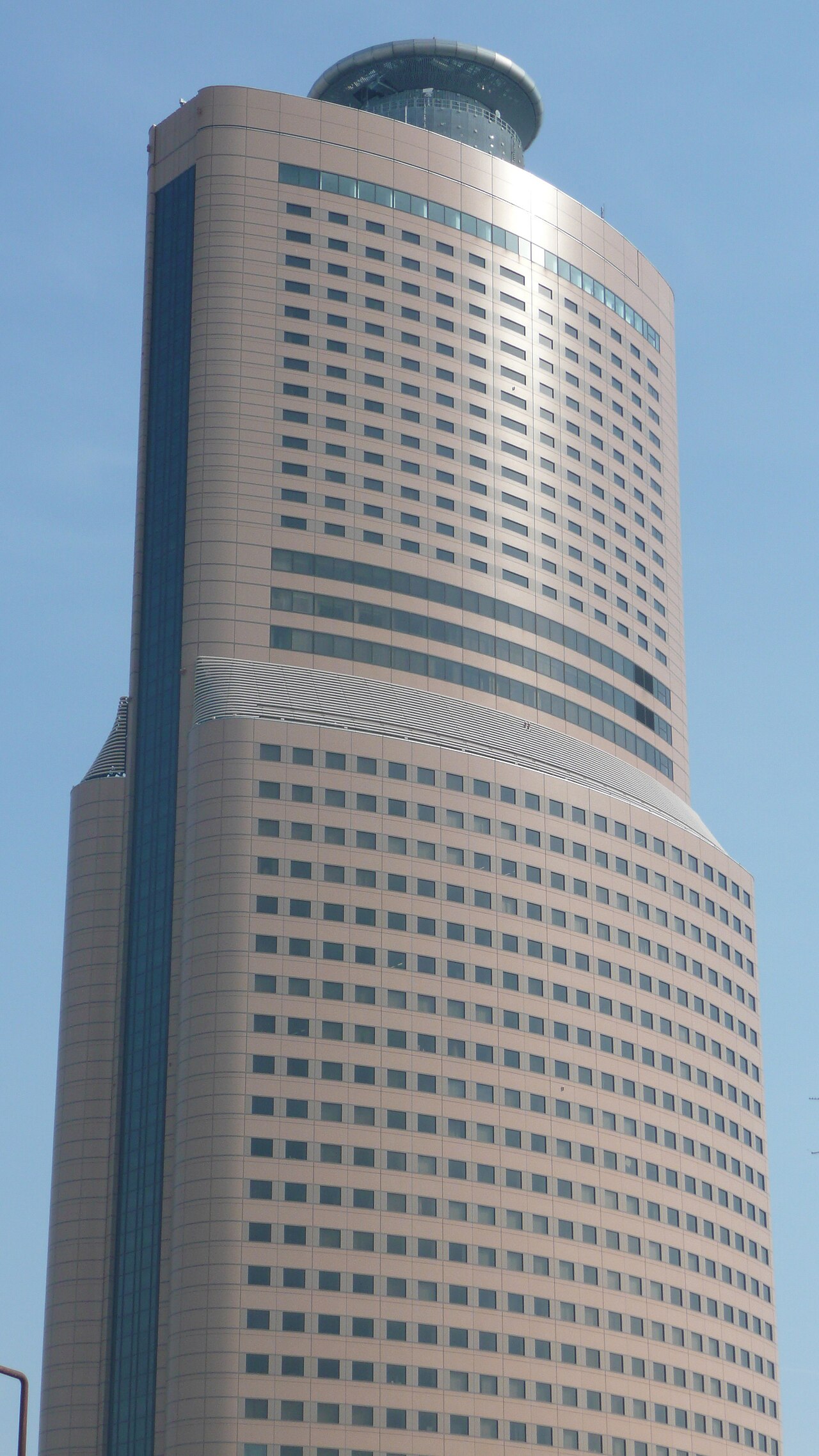
The observation deck has a café on one corner, a small photo-print kiosk, and a gift shop that sells — inevitably — ¥1,500 harmonicas with Act City branding. The view is the reason you’re here; the café is fine but you can do better at street level. Allow 30-45 minutes for a proper full walk-around and some Fuji photos. Tripods are permitted during the “sunrise special” hours (7:00-10:00 on weekend mornings during photography season, February and November), otherwise monopods only.
What else is inside Act City
Act City is actually four buildings grouped as a single complex, not just the tower. The footprint spans about a city block and you can walk between the four without going outside via covered concourses.
Main Hall — a 2,336-seat concert hall that’s the main Hamamatsu International Piano Competition venue. Acoustically engineered by Nagata Acoustics (the firm behind the Walt Disney Concert Hall in Los Angeles and Suntory Hall in Tokyo), and widely considered one of the three or four best concert acoustics in Japan. Worth checking the Act City event calendar if you’re in town — the Main Hall hosts a mix of classical, jazz, and touring popular music year-round, and ticket pricing is noticeably lower than Tokyo’s equivalent venues.
Nakahoru Hall — a 300-seat chamber hall specifically designed for solo and small ensemble classical. This is where the preliminary rounds of the piano competition are held. Acoustically startling in its clarity.
Congress Center — convention and conference facility, generally not of interest to day-trippers, but occasionally open during public-science events or the city’s Yamaha-sponsored “Music City” festival in October.
Commercial zone (Act City Plaza) — the retail and restaurant concourse on the first three floors of the tower base. About 40 shops, mostly mid-range fashion and gift. The restaurants here are the reason most local Hamamatsu residents come — specifically the unagi restaurants, because you can’t leave Hamamatsu without eating eel and Act City’s basement level has three of the better ones.
Act Park and the plaza
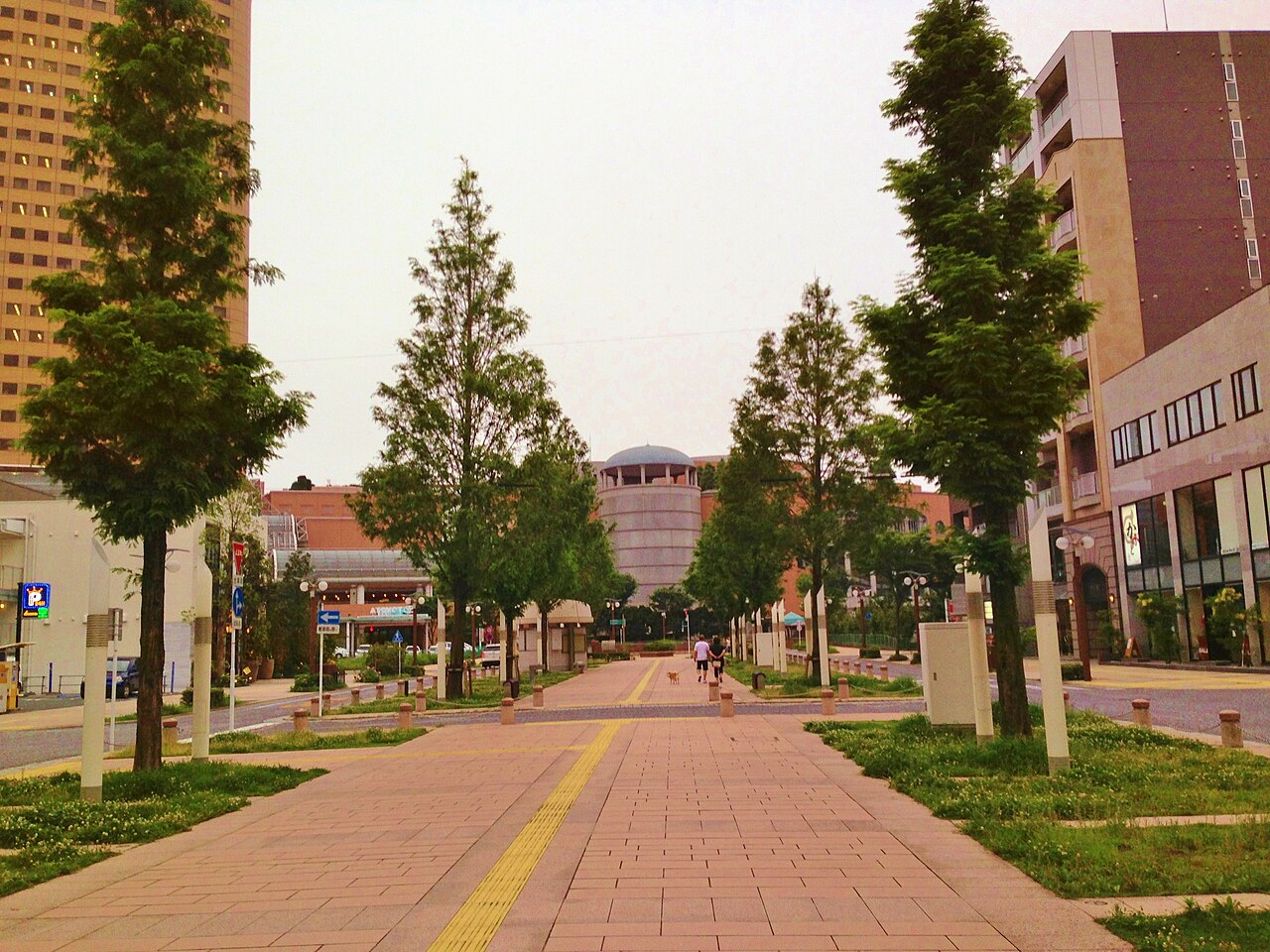
At the base of the complex, on the south side, is Act Park — a small but nicely-scaled public plaza with fountains, low planters, and a performance stage that the city uses for free outdoor gigs throughout the warmer months. It’s where you go to sit and regroup after you’ve come down from the observation deck. There’s a small café on the west side that does surprisingly decent coffee and a ¥900 lunchtime pasta deal.
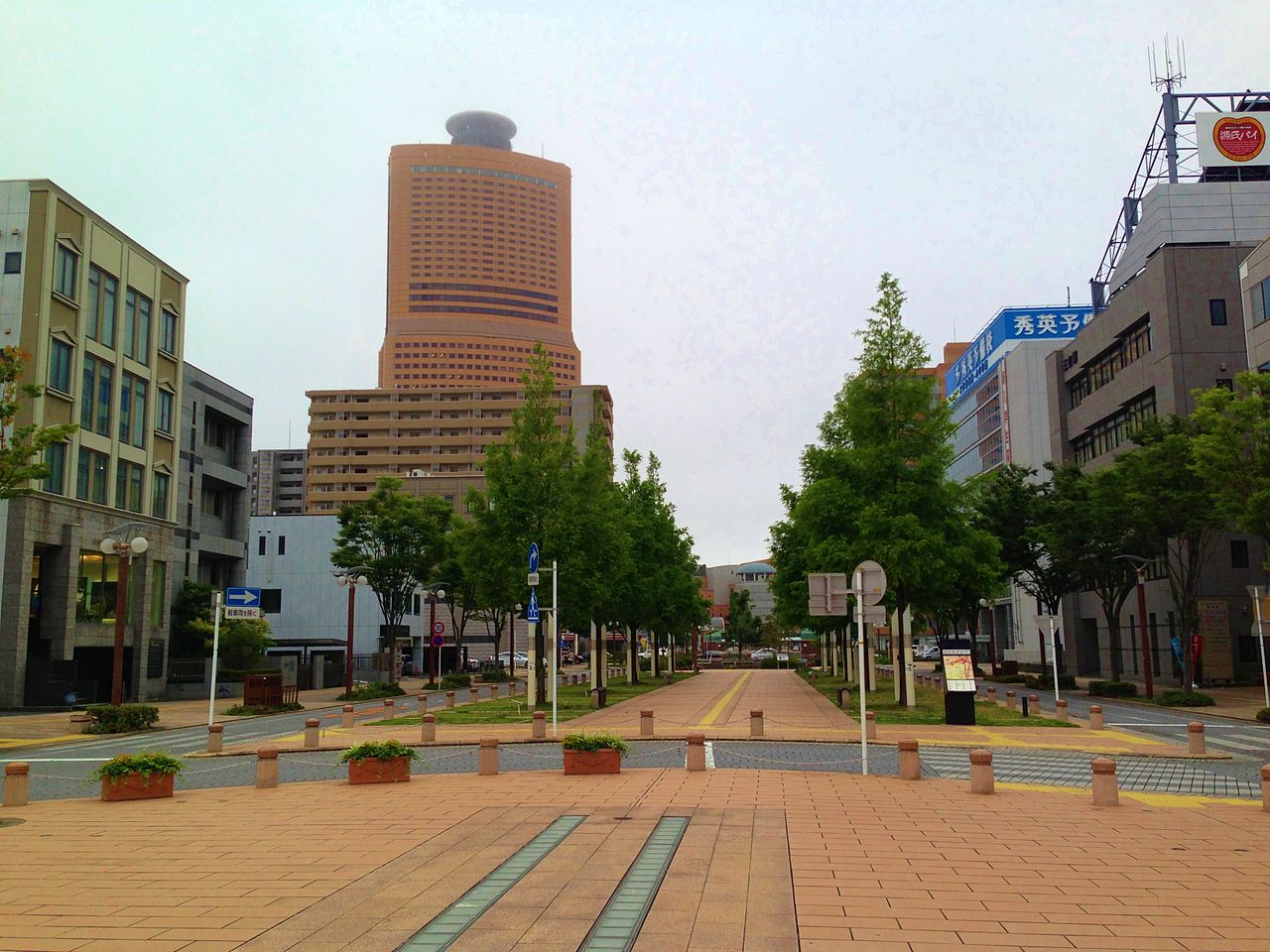
The plaza is the best spot for the postcard photo looking up at Act Tower — the complex’s 45-storey harmonica form stacks cleanly from this angle. Best light is late afternoon in summer (5pm-6pm) when the west face catches direct sun.
The Museum of Musical Instruments (the part that justifies Hamamatsu)
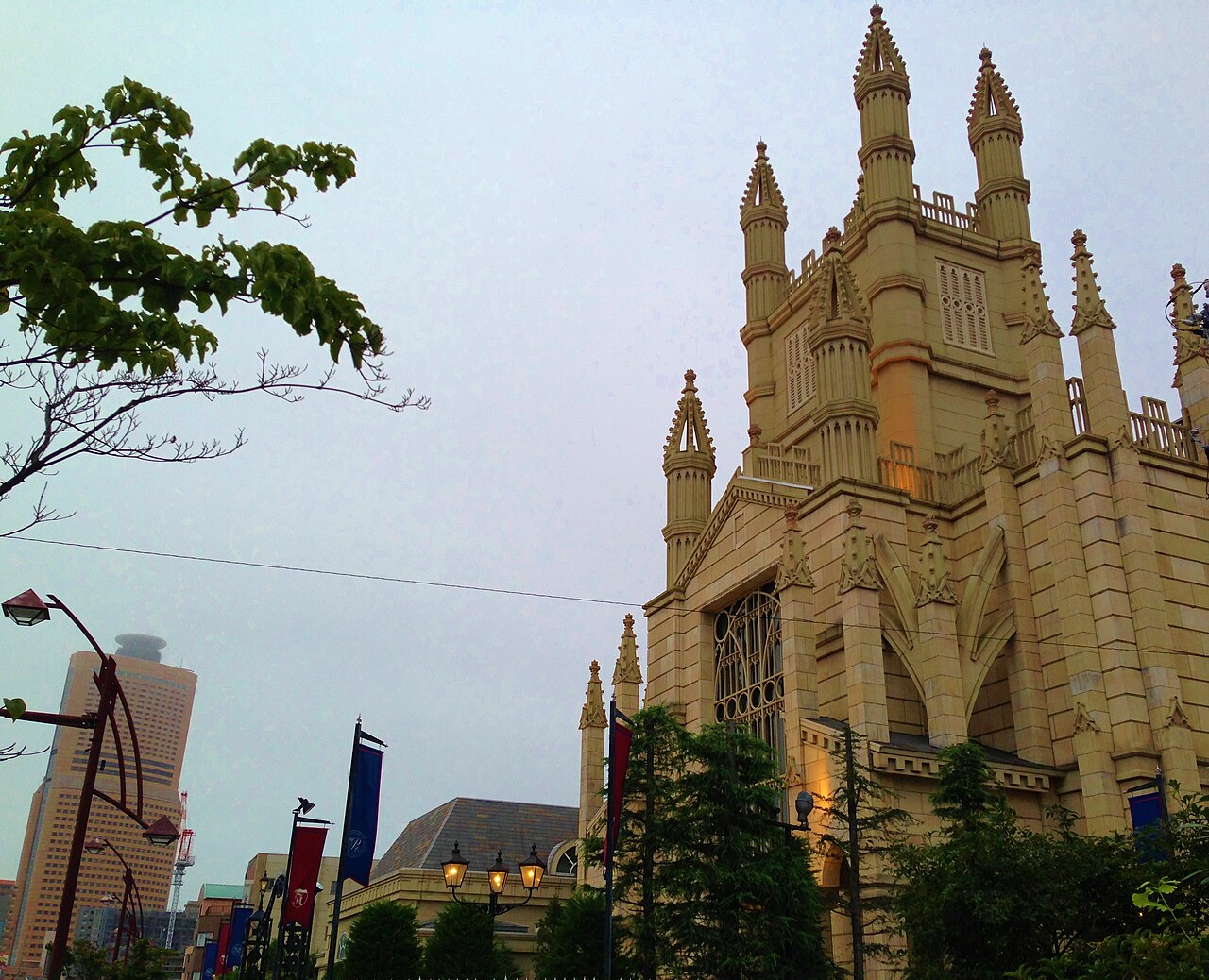
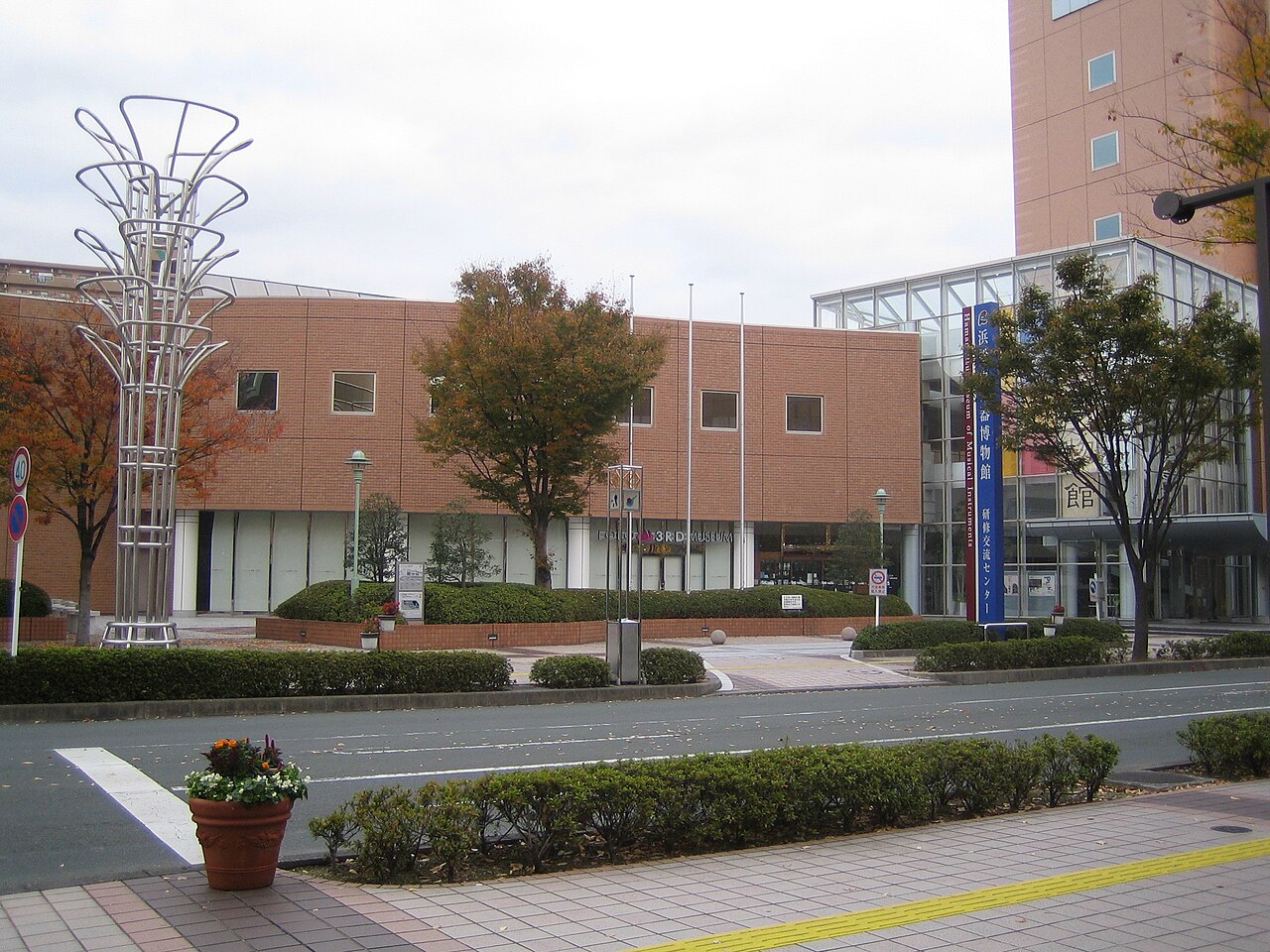
Walk five minutes east of Act City on the covered concourse and you hit the Hamamatsu Museum of Musical Instruments (浜松市楽器博物館, Hamamatsu-shi Gakki Hakubutsukan). This is the only municipal musical-instrument museum in Japan and it’s arguably the second-best anywhere in Asia (after Seoul’s National Museum of Korean Music). The permanent collection has around 1,500 instruments from 50+ countries, with particular strength in early pianos, Asian regional instruments, and electronic music history.
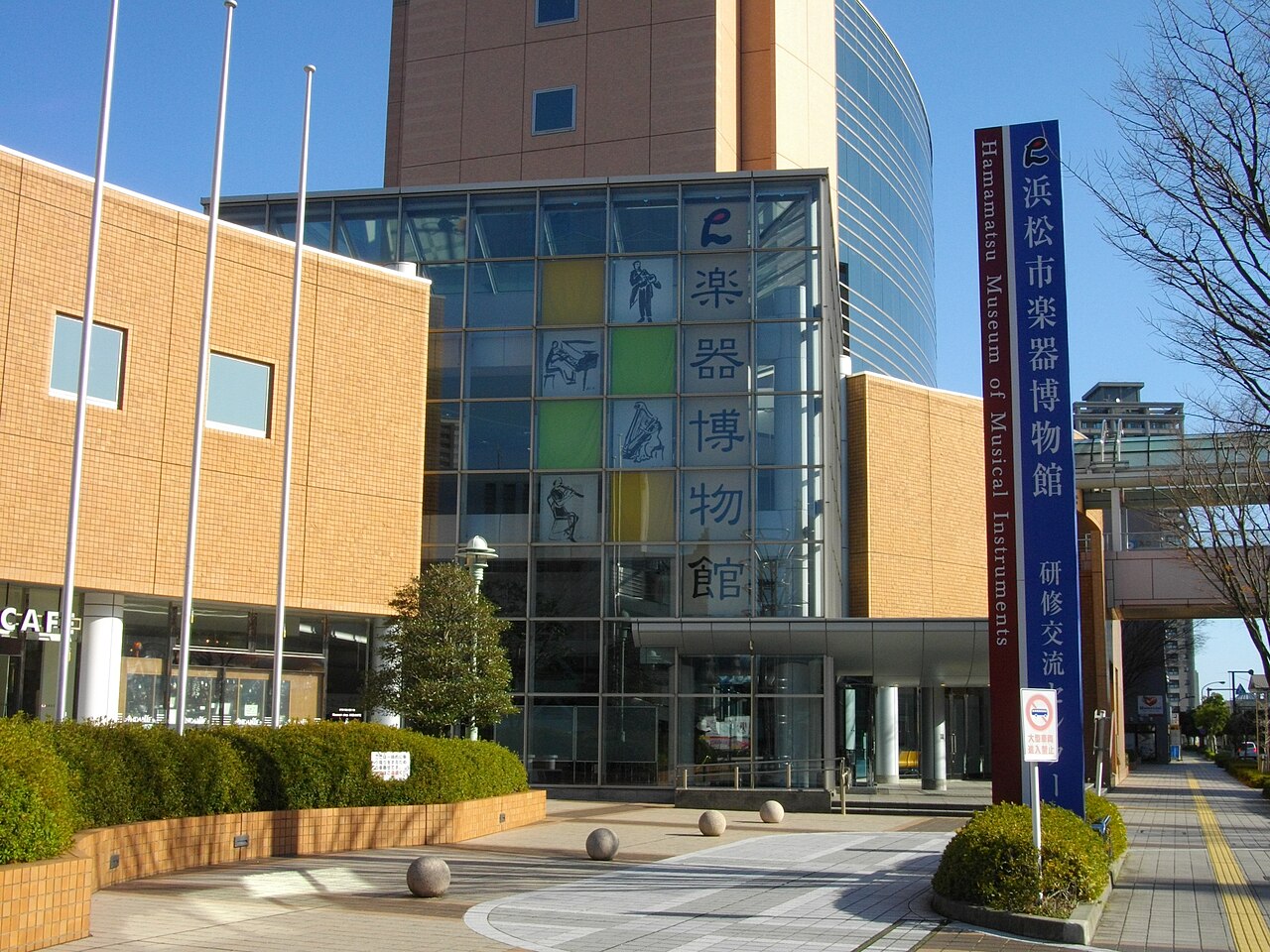
The genuinely interesting bit is that around 200 of the instruments are playable. Each gallery has a station where you can put on headphones and listen to the curator-recorded audio of that specific instrument being played — not a generic sample, but the museum’s own 1720 Broadwood harpsichord being played by a specific performer on a specific day. For a certain kind of visitor (anyone who plays an instrument, anyone interested in acoustics, most children under 10), this is the single best hour you can spend in Hamamatsu.
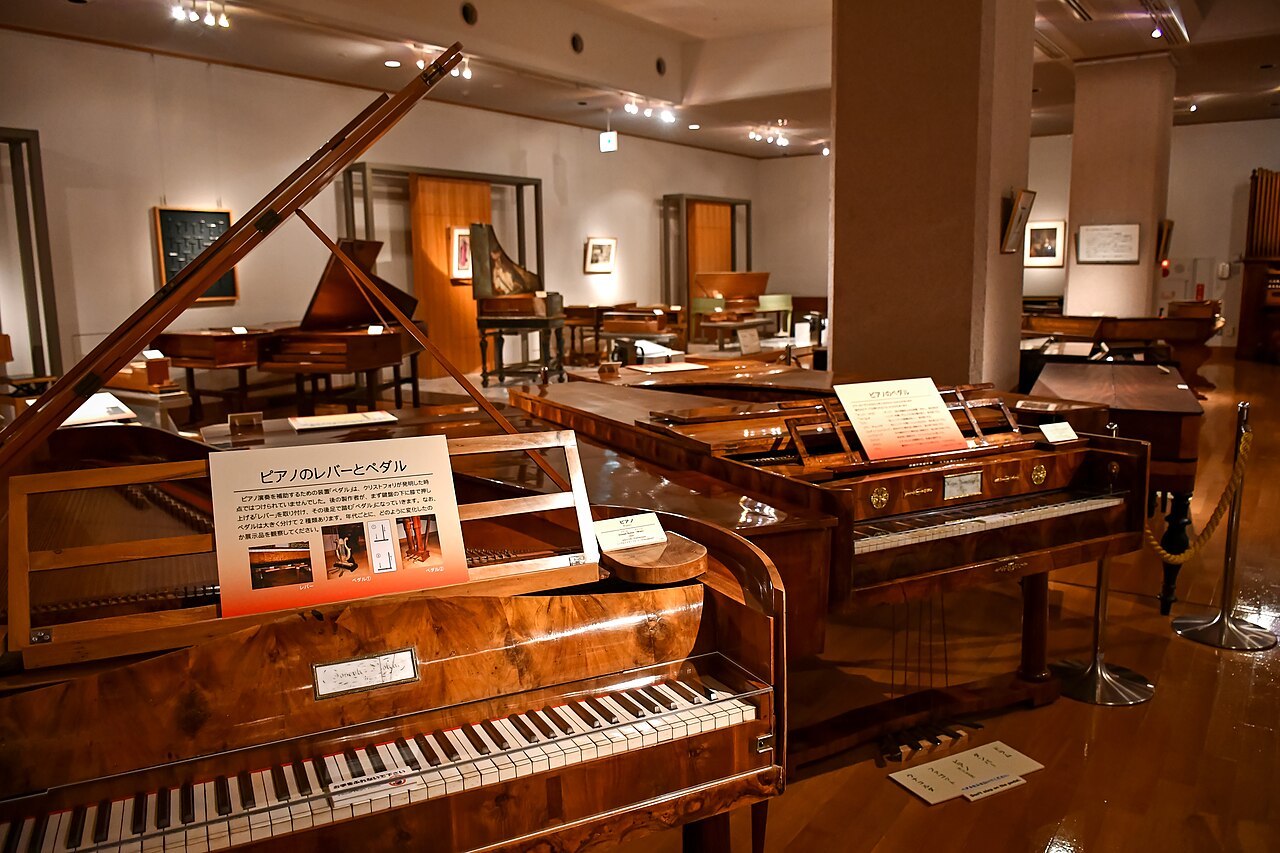
The section you want specifically is the historical pianos gallery. 30+ instruments, mostly from the 1780-1920 period, including a Silbermann fortepiano replica, several Broadwoods, an original 1853 Bluthner, and — the piece of the museum’s pride — a 1900 Steinway concert grand that Brahms’s student Artur Schnabel once owned. They’re all playable in the sense that a qualified visiting musician can book a 30-minute session with them, though you’ll need to apply a month in advance and provide references.
Why Hamamatsu is Japan’s music city
A small amount of history because it explains the rest. In 1887, a 36-year-old organ repairer called Torakusu Yamaha was called to Hamamatsu Elementary School to fix an American-imported reed organ. He fixed it. He then went back to his workshop and built one from scratch — the first Japanese-manufactured reed organ — and founded the company that would become Yamaha Corporation. By the 1920s Yamaha was making pianos. By the 1970s, alongside a growing Kawai (founded 1927 by a former Yamaha engineer), it was exporting to the world.
The network effects followed. Roland started in Osaka but moved its main R&D operation to Hamamatsu in the 1970s. Tokai Gakki (maker of the revered Stratocaster copies) is Hamamatsu-based. The world’s first MIDI-capable synthesiser (Roland Jupiter-6) was engineered here. Today Hamamatsu still manufactures more pianos and electronic musical instruments than any other city on earth, and the cluster effect means every manufacturing supplier from brass fittings to piano felt is within a 20km supply chain radius. The Act City complex is the city’s way of saying: we’re not just a factory town, we’re an ideas-and-performance town too.
Getting there from Tokyo, Nagoya, Osaka
Hamamatsu is conveniently positioned — exactly halfway between Tokyo and Osaka on the Tokaido Shinkansen — which makes it a natural stopover either direction.
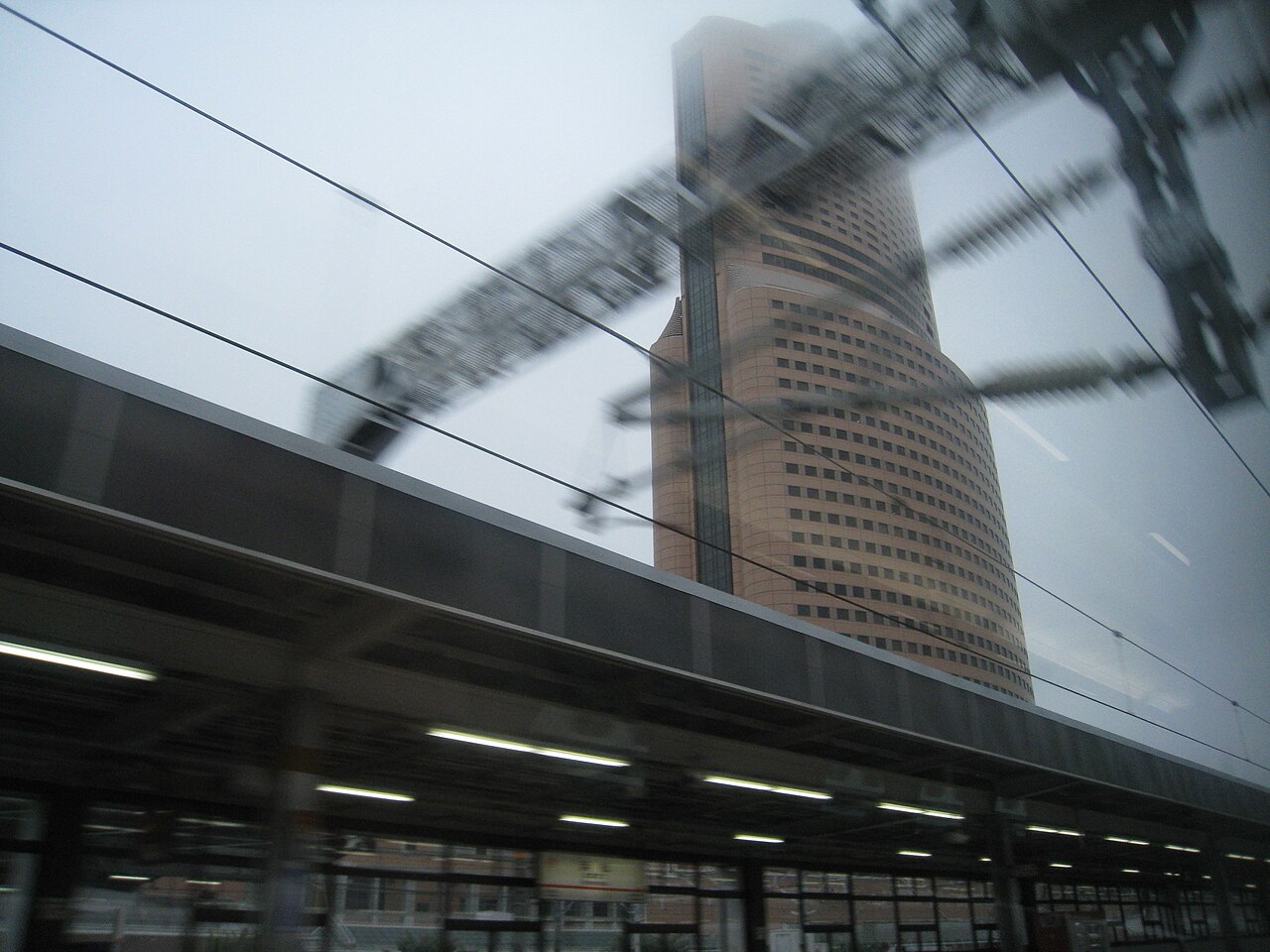
From Tokyo: Hikari service, 90 minutes, ¥8,350 reserved / ¥7,610 unreserved. Kodama service (all-stops) runs in 100 minutes at the same price. JR Pass covers both.
From Osaka/Shin-Osaka: Hikari service, 115 minutes, ¥11,450 reserved. Or change at Nagoya to Kodama: 130 minutes total. JR Pass covers.
From Nagoya: 40 minutes Hikari, ¥5,510. This is the quickest same-day excursion from Nagoya and pairs naturally with Nagoya’s own samurai district on a one-day loop.
From Hamamatsu Station: Act City is a 3-5 minute walk via the elevated covered concourse from the north exit. If you’re pulling a suitcase, this is step-free the whole way. The Museum of Musical Instruments is another 5 minutes east of Act City, also via covered walkway.
Making a Shizuoka day of it? Hamamatsu sits at the western end of the prefecture; at the eastern end, HappyToVisit.com rates a six-hour private tour around Shimizu’s Mt Fuji viewpoints, and the Hamamatsu & Lake Hamana visitor bureau has the local bus passes that make the Act City area walkable.
Where to stay
The Okura Act City Hotel is the in-building option — 339 rooms, Okura-group standard, rooms on the upper floors have the same view you pay ¥500 for at the observation deck. Pricing is Okura-typical (¥18,000-35,000 for a twin) and it includes observation-deck access at no extra charge. If the view is why you’re here, this is the move.
Cheaper station-area options: Hamamatsu has most of the business hotel chains (Toyoko Inn, Dormy Inn, Mitsui Garden, Hotel Abest) within a 10-minute walk of the station. Standard twin rooms ¥8,000-13,000, all with breakfast for another ¥1,500. Booking.com’s Hamamatsu listings cover the full spread.
For ryokan/onsen, the natural base is Lake Hamana (30 minutes west on the Enshu Railway) where half a dozen small onsen properties cluster around the lake shore. Better for a second night if you’re in town longer than an afternoon.
Combining Act City with the rest of Hamamatsu
Act City is a 2-3 hour visit. Combined with Hamamatsu’s other main sights, it makes a reasonable full day:
- Morning: Act City observation deck (9:30-10:30) + Museum of Musical Instruments (10:45-12:30).
- Lunch: unagi at one of the specialists in the Kajimachi area or the basement restaurants at Act City. Hamamatsu’s eel is properly famous and the ¥3,000-5,000 unagi-don is what locals will insist you try.
- Afternoon: Hamamatsu Castle (15-minute walk from Act City) — a reconstructed castle keep that’s short on historical authenticity but has decent city views from the tenshu platform. Or the Nakatajima Sand Dunes (30 minutes by bus) if it’s a clear day.
- Evening: Act City Main Hall if there’s a concert — the calendar runs year-round and ticket prices are reasonable. Otherwise the bars in the Yuraku district south of the station.
For a bigger itinerary, Hamamatsu fits cleanly as a one-night stop between Tokyo and Mie’s Ise Grand Shrine, or on a coastal-Shizuoka run down to the Izu Peninsula’s diving ports.
Is it worth the visit?
If you’re already passing through Hamamatsu or planning a stop between Tokyo and Osaka — yes, unambiguously. The observation deck alone is a ¥500, forty-minute, spectacular-view investment that you can slot in between a Shinkansen arrival and lunch. The Museum of Musical Instruments is a genuinely world-class attraction that most guides underrate.
If you’re specifically a classical musician, piano enthusiast, or interested in electronic music history — Hamamatsu becomes a pilgrimage-level destination. The historical piano gallery, the Yamaha factory heritage, the Roland R&D proximity, and the triennial piano competition all layer onto each other in a way that nowhere else in Japan replicates.
If you’re on a tight first-trip itinerary with only Tokyo, Kyoto, and Osaka — skip it. Hamamatsu deserves a day and most first-time visitors don’t have one to spare. Come back on the second trip.
FAQ
Can I see Mount Fuji from the observation deck?
Yes, on clear days — visibility is typically 3-4 days a week in winter (December-February), 1-2 days a week in summer. The morning hours (10:00-11:30) give the best visibility because Pacific-coastal haze builds through the afternoon. The official tourism board posts a weekly visibility forecast in the Act City lobby.
Is the Museum of Musical Instruments suitable for kids?
Yes, strongly. The audio stations (listen to each instrument being played on headphones) work for any age that can manage a pair of headphones, and the basement electronic-music gallery has hands-on instruments kids can play. Under-15s are free which makes it one of the best-value family stops in the region.
Are there English audio guides?
The museum has English, Chinese, and Korean audio guides (free with admission, pick up at the ticket counter). The Act City observation deck has multilingual info panels but no audio guide — you don’t really need one.
Is the observation deck worth it if I’ve already been up Tokyo Skytree?
Different proposition. Skytree is about looking at Tokyo; Act City is about looking at Mount Fuji and the Pacific coast. The panoramas aren’t comparable because the landscapes aren’t comparable. At ¥500 vs Skytree’s ¥3,000+, Act City is also much better value for the specific Fuji view.
When is the Hamamatsu International Piano Competition?
Every three years, usually November. The 2024 edition ran in November 2024; the next is scheduled for November 2027. All sessions are held at the Act City Main Hall and tickets sell out months in advance — check the official competition website for the year-by-year schedule.
Can I tour the Yamaha factory?
Yes and no. The main Yamaha piano factory (Toyooka, 15km from Act City) runs public tours by reservation only, Japanese-language, about twice a month. The Yamaha Innovation Road corporate museum at Yamaha HQ (Nakazawa-cho, 10 minutes by car from the station) is free, open daily, and does have English signage — an easier option than the factory itself.
Is there late-night dining around Act City?
Not really in Act City itself — the commercial zone closes by 22:00. For late food, walk south across the station plaza to the Yuraku district, which has izakaya and small bars open until 02:00 most nights. Hamamatsu’s gyoza (dumpling) scene is specifically notable — the city has the highest per-capita gyoza consumption in Japan, edging out Utsunomiya.