
Nagano Prefecture has a specific meteorological advantage that most Japanese travel guides miss: elevation. The prefecture’s altitude range runs from 300m valley floor up to 3,190m at the summit of Mt Kitadake, and because bloom times track temperature rather than calendar, Nagano’s flower calendar is the longest in mainland Japan. The sakura (cherry blossoms) sweep up the valleys in April and reach the highland villages in early May; the nanohana (rapeseed) fields fire off through Golden Week; the alpine meadows bloom from June to August; the autumn foliage begins on the peaks in late September and takes six weeks to reach the lowlands. You can be in Nagano any month of the year and find something in bloom or in its seasonal peak.
In This Article
- Quick facts
- Spring: the 45-day cherry blossom wave
- Late spring: the nanohana fields
- Summer: the high-altitude meadows and festivals
- Autumn: the six-week colour cascade
- Winter: snow monkeys, skiing, and Zenkoji in the snow
- The specific festival calendar (annual mains, by month)
- Combining seasons in a single trip
- Where to stay in each season
- Is Nagano worth a dedicated trip?
- FAQ
- What’s the single best month to visit Nagano?
- Is the Takato Castle cherry blossom really worth the detour?
- Do I need a car to see Nagano’s flowers?
- Is Jigokudani crowded in winter?
- What’s the relationship between Nagano and the Japanese Alps?
- Can I combine Nagano with the Tateyama-Kurobe Alpine Route?
- When do the snow monkeys actually use the hot spring?
This guide walks the full year of Nagano’s festival-and-flower calendar — where to be in each month, which specific festivals to plan around, and how the elevation wave works. It’s also, specifically, a rebuttal to the assumption that Nagano is a winter-only destination (which it emphatically is not, though the winter programme is excellent too).
Quick facts
- Where: Nagano Prefecture spans 13,561 km² of central Honshu — roughly the size of Connecticut. Main hubs: Nagano City (north, Shinkansen), Matsumoto (central, castle), Nagiso/Kiso Valley (south-central), Ina and Takato (south).
- Getting there: Hokuriku Shinkansen Tokyo → Nagano (80 min, ¥8,340). Chuo Line Tokyo → Matsumoto (2h40min, limited express Azusa, ¥6,900). From Osaka: Shinkansen to Nagoya, then limited express Shinano to Matsumoto / Nagano.
- Elevation range: 300m valley floor to 3,190m summit. Bloom window runs ~45 days longer than Tokyo because of this spread.
- Cost: Most flower parks free or ¥300-500 entry. Major castles/temples ¥300-1,000. Jigokudani Snow Monkey Park ¥800.
- When to go: April (cherry blossoms at elevation), May (nanohana + late cherries), July-August (alpine meadows), late September-October (autumn colours), December-March (snow monkeys + skiing). Any month works; the trip you get is different each time.
- Official: Go! NAGANO official travel guide, Visit Nagano Prefecture.
Spring: the 45-day cherry blossom wave
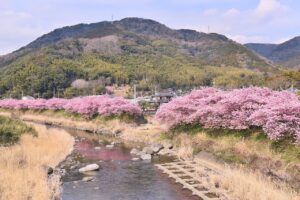
Nagano’s cherry-blossom season is the prefecture’s signature — not because it’s the most famous nationally (Kyoto and Tokyo take that prize) but because it lasts longer than anywhere else. The first buds open in Ina-Takato in southern Nagano around April 5-10; the last petals fall in the high-altitude villages near Hakuba around May 15-20. That’s a six-week window where you can always find somewhere in bloom.
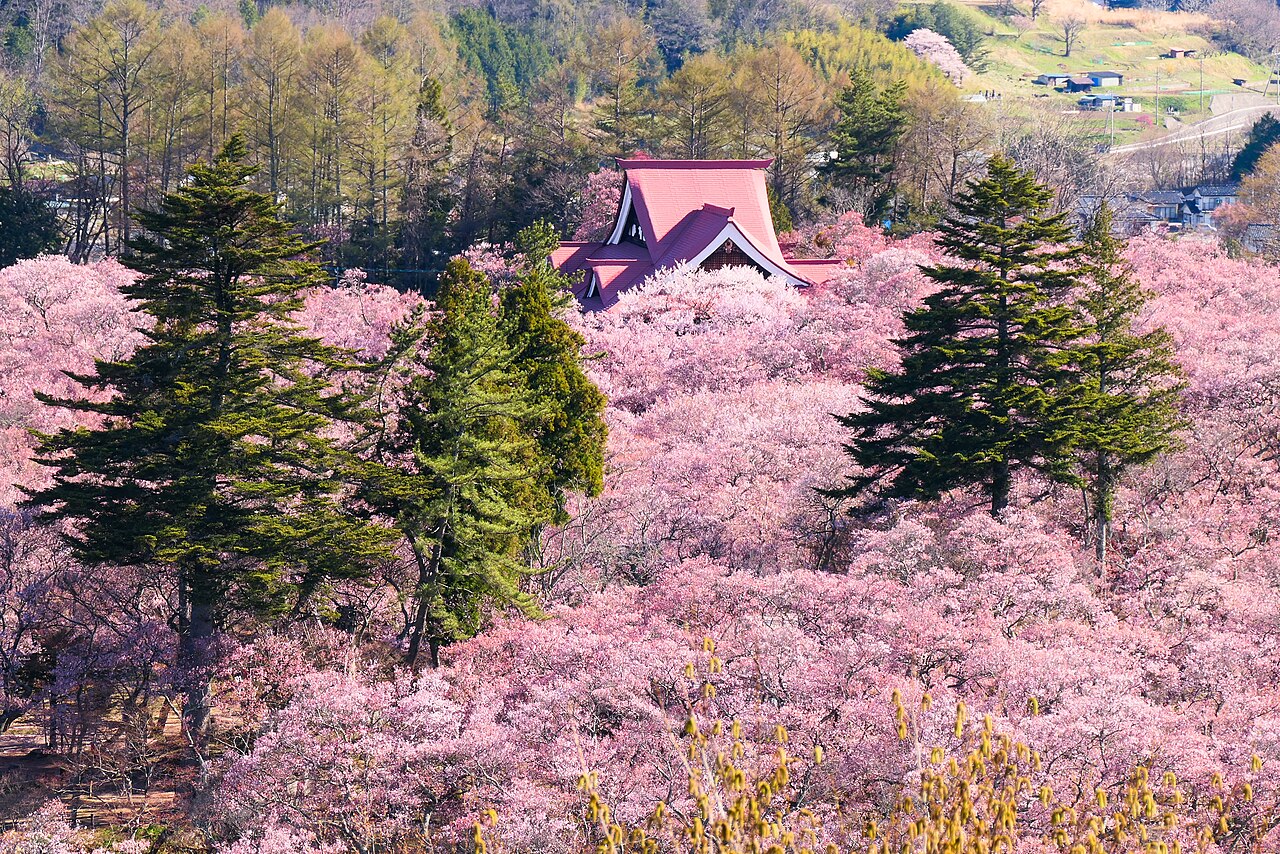
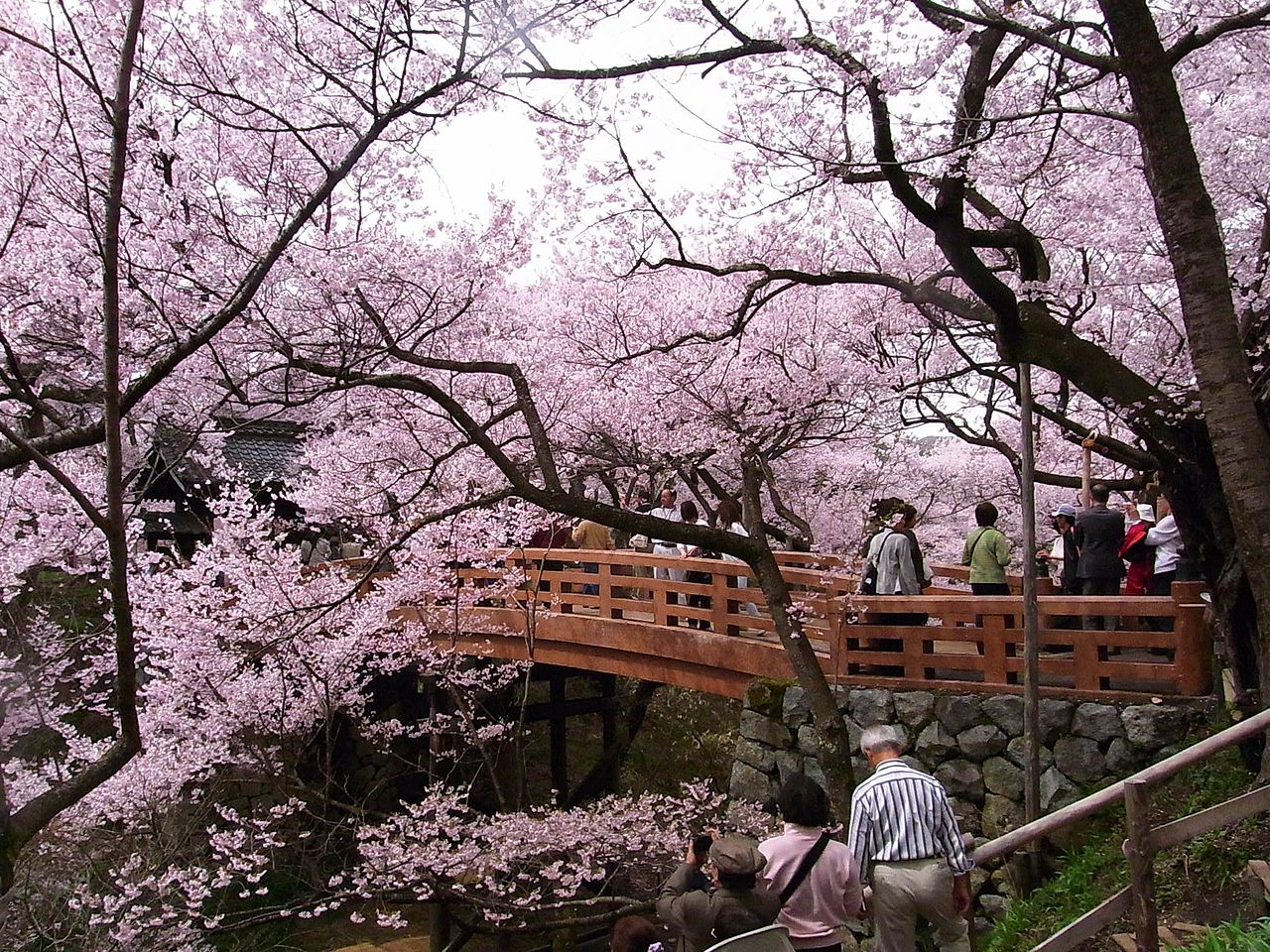
The set-piece is Takato Castle Park (高遠城址公園, Takatō Jōshi Kōen), 90 minutes south of Matsumoto. The site is the ruined hilltop of a 16th-century castle, now planted with 1,500 Takato-kohigan-zakura trees — a hot-pink variety specific to the site. The national ranking puts Takato in the top three Japanese hanami spots alongside Yoshino in Nara and Hirosaki in Aomori. Peak bloom is typically April 8-15. Entry ¥500 during festival period.
Follow-up options as the bloom moves north:
- Matsumoto Castle (the famous black castle) — sakura around the moat, bloom peak mid-April.
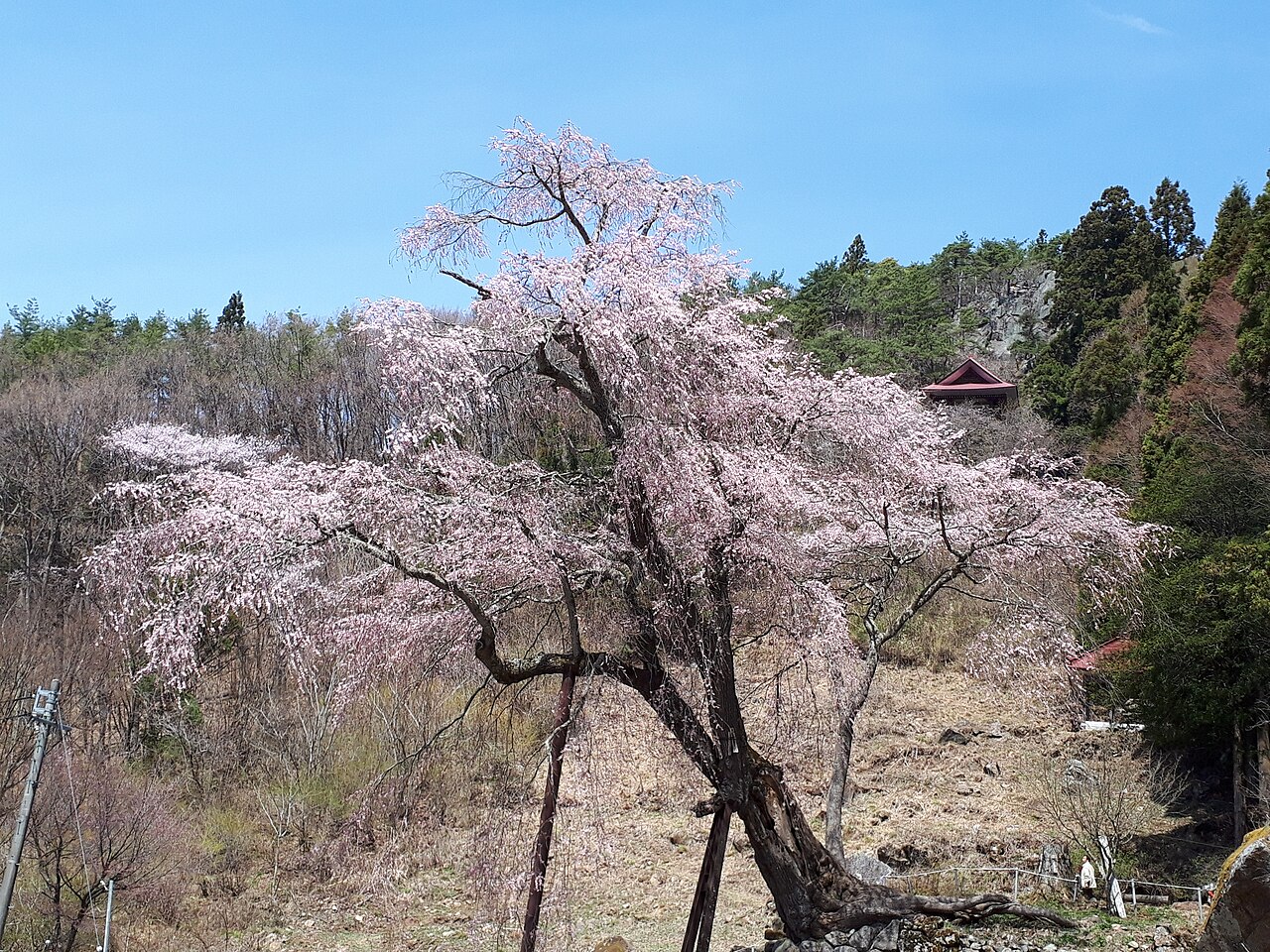
- Akawa Kannon (a small temple at Iijima) — home to one of Japan’s most dramatic shidare-zakura (weeping cherry) specimens, a 250-year-old single tree that blooms for about ten days in mid-April. Zero tourism, maximum beauty-to-visitor ratio.
- Zenkoji Hanakairo — a three-day flower festival at Nagano City’s main Buddhist temple (May 3-5 annually), with the temple’s approach street lined with seasonal flower arrangements.
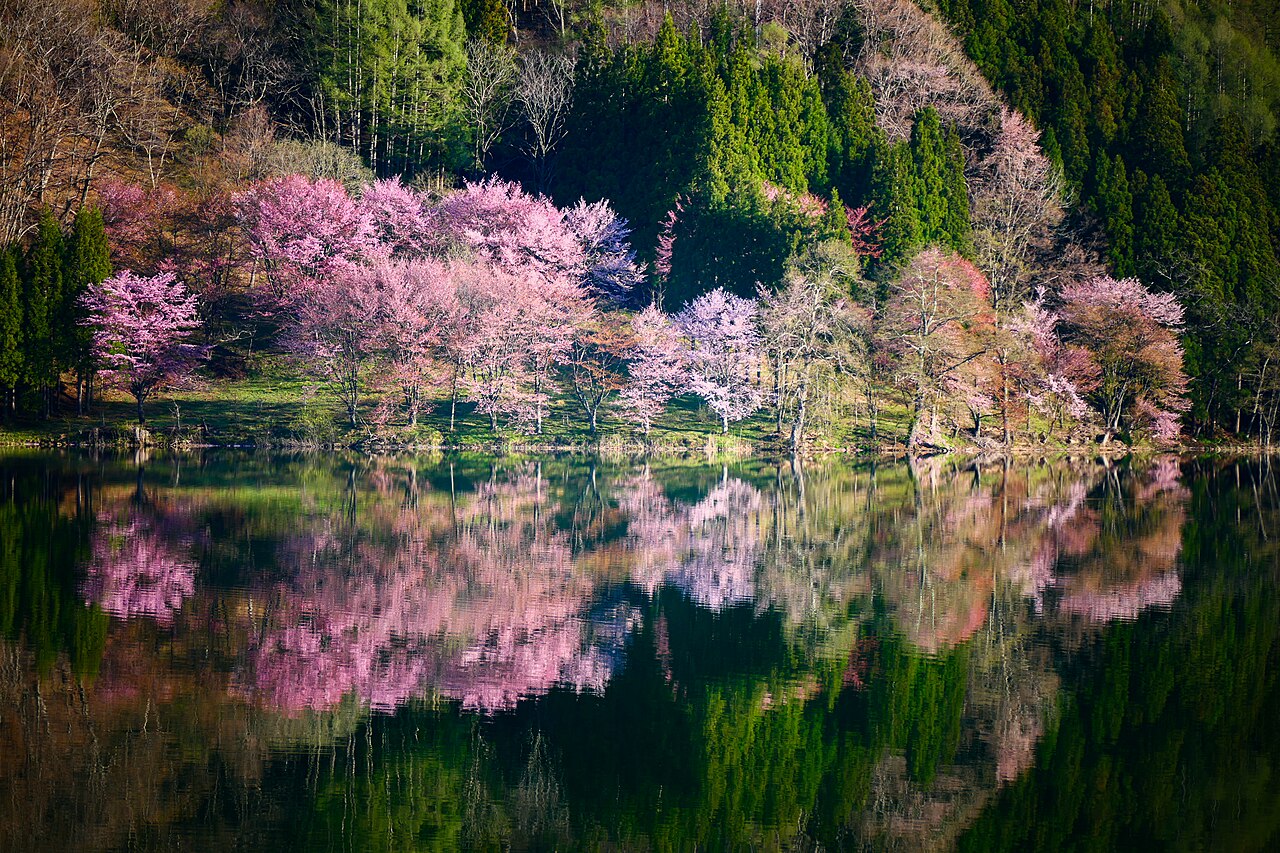
- Lake Nakatsuna (near Hakuba) — late-blooming cherries (around May 1-10) with the Japanese Alps as the backdrop. This is the last-stop hanami on the prefectural calendar.
Late spring: the nanohana fields
After the cherries come the nanohana (菜の花, rapeseed/canola) — the bright yellow fields that take over Nagano’s northern valley floor through Golden Week (April 29 – May 5). The signature site is the Iiyama Nanohana Park (飯山菜の花公園) in Iiyama city, about 40 km north of Nagano City. Thirteen hectares of yellow flowers peak in the first week of May, coinciding with the annual Iiyama Nanohana Matsuri — food stalls, live music, and the iconic photograph of the yellow fields running down toward the Chikuma River.
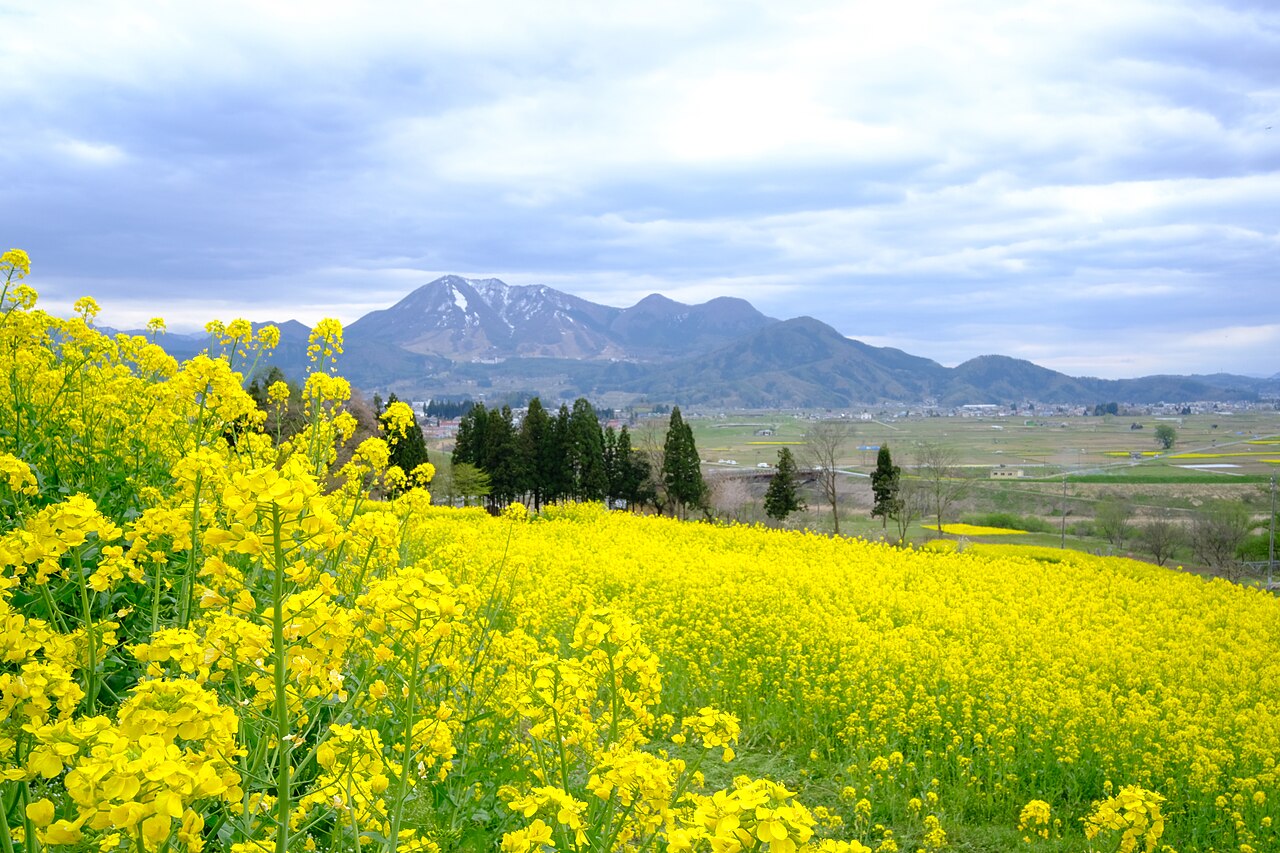
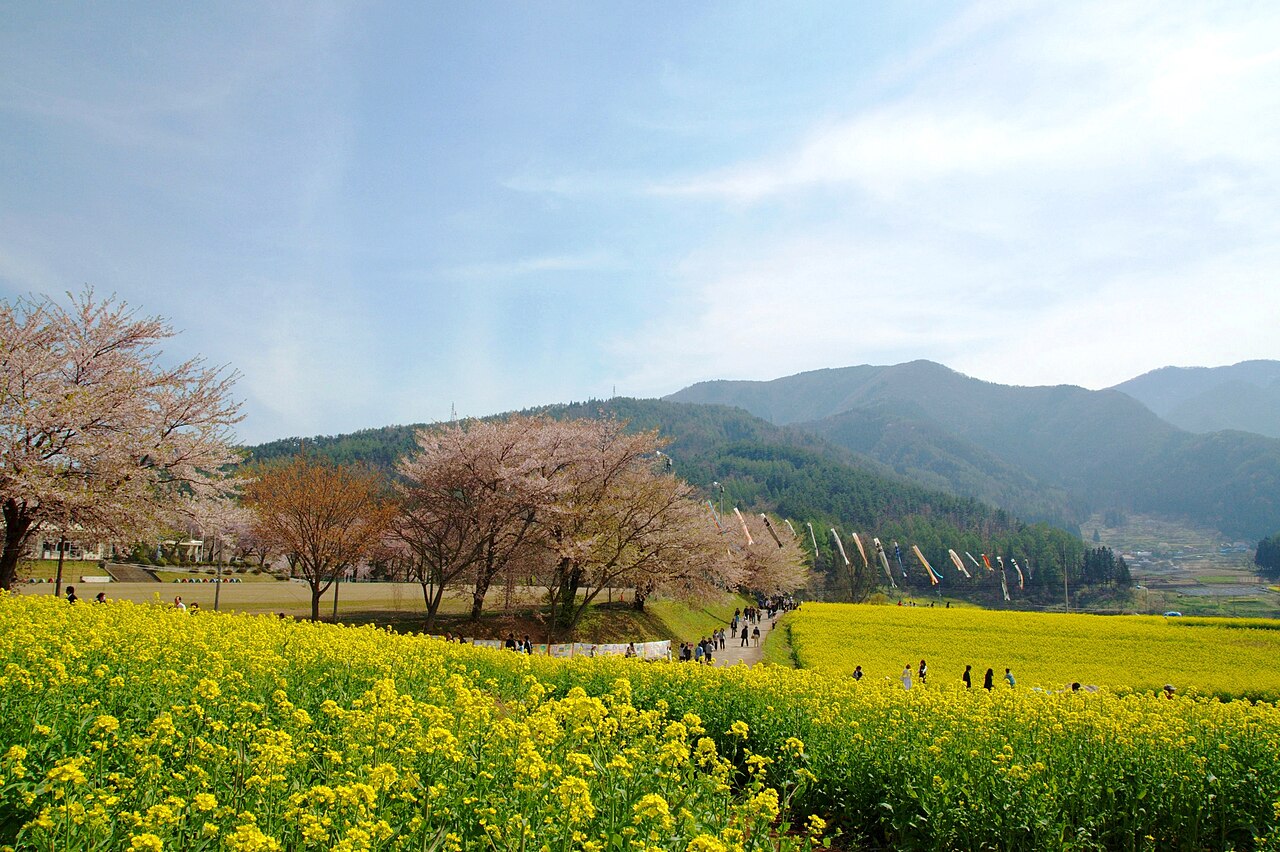
The Okususobana Nature Park’s Mizubasho Festival (mizubashō = Asian skunk cabbage) runs concurrently with the nanohana season, displaying large white flowers in marshland conditions. More botanical-garden in feel than the yellow Iiyama spread; worth pairing on the same day trip.
Summer: the high-altitude meadows and festivals
By late June the altitude advantage kicks in. While the lowlands start to swelter, Nagano’s mountain plateaus (1,000-2,500m) stay cool and their alpine flora explodes. The two key summer destinations:
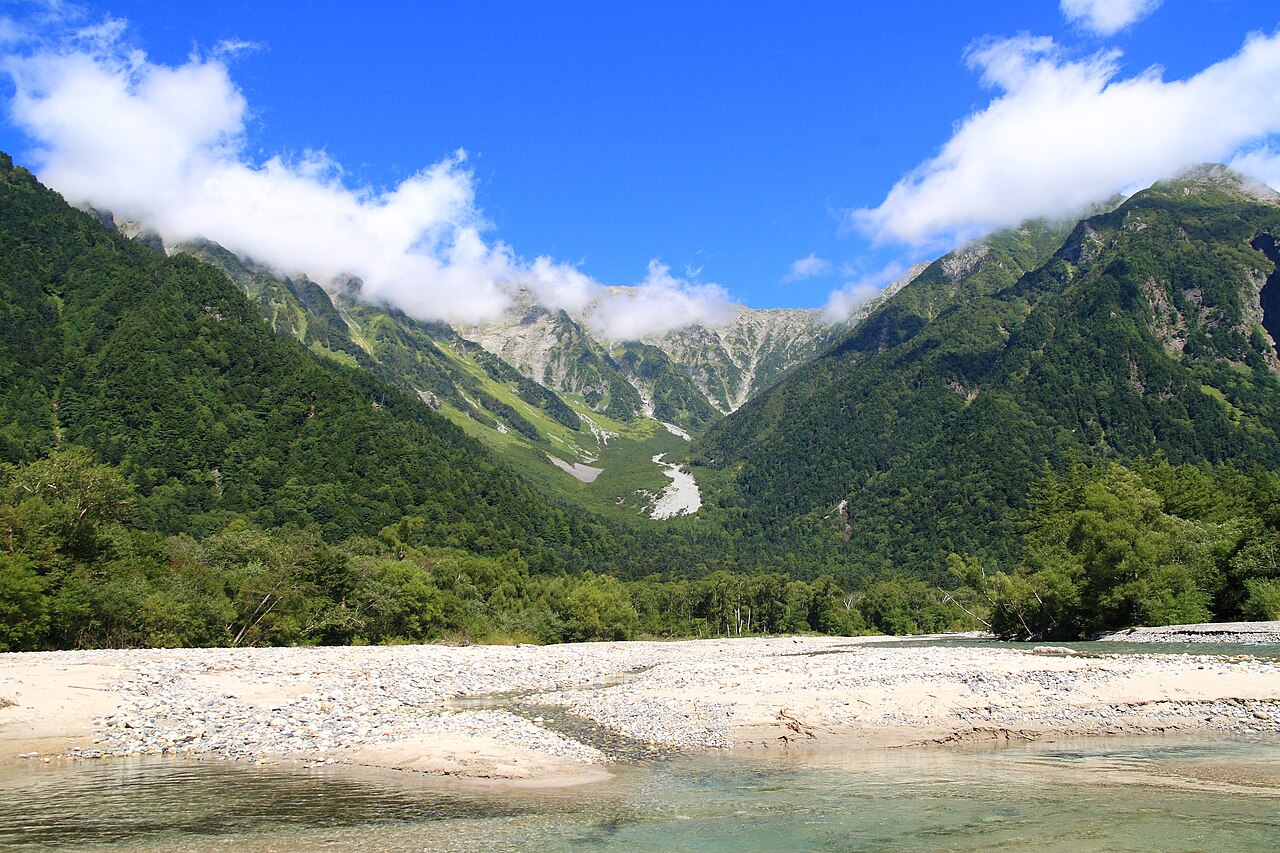
Kamikochi (上高地, Kamikōchi) — a 1,500m highland valley on the eastern edge of the Japanese Alps, about 90 minutes by bus from Matsumoto. The valley is closed to private cars (you take a shuttle bus from Sawando) and the 10km-long flat valley trail along the Azusa River is the most accessible alpine walk in Japan. Open April 17 to November 15 each year; closed entirely in winter.
Venus Line — the 76km scenic driving route that climbs from Chino through the Utsukushigahara plateau at 1,900m elevation. Four distinct alpine grassland zones and a dozen named viewpoints. Peak wildflower bloom mid-June to mid-August.
Summer festival-wise, Nagano runs a dense calendar of local matsuri across the prefecture:
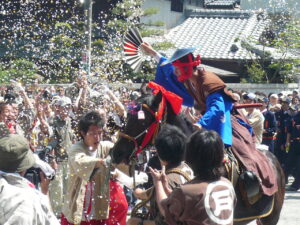
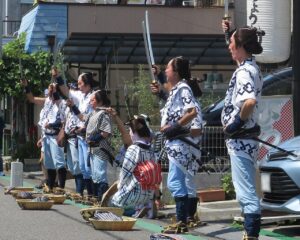
- Suwa Onbashira Festival (every 6 years; next in 2028) — a massive log-rolling festival where giant cedar logs are dragged down hillsides by teams of costumed men, sometimes with significant casualties. Not annual but culturally unmissable.
- Obon festivals across the prefecture — mid-August, every town has its own version. The Zenkoji obon illumination in Nagano City is especially good.
- Matsumoto Castle Taiko Festival — late July, massive drumming performance in the castle grounds. Free.
Autumn: the six-week colour cascade
Autumn is arguably Nagano’s best season, because the same elevation variation that spreads the spring bloom over six weeks spreads the autumn foliage over the same period. Early to mid-October: the high peaks in the Kamikochi area and the Tateyama-Kurobe Alpine Route turn yellow and red first — some of the most dramatic alpine autumn views in Asia. Late October: the mid-elevation valleys and the Kiso Road turn. Early to mid-November: the lowlands around Matsumoto and Nagano City hit peak colour, often coinciding with the last clear weather before winter.
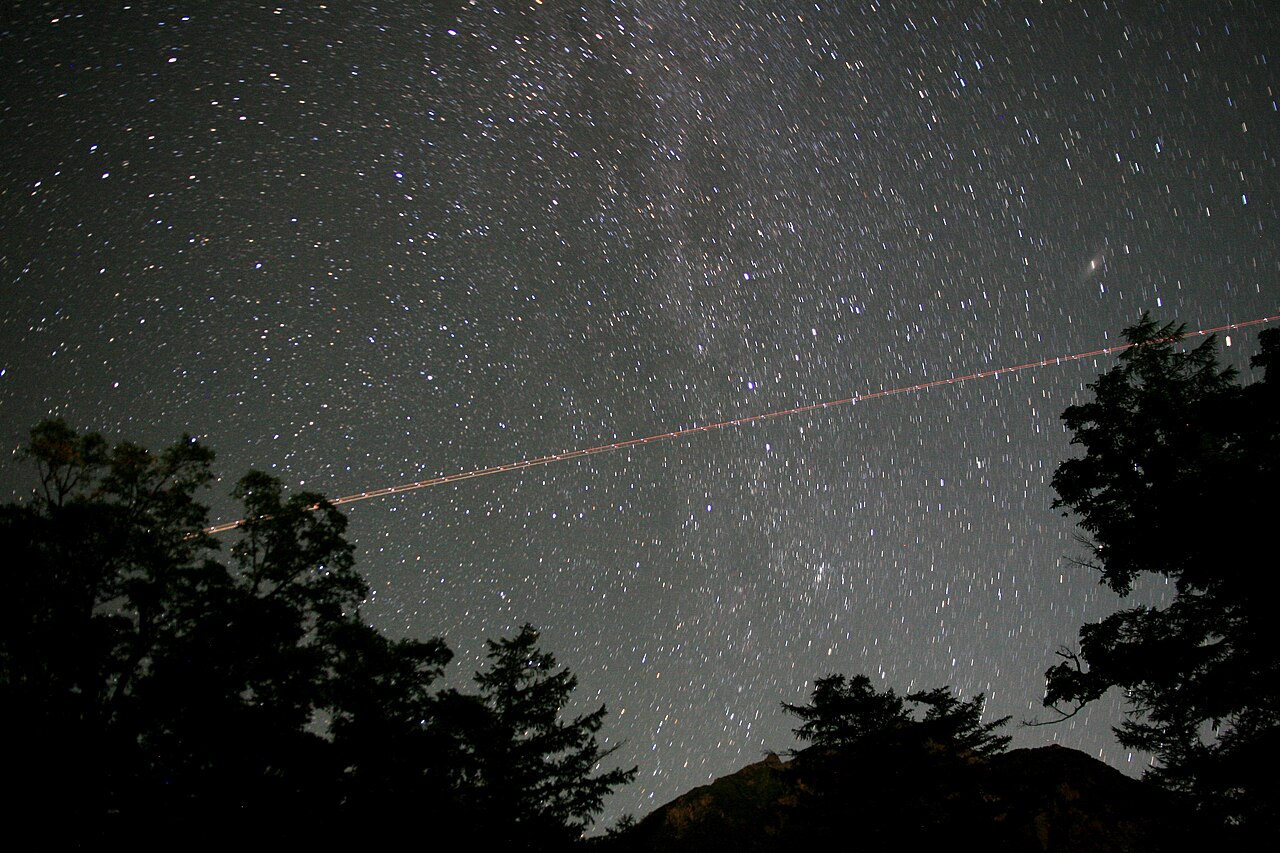
The Jigokudani larch forest near the Snow Monkey Park is a specific local highlight — the valley approach becomes a yellow tunnel in mid-October and is empty of the monkey-viewing crowds who haven’t arrived yet for winter.
Autumn also brings the harvest festivals. The most visitable is Shinano Oyaki Matsuri at Nagano City (usually the third weekend of October) — a food-focused festival celebrating the local oyaki (stuffed buckwheat dumpling) tradition.
Winter: snow monkeys, skiing, and Zenkoji in the snow
Nagano’s winter-tourism profile is dominated by two things: the Jigokudani Snow Monkey Park and the Hakuba/Nozawa ski areas. Both are genuine reasons to come.
Jigokudani Monkey Park (地獄谷野猿公苑, Jigokudani Yaen Kōen) — the site where wild Japanese macaques (Macaca fuscata) come down from the forested ridges to bathe in a natural hot spring, specifically during the December-March period when snow covers the surrounding slopes. The monkey-in-hot-spring photograph is a Japan-visit icon, and Jigokudani is the only place in the country where it can be taken reliably. Open year-round (the monkeys use the hot spring in summer too, but less frequently and without the snow backdrop). ¥800 entry, 45-minute walk from the Kanbayashi Onsen trailhead.
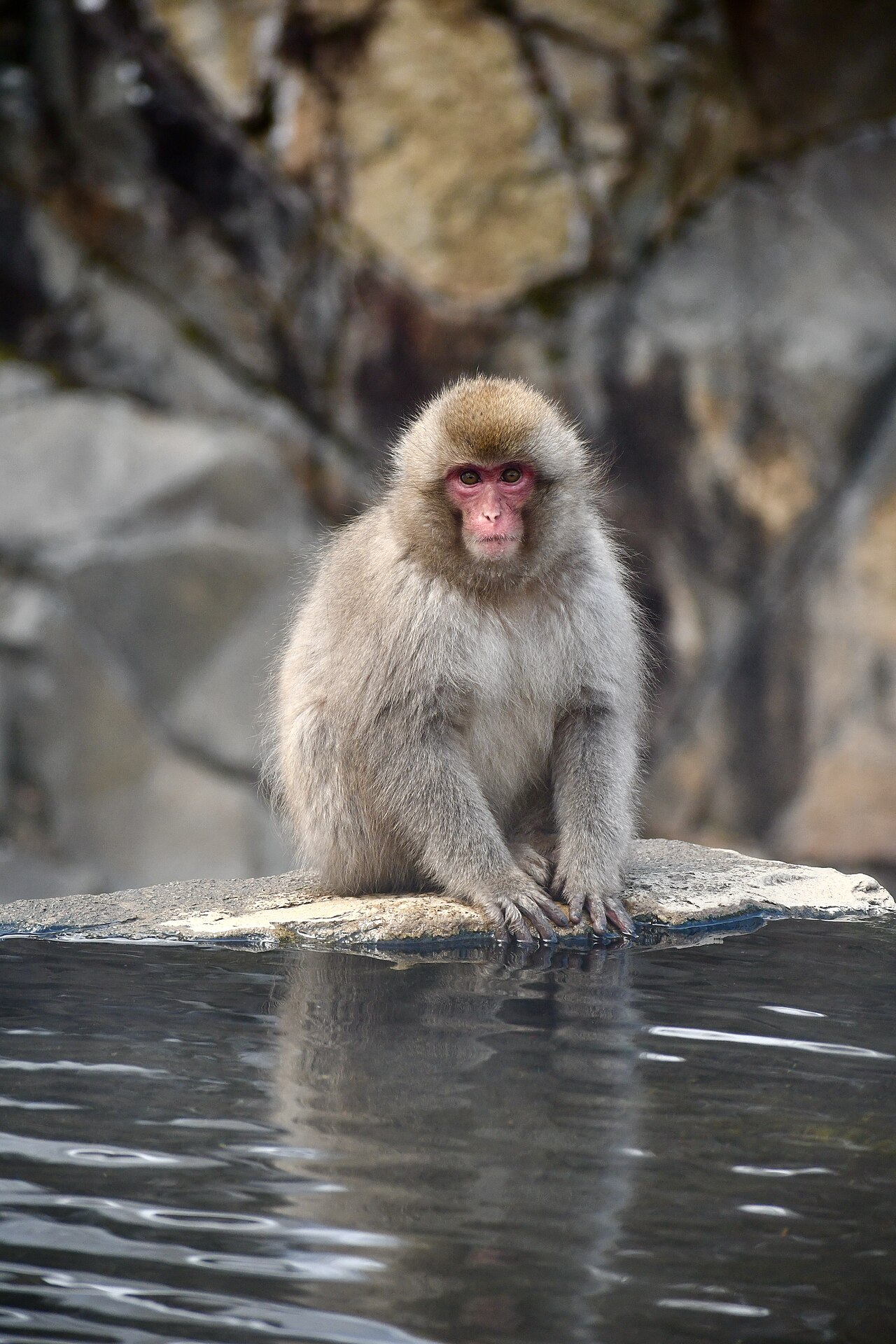
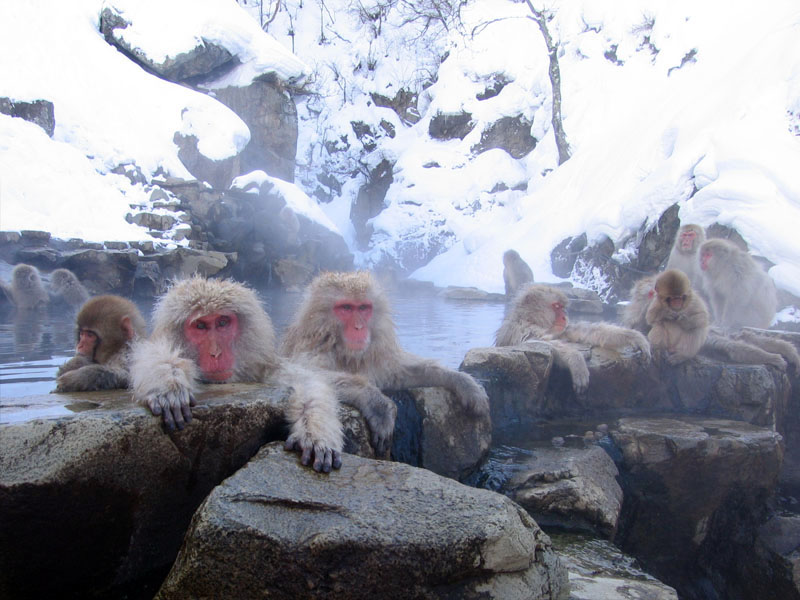
Hakuba and Nozawa Onsen are the two major ski areas — both hosts of 1998 Winter Olympics events and both still operational. Hakuba’s Happo-one is the most famous; Nozawa is the more traditional onsen-ski combination. Peak ski season is late December to mid-March; Japanese “powder paradise” hype genuinely applies here.
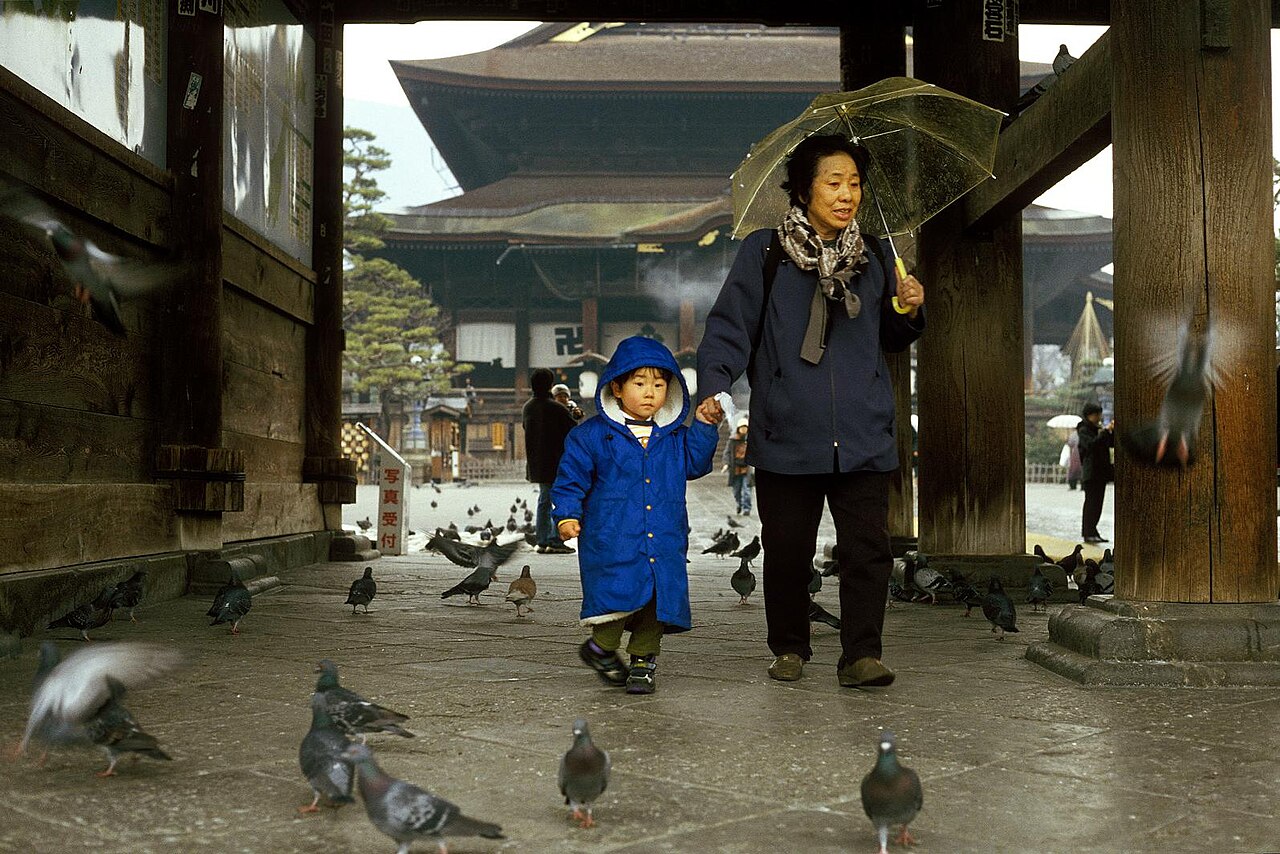
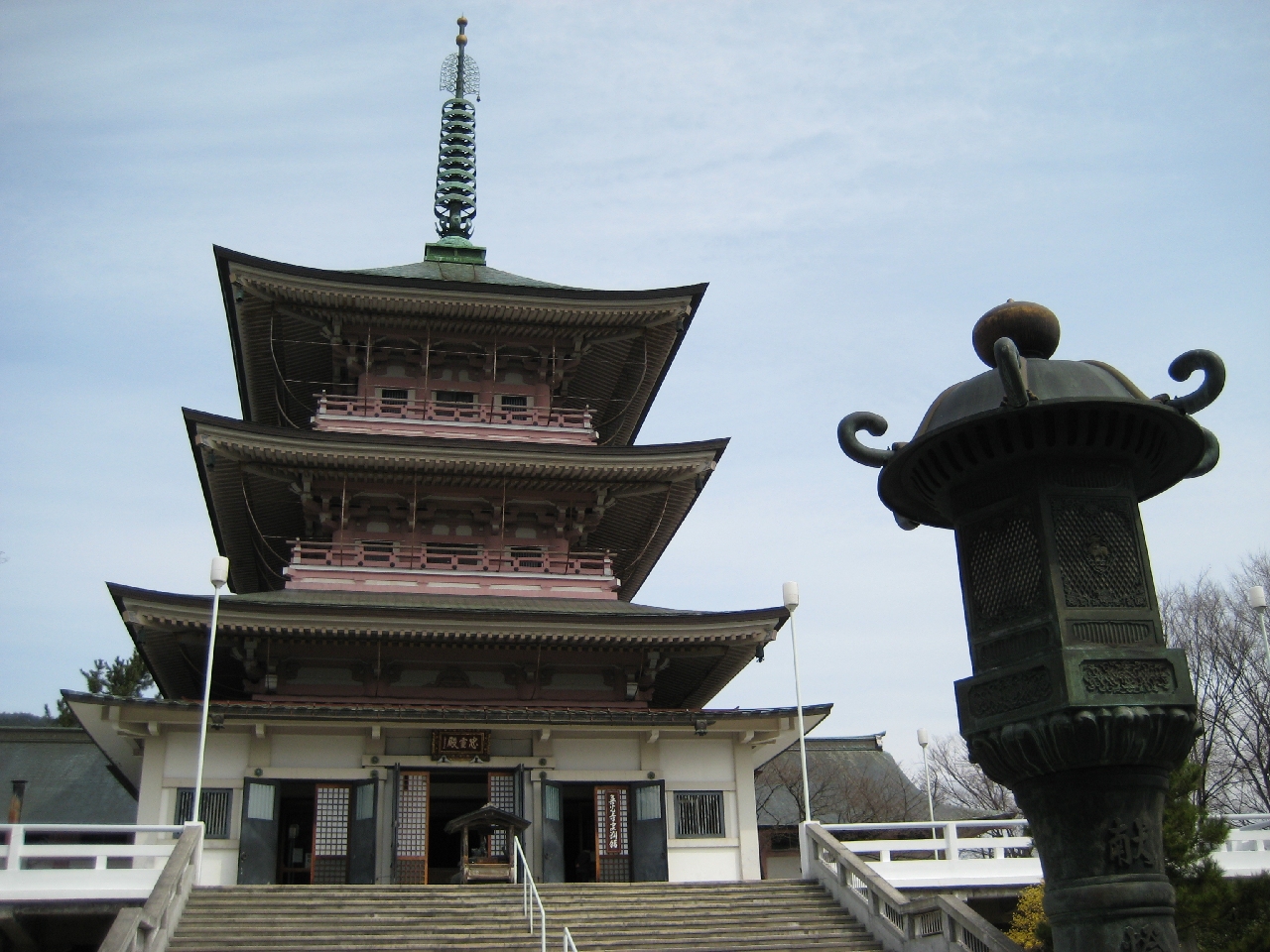
Zenkoji in the snow deserves its own visit. The 7th-century Buddhist temple in central Nagano City runs year-round, and the winter visit (covered in snow, lanterns lit at dusk for the evening service) is a different experience from the summer one.
The specific festival calendar (annual mains, by month)
For planning purposes, here are the fixed-date or predictable-date festivals through the year:
- January: Nozawa Dosojin Fire Festival (January 15, one of Japan’s Top 3 fire festivals — genuinely wild, includes a village-scale battle between villagers and fire-torch bearers over a wooden shrine structure).
- February: Sapporo-adjacent snow viewing; Nagano ski season peak.
- March: Snow monkeys still using the hot spring before the melt.
- Early April: Takato Castle cherry blossom peak.
- Late April-early May: Iiyama Nanohana, Zenkoji Hanakairo (May 3-5), late cherries near Hakuba.
- Mid-May-early June: Venus Line opens, alpine wildflower season begins.
- Late July: Matsumoto Castle Taiko Festival; Kamikochi peak summer tourism.
- Mid-August: Obon festivals across every town.
- Early October: Tateyama-Kurobe Alpine Route autumn colour peak.
- Mid-to-late October: Kamikochi autumn peak; Shinano Oyaki Matsuri in Nagano City.
- Late October-early November: Valley autumn colour peak; Matsumoto Castle autumn illumination.
- Mid-December: Ski season opens; snow monkey season begins.
- Late December-early January: Many ryokan in the Shibu and Nozawa onsen villages run their traditional kadomatsu (New Year pine gate decoration) for the first week of January — worth timing a winter stay around if you want a traditional New Year atmosphere beyond the Tokyo-centric one.
Combining seasons in a single trip
The single most frustrating thing about Nagano is that most visitors only ever come once, in one season, and miss the other three. If you can, plan a two-trip pattern: a winter trip (snow monkeys + skiing) and a warm-season trip (spring cherries + summer alpine). Within a single trip:
- 4-day spring combo: Nagano City (Zenkoji + day trip to Matsumoto Castle) → Takato Castle (overnight) → back via Iiyama for nanohana.
- 3-day winter combo: Yudanaka Onsen (base) → Jigokudani snow monkeys → day trip to Nozawa or Hakuba for a ski session.
- 5-day summer combo: Matsumoto (castle) → Kamikochi (2 nights, walking) → Venus Line drive → Lake Suwa onsen → back to Tokyo.
For the broader region, Nagano pairs with Tochigi’s Nikko on a Tokyo-anchored northern loop, with Shizuoka for the Central Japan prefecture circuit, or with Hokkaido for visitors doing the full north-Japan run.
Where to stay in each season
For spring/early summer: Matsumoto city has the broadest hotel inventory (¥7,500-15,000 business hotels near the station) and is the logical base for Takato, Matsumoto Castle, and Kamikochi day trips.
For high-summer / Kamikochi trips: stay in Kamikochi itself — the valley has about a dozen ryokan and mountain lodges (¥18,000-35,000 per person with half-board). Book 3+ months ahead for July-August.
For autumn and winter: Yudanaka Onsen or Shibu Onsen as a snow-monkey + ryokan base (¥15,000-30,000 per night half-board). Hakuba village for ski trips (huge international inventory, ¥10,000-50,000 range).
For year-round Nagano city base: Nagano Station area — Hotel Metropolitan Nagano (above the station) is the convenience option; a dozen business hotels within 10 minutes. Booking.com’s Nagano region listings cover all clusters.
Is Nagano worth a dedicated trip?
For repeat Japan visitors — absolutely yes, and specifically in multiple seasons. Nagano is the most rewarding “second-trip” prefecture in Japan for outdoor travellers: huge geographic range, dense cultural sites, four genuinely distinct seasonal programmes, and better value-for-time than the big tourism-centre prefectures.
For first-time visitors doing the Tokyo-Kyoto run — yes, for a 2-3 day side trip. The Nagano-City + Matsumoto + snow monkey combination is the most efficient out-of-Tokyo cultural weekend available, and both ends of it are 80-90 minutes from Tokyo by Shinkansen.
For sakura chasers specifically — yes, in early-to-mid April. Takato’s bloom window and Nagano’s general April cherry flowering is the best domestic alternative to Tokyo or Kyoto, with fewer crowds and distinctive local varieties.
For hikers — yes, in June to October. The alpine trails are among the best in Asia.
FAQ
What’s the single best month to visit Nagano?
Depends on priority. Mid-April if you want cherries plus some lingering ski; late July to early August if you want alpine wildflowers and no snow; early to mid-October if you want autumn colours at altitude; January if you want snow monkeys and powder skiing. There’s no “wrong” month, but the season determines the trip completely.
Is the Takato Castle cherry blossom really worth the detour?
If you’re already in Matsumoto or Nagano, yes — 90 minutes away by car. If you’re based in Tokyo, it’s a full day; worthwhile but intense. The Takato-kohigan-zakura variety is specifically different from the somei-yoshino you’ll have seen elsewhere, and that difference (deeper pink, longer bloom) justifies the trip for cherry-blossom purists.
Do I need a car to see Nagano’s flowers?
Helpful but not essential. Takato and Iiyama are reachable by bus from Matsumoto and Nagano respectively; Kamikochi is specifically no-car-allowed and uses a bus shuttle system. For the Venus Line, yes — that one genuinely needs a car or a packaged tour.
Is Jigokudani crowded in winter?
Yes, genuinely so. Peak days (January weekends) can see 3,000+ visitors to a small viewing platform. Weekdays are substantially better; early morning (8am-10am) has the fewest crowds because most tour buses arrive mid-morning. The monkey experience is memorable regardless, but for photography purposes, the weekday mornings are the move.
What’s the relationship between Nagano and the Japanese Alps?
The “Japanese Alps” is an umbrella term for three mountain ranges — the Hida, Kiso, and Akaishi ranges — all of which are substantially in Nagano Prefecture. So most of what’s called “Japanese Alps tourism” happens within Nagano’s boundaries. The name came from the Meiji-era British mountaineer Walter Weston, who saw the resemblance.
Can I combine Nagano with the Tateyama-Kurobe Alpine Route?
Yes — the Alpine Route is a cross-mountain infrastructure trip that crosses from Nagano’s Omachi to Toyama Prefecture. It’s open April 15 to November 30 and includes the famous 20-metre “snow walls” in April-May. A full traverse takes 8-10 hours; the Nagano side entry is 45 minutes from Shinano-Omachi Station.
When do the snow monkeys actually use the hot spring?
Most reliably December-March when snow covers their forest territory and the hot spring is warmer than the surroundings. They still bathe occasionally in other seasons but less frequently and without the snow context. If the snow-monkey photograph is your goal, plan for January or February.


.jpg)
.jpg)


