
Shizuoka Prefecture has the most generous spring calendar in central Honshu. It runs from the first pink buds on the Izu Peninsula in early February — a full seven weeks before Tokyo’s bloom — through the somei-yoshino wave that sweeps up from Shimoda to Fujinomiya in late March, and finishes with a month of costume parades and Edo-period reenactments that carry the season into mid-May. If your Japan itinerary is timed for the cherry blossoms but your dates don’t quite match Tokyo’s three-day peak window, Shizuoka is the prefecture that gives you options. Late blooms or early blooms, famous crowds or village-quiet temples, Perry-era history with fireworks, feudal parades in Tokugawa armour — the spring circuit here is deep, and unfairly lightly covered in English.
In This Article
- Quick facts
- Kawazu Sakura Matsuri (February-March): the early cherry blossom
- Inatori Hina Tsurushi Matsuri (January-March): the hanging doll festival
- Shizuoka Matsuri (early April): Tokugawa pageantry at Sunpu Castle
- Fujinomiya Fuji Sakura Festival (April): shrine sakura under the volcano
- Oigawa Railway Cherry Blossom Runs (April)
- Shimoda Black Ship Festival (mid-May)
- Where to stay during the spring festival run
- Combining the spring festivals into one trip
- Are Shizuoka’s spring festivals worth timing a trip around?
- FAQ
- When exactly do the Kawazu cherries bloom?
- Do the festivals have English information?
- Is the Shimoda Black Ship Festival tied to specific dates?
- Can I see a U.S. Navy ship at the Black Ship Festival?
- Is Shizuoka Matsuri crowded?
- What do the local food stalls sell?
- Are the Oigawa Railway blossom services family-friendly?
This guide walks the spring Shizuoka festival year in rough chronological order — from the February Kawazu cherries down on Izu, through the March-April Shizuoka Matsuri at Sunpu Castle, to the May Black Ship Festival at Shimoda, with the summer festival calendar picking up in July. Plus a few smaller spring events worth diverting for.
Quick facts
- Season: Early February (Kawazu-zakura) → late May (Black Ship Festival). Peak spring-matsuri window is late March to early April.
- Main festivals covered: Kawazu Sakura Matsuri (Feb-Mar), Inatori Hina Tsurushi Matsuri (Jan-Mar), Shizuoka Matsuri at Sunpu Castle (early April), Fujinomiya Fuji Sakura Festival (early April), Oigawa Railway blossom runs (April), Shimoda Black Ship Festival (mid-May).
- Getting there: Most events are accessible from Tokyo in under 2 hours via the Tokaido Shinkansen (Shizuoka Station) or the Izukyuko Line (Izu Peninsula). Shimoda requires either the Odoriko limited express from Tokyo or a Shinkansen + Izukyu combo.
- Cost: Almost every festival is free to attend. Paid extras are train fares, food, and occasional reserved-seat pricing at the larger parades.
- When to go: For Kawazu cherries, mid-February to early March. For the main somei-yoshino bloom, the first week of April. For early Showa-era reenactment festivals, mid-May in Shimoda.
- Official sites: Hello Shizuoka, Shizuoka Matsuri, Kawazu tourism.
Kawazu Sakura Matsuri (February-March): the early cherry blossom
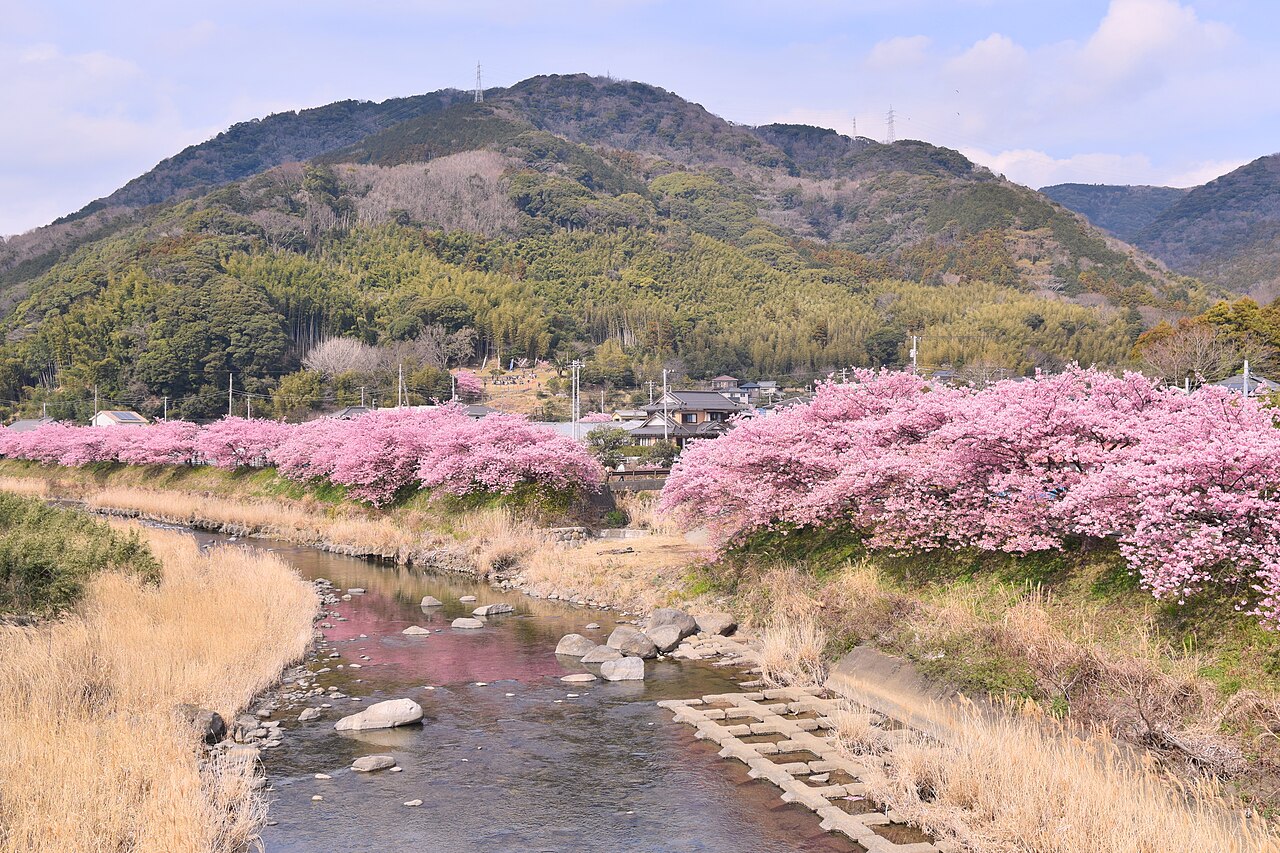
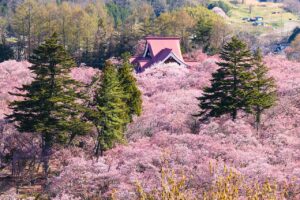
This is the festival that starts Shizuoka’s spring. The Kawazu-zakura (河津桜) is an early-blooming cherry variety discovered in the town of Kawazu in 1955 — a naturally-occurring cross between the oshima-zakura and kanhi-zakura that produces larger, hot-pink flowers which appear four to six weeks before the standard somei-yoshino. There are now around 8,000 Kawazu-zakura trees in Kawazu town alone, planted along a 4km stretch of the Kawazu River, and the annual Kawazu Sakura Matsuri (河津桜まつり, “Kawazu Cherry Blossom Festival”) runs from February 10 to March 10 each year.
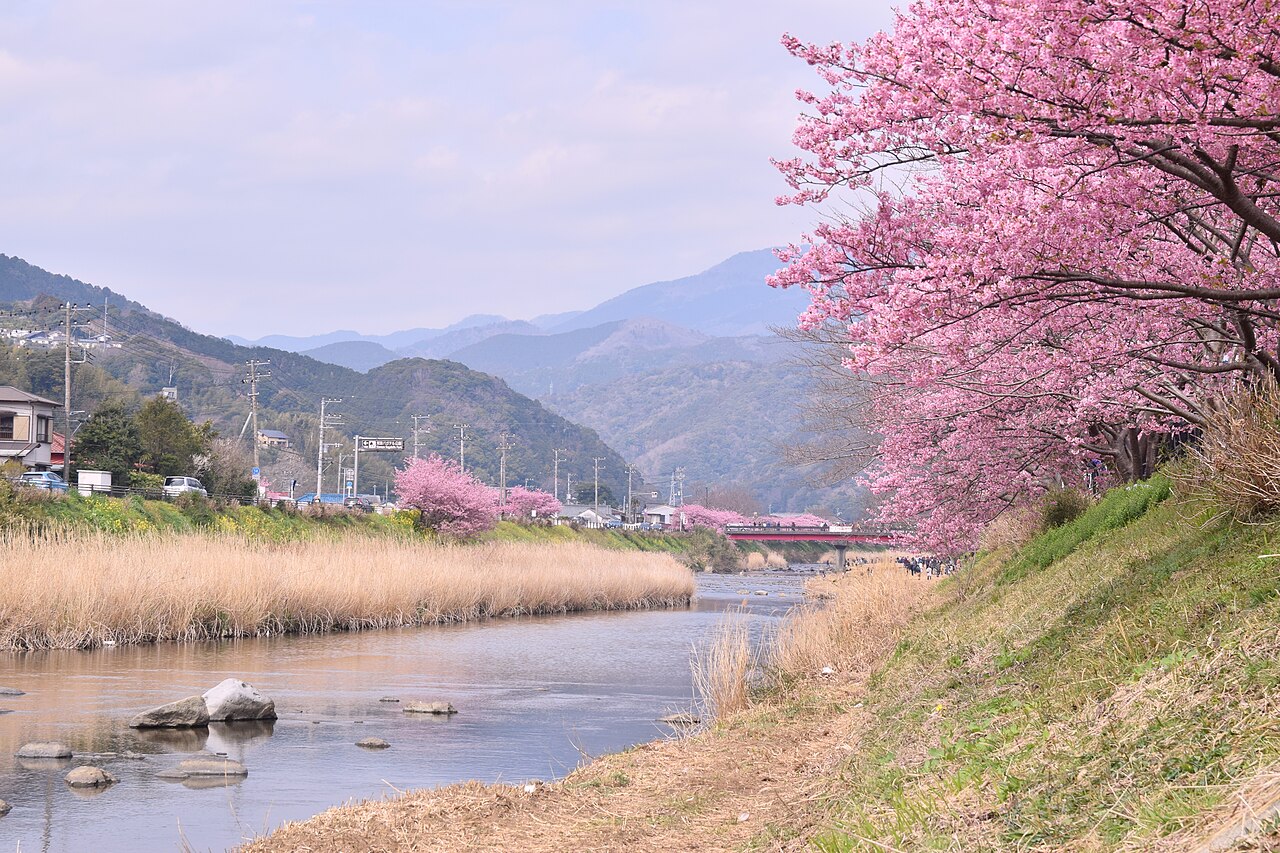
What you get in practical terms: cherry trees in full bloom along a dead-flat riverside path, evening illumination from 18:00 to 21:00, food stalls selling grilled squid and Shizuoka oranges and local sakura-mochi, and the steady hum of a festival that’s been running since 1991. Access is Izukyu Line from Atami to Kawazu Station — from central Tokyo, 2 hours 30 minutes via the Odoriko limited express, about ¥5,500 each way.
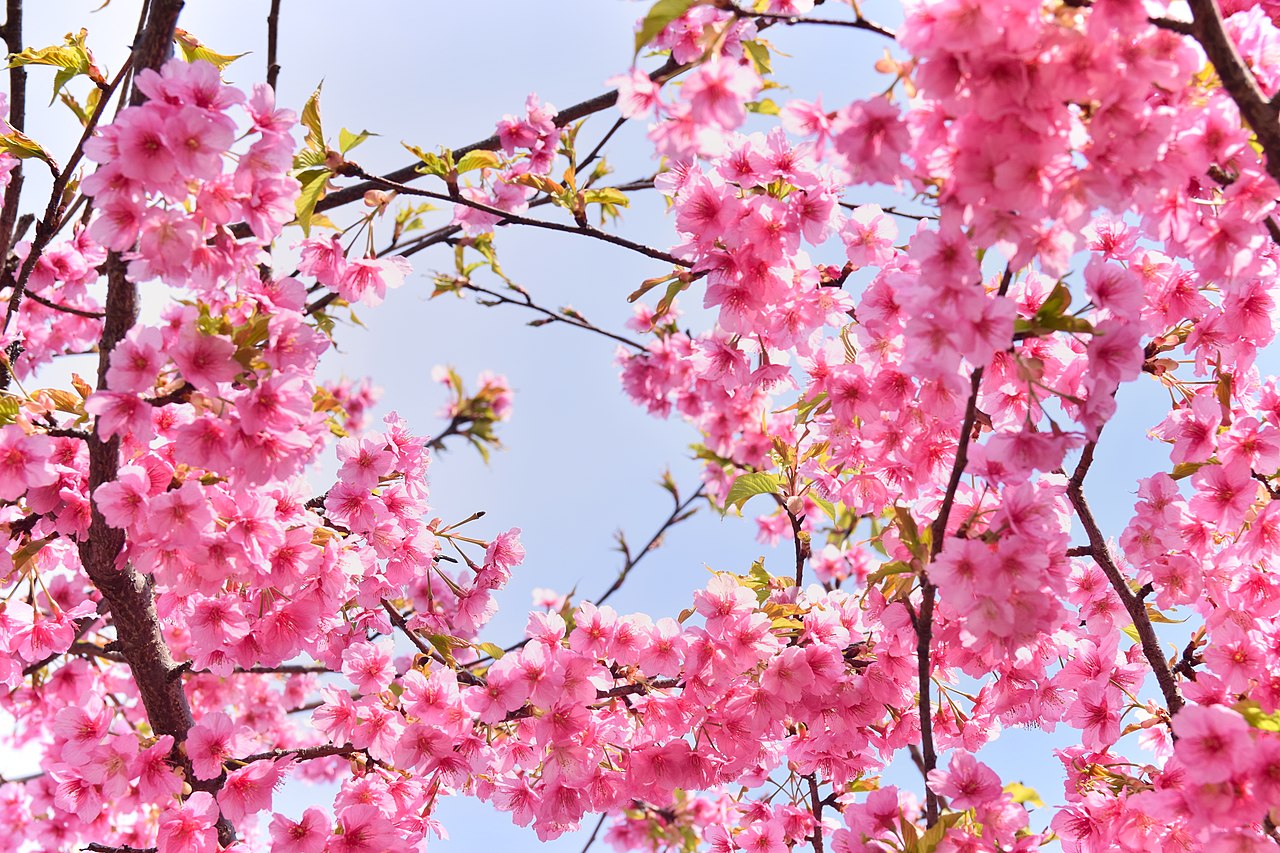
Peak bloom varies year-to-year — earliest recorded peak was February 15 (warm 2020 winter), latest was March 8 (cold 2017). The tourism office publishes a daily bloom report from mid-January and its accuracy is high. For photography, aim for mid-week mornings before 9am. The weekends during peak bloom are genuinely busy — 300,000 visitors per weekend on the peak Saturdays, and the 4km riverside path becomes a slow shuffle.
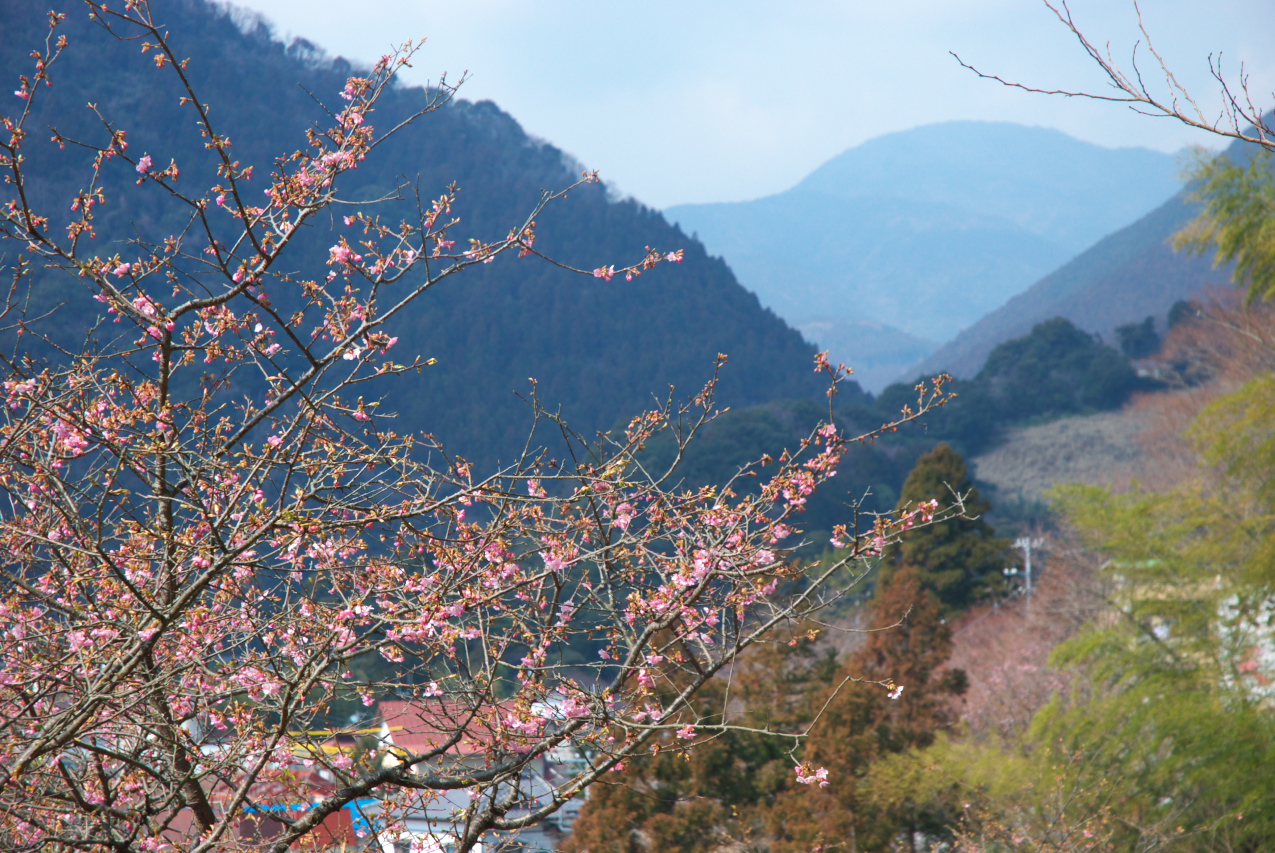
Combine it with: a 10-minute bus ride up to Kawazu Nanadaru, the seven-waterfall hiking trail that runs through the Amagi Pass, for a completely different Izu landscape an hour’s walk from the cherries. Or stay overnight in Kawazu itself — a handful of small onsen ryokan at the south end of town run spring-season packages.
Inatori Hina Tsurushi Matsuri (January-March): the hanging doll festival
Overlapping with the Kawazu cherries but on a different part of the Izu Peninsula, the Inatori Hina Tsurushi Matsuri (稲取雛のつるし飾りまつり) is a small but genuinely unique festival. The village of Inatori on the east coast of Izu is the birthplace of hina tsurushi (雛のつるし, “hanging Hinamatsuri ornaments”) — a local craft tradition where handmade fabric figurines are hung in clusters of 55 from string frames above a household’s main room, as a prayer for a daughter’s healthy growth. The village is one of only three places in Japan where this specific craft survives, and the festival runs from January 20 to March 31, timed to the Girls’ Day calendar.
Several venues across Inatori display hundreds of these tsurushi arrangements — the main showcase is Bunkakoryu Center, with smaller displays in the town’s temples and community halls. Each figurine has a specific meaning: a turtle for longevity, a crane for faithfulness, a sparrow for wealth, a chrysanthemum for perseverance. Craftspeople run demonstrations most afternoons.
Access: Izukyu Line from Atami or Ito to Izu-Inatori Station (1 hour from Atami). Festival entry ¥300 at the main venue. The town is a genuine working fishing village with a reasonable cluster of small ryokan — worth an overnight if you’re combining Inatori with Kawazu as a two-day Izu trip.
Shizuoka Matsuri (early April): Tokugawa pageantry at Sunpu Castle
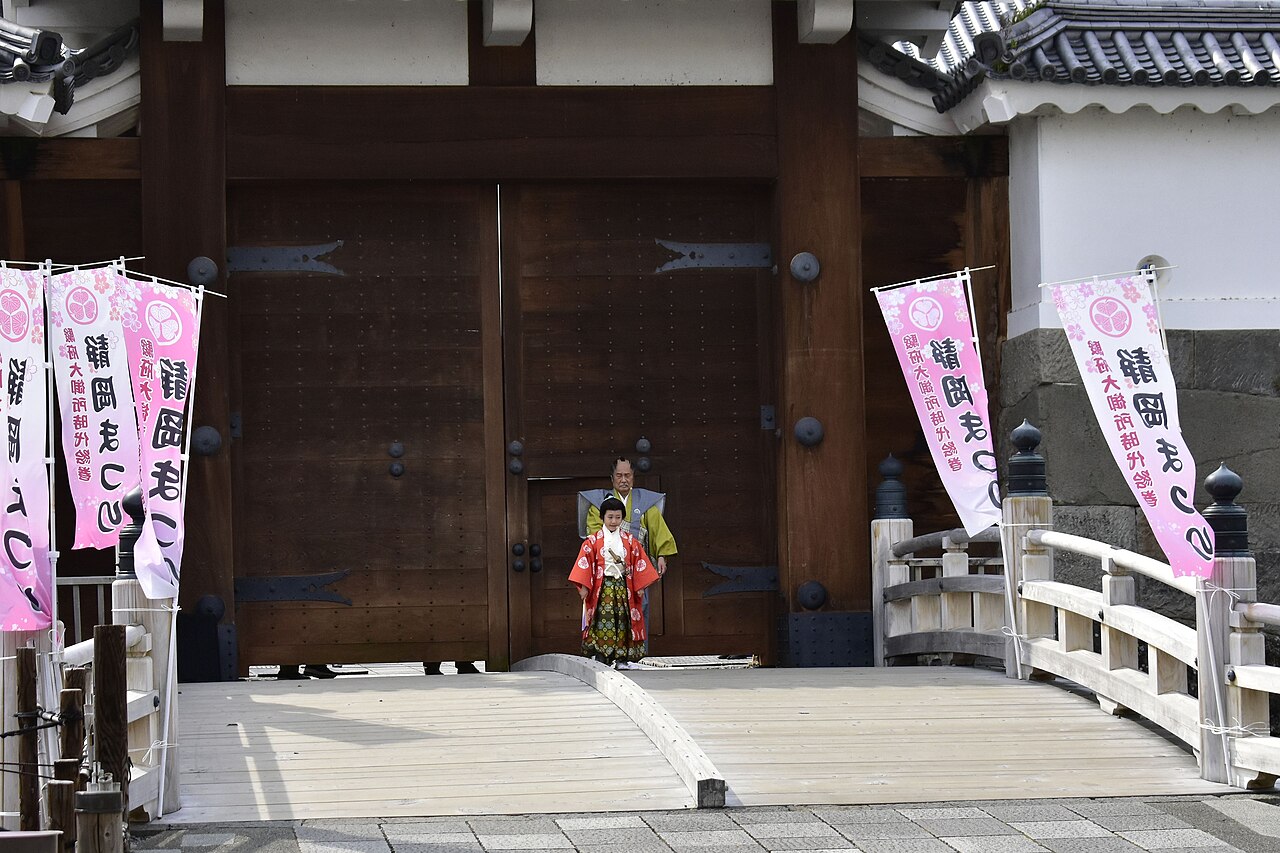
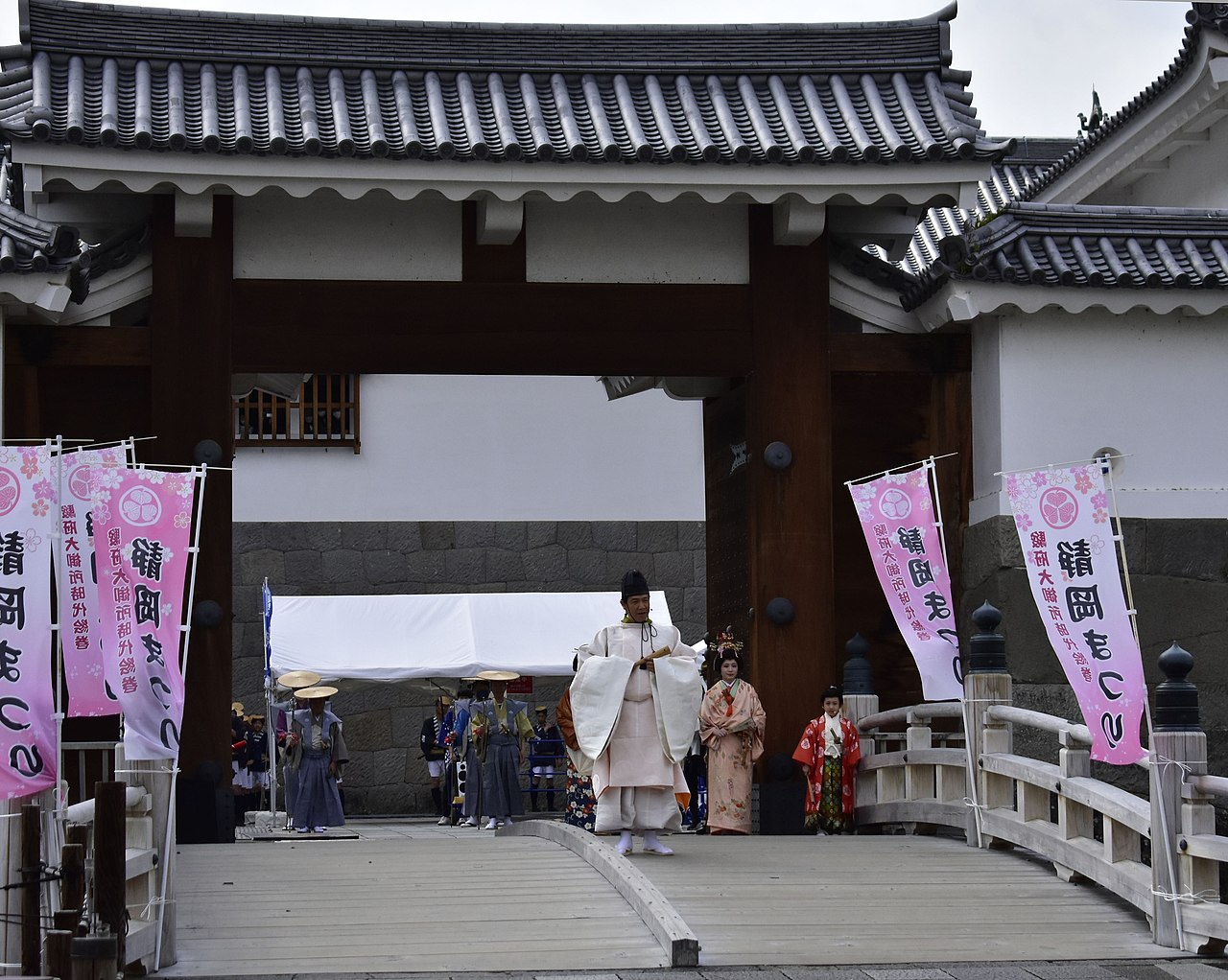
The headline event of central Shizuoka’s spring is the Shizuoka Matsuri (静岡まつり), held every year on the first Friday-Sunday of April at Sunpu Castle and the surrounding downtown district. The festival’s origin story is specifically Tokugawa: the first shogun, Tokugawa Ieyasu (徳川家康), spent his retirement in Sunpu (modern Shizuoka City) from 1607 until his death in 1616, and legend has it that he used to take his senior retainers to view the castle’s cherry blossoms as a spring ritual. The modern festival, running since 1957, re-enacts this in the main event called the O-Gosho Hanami Gyoretsu (大御所花見行列, “Retired Shogun Cherry-Viewing Procession”).
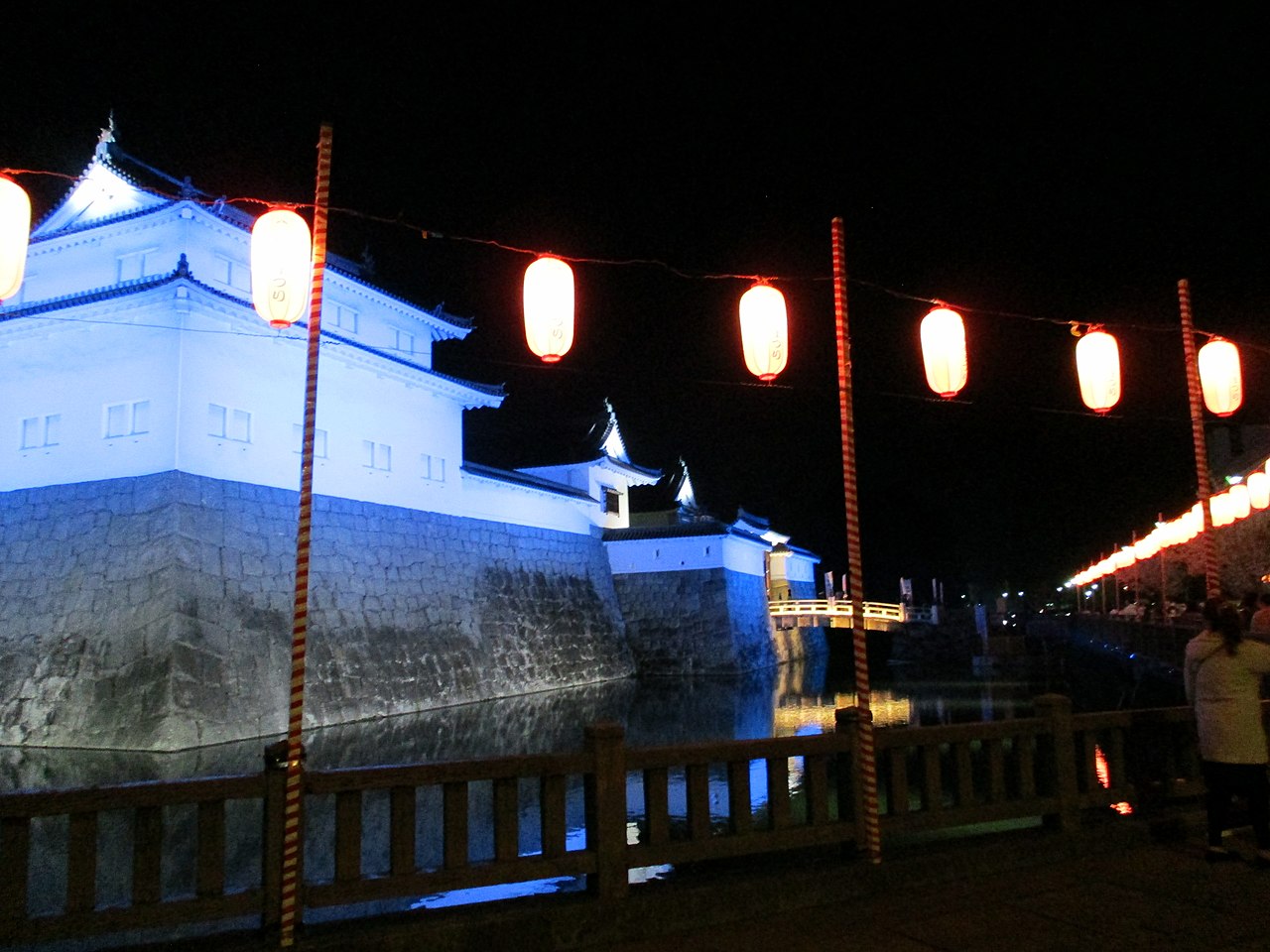
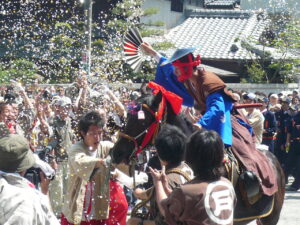
The Saturday afternoon procession is the set-piece you want to see. About 1,500 costumed performers in reconstructed early-Edo armour and kimono march from Sunpu Castle through the downtown shopping streets — a Tokugawa Ieyasu impersonator (typically a cast actor or local celebrity), his wife Ohime, senior retainers, samurai, court attendants, drummers, flag-bearers, and the “cherry blossom girls” in pink kimono scattering petals as they walk. It’s about two hours of procession and it’s free to watch; grabs a position along Gofuku-cho street or at the main Aoba-dori intersection about 45 minutes before the scheduled start.
Around the procession, the festival also has: a three-day food village with about 80 stalls in Sunpu Park; evening performance stages hosting taiko drumming and traditional dance; a yosakoi dance competition on Saturday; a cosplay photo-meetup on Sunday (this has become a genuine subculture tradition — several thousand cosplayers turn up); and the Night Hanami illumination, where Sunpu Park’s 300+ cherry trees are lit up between 18:00 and 21:00.
Access: JR Shizuoka Station on the Tokaido Shinkansen (Hikari stops), 1 hour from Tokyo, ¥6,020. Sunpu Park is a 15-minute walk from the north exit, or a 4-minute bus ride. Free entry to the park and to all procession viewing.
Fujinomiya Fuji Sakura Festival (April): shrine sakura under the volcano
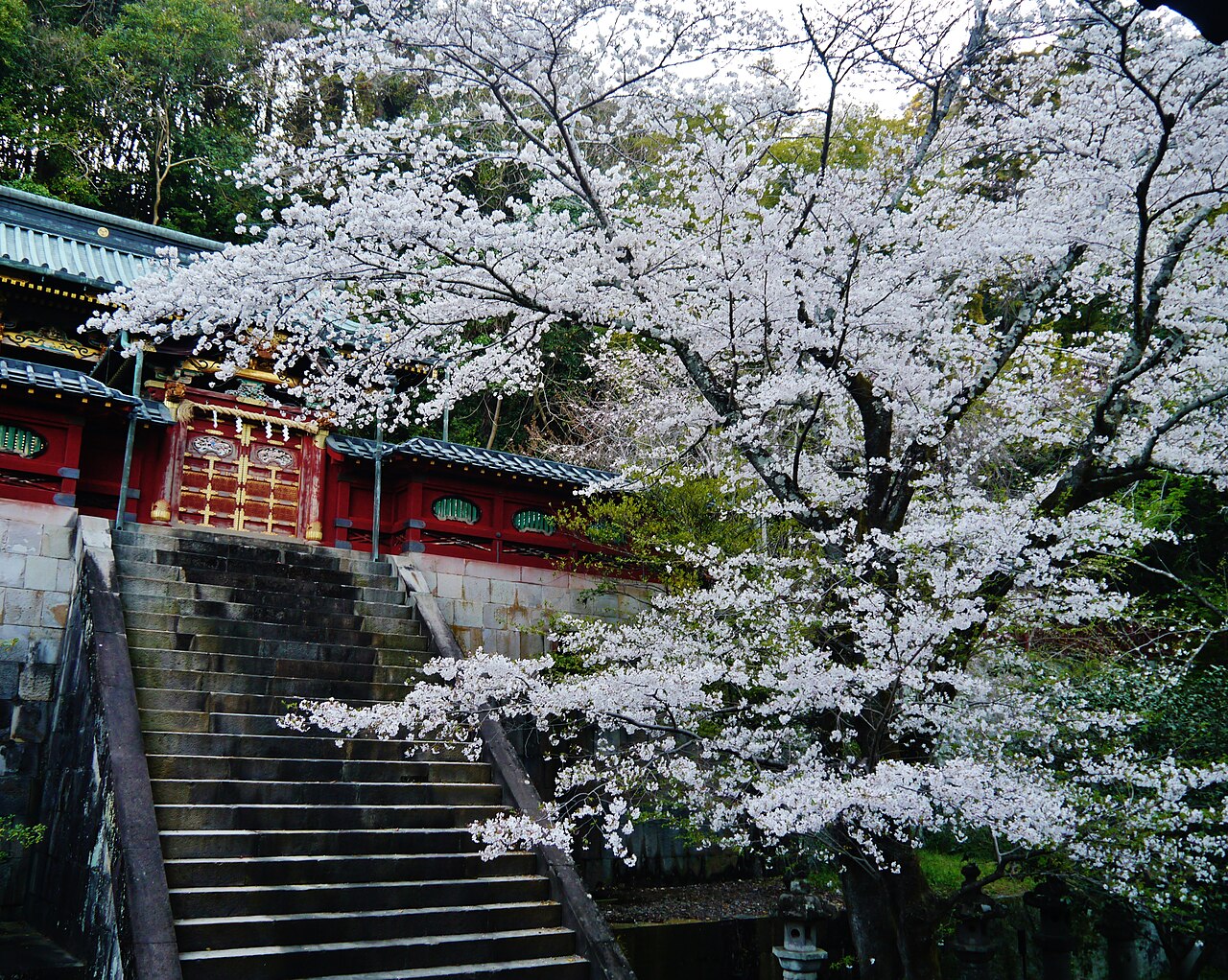
Further west, at the foot of Mount Fuji, the Fujinomiya Fuji Sakura Festival (富士宮桜まつり) runs at Fujisan Hongu Sengen Taisha (富士山本宮浅間大社) — the head shrine of the 1,300 Sengen shrines dedicated to the Mt Fuji deity. About 500 cherry trees line the precinct, including a distinctive collection of Fujizakura (a rare variant with smaller flowers that’s specifically endemic to the Mt Fuji volcanic slopes). Peak bloom is usually the first week of April, a few days later than Tokyo but at the same moment as the wider Shizuoka bloom.
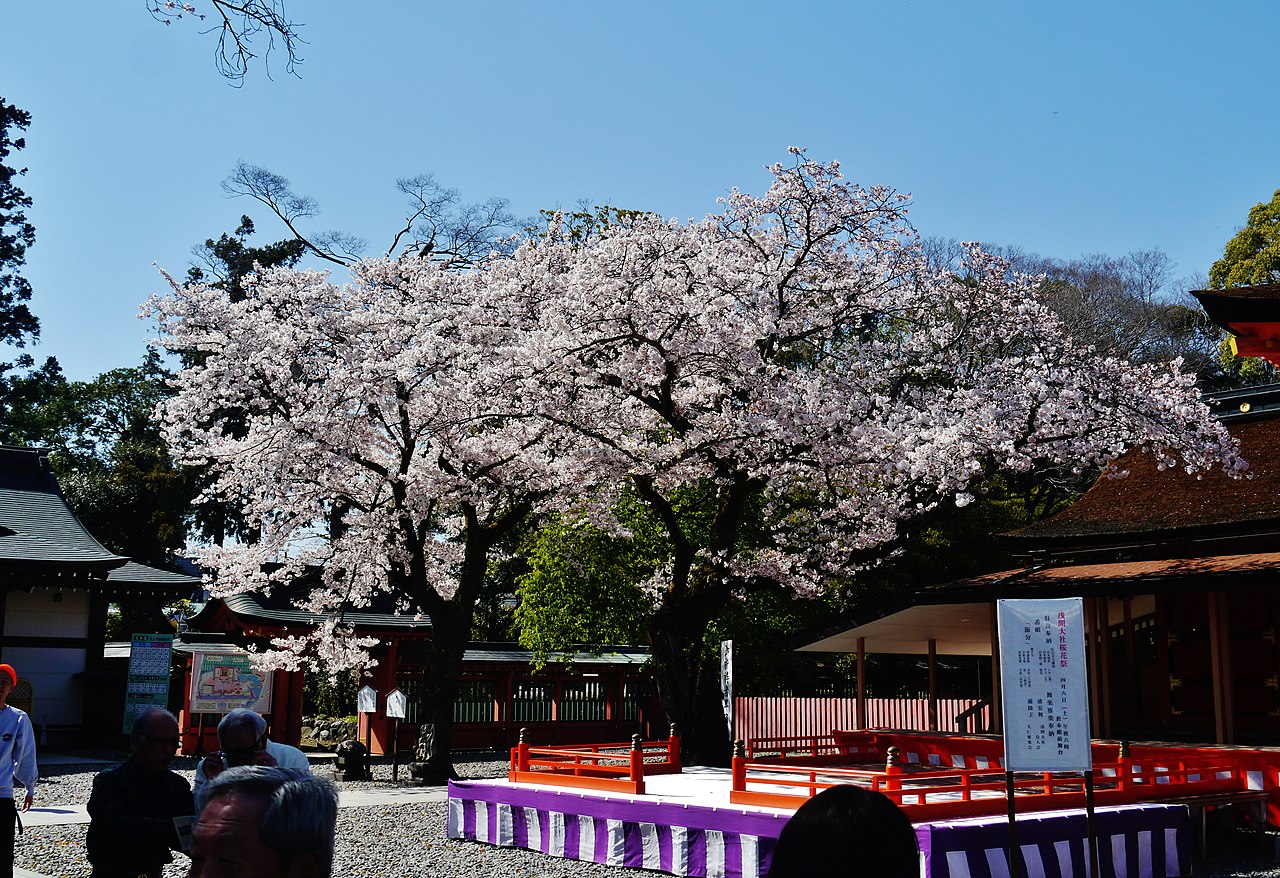
The festival is low-key compared with Shizuoka City’s — food stalls in the outer precinct, local-brewed sake tastings in the treasury hall, a regional taiko performance on Sunday afternoon. What it has that Shizuoka Matsuri doesn’t is the direct backdrop of Mount Fuji itself, which on clear days looms directly behind the shrine’s main torii. The resulting photograph — red torii, pink blossoms, white-capped Fuji — is one of the postcard-famous Shizuoka images.
A similar, smaller event runs concurrently at Shizuoka Sengen Jinja in central Shizuoka City (two shrines in the same city, both dedicated to the Fuji deity — confusingly similar naming). That shrine is within walking distance of Sunpu Castle and is worth a detour if you’re doing the Shizuoka Matsuri on the Sunday morning, since the crowds are thinner than at the main Sunpu park.
Oigawa Railway Cherry Blossom Runs (April)
If you’ve got an extra half-day and an interest in steam trains, the Oigawa Railway (大井川鐵道) runs a spring schedule of scheduled steam services during cherry blossom season. The line goes from Shin-Kanaya up the Oi River valley to Senzu, with a 90-minute steam-pulled service (using a rotating fleet of coal-fired locomotives from the 1920s-40s) that passes through genuine Shizuoka countryside just as the cherries bloom.
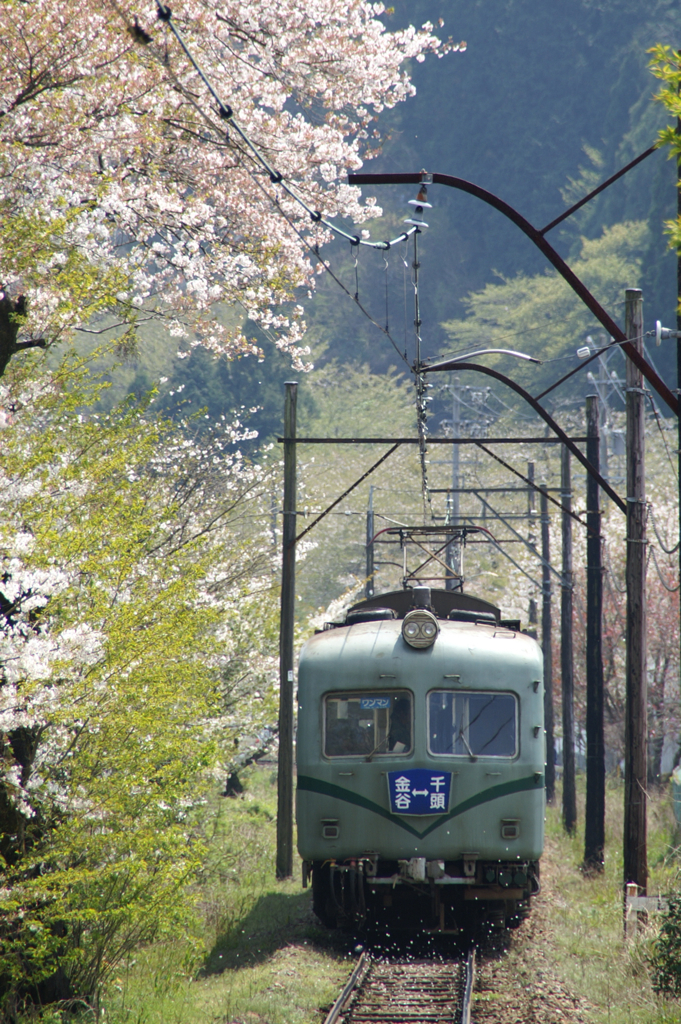
The blossom-season specials usually run weekdays and weekends through April, with tickets released on the 1st of the preceding month. Advance booking is essential — the train sells out within 72 hours of release. ¥5,000 round-trip including the steam surcharge, plus ¥1,700 Shinkansen transfer from Shizuoka Station. The railway’s English booking page has the schedule.
Shimoda Black Ship Festival (mid-May)
The spring calendar closes with one of the more unusual festivals in Japan. Shimoda (下田), at the southern tip of the Izu Peninsula, was the port where Commodore Matthew Perry’s U.S. Navy squadron landed in 1854 and effectively ended Japan’s 220-year self-imposed isolation. The Shimoda Kurofune Matsuri (下田黒船祭, “Black Ship Festival”) has been run annually since 1934 as a joint Japan-U.S. commemoration — a festival that celebrates the specific moment Japan re-opened to the world.
The festival runs on the third Friday-Sunday of May each year. What happens:
- Friday: Opening ceremony at Shimoda Park followed by an evening fireworks display over the harbour.
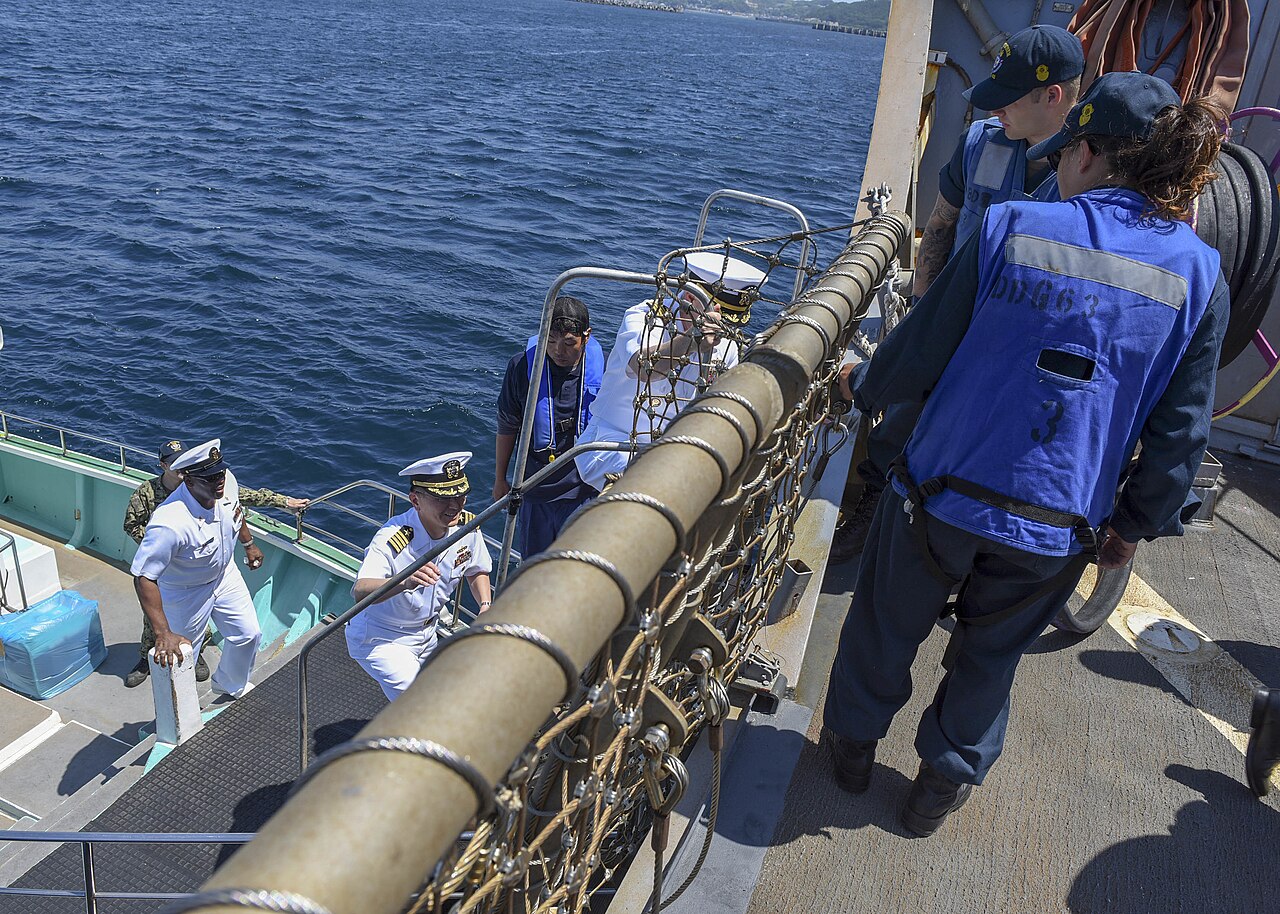
- Saturday: The main parade — a 3km procession from Ryosenji Temple (the building where the 1854 Treaty of Kanagawa was signed) through downtown Shimoda to Shimoda Park. The parade includes Perry’s landing re-enactment (a local high school student in the Perry role, Japanese shogunate officials in period costume, and U.S. Navy sailors from the visiting warships).
- Sunday: A memorial ceremony at the Perry Monument, a Japan-U.S. naval band concert, and open-ship tours if a U.S. Navy destroyer is in port.
Access: Shimoda is the southernmost station on the Izukyu Line — 2 hours 45 minutes from Tokyo on the direct Odoriko limited express, or 3 hours 30 minutes via Atami transfer. Festival entry is free throughout; reserved seating for the Saturday parade is ¥1,000 at several points. Hotel availability in Shimoda fills 2-3 months out for festival weekend — book early.
What makes the festival interesting beyond the spectacle is the historical weight. Shimoda was the first open port under the 1854 treaty; the U.S. consulate operated there from 1856 under Townsend Harris; the first American flag raised on Japanese soil is still preserved in the local Gyokusenji Temple. The festival programme includes a visit to both Ryosenji and Gyokusenji and most of the historical sites are accessible on the festival weekend at reduced or free entry.
Where to stay during the spring festival run
For the Kawazu cherries: stay in Kawazu town itself if you want to do evening illumination without the trek back to a bigger city. Small ryokan clusters at the south end of town run ¥12,000-25,000 per night including a light breakfast, and walking distance to the river. The better option for most travellers is Atami (60 minutes north by train) — more hotel choice, bigger range of restaurants, and the early morning trains into Kawazu are rarely packed.
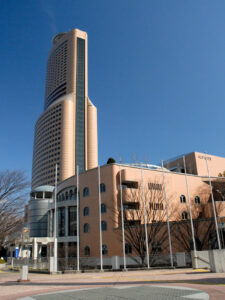
For the Shizuoka Matsuri: Shizuoka City itself has a full business-hotel cluster around Shizuoka Station (¥8,000-14,000 for a twin). The Hotel Associa Shizuoka, directly above the station, is the convenience choice; Dormy Inn Shizuoka is the quality-for-price pick.
For the Black Ship Festival: book Shimoda itself six weeks in advance. The central Shimoda cluster is mostly small ryokan and minshuku; the better hotels sit a 10-minute bus ride south along the coast near the hot-spring towns of Shirahama and Kisami. Backup base: Shimoda Prince Hotel at Shirahama Beach, 15 minutes from central Shimoda by bus.
Booking.com’s Shizuoka-region listings cover all three clusters with comparison pricing.
Combining the spring festivals into one trip
If you want to hit multiple spring events in a single Shizuoka trip, the timing works as follows:
- Mid-February: Kawazu (cherries, early) + Inatori (hina dolls, peak). 2-day Izu Peninsula trip.
- Early April: Shizuoka Matsuri (Friday-Sunday) + Fujinomiya Fuji Sakura + Oigawa Railway SL. 3-day central Shizuoka loop.
- Mid-May: Shimoda Black Ship Festival as a standalone weekend trip.
The calendar spacing makes it hard to combine everything in one trip unless you’re in Japan for a month. For a single-week window, the cleanest choice is early April (Shizuoka Matsuri, with day trips to either the Fujinomiya shrine or the Oigawa Railway). For photographers specifically chasing cherry blossoms, the February Kawazu window is unique in Japan — no other major spring sakura festival begins this early.
For the wider spring itinerary, Shizuoka also pairs naturally with Hakone’s plum blossoms earlier in the season, with Nagano’s later-April sakura if you want to extend the blossom window, or with the Mie coast’s Ise Shrine for a temple-heavy add-on.
Are Shizuoka’s spring festivals worth timing a trip around?
For Kawazu specifically — yes, if you’re a cherry-blossom purist and your dates don’t line up with Tokyo’s April peak, this is the alternative worth rearranging your itinerary for. The early February bloom is unique in the Japanese cherry calendar, and the photographs you get in Kawazu are different from everywhere else.
For Shizuoka Matsuri — yes, if you enjoy costume-parade pageantry and you want to see a specifically Tokugawa-themed event without the crowds of Kyoto’s Jidai Matsuri. It’s a medium-sized festival, genuinely accessible, and the Shinkansen stop puts it within easy reach of Tokyo as a day trip.
For the Black Ship Festival — yes, if you’re interested in Meiji-era Japan history or the U.S.-Japan naval tradition specifically. It’s a small festival but a deeply unusual one, and Shimoda itself rewards the travel time.
For a first Japan trip with Kyoto already booked — skip these and rely on Kyoto’s own cherry season. Shizuoka’s spring festivals are the second-trip circuit for travellers who want to get past the top-tier tourism sites.
FAQ
When exactly do the Kawazu cherries bloom?
Peak bloom is typically February 20-25, but the official festival runs February 10 – March 10 to cover the full viewing window. The Kawazu tourism office updates a daily bloom report from mid-January onward — check before committing travel dates. A cold year can push peak to early March; a warm year to mid-February.
Do the festivals have English information?
Mixed. Kawazu and Shimoda have reasonable English materials and signage (the former attracts enough international visitors, the latter has the U.S. Navy angle). The Shizuoka Matsuri is less internationally-oriented — the main procession makes sense visually without translation but the side events are mostly Japanese-only. Google Translate’s camera function handles the food-stall signage fine.
Is the Shimoda Black Ship Festival tied to specific dates?
Yes — always the third Friday-Sunday of May. In 2026, that’s May 15-17; in 2027, May 21-23. The U.S. Seventh Fleet ship visits are scheduled around these specific dates.
Can I see a U.S. Navy ship at the Black Ship Festival?
Most years, yes. The Seventh Fleet has sent a destroyer (usually an Arleigh Burke-class) to Shimoda for the festival almost every year since the 1950s. In recent years the ship has been open for public tours on the Sunday, but scheduling depends on operational availability and any given year can be cancelled. Check the Shimoda city tourism site for that year’s programme.
Is Shizuoka Matsuri crowded?
The parade route gets busy — expect 3-4 deep crowds along the main downtown streets during the Saturday procession. Sunpu Park itself spreads out enough to stay manageable. The cosplay day Sunday has its own specific crowd density around the festival grounds. Mornings, including the Friday opening night, are substantially quieter than Saturday afternoon.
What do the local food stalls sell?
Shizuoka specialities: sakura-mochi (pink rice cake with cherry-leaf wrapper), shizuoka oden (the local dark-broth version, a Shizuoka-specific variation), grilled sakura-ebi (tiny pink shrimp unique to Shizuoka’s Suruga Bay), and fresh wasabi from the Izu Peninsula’s cold-stream farms. All three are priced around ¥300-800 per item at festival stalls — cheaper than at restaurants, and genuinely worth trying.
Are the Oigawa Railway blossom services family-friendly?
Yes — the steam trains run at 30-40 km/h, seats are comfortable, and the station stops let you get out and photograph the train from the platform. Children under 6 ride free. Book at least three weeks out for any weekend service in April.
.jpg)
.jpg)
.jpg)
.jpg)


