
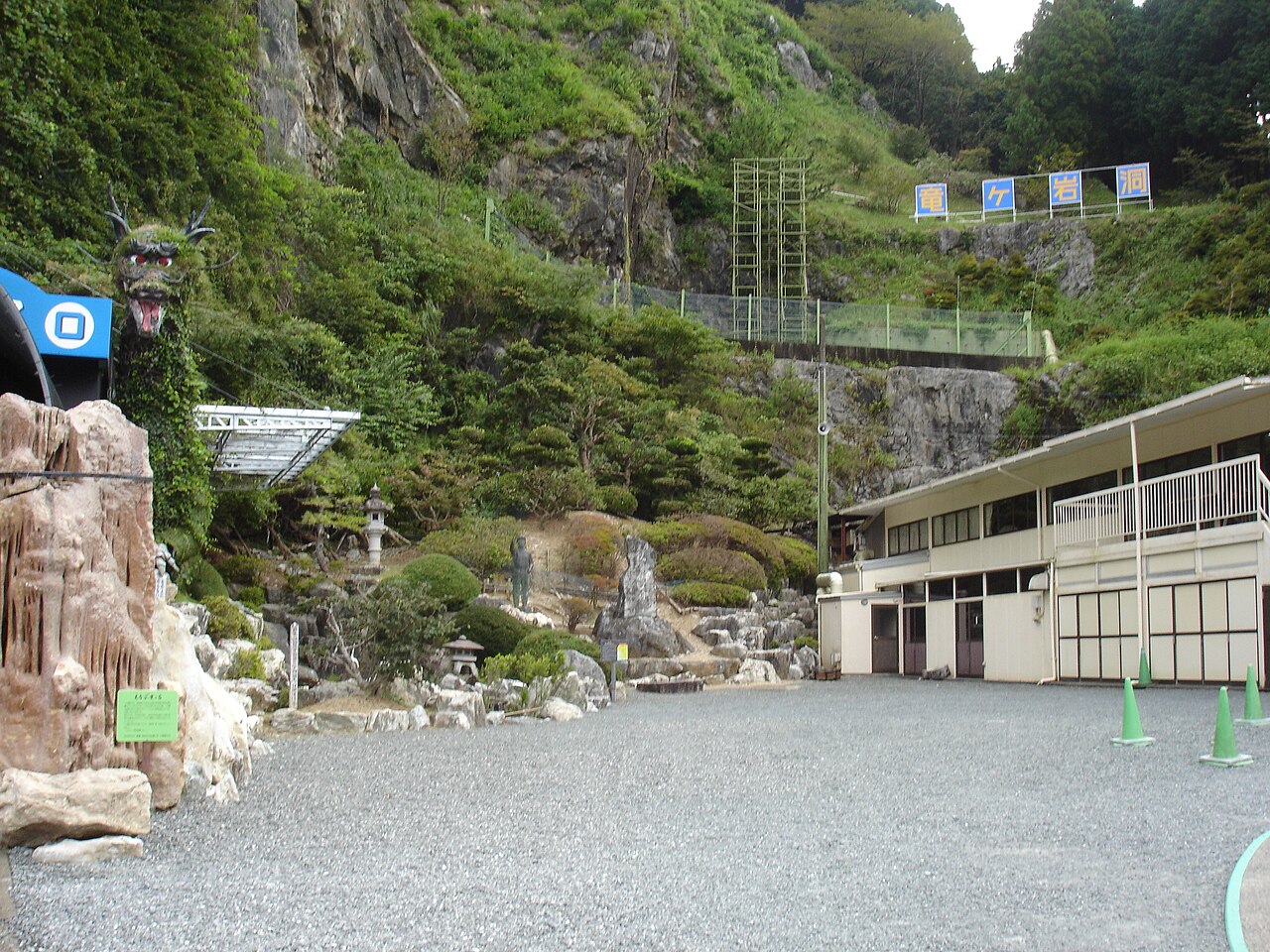
Forty kilometres north of Hamamatsu, on the southern flank of Mt Ryugashi in the Inasa district, sits a limestone cavern that nobody knew about until a caver found an air-leak in a limestone outcrop in the mid-1970s. Ryugashi-do (竜ヶ岩洞, Ryūgashidō, “dragon-rock cave”) opened to the public in 1983 and has been operating as an easygoing show-cave ever since. 400 metres of walkable passage, 18°C year-round air temperature, stalactites, an underground waterfall, a population of small bats that get their own evening feeding show, and a small museum at the entrance that’s the first dedicated cave-themed museum in Japan. It’s one of the better-preserved and better-lit limestone caves in central Honshu, and it sits a ninety-minute train-plus-bus trip from the Tokaido Shinkansen line.
In This Article
- Quick facts
- What the cave actually is
- The bat show (yes, there’s a bat show)
- The museum (the part most visitors skip)
- Getting there from Hamamatsu
- Combining with the rest of the Hamamatsu region
- Where to stay
- Is Ryugashi-do worth the trip?
- FAQ
- How cold is it inside the cave?
- Is the cave accessible for wheelchairs or strollers?
- Can I take photos?
- Is there food at the cavern?
- Are there other caves to visit nearby?
- How does it compare to Akiyoshi-do?
- What’s the story of the cave’s discovery?
The cavern is part of the Okuhamana limestone belt — an older-than-the-Jurassic block of uplifted marine limestone that runs across northern Shizuoka Prefecture and into Aichi. Most of the belt is still buried forest; Ryugashi-do is the one accessible window into what’s underneath. Geology-wise it’s 250 million years old (Permian limestone), which makes it one of the oldest exposed limestones in the region.
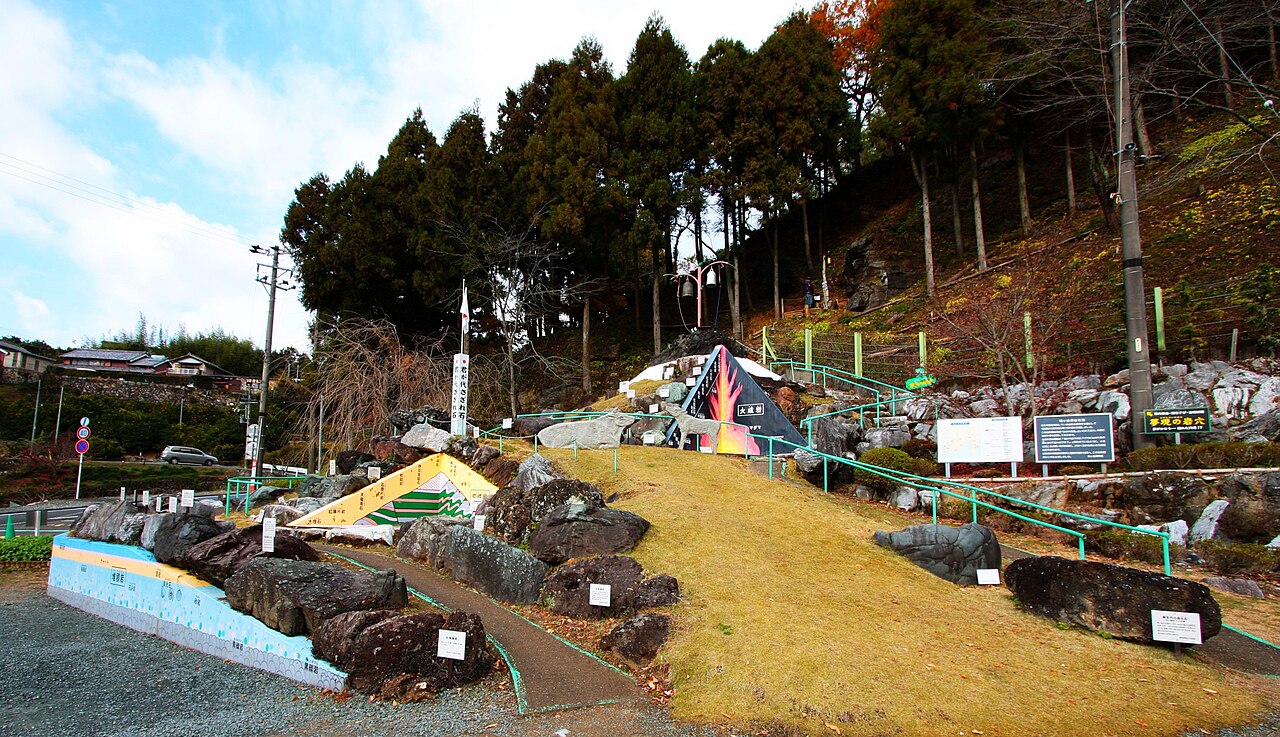
Quick facts
- Where: Ryugashi-do Cavern, 193 Tachihimachi Kanzanji, Kita Ward, Hamamatsu City, Shizuoka 431-2221. North of Hamamatsu city, near Lake Hamana.
- Getting there: From Hamamatsu Station: Entetsu bus #35 from bus bay 15, 50 min to Ryugashi-do stop, ¥850. By car: Shin-Tomei Expressway to Hamamatsu-Hamakita IC, 30 min on Route 257.
- Hours: 9:00-17:00 daily (last entry 16:30). Open year-round.
- Cost: ¥1,100 adult / ¥550 child (over 4). Cave-themed museum included in entry.
- When to go: The cave temperature is constant 18°C year-round — cool in summer, warm in winter. Summer weekends are busiest; winter weekdays are quietest. Avoid the week between Christmas and New Year when the museum is closed.
- Official: Ryugashi-do Cavern (Japanese), Hamamatsu Visitor Site (English).
What the cave actually is
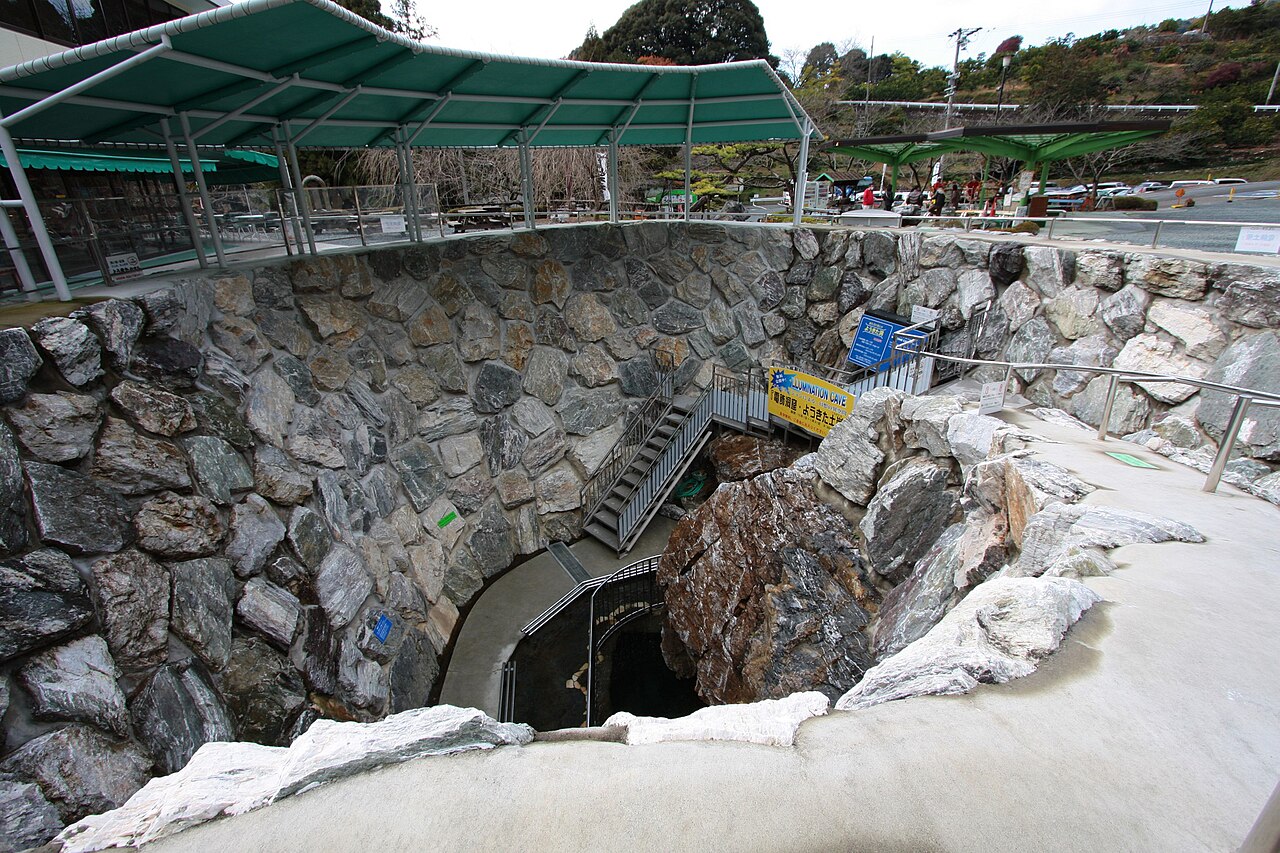
Ryugashi-do is a single-passage limestone show cave, discovered in 1978 and opened commercially in 1983. The full surveyed length is 1,046 metres; the publicly-accessible walkable section is the first 400 metres. The passage runs roughly east-west through the southern shoulder of Mt Ryugashi (359m), and the walk takes 30-45 minutes at sightseeing pace with photo stops.
The cave’s named formations (which you’ll see on the route signage):
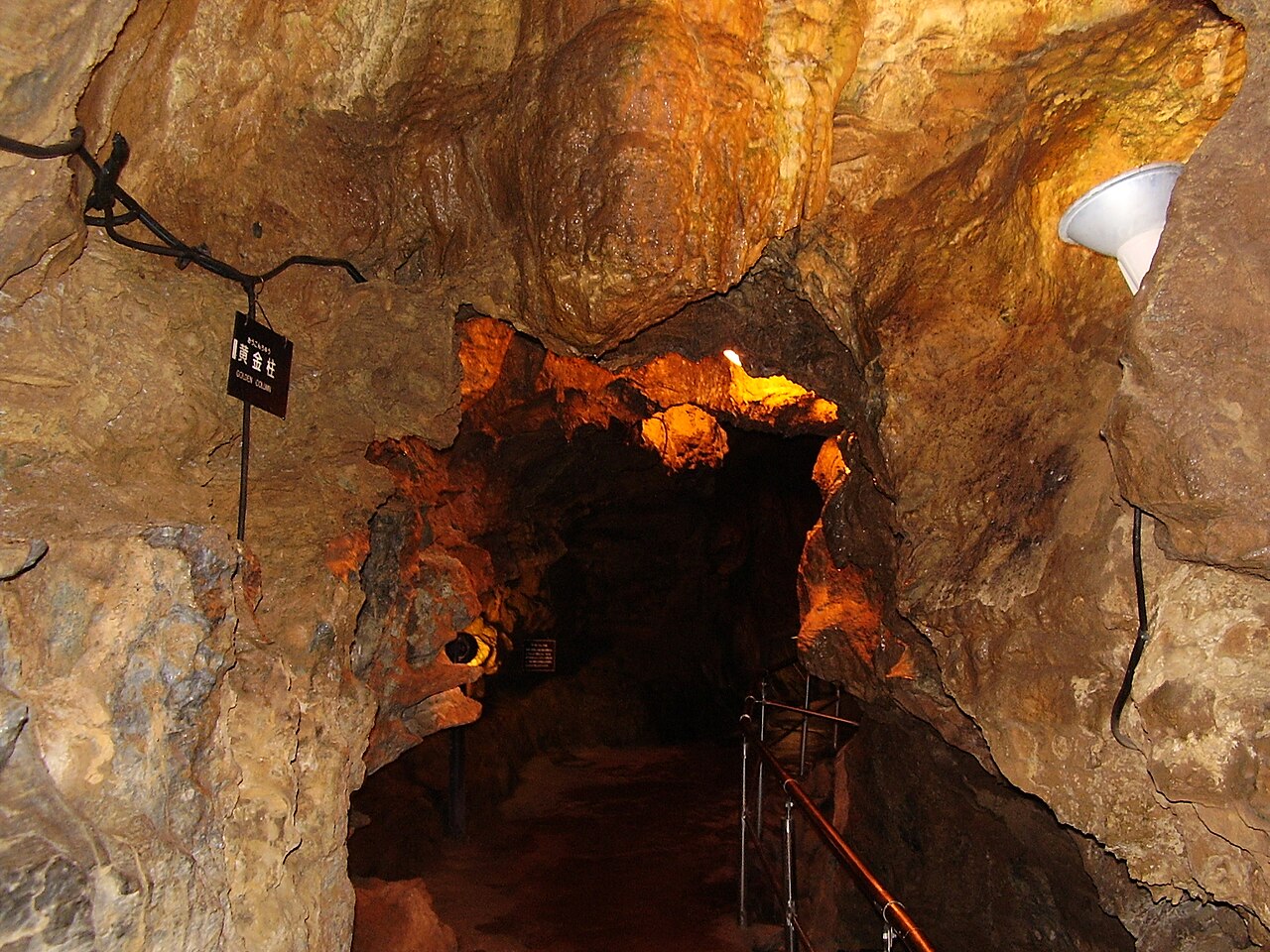
- Kirin no Hiroba (麒麟の広場, “Kirin Plaza”) — the first major chamber after the entrance, with tall stalactite columns and a ceiling dome.
- Tsuki no Sekai (月の世界, “Moon World”) — a chamber with pale white calcite formations and a deliberate blue-white lighting scheme that’s supposed to evoke a lunar landscape.
- Ho-o no Ma (鳳凰の間, “Phoenix Hall”) — a flat-ceilinged chamber with a stalagmite formation that resembles a rising phoenix from below. The centrepiece of the tour and the photo most visitors take.
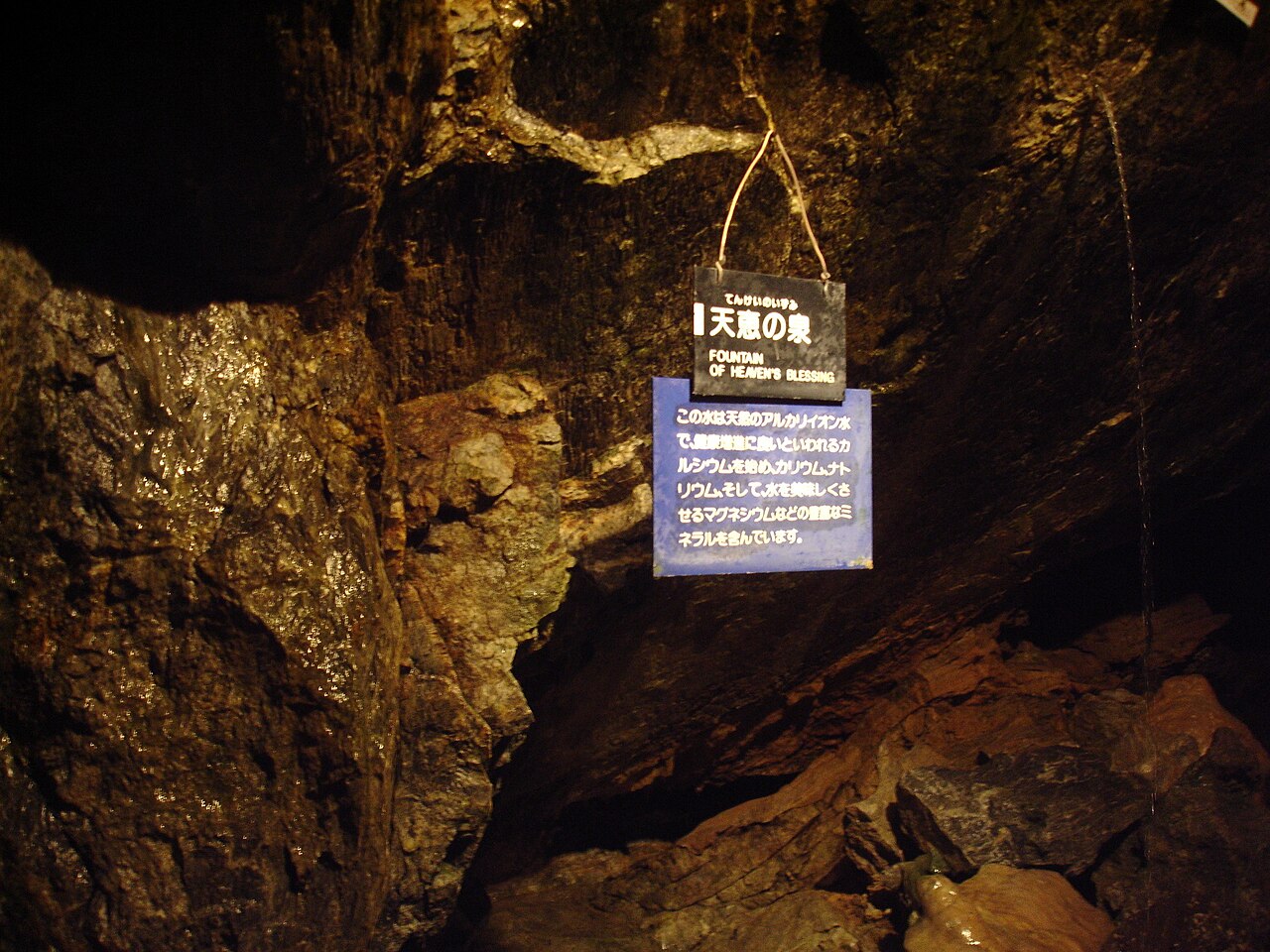
- Ogonichi no Taki (黄金の滝, “Golden Waterfall”) — a 30-metre underground waterfall at the far end of the public section, lit gold from below. The tallest underground waterfall in any Japanese show cave.
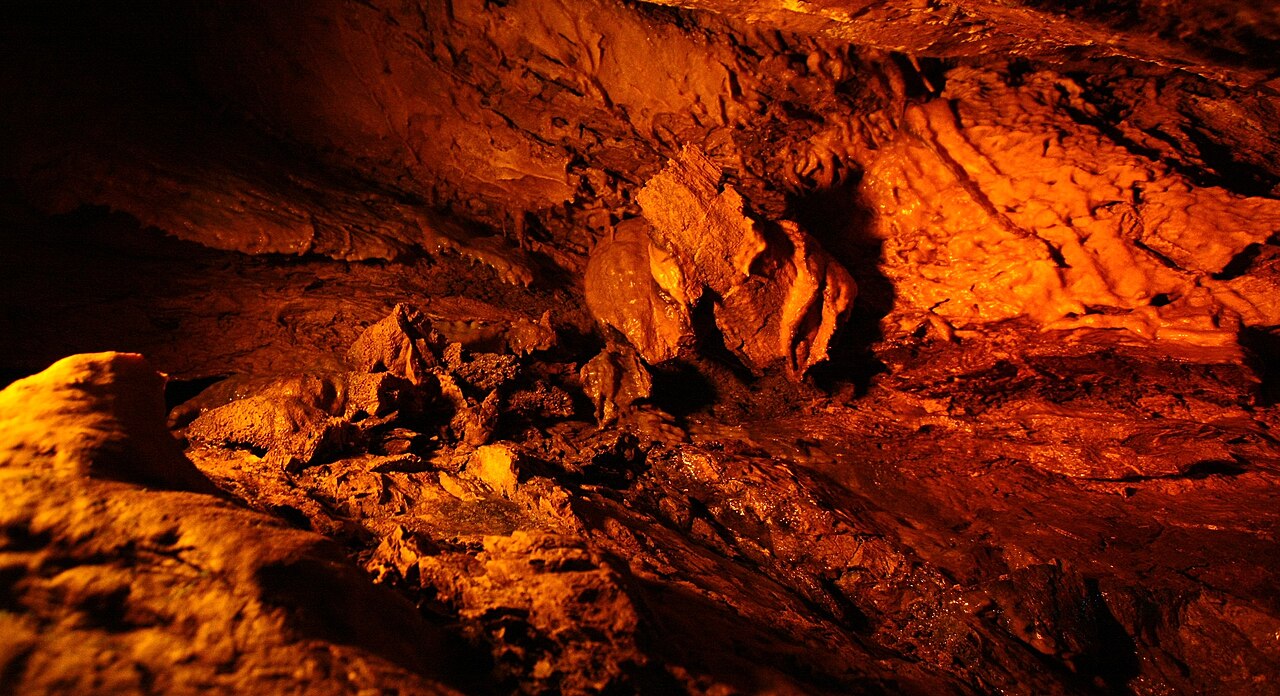
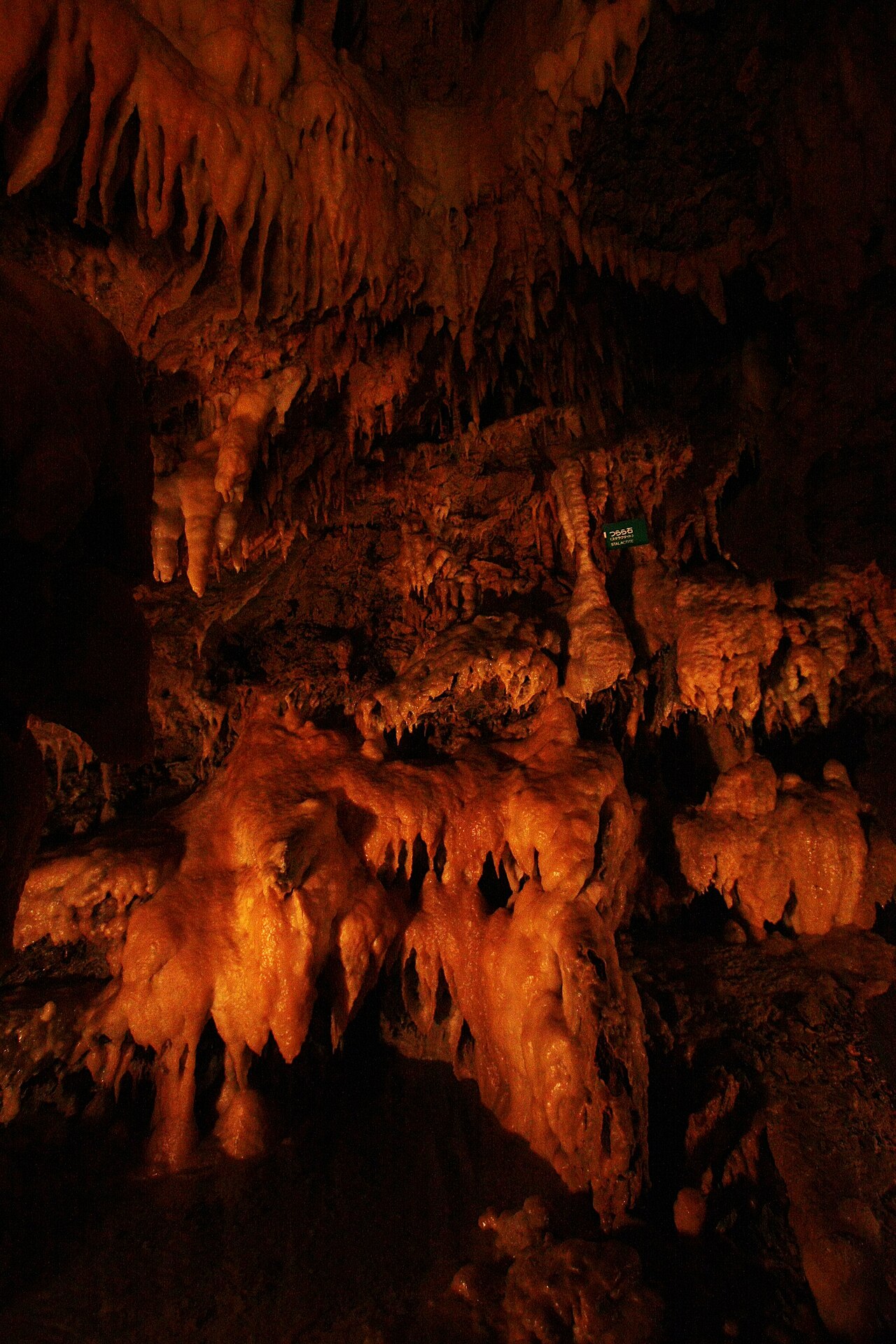
Geologically, the cave is what speleologists call an active solutional cave — the limestone is still being dissolved by seasonal groundwater, the formations are still growing (slowly; roughly 0.1-0.2mm per year for the larger stalactites), and the Golden Waterfall at the back is part of the cave’s ongoing water-flow system.
The bat show (yes, there’s a bat show)
Ryugashi-do has a resident population of approximately 2,000 small Japanese horseshoe bats (kikugashira kōmori, Rhinolophus cornutus) who roost in the closed sections of the cave. Since 2005, the cavern operates a Bat Show (コウモリショー) as part of the visitor programme — twice a day, a staff member demonstrates the feeding habits of a rehabilitation-program resident bat (not the cave’s wild population, which is protected) in a glass-fronted enclosure near the museum.
Show times: 10:30 and 14:00 daily, about 15 minutes each. The bat itself is a young female called Koko who was injured and couldn’t be returned to the wild; she’s been part of the public programme for about six years. The show is in Japanese only, but the actions are visual enough that language doesn’t really matter.
The museum (the part most visitors skip)
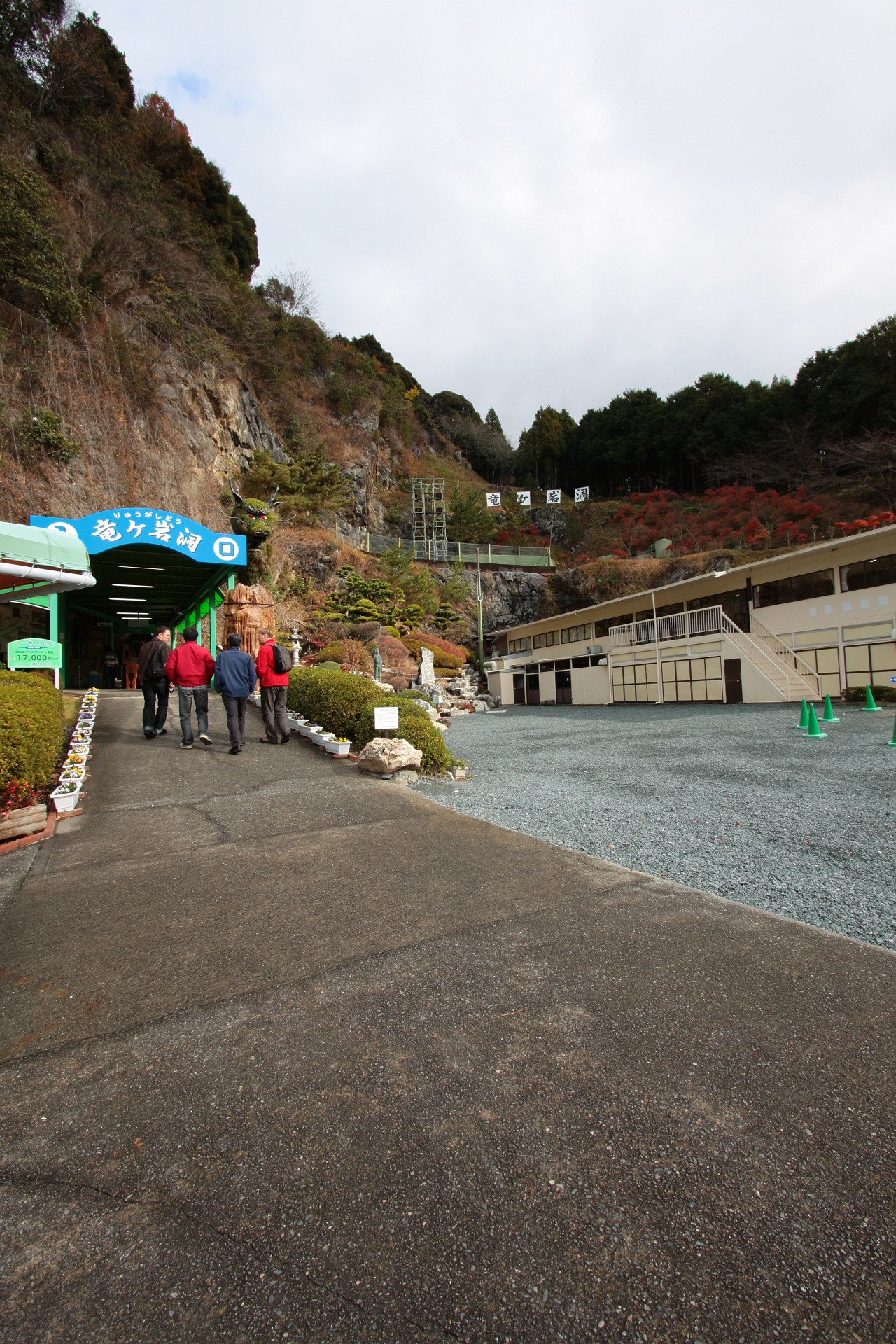
Japan’s first cave-themed museum sits at the entrance building and is included in the ¥1,100 cavern entry. It’s small — about 400 square metres — but surprisingly well-curated. Exhibits cover the specific formation processes of limestone caves, the geology of the Okuhamana belt, the social history of Japanese speleology, and the biology of the cave-dwelling bat and insect species. Two permanent highlights:
The cave cross-section model — a 1:50 scale cutaway of the entire Ryugashi-do cave system, showing the parts that are closed to the public. This is the only way you’ll see the remaining 646 metres of the cavern.
The bat acoustic display — a set of ultrasound recordings of each of the cave’s resident bat species, pitched down to audible frequencies. Kids love it; adults find it genuinely interesting.
Allow 20-30 minutes for the museum either before or after the cavern walk. English captions are thin but exist for the main exhibits.
Getting there from Hamamatsu
Ryugashi-do is on the way to Lake Hamana, but substantially inland from it — the bus route takes you through the Inasa agricultural district before climbing into the Mt Ryugashi foothills.
By bus: Entetsu Railway Bus #35 from Hamamatsu Station bus bay 15. Departs every 90 minutes during the day, 50-minute ride, ¥850 one way. Get off at Ryugashi-do (the cavern has its own stop). Last return bus to Hamamatsu is around 16:30.
By car: From central Hamamatsu, 30 minutes on Route 257 north. The cavern has a 200-car free car park directly at the entrance.
By bicycle: If you’re adventurous and have a good bike, it’s a 28km ride from central Hamamatsu — pavement mostly, with about 100m of climbing on the approach. Not for casual cyclists but a good option for the fit.
Combining with the rest of the Hamamatsu region
Ryugashi-do makes sense as a half-day stop on a broader Hamamatsu-and-Inasa itinerary. The natural combines:
Ryotanji Temple — a 11th-century Rinzai Zen temple 15 minutes by car from Ryugashi-do. Notable for its Edo-period Muromachi-style garden, which was briefly famous for appearing in the 2017 NHK Taiga drama Onna Joshu Naotora. Entry ¥500, open 9:00-16:30. Historically significant as the home temple of the Ii clan — the samurai family that controlled this specific corner of Shizuoka in the late Sengoku period.
Lake Hamana — 25 minutes by car south. Japan’s tenth-largest lake and a significant oyster-farming area. The lakeshore onsen town of Kanzanji has a handful of good ryokan and a cable-car observatory with views across the lake.
Hamamatsu city proper (see our Act City Hamamatsu guide) — the Act Tower observatory, the Musical Instruments Museum, Hamamatsu Castle, and the unagi restaurants that are the city’s food reputation.
Okuhamana area — the broader mountain-and-valley region north of Lake Hamana. Additional caves (smaller than Ryugashi-do and not publicly accessible), hot springs, a working wasabi farm at Utogi, and stretches of the Tokaido Road’s older branch routes.
Where to stay
No accommodation at Ryugashi-do itself — the cavern is a half-day visit. For overnight, go back to Hamamatsu city (standard business hotel inventory at ¥7,000-14,000) or out to Kanzanji Onsen on Lake Hamana (ryokan with hot springs at ¥15,000-30,000 per person half-board). Booking.com’s Hamamatsu listings cover both.
For a rural overnight specifically in the Inasa area, Hosoe and Mikkabi (neighbouring villages) have a handful of small minshuku in the ¥8,000-11,000 range. Atmospheric and quiet; limited dining options.
Is Ryugashi-do worth the trip?
For travellers already in Hamamatsu — yes, if you have a free half-day. 50-minute bus, 45-minute cavern walk, 30-minute museum, 50-minute bus back. Total time commitment ~3.5 hours, and it’s a genuinely different kind of sight compared with the usual Japanese temple-and-castle programme.
For a half-day from the Shinkansen — worth it as a break in a Tokyo-Osaka rail journey. Stop at Hamamatsu Station in the morning, take the bus, do the cave and museum, have lunch at the cavern-front restaurant (or back in Hamamatsu), continue south on the afternoon Shinkansen. 5-6 hour window total.
For families with kids — specifically good. The Bat Show is a hit with children, the cave walk is short and well-paved, and the constant 18°C temperature means it’s a reliable summer or winter rainy-day plan when outdoor options are compromised.
For a first-time Japan trip focused on cultural sights — skip. Ryugashi-do is interesting but it’s not the Japanese experience most first-time visitors are hunting for. Come back for it on a return trip or if you’re specifically interested in geology or caves.
For anyone interested in limestone caves specifically — good. Ryugashi-do is in the top five accessible Japanese show caves (alongside Akiyoshi in Yamaguchi, Ryugado in Kochi, Nippara in Tokyo’s western mountains, and Abukuma in Fukushima), and the lighting/management standard is high.
FAQ
How cold is it inside the cave?
A constant 18°C year-round — comfortable enough in light summer clothes, distinctly cool if you’ve been outside on a 35°C August day. Bring a light layer year-round. The cave is not cold enough to need a jacket, but t-shirts alone can feel chilly after 20 minutes.
Is the cave accessible for wheelchairs or strollers?
Partially. The first 150 metres of the walk is flat and paved; beyond that there are several sets of stairs and some narrow sections. Strollers can handle the first chamber but not the full route. Wheelchair access is essentially limited to the museum and the entrance plaza. The cavern operator offers a reduced ¥550 ticket for accompanying visitors who only do the accessible section.
Can I take photos?
Yes, no flash. Tripods are permitted (which is unusual for Japanese tourist sites). The low-light conditions mean you’ll want either a fast lens or a steady hand / tripod for good photos.
Is there food at the cavern?
One restaurant at the entrance building — standard cave-tourism fare (udon, soba, curry rice) at ¥900-1,500 per meal. Not a destination in itself but fine for a mid-visit lunch. Vending machines for drinks throughout.
Are there other caves to visit nearby?
Not accessible to the public in Japan’s general show-cave category. Several smaller caves exist in the Okuhamana limestone belt but they’re research-access only. For the next closest public limestone cave, travel to Nippara in the western Tokyo mountains (2 hours 30 min by train) or to Akiyoshi-do in Yamaguchi Prefecture (the largest and most famous public cave in Japan, but a significant journey from Hamamatsu).
How does it compare to Akiyoshi-do?
Akiyoshi is larger and more spectacular (1km of public passage, a massive cascading terrace system called Hyakumai-Zara). Ryugashi is more intimate, better-lit, more kid-friendly, and much easier to reach from the Tokaido Shinkansen line. If you have unlimited time, go to Akiyoshi. For a half-day from Hamamatsu, Ryugashi is the right pick.
What’s the story of the cave’s discovery?
In 1978, a group of Shizuoka University speleologists noticed a cold air-leak from a limestone outcrop on Mt Ryugashi’s southern flank. Expanding the fissure took them into what they recognised as a substantial and previously-unrecorded cave system. The discovery coincided with a national uptick in show-cave tourism; by 1983, a local business had partnered with the university to develop the tourist access tunnel and open the commercial operation. The original discovery entrance is still sealed and marked with a memorial plaque near the museum.
_-_panoramio.jpg)
.jpg)
_-_panoramio.jpg)
.jpg)

_-_panoramio_-_gundam2345.jpg)
_-_panoramio_-_gundam2345_(1).jpg)