
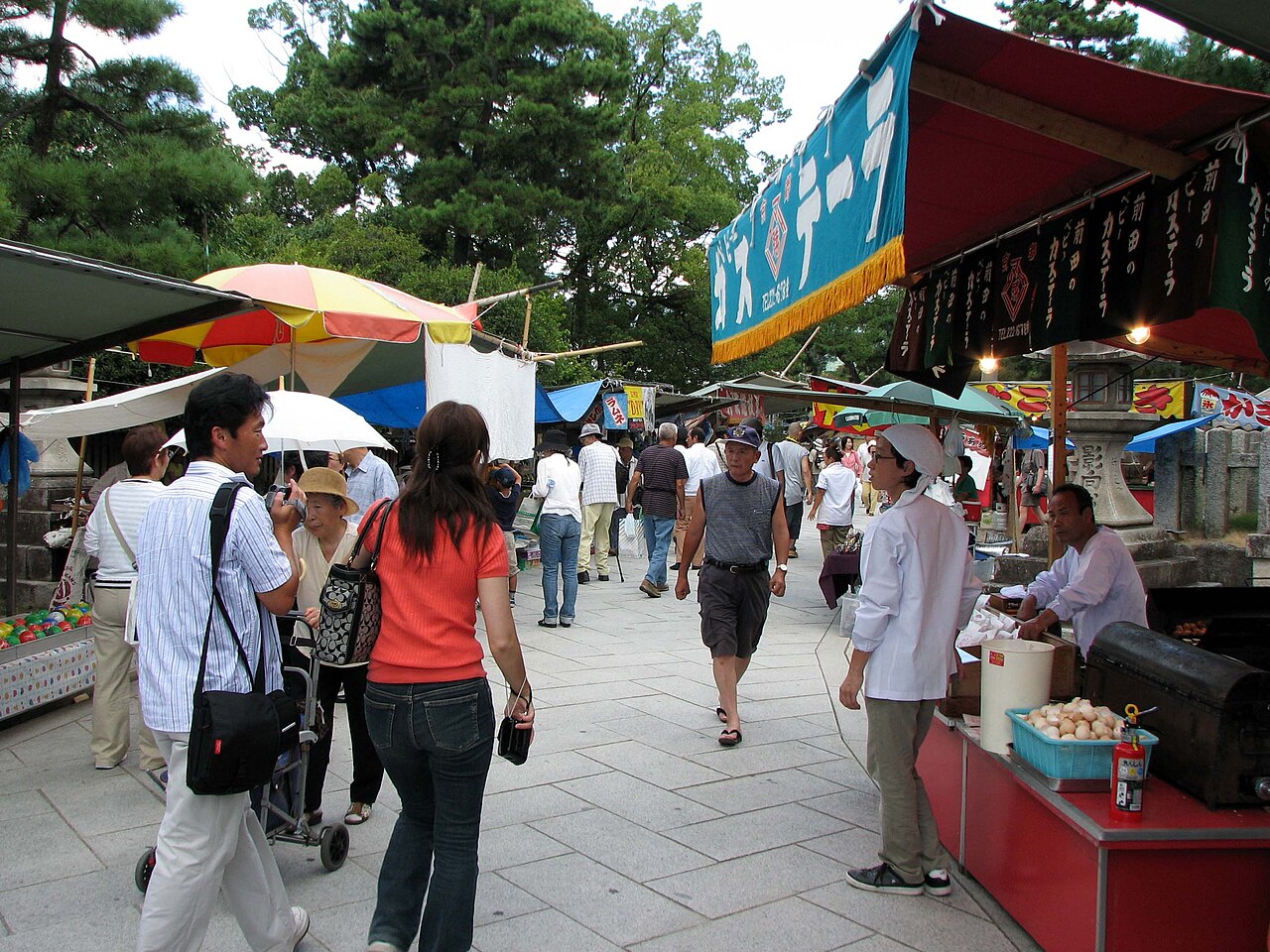
Nagoya has a specific kind of shopping day that the main Tokyo and Kyoto tourism circuit doesn’t really replicate: a working flea market held on a Buddhist temple’s grounds, twice a month, with stalls selling Edo-period woodblock prints, Meiji-era kimono, Showa-era vinyl records, ceramics from the nearby Seto and Tokoname kiln districts, and the occasional piece of samurai armour nobody has quite priced yet. The headline is the Osu Kannon Antique Market (大須観音骨董市, Ōsu Kannon Kottō-ichi), held on the 18th and 28th of every month in the precinct of Osu Kannon Temple in central Nagoya. It’s one of the bigger recurring antique markets in Japan — about 80 stalls on a typical day, substantially more on a weekend date — and the pricing runs from ¥500 bargain trinkets to ¥500,000 serious collector pieces. Foreign buyers are rare enough that you’ll often be the only non-Japanese person in the aisle.
In This Article
- Quick facts
- Osu Kannon Temple: the context you need
- The Osu Antique Market: what’s for sale
- How to shop the market (for foreign visitors)
- The Osu shopping district (the non-market context)
- The other Nagoya flea markets
- Getting to the Osu market from Nagoya Station
- Combining with the rest of Nagoya
- Where to stay
- Is the Osu flea market worth a visit?
- FAQ
- What if the 18th/28th falls on a public holiday?
- Can I pay by card or QR?
- Is there English-speaking support at the market?
- Are items export-approved?
- Can I visit the temple if I’m not shopping?
- What’s the best time of day for the market?
- Are there food stalls?
Nagoya also has a broader flea-market calendar across its other temple precincts — the Osu headliner isn’t the only option. Smaller monthly fairs at Wakamiya Hachimangu, Toyota Daihatsu Shrine, and the Shinshoji Temple in Higashiyama each run on different dates, collectively giving you antique-hunting options 5-6 days per month. This guide covers the whole Nagoya flea-market network, with special focus on Osu because it’s the biggest and best-located for foreign visitors.
Quick facts
- Where: Osu Kannon Temple, 2-21-47 Osu, Naka Ward, Nagoya, Aichi 460-0011. Central Nagoya, 5-min walk from Osu Kannon subway station.
- Getting there: Tsurumai Line subway to Osu Kannon Station, exit 2, 1-minute walk. From JR Nagoya Station: 10 min by subway (Higashiyama Line to Fushimi, transfer to Tsurumai Line).
- Hours: Osu Antique Market runs the 18th and 28th of every month, 09:00-16:00 (vendors start packing up around 15:30). Osu Kannon Temple itself open daily 06:00-19:00, free entry.
- Cost: Market entry free; individual purchases ¥500 and up. Temple entry free.
- When to go: Mornings (09:00-11:00) for the best selection; afternoons for bargaining pressure as vendors want to avoid taking stock home. Weekdays quieter; weekends larger selection but more crowds. Rain cancellations possible — check the Osu Kannon site.
- Other Nagoya markets: Wakamiya Hachimangu antique market (1st Saturday), Toyota Daihatsu Shrine (every 8th), Shinshoji antique fair (2nd Sunday).
Osu Kannon Temple: the context you need
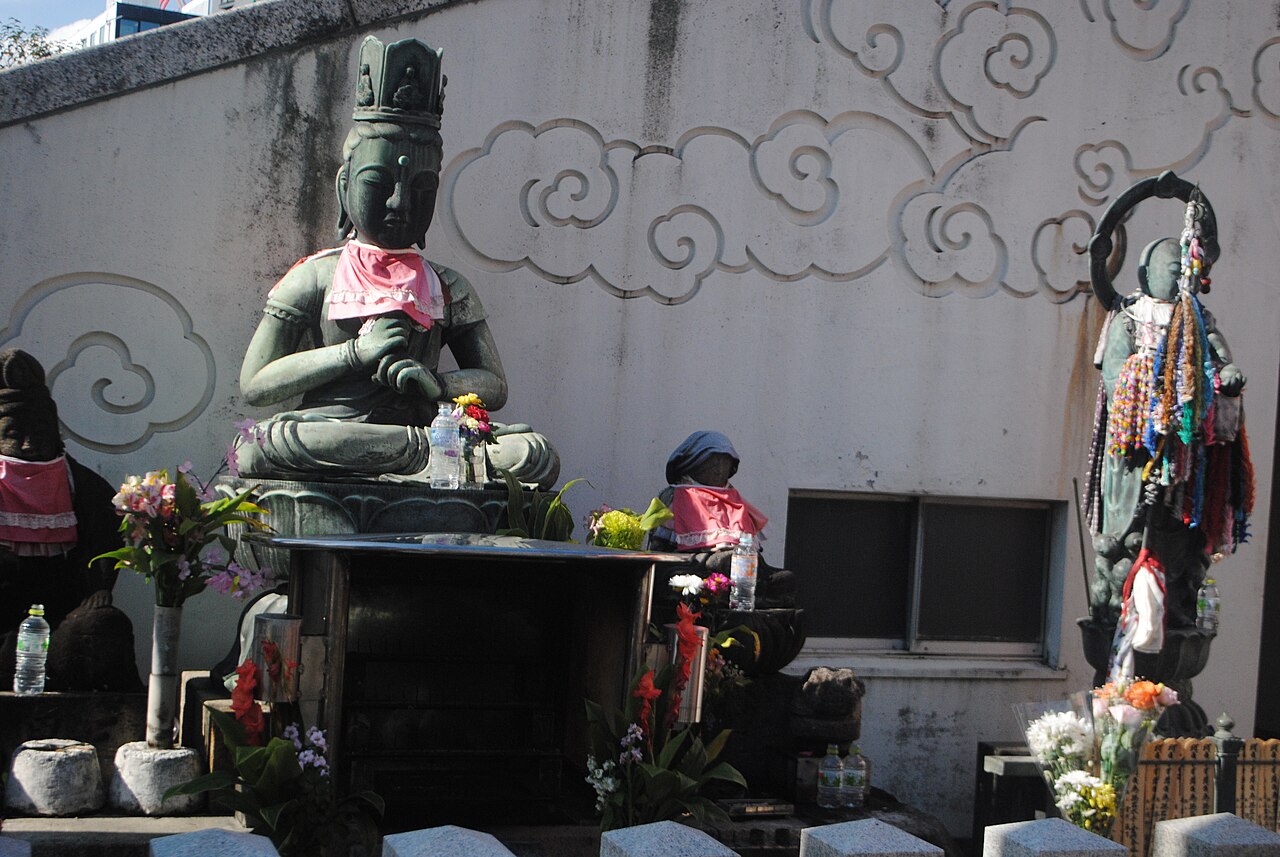
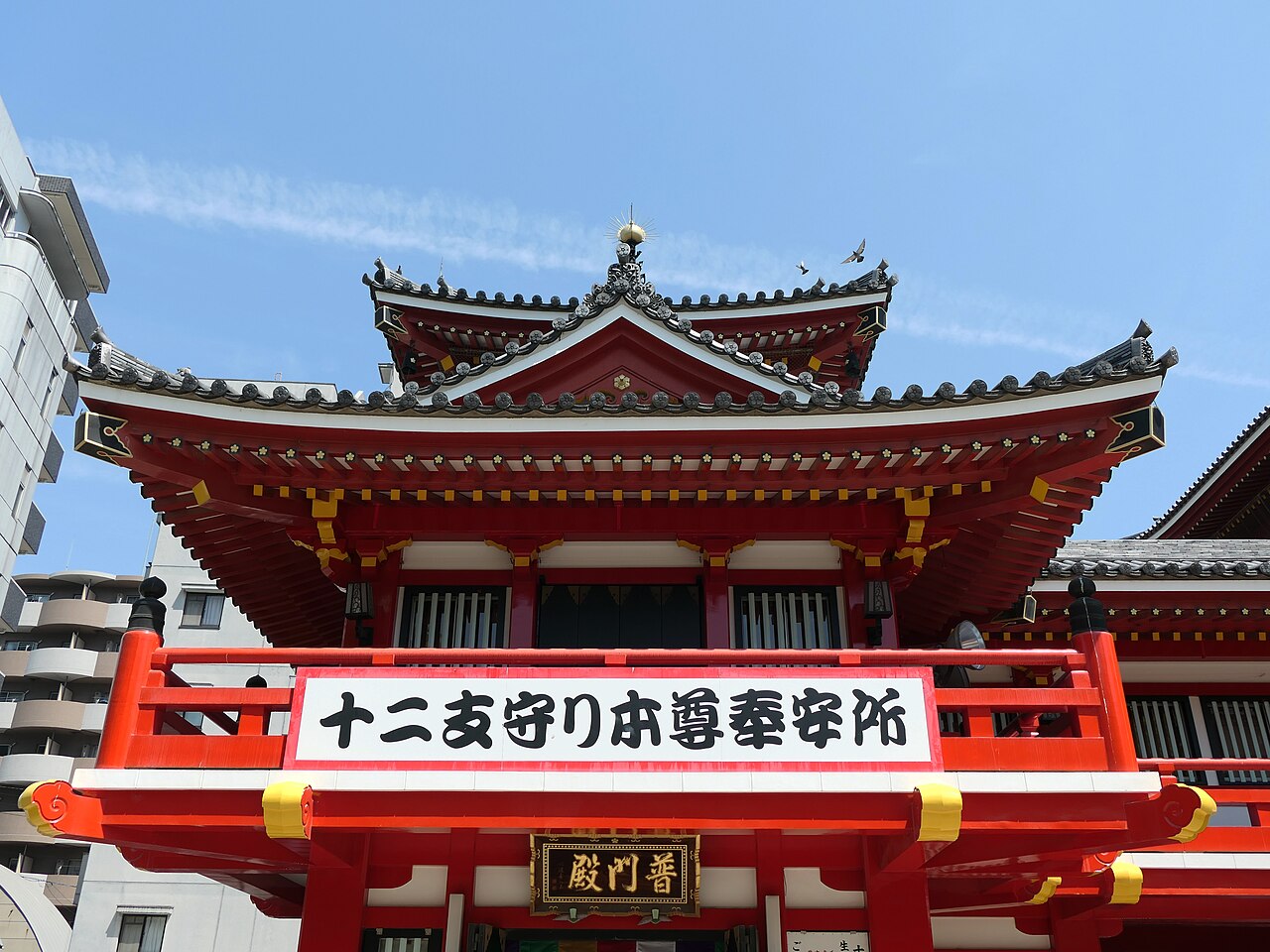
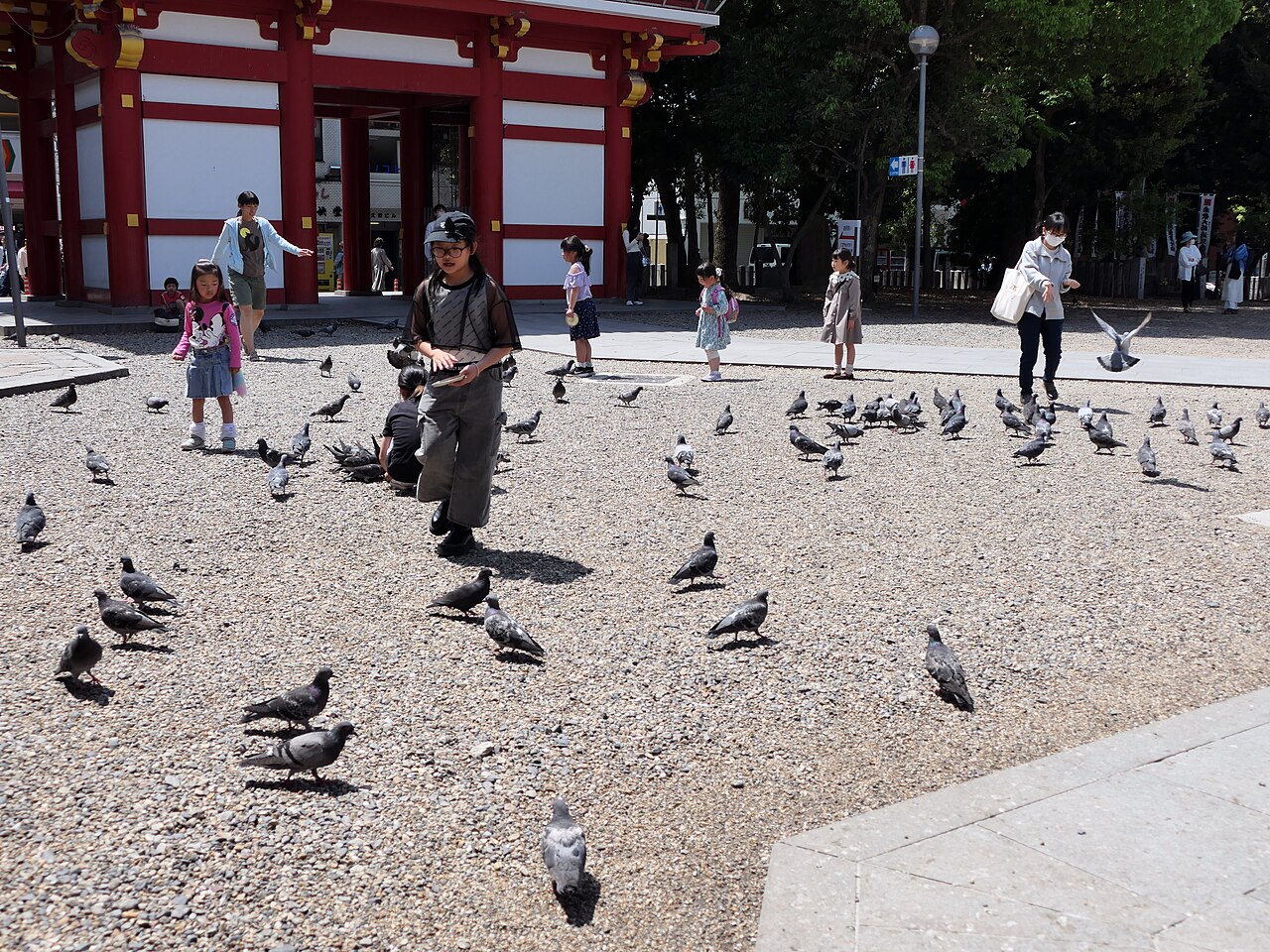
The flea market makes more sense once you know about the temple hosting it. Osu Kannon (大須観音, Ōsu Kannon) is a Shingon-sect Buddhist temple founded in 1333 in the former Mino Province, moved to its current Nagoya location in 1612 under orders from Tokugawa Ieyasu. The relocation was part of Ieyasu’s plan to populate the new Nagoya castle-town with important Buddhist and Shinto sites; Osu Kannon became the anchor temple for the southern commercial district.
The temple’s specific historical claim: it holds one of Japan’s oldest surviving copies of the Kojiki (Japan’s oldest book, dated 1371 here), alongside the Manyoshu and several other core Japanese classical-literature manuscripts. The collection is known as the Shinpukuji Bunko and is held in the temple’s library wing; the originals are rarely displayed, but high-quality facsimiles are accessible to scholars on request.
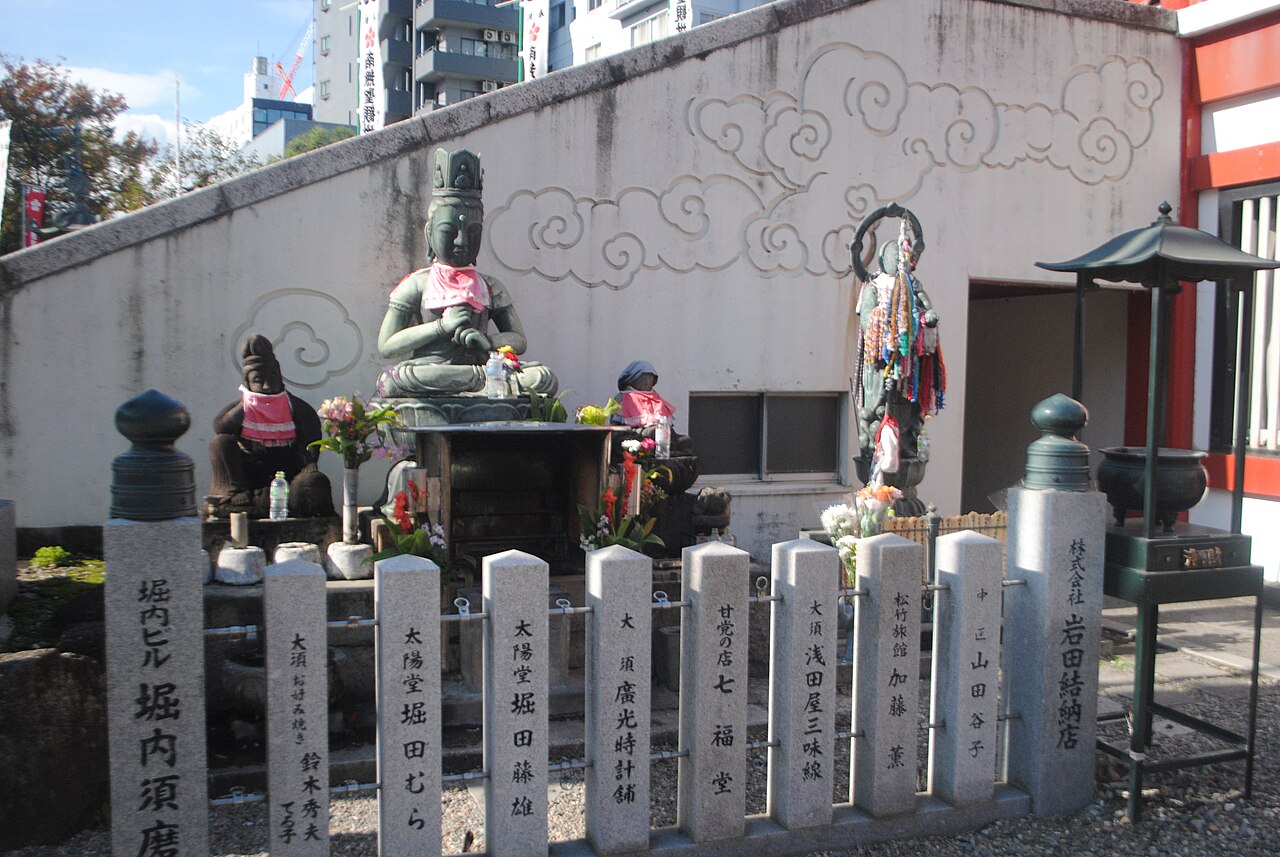
The temple is dedicated to Kannon (観音, the Bodhisattva of Compassion). It’s an active place of worship — expect the main hall to have working rituals happening during market hours, and respect the usual Buddhist-temple etiquette when approaching the inner sanctuary.
The Osu Antique Market: what’s for sale
About 80 stalls on an average market day (120+ on a weekend). The merchandise is genuinely diverse — this isn’t a curated tourism-theatre flea market, it’s a working second-hand-goods venue where Nagoya-area collectors and dealers trade.
Typical categories you’ll see:
- Ceramics — pottery from the Seto, Tokoname, Mino, and Shigaraki kilns. Edo-period to contemporary. ¥1,000-50,000 range for mid-tier pieces; genuine antique teabowls can run ¥100,000+.
- Kimono and obi — second-hand and vintage. Pre-war silk kimono at ¥3,000-15,000; Meiji-era formal kimono with maker’s marks at ¥30,000-80,000.
- Woodblock prints — mostly Showa-era reprints at ¥1,000-3,000; occasional genuine Edo-period ukiyo-e at higher prices. Quality varies; bring a loupe if you’re buying seriously.
- Coins and currency — Edo-period kan’ei tsūhō copper coins, Meiji paper money, WWII occupation currency.
- Lacquerware — tea trays, stacked bento boxes, Buddhist ritual objects.
- Glassware — Showa-era Meiji-no-garasu (Meiji-glass) reproductions, occasional Taisho-era originals.
- Books and documents — old Japanese printed books (wahon), maps, postcards.
- Swords and armour — specifically, sword fittings (tsuba, fuchi-kashira) rather than whole blades. Full swords require special dealer licensing and rarely appear. Fittings at ¥5,000-100,000.
- Vinyl, toys, film ephemera — Showa-period consumer goods with a strong retro market.
How to shop the market (for foreign visitors)
A few specific things worth knowing if you’ve never done a Japanese antique market:
Pricing and haggling: Japanese antique markets do allow haggling, but the culture is gentler than in other parts of Asia. A 10-15% reduction on the asking price is standard; asking for 50% off is considered rude. Price tags are often absent — ask “kore wa ikura desu ka?” (how much is this?) and you’ll get a quoted figure. Counter-offer politely, one or two rounds maximum.
Cash only: Essentially all vendors are cash-based; a few higher-end dealers take cards for purchases over ¥50,000, but assume cash for anything under. Have ¥5,000 and ¥10,000 notes available; ATM nearest is at the 7-Eleven 200m from the temple’s east gate.
Authentication: The market is not authenticated — you’re buying at your own risk. For high-value items (antique ceramics, ukiyo-e, swords), ask the vendor for documentation (hakogaki box inscription, dealer certificate, etc.). Serious collectors do research before market day; casual browsers buy for the object itself rather than investment value.
Shipping: Most vendors don’t ship internationally. If you’re buying something fragile or large, arrange shipping through the Nagoya Yamato-Transport office (5 min from the temple). Expect ¥8,000-15,000 for international surface-mail shipping.
Language: Some stallholders speak English, most don’t. Google Translate’s camera function handles price tags and maker’s marks fine. Bring a notepad to sketch kanji if needed.
The Osu shopping district (the non-market context)
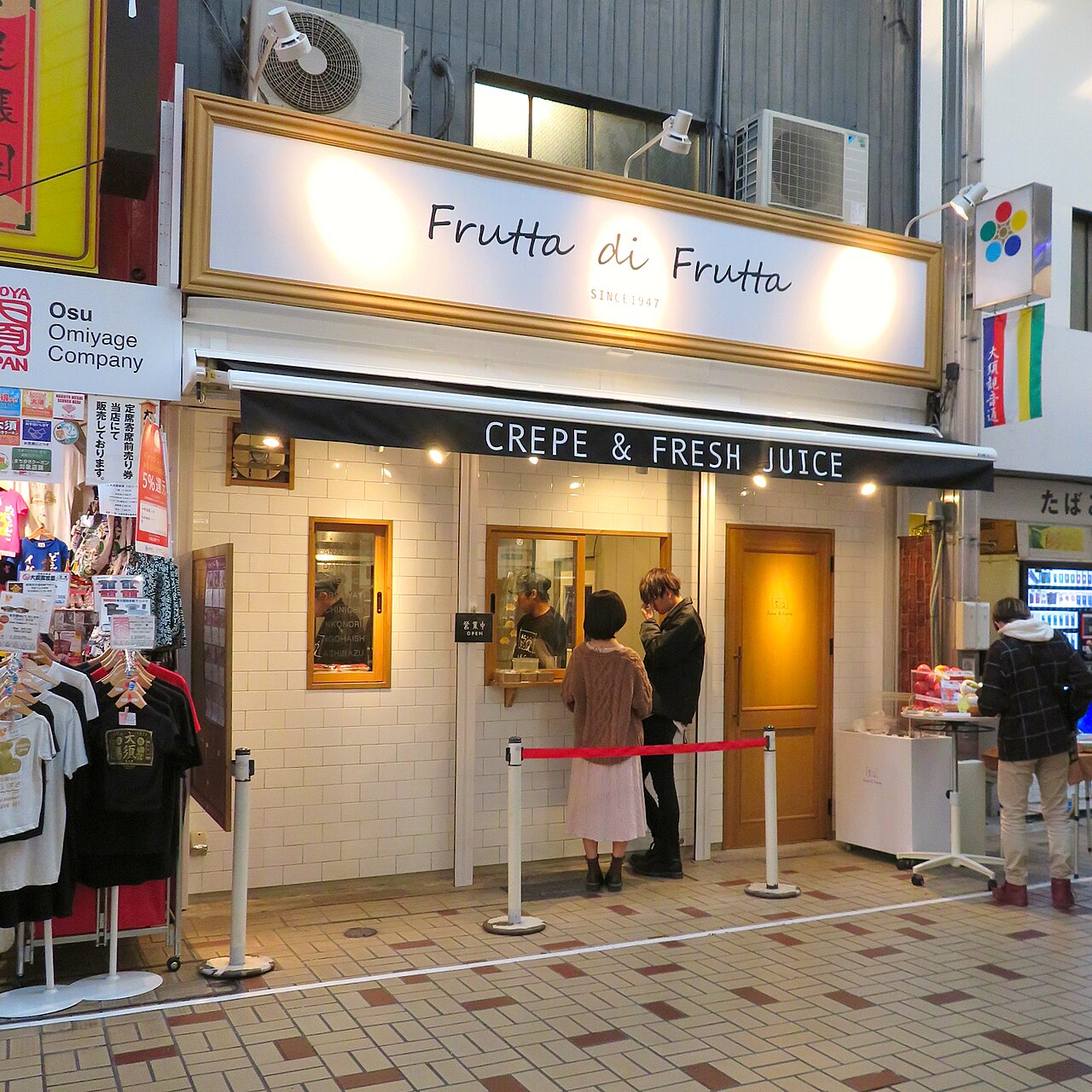
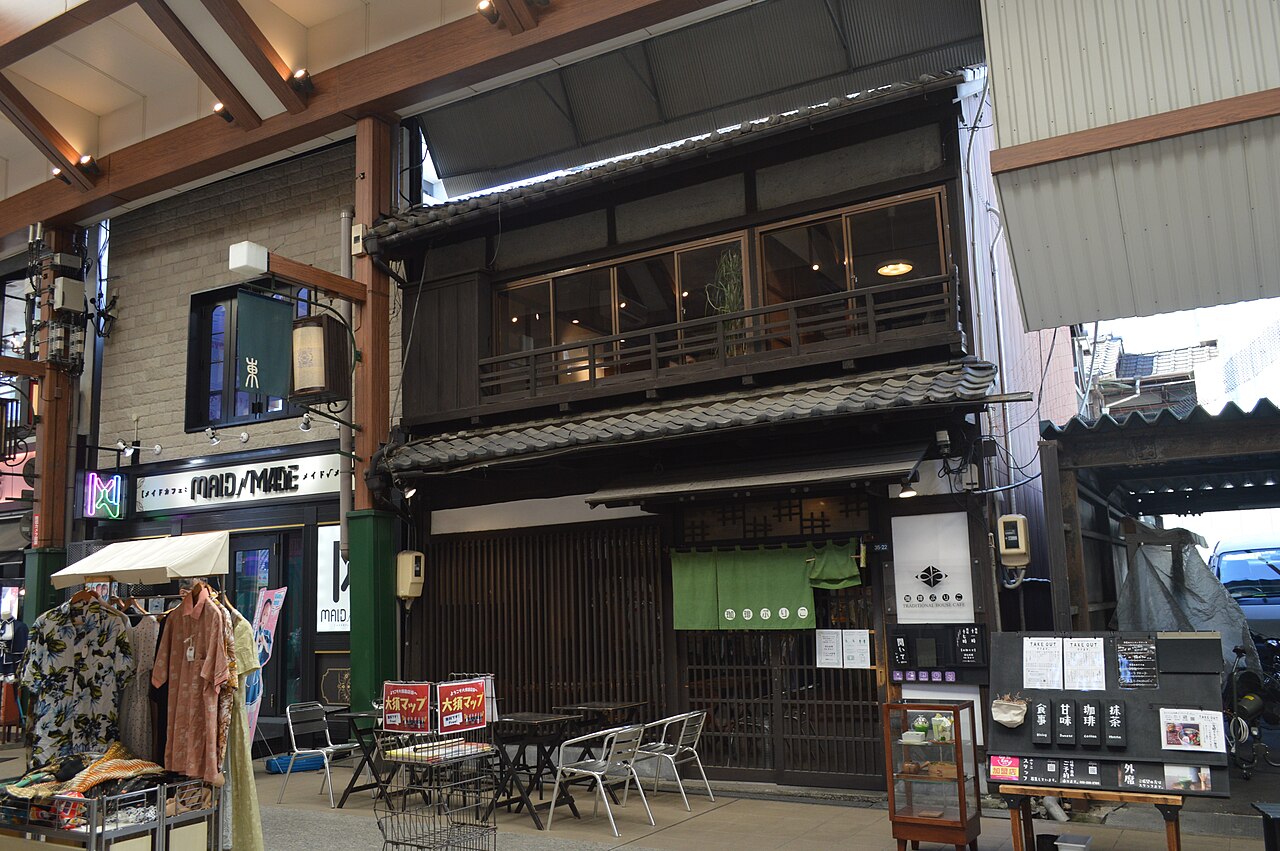
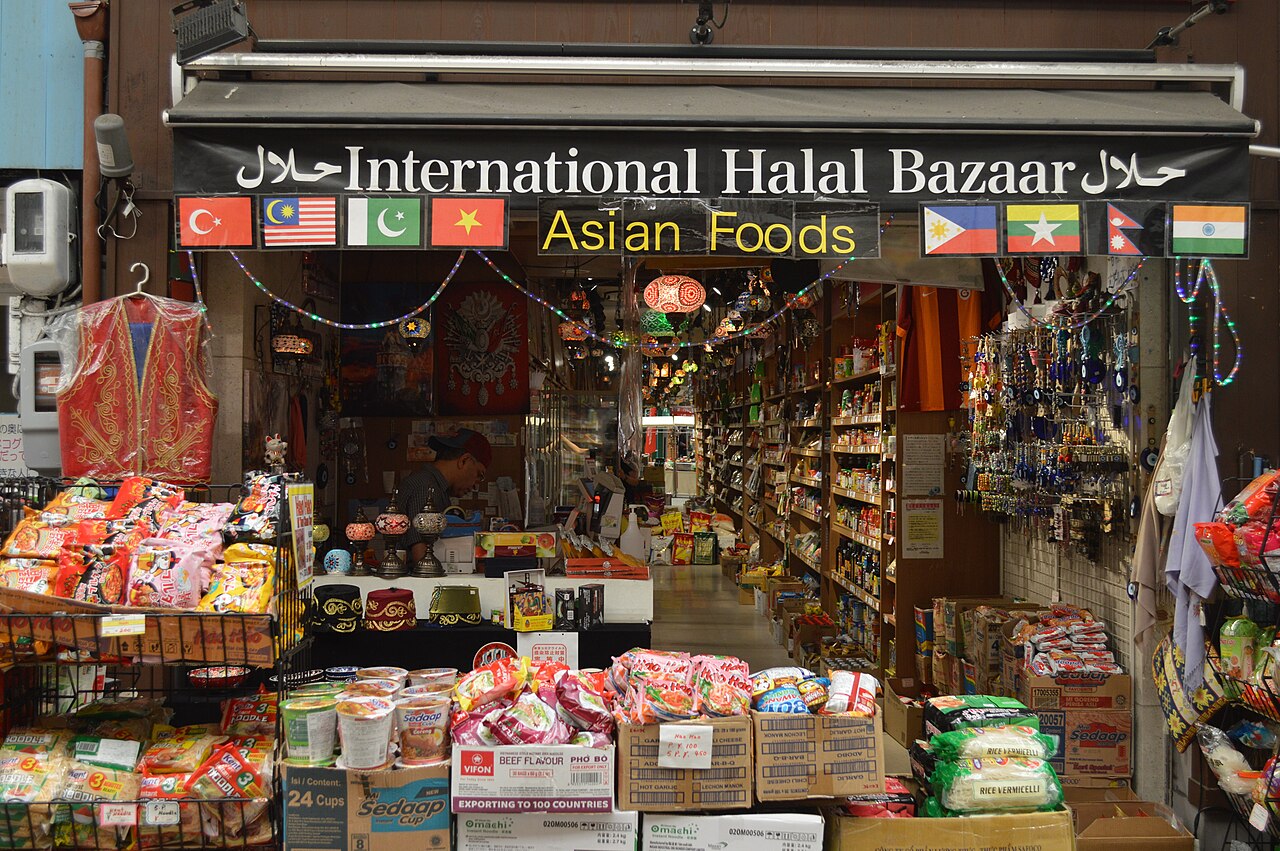
Osu Kannon Temple doesn’t stand alone — it’s the anchor of the Osu shopping district (大須商店街, Ōsu Shōtengai), a network of covered arcades and pedestrian streets running 1km east of the temple. This is Nagoya’s alternative/retro shopping hub, with a specific reputation for:
- Used electronics — Akihabara-style vintage PCs, audio equipment, parts. Dospara and Inverse-Net are two of the bigger shops.
- Second-hand fashion — 2nd Street and Jumbo are local secondhand-chain anchors; plus about 30 independent vintage boutiques.
- Anime and manga — smaller scale than Tokyo’s Akihabara but genuine, with specialty shops for older Showa-era comics and collectibles.
- Street food — takoyaki, karaage, tai-yaki, and specifically Nagoya’s tebasaki (chicken wings); the arcade has one of the highest street-food densities in central Japan.
The other Nagoya flea markets
If your dates don’t align with the 18th/28th Osu market, Nagoya has a broader flea-market circuit across its other temple and shrine precincts:
Wakamiya Hachimangu Antique Market — 1st Saturday of each month, 08:00-14:00, at Wakamiya Hachimangu shrine in central Nagoya. 30-40 stalls, more weighted toward Japanese classical antiques than contemporary Showa items. Easier subway access from Fushimi Station.
Toyota Daihatsu Shrine Market — 8th of each month at Arako Kannon Shrine in southwestern Nagoya. Smaller (about 30 stalls), more community-oriented, good for kids’ used goods and retro toys. Less English support.
Shinshoji Temple Antique Fair — 2nd Sunday of each month at Shinshoji in the Higashiyama district. 40-50 stalls, particularly strong on pottery from the surrounding Seto-Tokoname kiln area. 15 minutes east of central Nagoya on the Higashiyama Line.
Heiwa Park Weekly Market — every Sunday at Heiwa Park in the eastern suburbs. Mixed flea market (not specifically antique) — good for general second-hand shopping, household goods, and Nagoya-area makers’ handmade items. Family-friendly.
Getting to the Osu market from Nagoya Station
From JR Nagoya Station: take the Higashiyama Line subway two stops to Fushimi, transfer to the Tsurumai Line, one stop to Osu Kannon Station, exit 2. Total 10 minutes, ¥240.
From central Sakae district: take the Tsurumai Line direct, 5 minutes, ¥210. Or walk 15 minutes south-west; covered arcade for most of the route.
By taxi: 10-15 minutes from central Nagoya, ¥1,200-1,800 fare.
Combining with the rest of Nagoya
The Osu market makes sense as a morning activity combined with:
- Nagoya Castle — 10 minutes north by subway. Do the antique market 09:00-11:30, lunch in the Osu arcade, castle 13:00-15:30.
- Atsuta Jingu — the major Nagoya shrine, 15 minutes south by subway. Natural pairing with a temple-focused day.
- Toyota Commemorative Museum — 20 minutes west, for anyone interested in Japan’s industrial history.
- Laguna Gamagori — the theme park, 60 minutes east, for families who want an afternoon theme-park stop after morning shopping.
For a broader regional trip, Nagoya-Osu pairs with Nagashima Spa Land (40 min west), Mie fruit picking, or the Ise Grand Shrine on a 2-3 day central-Japan loop.
Where to stay
Central Nagoya has huge hotel inventory — ¥7,500-18,000 for business hotels, up to ¥40,000+ for the Marriott and the Hilton at the premium end. For specifically antique-market-focused trips, stay within 10 minutes’ walk of either Osu Kannon or Fushimi Station to maximise your time at the market. Booking.com’s Nagoya listings cover the full spread.
Is the Osu flea market worth a visit?
For antique collectors — unambiguously yes, specifically if you can make a market day work with your travel schedule. Osu is one of the better-priced substantial Japanese antique markets; you’ll find pieces unavailable at Tokyo-market prices.
For general culture travellers — yes, if you’re already in Nagoya. The combination of working Buddhist temple, active flea-market culture, and the adjacent Osu shopping district makes for a substantial half-day in central Nagoya.
For first-time Japan visitors — skip unless you’re specifically interested in antiques or retro shopping. The Osu district is more rewarding on a second trip when you’ve already done the main Nagoya sights.
For kimono collectors specifically — yes, and pair it with the Kyoto Temple of Kōbō-san flea market if you’re doing a broader kimono-collecting trip. Osu has a strong regional kimono selection at prices below Kyoto-market equivalents.
FAQ
What if the 18th/28th falls on a public holiday?
The market runs as scheduled regardless of holidays — including during Golden Week (late April/early May) and Obon (mid-August). The only cancellations are for heavy rain or typhoon warnings; check the Osu Kannon site the morning of.
Can I pay by card or QR?
Mostly no — cash is standard. Some of the higher-end dealers with fixed shops inside the Osu arcade take cards for high-value purchases; market stalls themselves are cash-only. PayPay (Japanese QR code payment) is accepted at an increasing number of stalls but not universally.
Is there English-speaking support at the market?
Minimal. A few dealers speak functional English; most don’t. Google Translate’s camera function handles signage and price tags. For high-value purchases, it’s worth bringing a Japanese-speaking friend or hiring a half-day interpreter (about ¥10,000 from Nagoya’s tourism office).
Are items export-approved?
Most ordinary antiques can leave Japan without issue. Specific restrictions apply to: swords (require dealer registration and export permit, not casually sold), pre-1925 cultural-property-registered items (require export clearance), certain animal-product items. For most flea-market purchases (ceramics, kimono, books, coins), no paperwork is needed.
Can I visit the temple if I’m not shopping?
Yes, completely. Osu Kannon is an active public temple with free access, open 06:00-19:00 daily. The antique market is a separate monthly event held on the temple’s grounds rather than the temple itself.
What’s the best time of day for the market?
Arrive 09:00-09:30 for the widest selection. Late morning (10:00-12:00) is the busiest. Mid-afternoon (14:00-15:30) has the best pricing pressure as vendors want to reduce pack-down stock. Very end-of-day (15:30-16:00) can be too late for serious buying — many vendors have already left.
Are there food stalls?
A few at the market itself (mostly festival-food style — yakisoba, grilled squid, shaved ice). For a proper meal, the adjacent Osu shopping arcade has 50+ restaurants within 5-10 minutes’ walk. The district is particularly good for Nagoya specialities: hitsumabushi (grilled eel on rice), miso katsu (miso-sauced pork cutlet), and tebasaki (chicken wings).


_VLux5_hdsr_c04.jpg)
_VLux5_hdsr_d03.jpg)
_VLux5_hdsr_p11.jpg)

.jpg)
.jpg)

