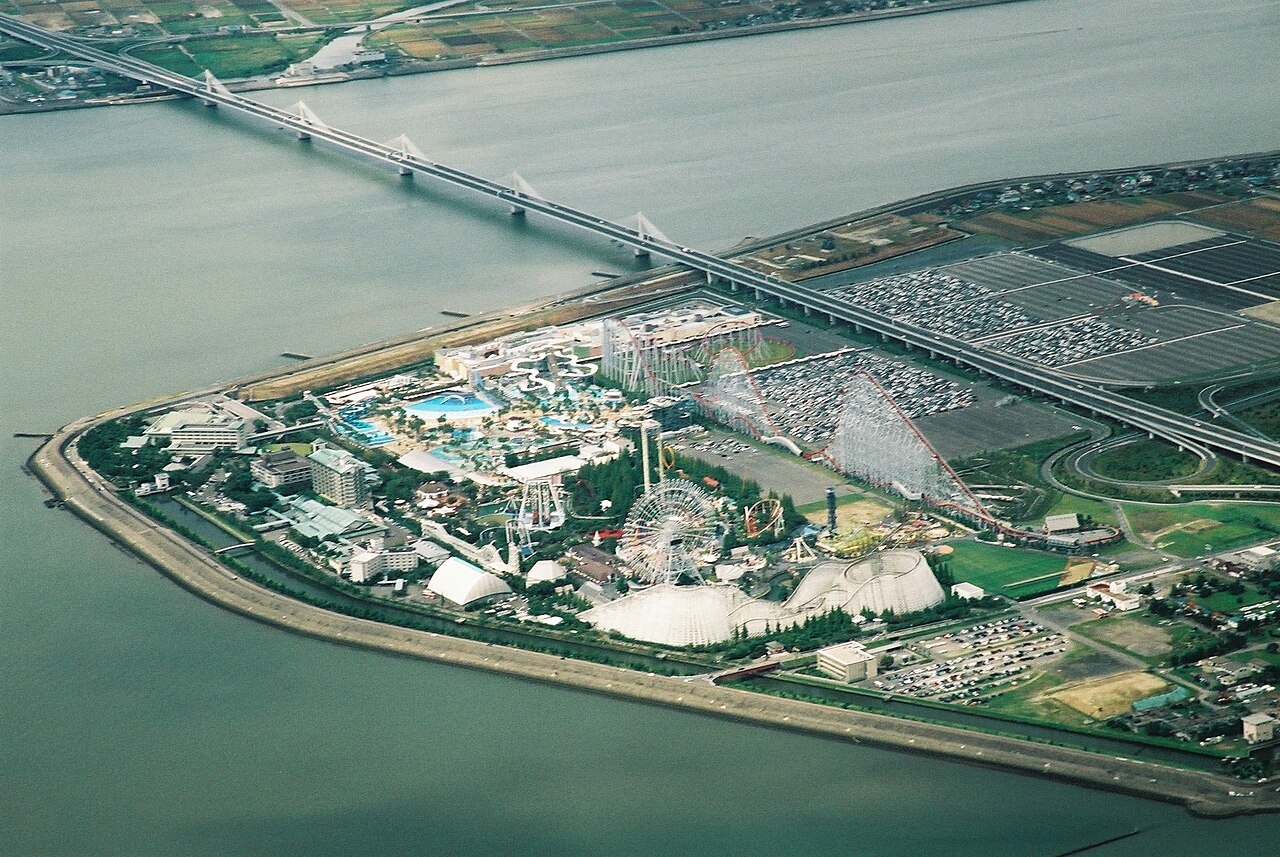
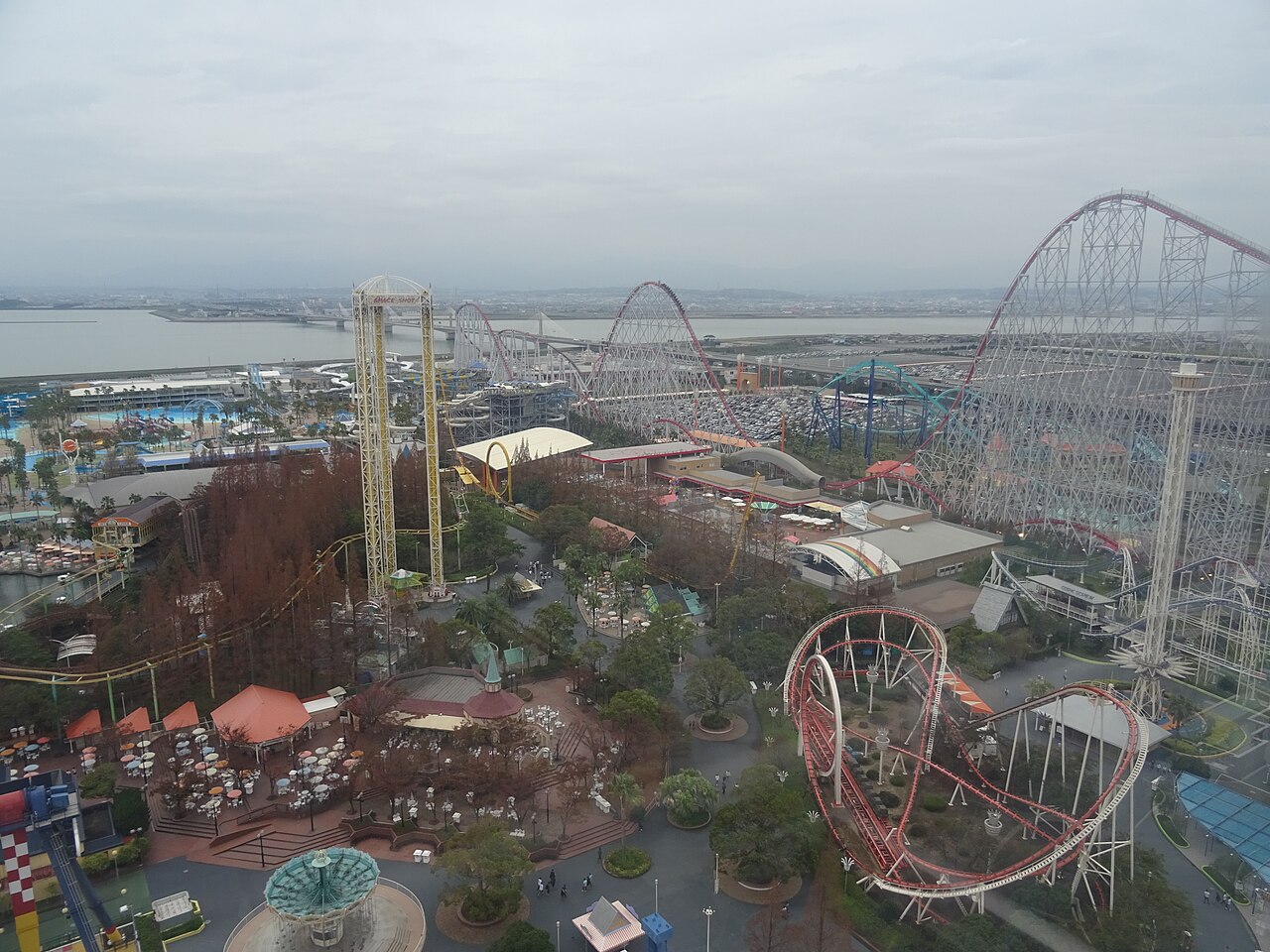
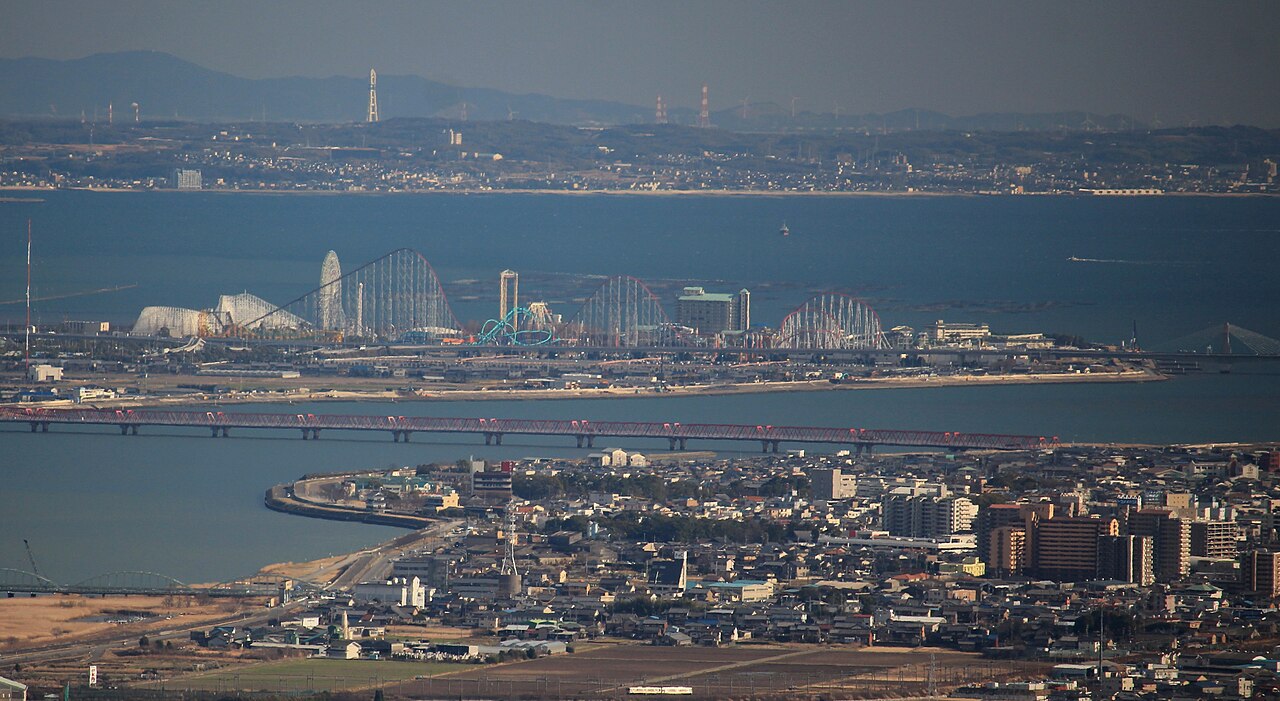
Nagashima Spa Land is a lot. That’s the first thing to say about it — it’s a lot, and nothing about the approach road, the featureless commuter train out of Kuwana, or the boxy signage prepares you for it. You come over the last rise of the bus route and there is just suddenly a wooden hillscape the size of a small district sitting on a spit of land in the Kiso River delta. That’s the coaster park. The water slide park is the thing next to it. The hot spring complex is the steaming roofline beyond that. The outlet mall is the one that looks like a suburban Phoenix strip. All of it is Nagashima, and all of it belongs to the same company, and collectively it is Japan’s answer to the question “what if Orlando, but more polite.”
In This Article
- Quick facts
- What Nagashima actually is (and isn’t)
- Steel Dragon 2000: the one you came for
- The other eleven coasters
- Beyond coasters: what the park actually does well
- Nagashima Onsen (the bit most foreigners skip)
- Water park and outlet mall
- Getting there from Nagoya (and the wider region)
- When to go, and when definitely not to
- Where to stay
- Is Nagashima worth it?
- FAQ
- Is the English signage good?
- Can I bring food into the park?
- Are the coaster height restrictions strict?
- Can I do Nagashima + Universal Studios Japan in one trip?
- What’s the deal with the onsen if I have tattoos?
- How does Nagashima compare to Fuji-Q Highland?
- What’s the story with the Morgan coaster heritage?
It’s the second-most-visited theme park in Japan after Tokyo Disneyland and the fourth-most in Asia — 4.2 million visitors a year, with a twelve-coaster rail count that is the country’s highest. But what makes Nagashima actually interesting, rather than just large, is that almost none of the western travel press covers it. Most guides will send you to Universal Studios Osaka or Fuji-Q Highland. Those are good parks. Nagashima is just better if what you want is a proper thrill-coaster park with short lines, and it sits between Nagoya and Osaka on a line that passes through exactly nothing else worth stopping for.
Quick facts
- Where: 333 Urayasu, Nagashima-cho, Kuwana, Mie 511-1135
- Getting there: From Nagoya, 20 min on the Meitetsu Kintetsu Line to Kuwana Station, then a 20-minute bus (¥600) to the Nagashima Onsen terminus. Or the direct highway bus from Nagoya Meitetsu Bus Center (50 min, ¥1,000). By car: Wangan-Nagashima IC on the Isewangan Expressway, the ramp lands you in the car park.
- Hours: 9:30-17:00 low season, 9:30-19:00 peak. The water park (Joyful Water Park) is summer-only, usually early July to early September.
- Cost: Entry + unlimited rides (the “Passport”) ¥6,000 adult, ¥4,000 child, ¥2,200 toddler. Entry-only ticket is ¥2,000; individual ride tickets then ¥500-¥1,000 each — worth it if you’re coming for two or three coasters only.
- When to go: Weekdays outside school holidays. The park is monumentally less pleasant on a summer Saturday, when the water park peaks, than it is on a Tuesday in early June. Avoid Golden Week (late April) and August Obon week at all costs.
- Official site: nagashima-onsen.co.jp/spaland (English version available).
What Nagashima actually is (and isn’t)
Nagashima Resort (ナガシマリゾート, Nagashima Rizōto) is a four-part complex operated by Nagashima Kanko Kaihatsu, a Mie-based firm that’s been building onto the same delta spit since 1964. In order of chronological appearance, the four parts are:
- Nagashima Onsen (1964) — the hot spring that started the whole place. Still operating as a traditional large-scale public bath complex with multiple indoor and outdoor baths. ¥1,800 day pass.
- Nagashima Spa Land (1966) — the amusement park proper. This is what people mean when they say “Nagashima.”
- Joyful Water Park (1980) — the outdoor water park, summer only. Twelve-section complex with wave pool, lazy river, and some of the steeper slide rides in Japan.
- Mitsui Outlet Park Jazz Dream (2002) — the outlet mall. 300 stores in a New Mexico-themed layout. Generally ignored by coaster-focused day trippers but genuinely useful if you’ve got a non-rider in your group.
What Nagashima isn’t is a themed park. Disneyland has Fantasyland, Universal has Hogwarts — Nagashima has “the coaster area” and “the kiddie area” and a general “family rides” zone. The theming is minimal. What you come for is the rides themselves, not the in-between. If that disappoints you, go to Osaka. If it liberates you — and for most coaster enthusiasts it does — Nagashima is the best park in Japan.
Steel Dragon 2000: the one you came for
Let’s deal with this one first because it’s why any westerner who’s ever watched a coaster documentary has heard of Nagashima. Steel Dragon 2000 (スチールドラゴン2000, Sutīru Doragon 2000) is the longest roller coaster on earth. 2,479 metres of track. It was built in 2000 as part of a millennium-year investment by Morgan Manufacturing (the California firm that also built Magnum at Cedar Point), and when it opened it simultaneously held three world records — longest, tallest complete-circuit, and fastest. It still holds the longest title. The tallest and fastest records have since fallen, but Steel Dragon is still tied with Fury 325 as the fastest coaster with a traditional lift hill, at 153 km/h.
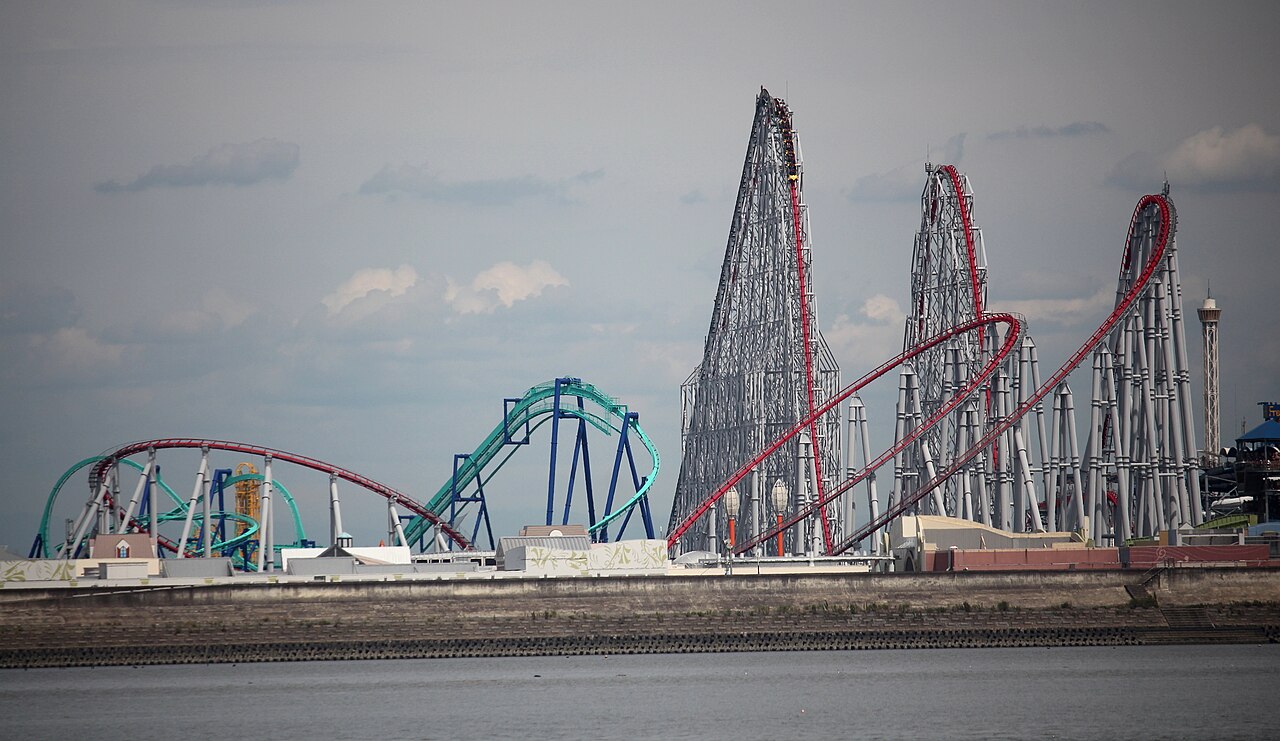
What the statistics undersell is how the ride actually feels. Most hyper-coasters (the 200-foot-plus category) are one big drop followed by diminishing airtime hills. Steel Dragon is a full run — after the first drop it enters a second 82-metre hill, then a series of airtime moments over what Morgan called the “swooping drops,” then a helix, then a tunnel, then a secondary lift, then another set of drops. You come off the ride having actually gone somewhere, which is rare.
Practical notes: the queue peaks 12:00-14:30, drops sharply 14:30-16:00, then rises again in the last hour. Your best window is the first ride of the day (gates open 9:30, get to the queue by 9:15) or between 14:45 and 15:30. On weekdays in shoulder season you can often walk straight on at either of those times.
The other eleven coasters
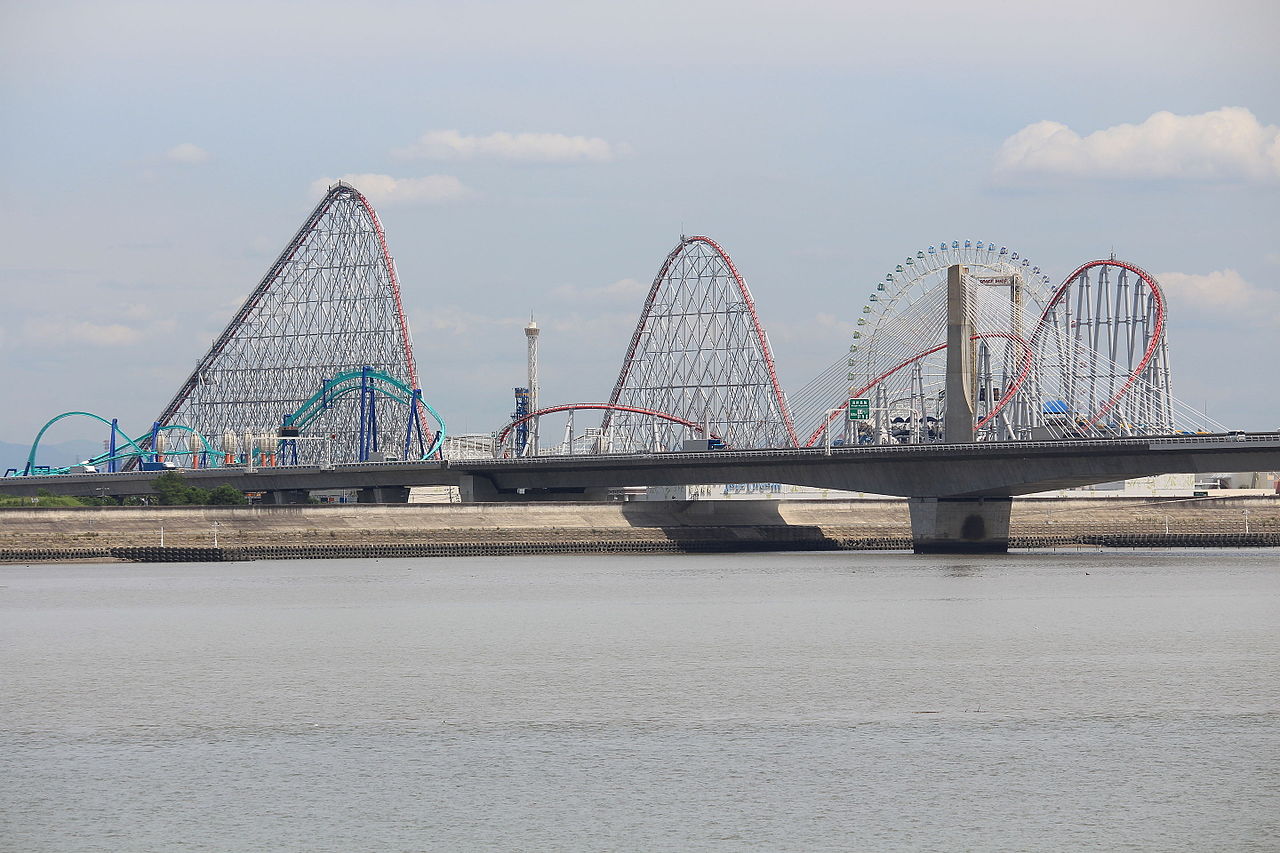
Twelve coasters. Nagashima has twelve. By comparison: Tokyo Disney Resort has three. Fuji-Q Highland has four. Universal Studios Japan has four including the Flying Dinosaur. Nagashima being at twelve is a fact that most casual travellers don’t absorb until they’re standing inside and can see half of them simultaneously.
The ones worth queuing for:
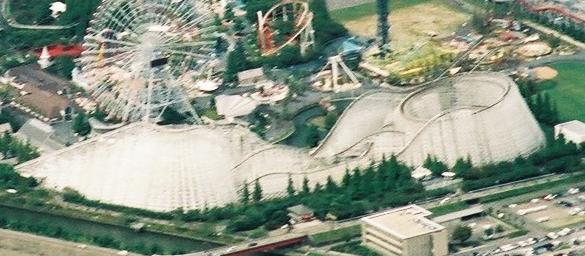
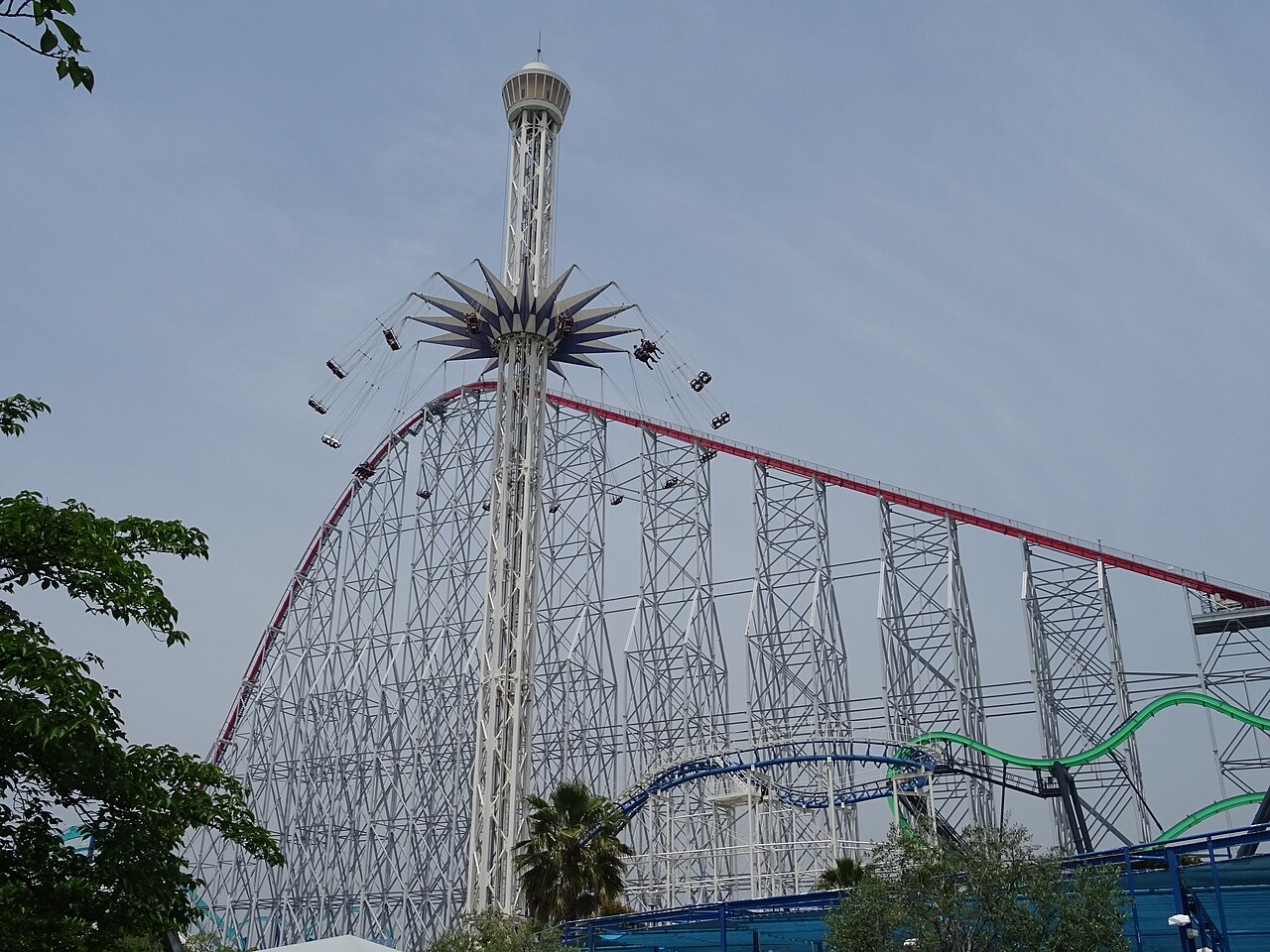
Hakugei (白鯨, “white whale”) is the wooden-steel hybrid that replaced the original White Cyclone in 2019. This is the park’s second-best coaster and for many enthusiasts the best — a Rocky Mountain Construction retrack that fired an ageing wooden structure into an inverted-hill, barrel-rolling monster. If you’ve been to a US park that has an RMC hybrid, you know the house style. If you haven’t, Hakugei is where you find out what modern wooden-track technology has done to the genre. Queue is usually 15-30 minutes shorter than Steel Dragon’s.
Acrobat is the park’s flying coaster — the first flying coaster in Japan when it opened in 2006. You lie face-down for the full run, simulating flight. Intense but short. Worth doing once for the novelty; the re-ride value is lower than the steel coasters.
Arashi is the S&S 4D free-spin coaster — a newer (2017) addition where individual ride cars rotate independently on side-mounted axes. Every ride is different because the spin is uncontrolled. Short but very intense. Short queues because it’s a polarising ride.
Shuttle Loop is the 1978 Schwarzkopf vintage single-loop coaster that the park kept running when most others in the world scrapped theirs. Historical interest if you like your industrial design; it’s fine as a ride, nothing special.
The other seven coasters are either family rides (Children’s Coaster, Peter Rabbit, Ultra Twister, Jet Coaster), or redundant spinning/looping steel (Wild Mouse, Looping Star). You can skip them and not feel you missed anything.
Beyond coasters: what the park actually does well
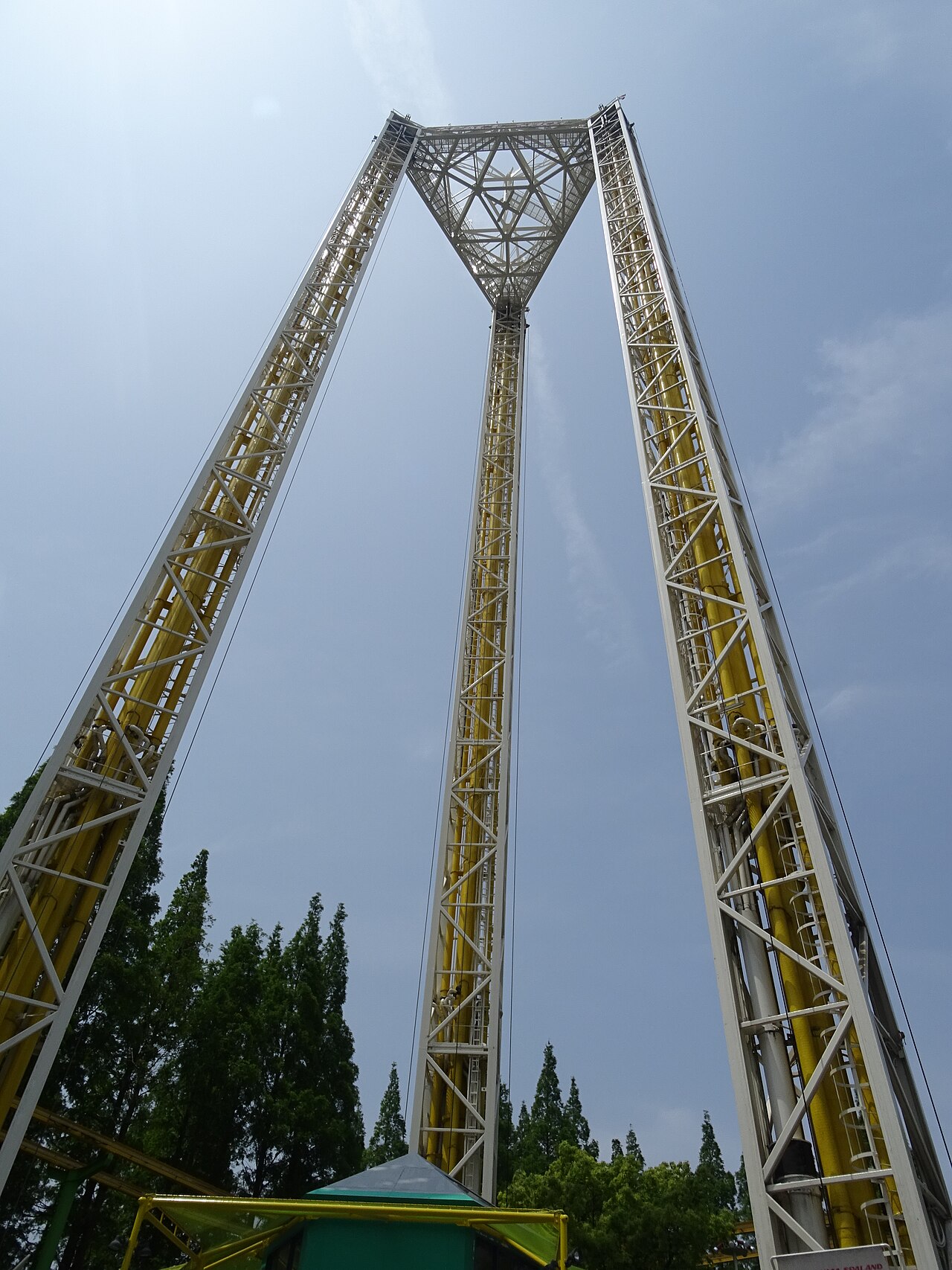
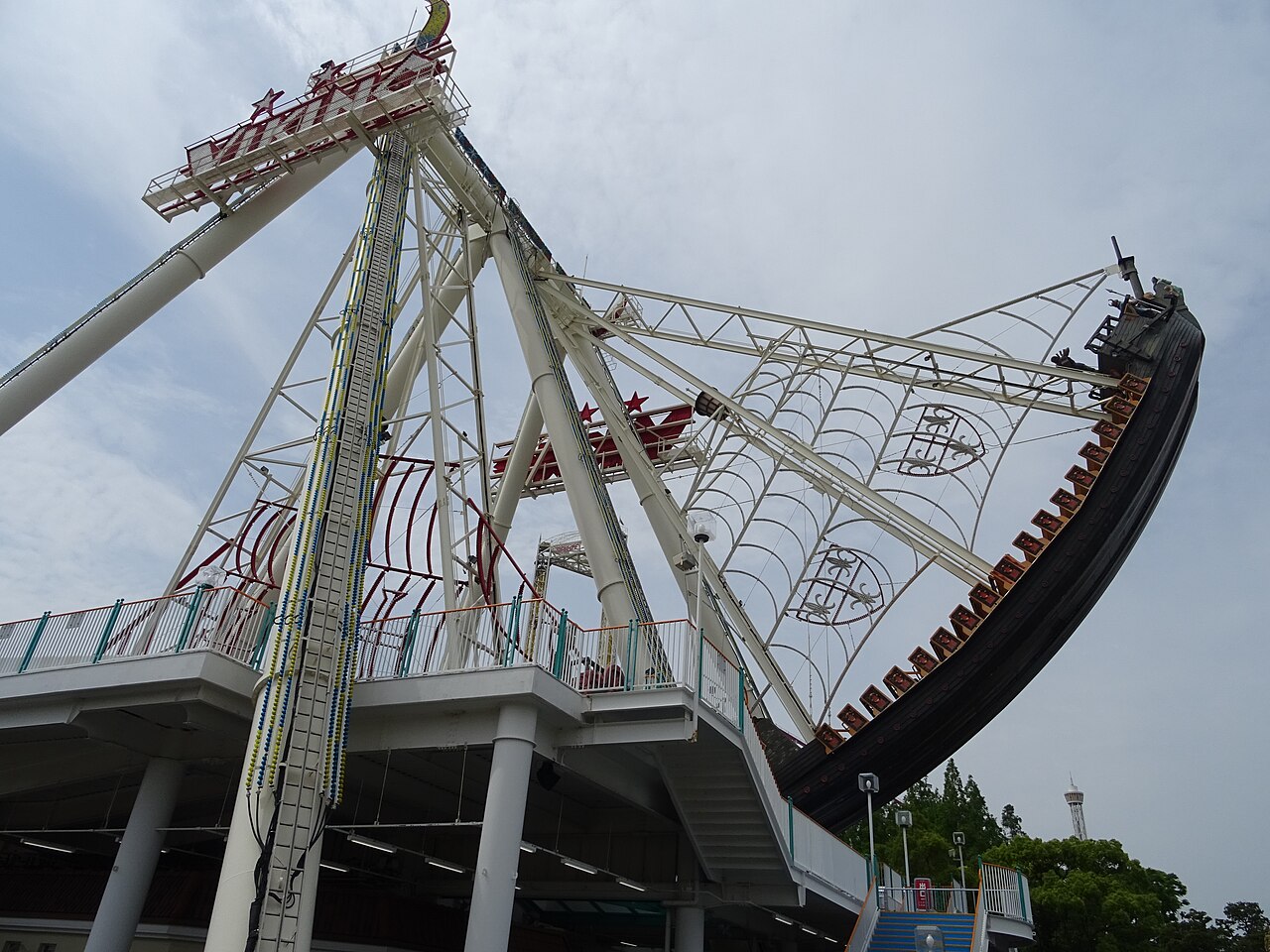
If you or someone with you isn’t a coaster person, the park still has a case. There are roughly sixty rides total and the flat rides are unusually good — Nagashima has put real money into flat rides, which most modern parks neglect.
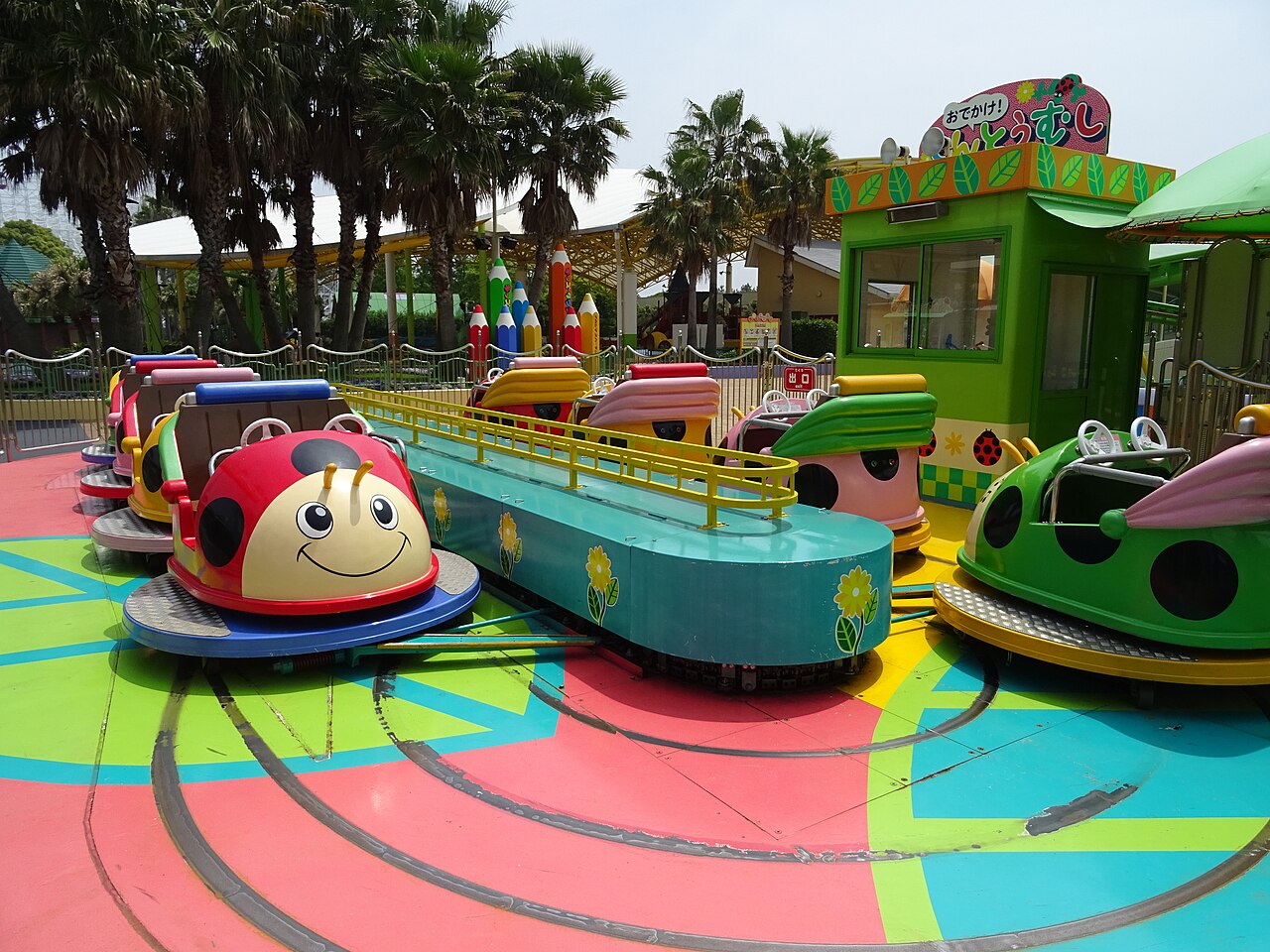
For smaller children, there’s a dedicated Kids Town zone that runs its own Ladybird coaster (a Zamperla Mini Mouse, lap-bar, under-seven appropriate) plus about fifteen smaller flat rides. Japanese theme parks generally understand the under-eight market better than Western parks do, and Nagashima is no exception — Kids Town keeps a toddler occupied for a couple of hours on its own.
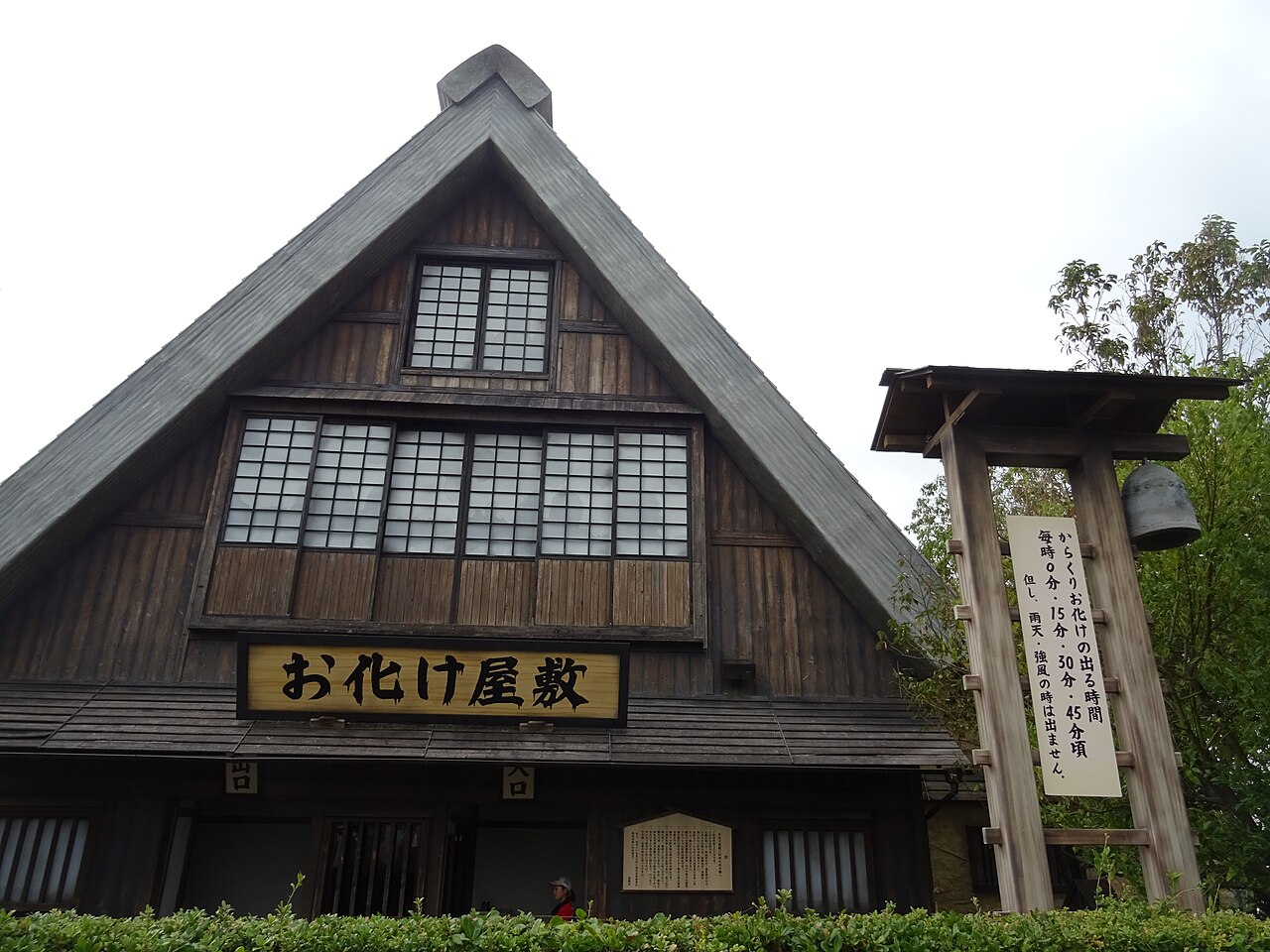
Haunted Mansion (お化け屋敷, obakeyashiki) deserves a specific mention. It’s a walk-through dark-ride attraction in a standalone building; the theming inside is genuinely well-done; and the final room involves an actress playing an onryō (vengeful spirit) who is allowed to touch you. Japan’s walk-through ghost houses have a specific cultural history — they’re a summer tradition tied to the Obon festival — and Nagashima’s is one of the better ones. ¥800 separate from the day pass.
Nagashima Onsen (the bit most foreigners skip)
The 60-year-old hot spring that started the resort is still there and still operating. It’s a public bath complex rather than a single pool — multiple indoor baths at different temperatures, two outdoor rotenburo with garden views, a sauna, a cold plunge, and a dining hall. The water comes from a ¥1.8 billion deep-well programme the resort runs for its own supply: sodium chloride spring at 70°C at source, brought down to bathing temperature in the circulation system.
This is useful to know because a lot of first-time visitors do the coaster park and don’t realise the onsen is a 10-minute walk away, part of the same ticket when bundled with the hotel. If you’re staying over and aren’t sure about the onsen, do it in the hour after the park closes — you come back wrecked from twelve hours of rides, you go in the rotenburo for forty minutes, you come out restored. ¥1,800 day pass, combined passes available.
Water park and outlet mall
The Joyful Water Park (ジャンボ海水プール, Jambo Kaisui Pūru, literally “jumbo seawater pool”) is the summer-only component, typically open July 1 to early September. It’s huge — ten separate slide rides, a wave pool the size of a city block, a lazy river, and a children’s zone. Entry is ¥3,500 separate from the amusement park ticket, or ¥7,500 for a combined Passport-plus-Water-Park pass. The combined pass is the right move if you’re there between July and September; trying to do both parks at ride-by-ride pricing doesn’t add up.
Mitsui Outlet Park Jazz Dream is the outlet mall that sits on the same spit of land. 300 stores including most Western brand outlets (Nike, Adidas, Gap, Levi’s, Coach) at 20-50% off retail. Free entry, accessible from the same car park. It’s genuinely fine — not a destination in itself, but a reasonable use of a spare couple of hours if your group has one shopper who wants to disappear while the other rides Steel Dragon for the fourth time.
Getting there from Nagoya (and the wider region)
By train: Nagoya to Kuwana on the Kintetsu Nagoya Line (express service) runs every 10-15 minutes, 20 minutes to Kuwana Station, ¥450. From Kuwana, the Nagashima Onsen bus leaves from the east exit, bus bay 2, runs every 15-20 minutes on weekends and hourly on weekdays, 20 minutes to the Nagashima Onsen terminus. ¥600. Total journey: 40-55 minutes depending on transfers.
By highway bus: The Meitetsu Highway Bus from Nagoya Meitetsu Bus Center (in Meitetsu Nagoya Station, above Nagoya JR station) runs 5-6 times a day direct to Nagashima Resort. 50 minutes, ¥1,000. This is the easier option with kids because there’s no transfer.
By car: Isewangan Expressway, Wangan-Nagashima IC. 30 minutes from central Nagoya, 2 hours from Osaka. 5,000 parking spaces, ¥1,500 per day. On-site parking fills completely by 10am on summer weekends — be there at opening or use the overflow lot with the shuttle.
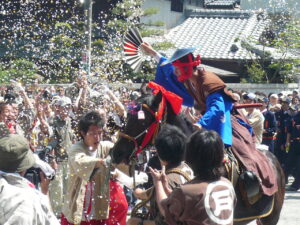
From further afield: Nagashima works as a day trip from Nagoya (obviously), Tado Taisha and the Ageuma festival across the river, Gifu (60 min), Kyoto (2 hours by Shinkansen to Nagoya then local), or Osaka (2.5 hours total). It is impractical as a day trip from Tokyo — Nagoya is 90 minutes each way on the Shinkansen, and combined with the Kuwana transfer you’re at six hours of transit for six hours of park. Stay over in Nagoya or use the Nagashima Garden Hotel Orange / Hotel Nagashima combo the resort operates.
For the broader region, Nagashima is a natural combine with Nagoya’s castle and samurai district, and further south with Mie’s Ise Grand Shrine. It is not a good combine with Kyoto on the same day — too much transit, too much contrast in rhythm.
When to go, and when definitely not to
There’s a six-to-one crowding spread across the year. A weekday in early June might see 8,000 visitors. A Saturday in Golden Week can see 50,000. This matters a lot because Nagashima’s capacity management is not especially modern — there’s no virtual queue, no paid fast-pass, and the popular rides simply develop four-hour lines on the worst days.
Best windows:
- Mid-May to mid-June (between Golden Week and summer school holiday)
- Mid-September to mid-October (post-Obon, pre-autumn colours weekend)
- Weekday mornings in February (cold, but nearly empty; dress for wind at 153 km/h)
Avoid:
- Golden Week (late April-early May): the worst week of the year, every year
- All of August (summer school holiday + water park peak)
- New Year (closed or very restricted hours, 29 Dec-2 Jan)
- Any Saturday in July-September if the weather forecast says above 30°C
Where to stay
The resort operates three on-site hotels — the Garden Hotel Orange, Hotel Nagashima, and Hotel Hanamizuki — all of which bundle park + onsen access into room rates. Useful if you’re doing multiple days; pointless for a single-day visit. The onsite hotel pricing is not discount (typically ¥20,000-35,000 per night for a family of four), but the onsen access and the ability to walk to the park gates at 9:25am is genuinely valuable on busy days.
Cheaper option: stay in Kuwana town, a short Kintetsu ride away. Business hotels around Kuwana Station run ¥8,000-12,000 for a twin. The tradeoff is the 20-minute bus each way vs the five-minute walk from the onsite hotels.
Cheapest option: do it as a same-day trip from Nagoya. Central Nagoya hotels are ¥7,000-15,000 at mid-range, you get an extra evening’s worth of city time, and the transit out and back is under an hour each way. Booking.com’s Nagashima-area listings cover both the on-site hotels and the Kuwana business options for comparison.
Is Nagashima worth it?
For coaster enthusiasts: yes, unambiguously. Steel Dragon 2000 alone justifies the trip if you’ve never ridden a full-length hyper-coaster, and Hakugei alongside it is a genuinely world-class RMC hybrid. Twelve coasters in one park, short queues on weekdays, low pricing vs Western equivalents.
For families with mixed-age kids: yes, with caveats. The under-eight market is well-served by Kids Town; teens get the thrill coasters; adults get the onsen. The caveat is the water park is seasonal and the outlet mall isn’t a destination, so if you’re travelling outside July-September and your group includes a non-rider, they will genuinely be bored.
For casual Japan travellers on a two-week itinerary: probably not. The opportunity cost is high — you could be in Nikko, the Yaeyama islands, or any of a dozen more culturally specific destinations. Nagashima is excellent at what it does but it’s a Western-style resort experience, which isn’t what most people come to Japan for.
For a single day from Nagoya, if you have a spare one: yes. Nagoya itself has about a day’s worth of sightseeing, and the rest of the region is thinner than people assume. Nagashima makes Nagoya make sense as a three-day stop rather than a one-day stop.
FAQ
Is the English signage good?
Yes — the park is one of the better ones in Japan for English. Ride signage, height requirements, and the main map are all trilingual (Japanese / English / simplified Chinese). Staff English is limited but ride instructions are demonstrated rather than spoken.
Can I bring food into the park?
Technically no, in practice they don’t check bags aggressively. The in-park food is fine, decent standard theme-park options (curry rice, ramen, ice cream, churros), ¥800-1,500 per plate. If you’re doing a full day you’ll want at least one meal inside, and the onsite restaurants near the entrance are better than the mid-park kiosks.
Are the coaster height restrictions strict?
Yes. Steel Dragon 2000 and Hakugei are 130cm. Acrobat is 140cm. They are measured at the entrance to the ride, every time — not by eyeball. If your child is close to the limit, measure them at home first; being turned away at the front of a 90-minute Steel Dragon queue is a specific kind of heartbreak we have witnessed.
Can I do Nagashima + Universal Studios Japan in one trip?
Yes, if you’re routing Nagoya → Osaka. They are different enough experiences that doing both on one trip makes sense — Nagashima for the pure-coaster day, USJ for the themed-IP day. Don’t try to do them on consecutive days without a rest day in between; the combined ride-queue fatigue is real.
What’s the deal with the onsen if I have tattoos?
The onsen complex technically prohibits visible tattoos, in line with most traditional Japanese hot springs. In practice, small tattoos can usually be covered with the waterproof patches available at the entrance (¥300) or from any convenience store. Large tattoo pieces are a problem — you may be refused entry. If tattoos are a dealbreaker, Kuwana town has a couple of newer spa facilities that are more relaxed about it.
How does Nagashima compare to Fuji-Q Highland?
Different propositions. Fuji-Q has the Mt Fuji backdrop and two of Japan’s most famous coasters (Fujiyama, Takabisha) but only four coasters total and a much smaller park. Nagashima has three times the coaster count, significantly better operational capacity, and a full spa/water-park/outlet bundle. Fuji-Q wins for the Fuji views and for anyone specifically collecting the Takabisha front-seat experience; Nagashima wins for everything else.
What’s the story with the Morgan coaster heritage?
Morgan Manufacturing (California) built Steel Dragon in 2000 and a handful of other Japanese coasters in the late 1990s — it was a brief but significant period when an American manufacturer dominated Japanese hyper-coaster construction. Morgan was acquired by Bolliger & Mabillard in 2001 and the name retired. Steel Dragon is therefore one of the last and largest Morgan-built machines in existence, which is part of why it still attracts coaster-pilgrim tourism 25 years on.