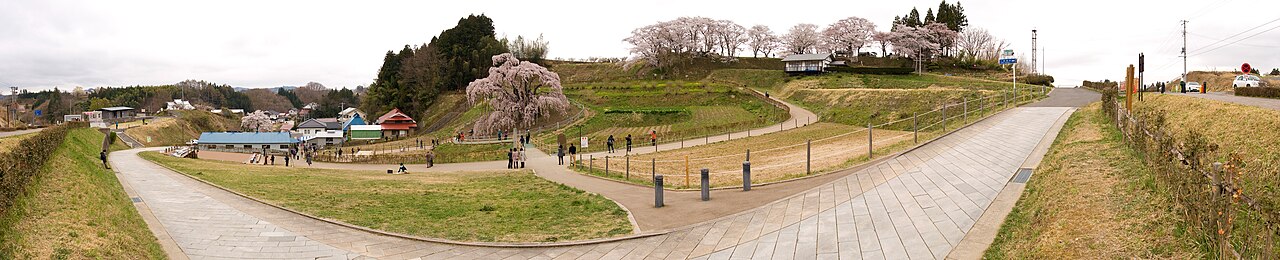
Pull into the parking field at the base of the hill on a Sunday in mid-April and you’ll walk the last five minutes up a gentle slope with maybe two thousand other people. Nobody is talking. The first time you come round the bend and actually see the Miharu Takizakura you’ll understand why — it’s a single tree, over thirteen metres tall, and its branches fall outward and downward in a pink curtain that spreads further than a tennis court. People stop dead. Somebody always says “嘘でしょ” (“you’re kidding”) under their breath, and then everyone starts moving again.
In This Article
- Quick facts
- What you’re actually looking at
- The timing problem
- Going during the bloom: what to expect on the ground
- The night light-up (which is the actual experience)
- Getting there without a car (the shuttle, the taxi, the walk)
- Is it worth it?
- Miharu’s other cherries (which almost nobody sees)
- Beyond the cherries: what else is in Miharu
- Miharu-goma and the Takashiba Dekoyashiki craft village
- Lake Sakura and Miharu Dam
- Commutan Fukushima
- Abukuma Cave (close, but in Tamura)
- Where to stay
- Eating in Miharu
- Cherry-season strategy for a typical three-day visit
- FAQ
- Can you see the Miharu Takizakura in one day from Tokyo?
- When is peak bloom in a typical year?
- Is the admission fee charged outside the bloom season?
- How does it compare to the other two “Three Great Cherries” of Japan?
- Can you photograph the tree with no other people in the frame?
- Is the area safe and fully reopened since 2011?
- What are the light-up times and does the ¥300 ticket cover the evening?
The Takizakura (三春滝桜, Miharu Takizakura, “Miharu’s waterfall cherry”) is one of the Three Great Cherry Trees of Japan, alongside the Usuzumi-zakura in Gifu and the Yamataka Jindai-zakura in Yamanashi. It is estimated at over a thousand years old. The trunk is 8.1 metres around at chest height. The bloom lasts maybe ten days if the weather cooperates. You are coming a long way to look at a tree, and the tree justifies the trip — but only if you get the timing right, and only if you plan around the crowds. Here is how to do both.
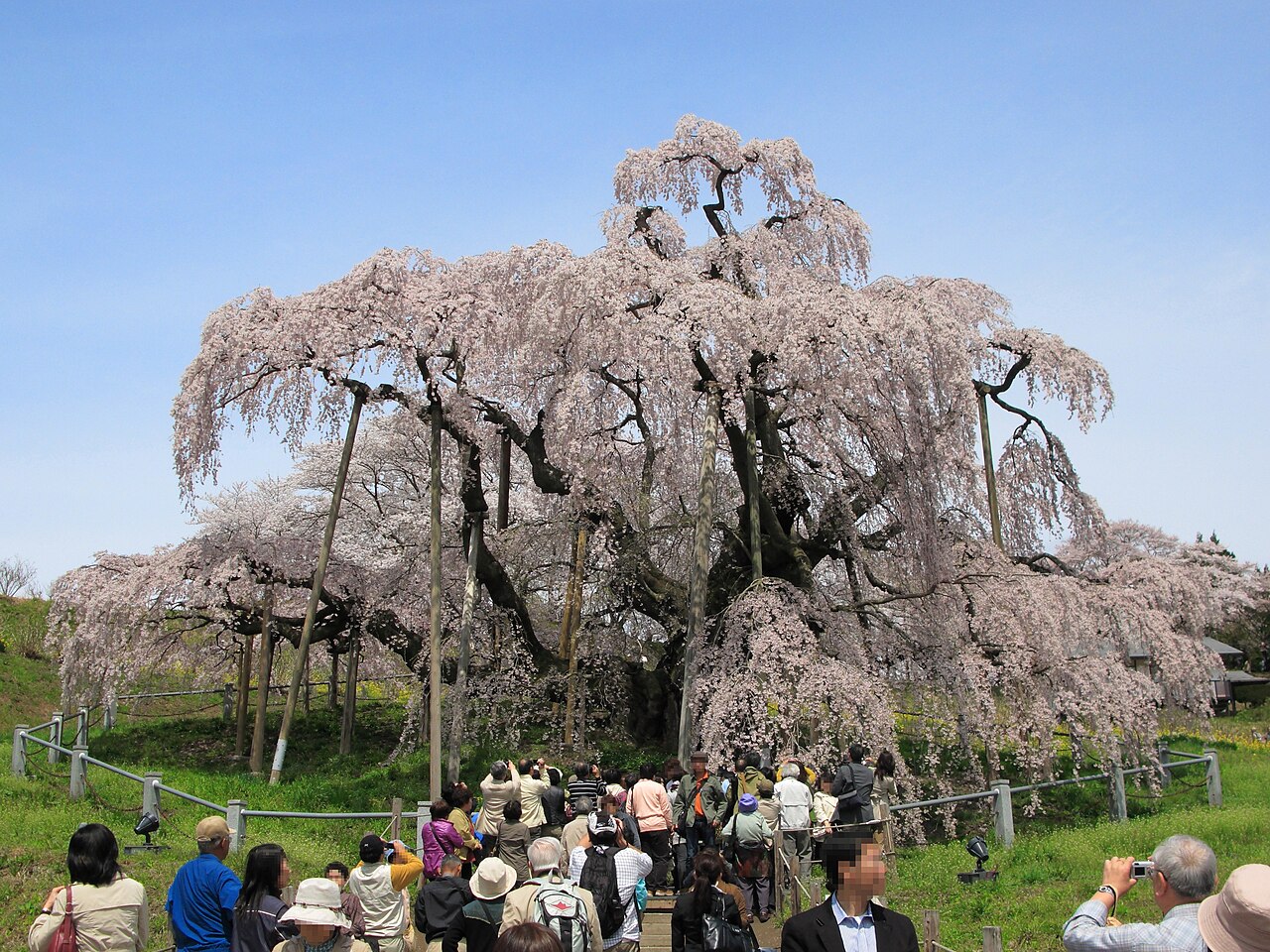
Quick facts
- Where: Takizakura, Taki, Miharu-machi, Tamura-gun, Fukushima 963-7714
- Getting there: JR Banetsu-to Line from Koriyama to Miharu Station (12 min, ¥260). Then the Takizakura shuttle bus from the station during bloom season — around 25 minutes. Off-season or outside the bloom window, you need a car or taxi: the tree is 6.3 km from Miharu Station with no regular bus.
- Hours: 6:00-18:00 during bloom season (extended for evening light-up, see below). Off-season the grounds are effectively open all day; off-peak nobody is collecting admission.
- Cost: ¥300 during the bloom season for anyone in high school or older; free for junior high and younger. Free outside the bloom window.
- When to go: Mid to late April for peak bloom. The tree is a beni-shidare (red weeping) variety — it flowers later than the Somei-yoshino cherries that dominate Tokyo. Koriyama in general blooms roughly a week after Tokyo; the Takizakura usually lags the Koriyama Somei-yoshino by another four or five days.
- Official site: town.miharu.fukushima.jp (Miharu Town, Japanese) and fukushima.travel/miharu-takizakura (Fukushima tourism, English)
What you’re actually looking at
It is worth knowing what makes this tree different from every other cherry you have seen in Japan, because the photographs do not do it justice — they flatten the scale.
The Takizakura is a specific cultivar of Prunus pendula called beni-shidare (紅枝垂, “red weeping”). Almost every cherry tree you see on a Tokyo park walk is Somei-yoshino (染井吉野) — a late-Edo hybrid, white-pink, upright, and cloned to the point that every Somei-yoshino in Japan is genetically identical. Somei-yoshinos live roughly eighty years. Beni-shidare trees, grown from seed and left to their own devices, can live a thousand. The Takizakura is the headline example.
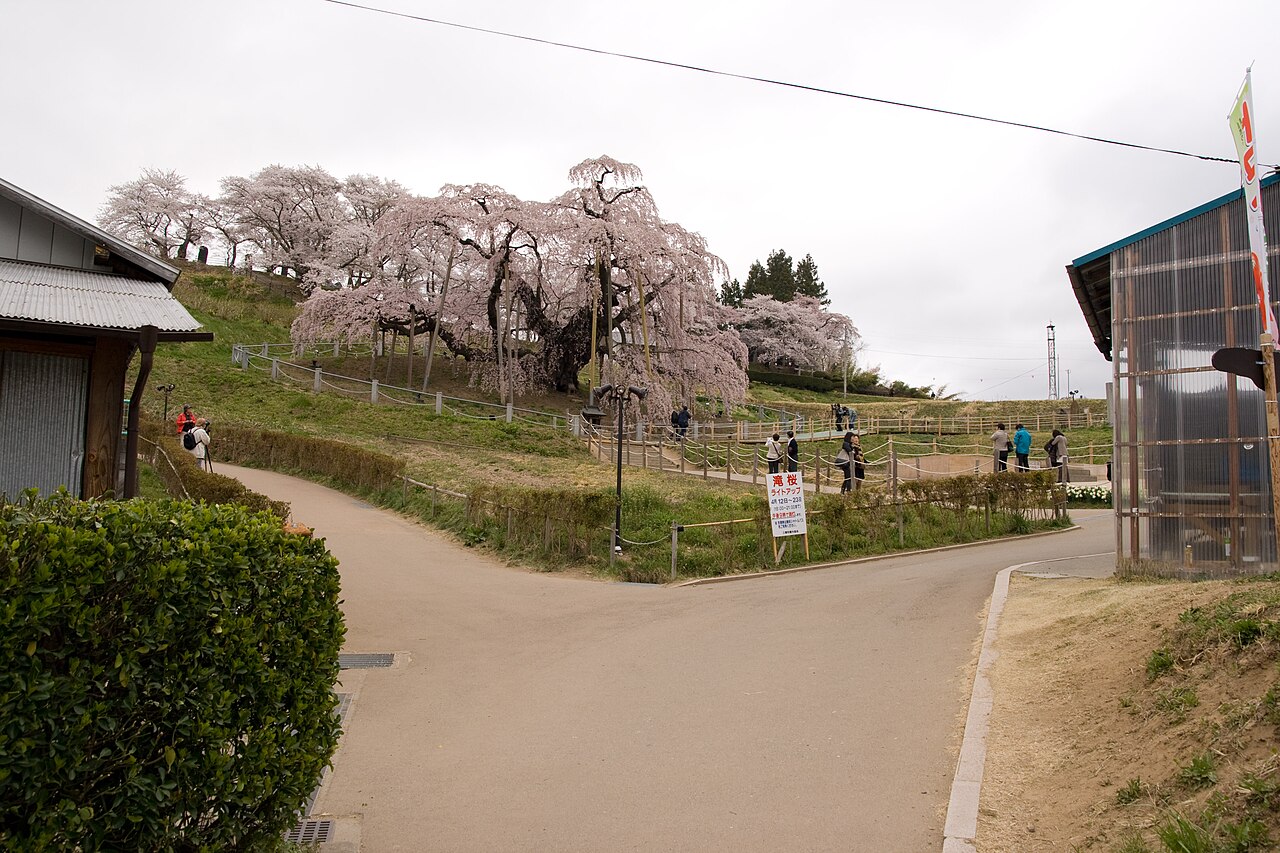
The measurements on the official notice board: height 13.5 m, trunk circumference at 1.2 m above ground 8.1 m, root spread 11.3 m, branch spread 14.5 m south, 14.0 m west, 11.0 m east, 5.5 m north. That north-south-east-west asymmetry is the tell of a tree that has grown outdoors on a slope for a thousand years rather than inside a temple precinct — it has leaned into the light and away from the wind for forty human generations.
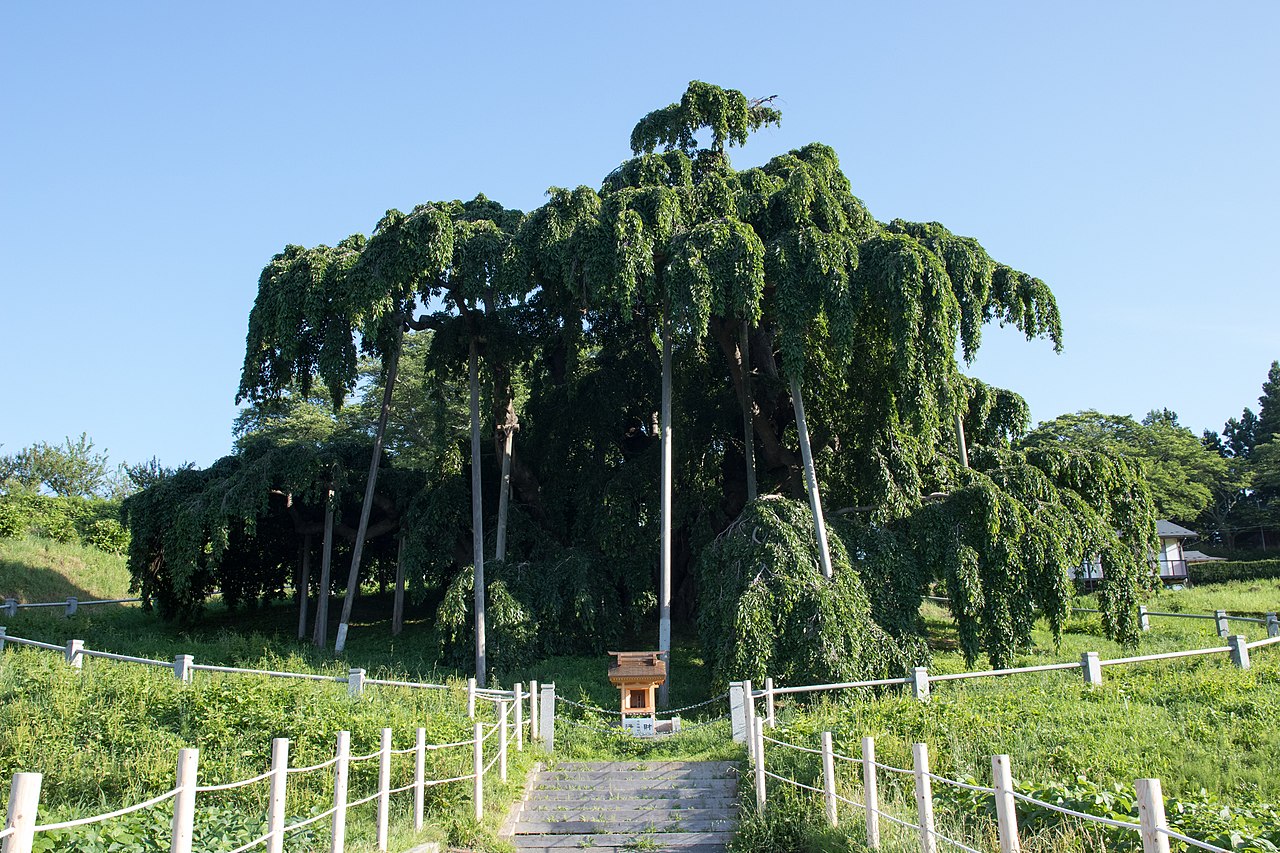
It was designated a National Natural Monument on 12 October 1922, the first cherry tree in Japan to get that status. The Miharu-han (the local feudal domain) protected it from the late Edo period onward as an oyō-boku (御用木, “official tree”). The poet Kamo no Suetaka, in the 1830s, wrote a verse about blossoms “reaching to every corner of Oshu” that fixed the tree in the national imagination. Since then it has only grown more famous.
The timing problem
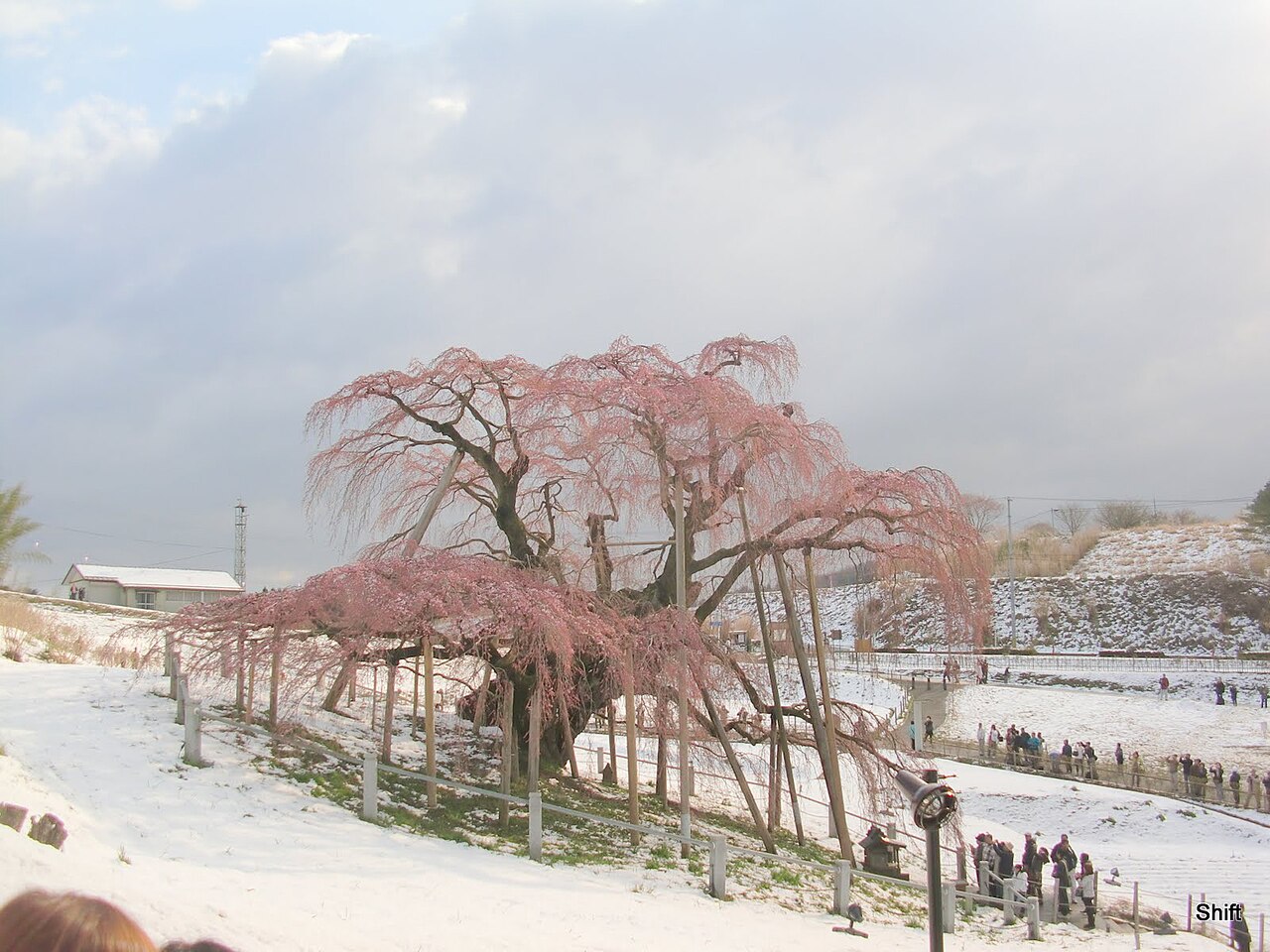
You have a roughly ten-day window for peak bloom, and it moves. The Miharu tourism association posts a daily bloom update on their Japanese-language site from late March onward, ranked from tsubomi (蕾, bud) through saki-hajime (咲き始め, starting to bloom) to mankai (満開, full bloom) to chiri-hajime (散り始め, starting to fall). Watch the page. In a normal year mankai hits in the third week of April; in warm years it can be as early as 10 April, and in cold years it can push past 25 April.
Two things to keep in mind when you’re trying to book train tickets from Tokyo:
- The Takizakura is a beni-shidare, which means it opens later than the Somei-yoshino cherries. If Tokyo hit peak bloom on 30 March, the Takizakura will usually peak around 18-22 April. That’s a three-week lag, not a few days.
- Altitude matters. Miharu sits at about 370 m, noticeably higher than the Pacific coast. A warm week in Iwaki does not necessarily mean a warm week in Miharu.
If you’re booking flexible lodgings rather than locking a date a month out, you have a better chance. Koriyama is twelve minutes down the train line and has around thirty business hotels; watching the bloom forecast and booking 48 hours ahead is the safest approach if your schedule allows.
Going during the bloom: what to expect on the ground
During the peak bloom window you are looking at somewhere between 150,000 and 200,000 visitors across roughly ten days. The tree is on a hill above paddy fields, with a dedicated viewing area of maybe 80 metres by 40 metres around the base. The path is one-way: you enter at the south, loop clockwise around the tree, exit north. Wheelchair access is possible on the lower loop but the upper loop has steps.
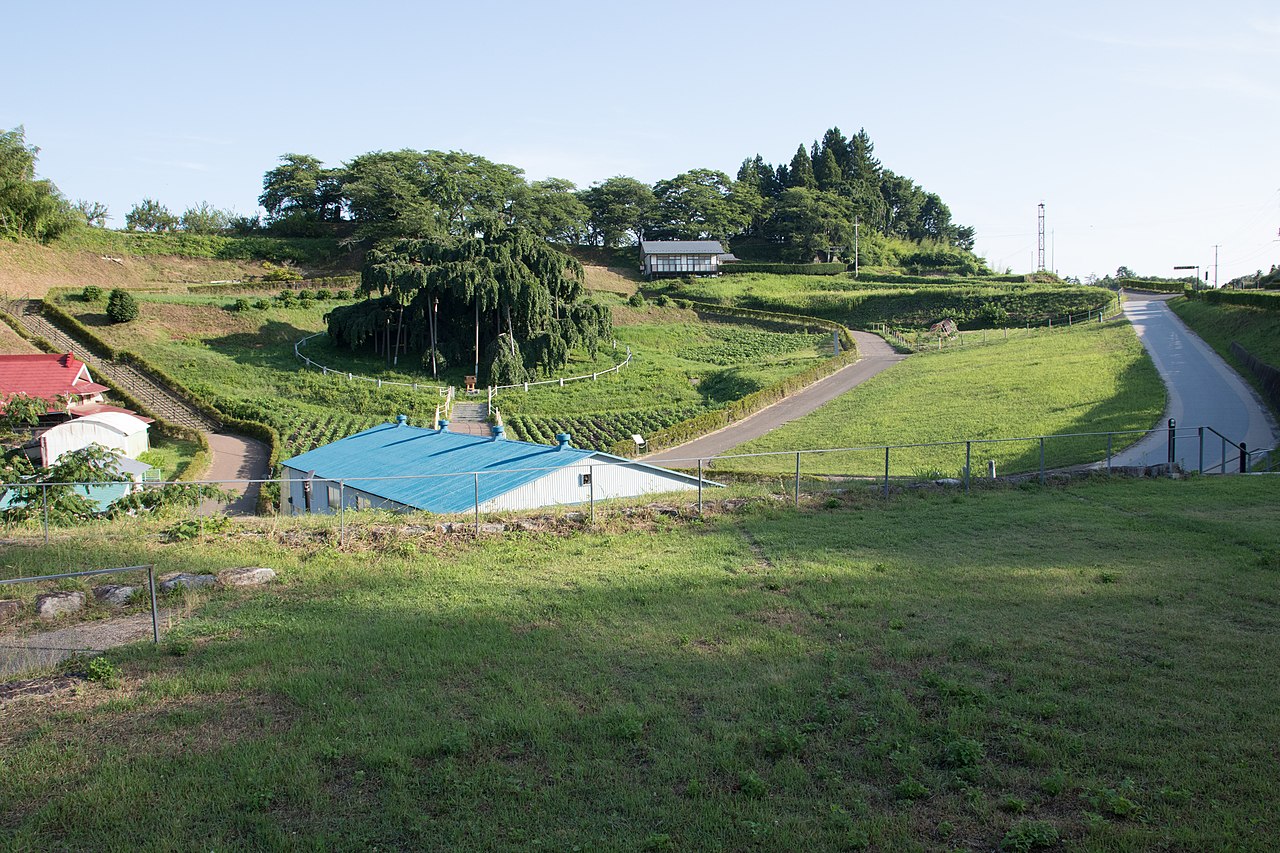
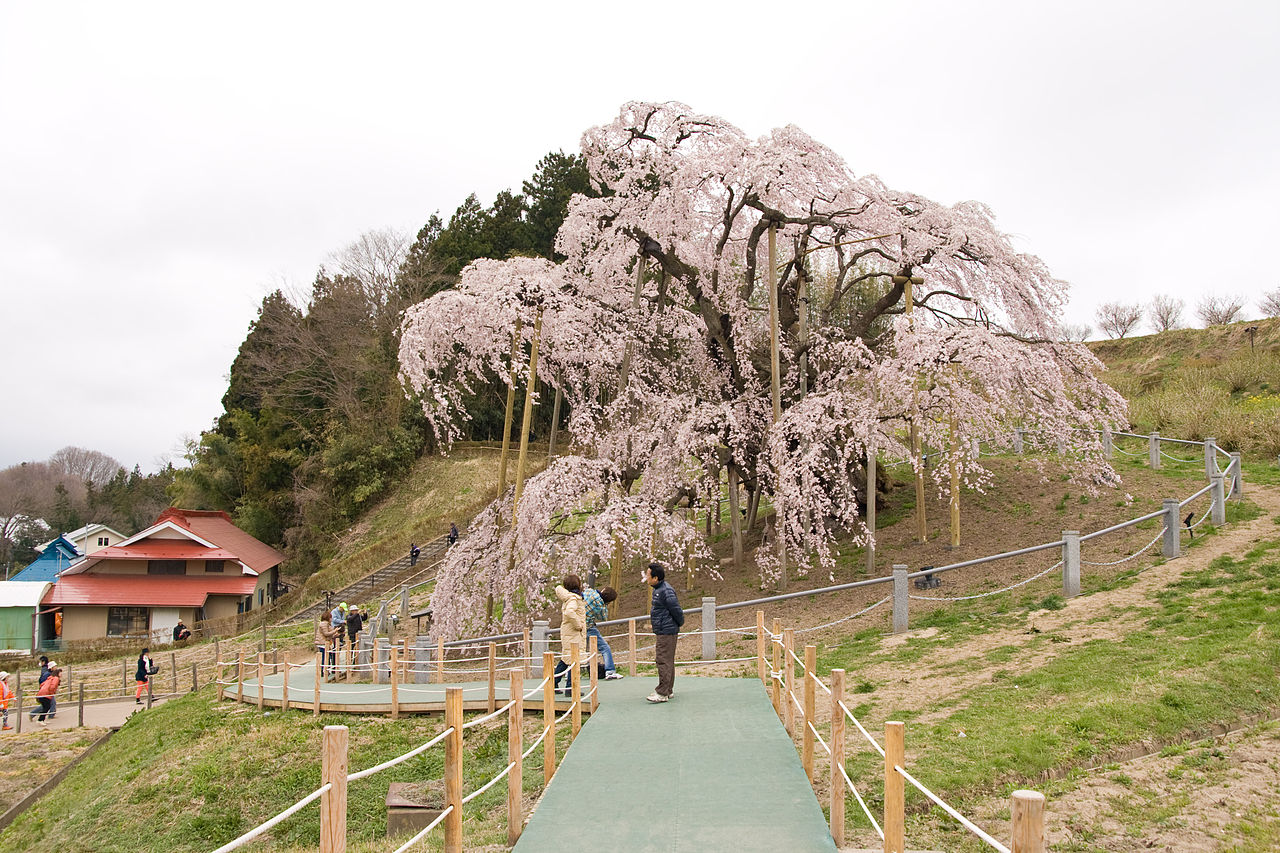
Arrive early or arrive late. The car parks at the bottom of the hill hold 850 vehicles. On a sunny Saturday at peak they are full by 09:30. If you are driving, aim to be parked by 07:00 or after 16:00. If you are on the shuttle from Miharu Station, the first bus is usually around 07:30 and the last is an hour after sunset during light-up.
The 30-minute tourist stops aren’t the point. Most of the tour buses give passengers about twenty-five minutes on the hill, which is enough to see the tree once, photograph it once, and leave. You are better off giving yourself a full hour. Walk the perimeter twice — once slowly, once with a camera — and sit for ten minutes on one of the benches above the tree. The viewing angle changes every five metres; a second lap almost always finds something the first one missed.
The night light-up (which is the actual experience)
The Miharu Tourism Association runs an evening illumination throughout the bloom period, usually from around 18:00 to 21:00. The lighting is warm, positioned at ground level behind the tree, and it turns the blossoms from pink into something closer to molten gold at the edges and deep pink toward the centre.
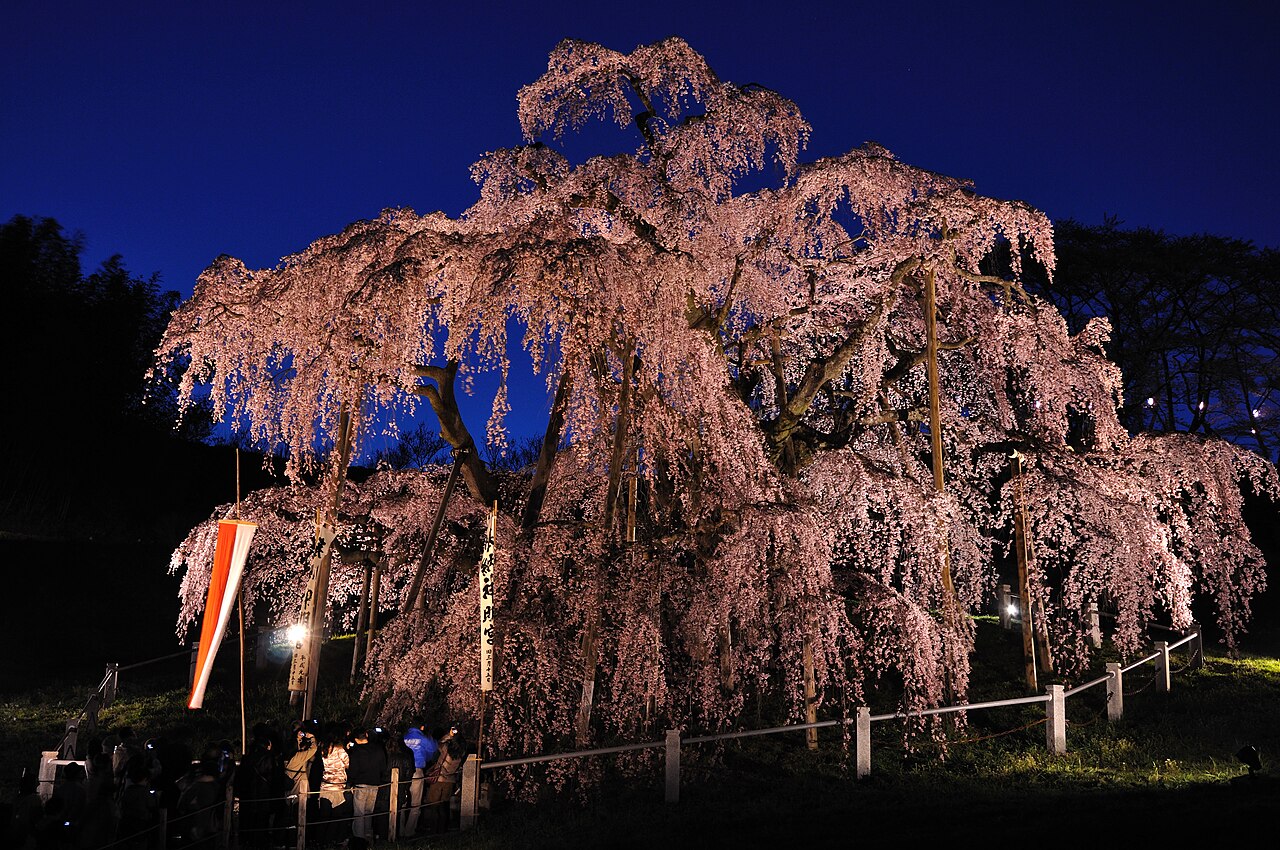
The night view is genuinely a separate experience from the daytime one. The tour buses are gone by 17:00. The tripods come out around 18:00. The air is colder — you are 370 m up, in April, and the wind off the hills can push the effective temperature down to single digits. Bring a jacket even if the afternoon was 15°C.
A practical note: the ¥300 admission gets you in for the whole day, so if you come during the afternoon, keep your ticket and come back at dusk. The gate reopens after a short closed interval in the late afternoon (usually 17:30-18:00) to clear the day crowd and reset for the evening.
Getting there without a car (the shuttle, the taxi, the walk)
The Takizakura is 6.3 km from Miharu Station — closer to a 25-minute drive than a walkable distance. Your options, in rough order of sanity:
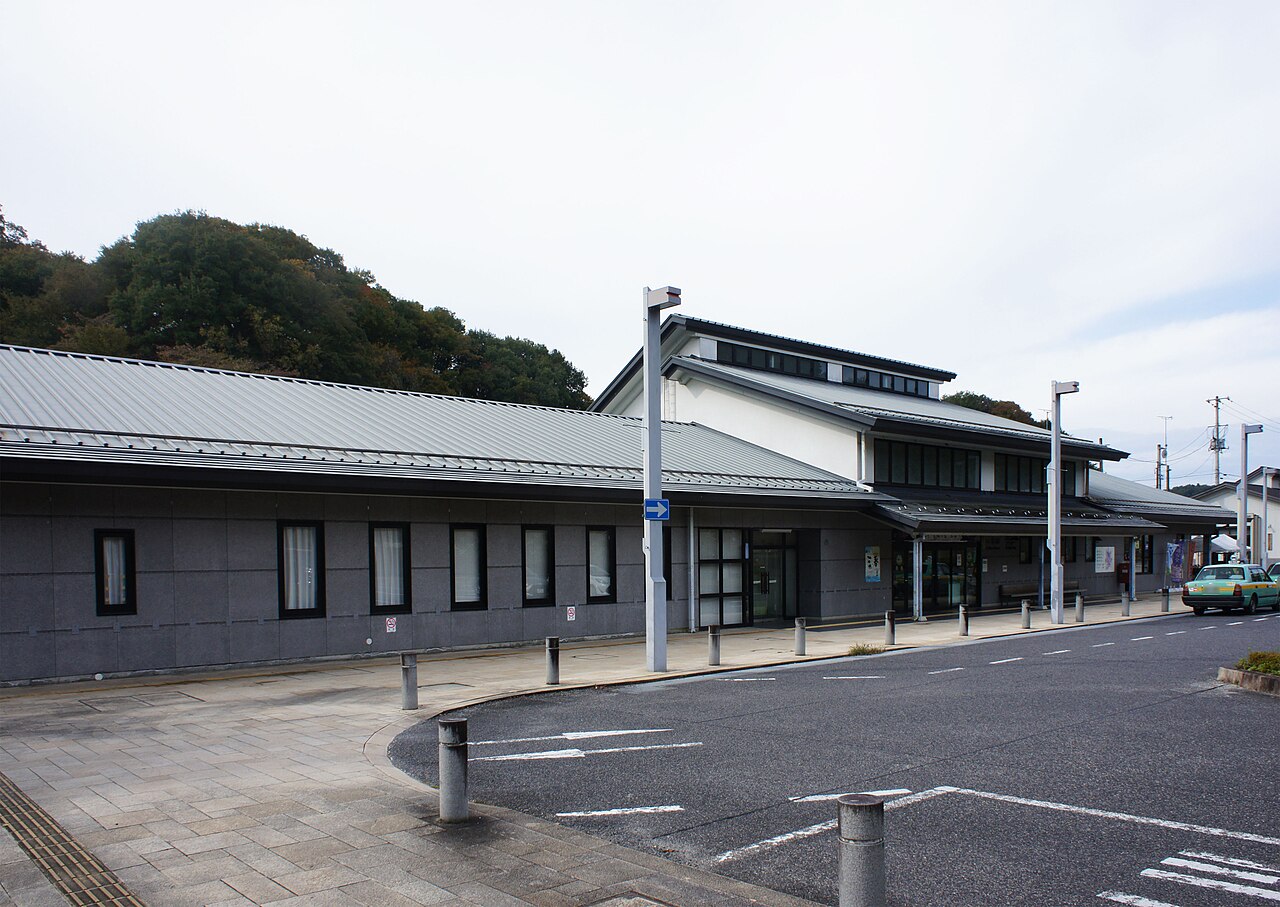
Takizakura-go shuttle bus: runs only during the bloom period, usually the first or second week of April through the third week. From Miharu Station, a one-day pass is around ¥700 and a round-trip single is around ¥500. It picks up directly outside the station and drops at the Takizakura parking field. The first bus is around 07:30, the last is timed for the end of the light-up (usually around 21:30 from the tree). Schedule is posted on the Miharu Tourism Association’s site in late March.
Taxi: a one-way taxi from Miharu Station to the Takizakura is around ¥2,500-¥3,000. There is a taxi rank directly outside the station but during the peak week the queue can be forty minutes. Don’t rely on it as a backup.
Rental car from Koriyama: the most flexible option if you are planning to combine the Takizakura with Abukuma Cave or the other Miharu cherries (see below). Budget around ¥6,000-¥8,000 for a half-day rental from Koriyama Station. Parking at the Takizakura is free; queuing to park at peak is not.
The walk: technically possible, probably unpleasant. It’s 6.3 km on a winding rural road with no footpath for the last 4 km, through paddy-and-orchard country with no shade. If the shuttle has stopped for the day and you are stuck, walk 30 minutes to the nearest convenience store and call a taxi from there.
Is it worth it?
A thousand-year-old cherry tree is worth going out of your way for once. Two qualifications:
If you can’t hit peak bloom, do not come. The Takizakura out of bloom is a big bare tree on a hill. You can see the shape, you can sit under it, you can appreciate the age — but you will not understand why people write poems about it. The bare-branch version is a hiking destination. The mankai version is a pilgrimage.
If you only have one day for a cherry-blossom trip from Tokyo, there are closer options. Miharu is roughly 2 hours by shinkansen to Koriyama plus 12 minutes local. If you are on a tight schedule, the Takizakura probably isn’t the right pick — the day trip from Tokyo to the Takato Cherry Park in Nagano is similar in time and easier to combine with other stops. But if you are spending two or three nights in Koriyama, or combining the Takizakura with an Aizu-Wakamatsu loop, it is the headline of the whole trip.
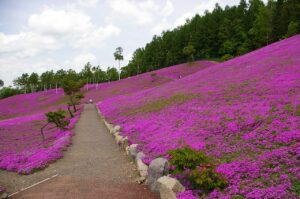
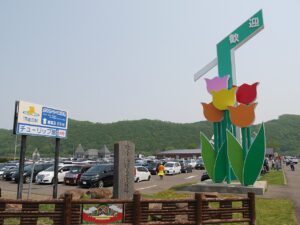
For what it’s worth, out of the three “Great Cherries” of Japan, the Takizakura is generally ranked highest by people who have seen all three. The Usuzumi in Gifu is paler and more fragile-looking; the Jindai in Yamanashi is older but less dramatic in shape. The Takizakura has the scale, the colour, and the setting all working together. (If you are pursuing named-flower destinations across Japan more broadly, Takinoue’s moss-pink carpet in Hokkaido and the Kamiyubetsu tulip park are the next-best-known seasonal flower sights in the north.)
Miharu’s other cherries (which almost nobody sees)
The town’s name, Miharu (三春), literally means “three springs” — plum, peach, and cherry, all blooming more or less together in a compressed Tohoku spring. The headline tree gets 200,000 visitors; the rest of Miharu’s cherries get maybe a thousand between them.
A partial list, all within a 30-minute drive of the Takizakura:
- Jigan-ji Temple Shidare-zakura (地蔵院): a 400-year-old weeping cherry in a temple precinct on the way back to Miharu Station. Smaller than the Takizakura but with no crowds and a free-to-enter temple courtyard around it.
- Nanauchi Ōzakura (七内大桜): a child of the Takizakura, genetically, about 5 km south. Three metres shorter, half the crowds, arguably the best place to photograph a Takizakura-style tree without tripods in your frame.
- Kassenba-no-shidare-zakura (合戦場のしだれ桜): technically in neighbouring Nihonmatsu city, 20 minutes by car from Miharu. Two weeping cherries side by side in the middle of a rice paddy; photographs well at golden hour.
The Miharu tourism office puts out a sakura-meguri (cherry-tour) map every year marking about forty notable trees across the town. It is available at the station information desk during the bloom season. If you have two days in the area, the second day is better spent on the map than on a second visit to the main tree.
Beyond the cherries: what else is in Miharu
Miharu is a small town (population around 17,000) and genuinely worth a few hours outside of sakura season. A few things that are open year-round:
Miharu-goma and the Takashiba Dekoyashiki craft village
The Miharu-goma (三春駒, “Miharu horse”) is a small wooden horse figurine, black-lacquered, with red-and-white tack painted on, and it is one of the three great folk toys of Japan alongside the Kokeshi doll and the Akabeko of Aizu. The carving has been made in the Takashiba Dekoyashiki (高柴デコ屋敷) hamlet on the Miharu–Koriyama border since the early Edo period; the same hamlet also produces Miharu hariko (三春張子), painted papier-mâché dolls descended from castle-town souvenirs.
Four workshops in Takashiba are open to visitors. You can watch the painting process (the black-lacquer base is applied by hand, one coat at a time, and dried for a week between coats), and every workshop sells finished pieces from around ¥800 for a small horse up to ¥30,000 for a full ceremonial set. It’s a 15-minute drive from Miharu Station and a much quieter cultural half-day than anything in Koriyama proper.
Lake Sakura and Miharu Dam
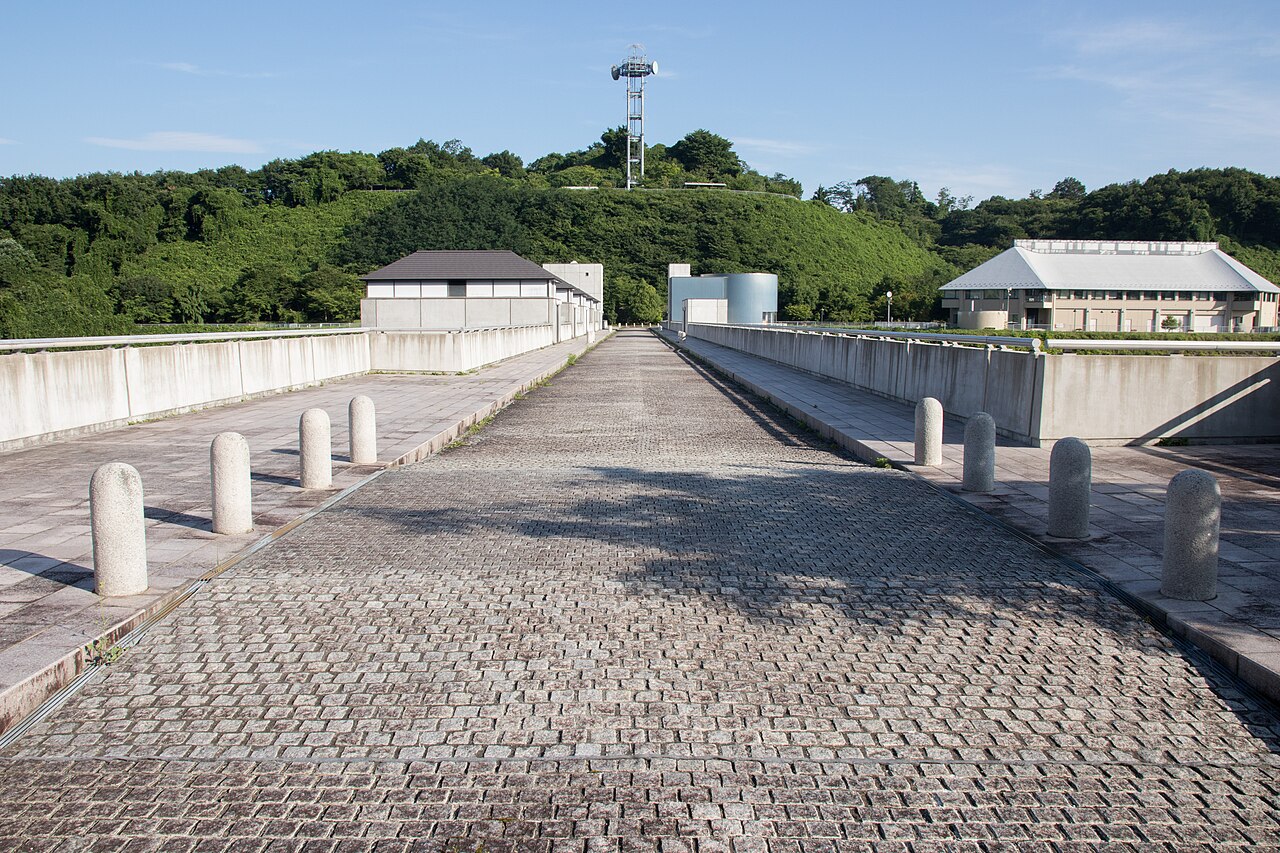
Built in 1998 on the Ōtakine River, the Miharu Dam created Lake Sakura (さくら湖, Sakura-ko) — a narrow, 3 km reservoir that is one of the ten best foliage-and-blossom drives in Tohoku. The road around the south shore is free and almost empty on a weekday; there’s a small visitor centre at the dam itself that shows how the dam was engineered around an existing cluster of old cherry trees. In April the lake shore is a second cherry destination in its own right.
Commutan Fukushima
A fifteen-minute drive from the Takizakura, Commutan Fukushima (コミュタン福島) is the prefecture’s environmental education centre. Free entry. It covers the 2011 Tohoku earthquake, the tsunami, and the Fukushima Daiichi accident in plain-spoken English and Japanese. It is not a light visit. It is also one of the best explanations of the decontamination and rebuild work you can find in the region, and worth ninety minutes if you are interested in the recovery context of the whole area.
If you are already doing the Iwaki La La Mew seafood-market trip on the coast, Commutan Fukushima is the inland counterpart — same story, different industry.
Abukuma Cave (close, but in Tamura)
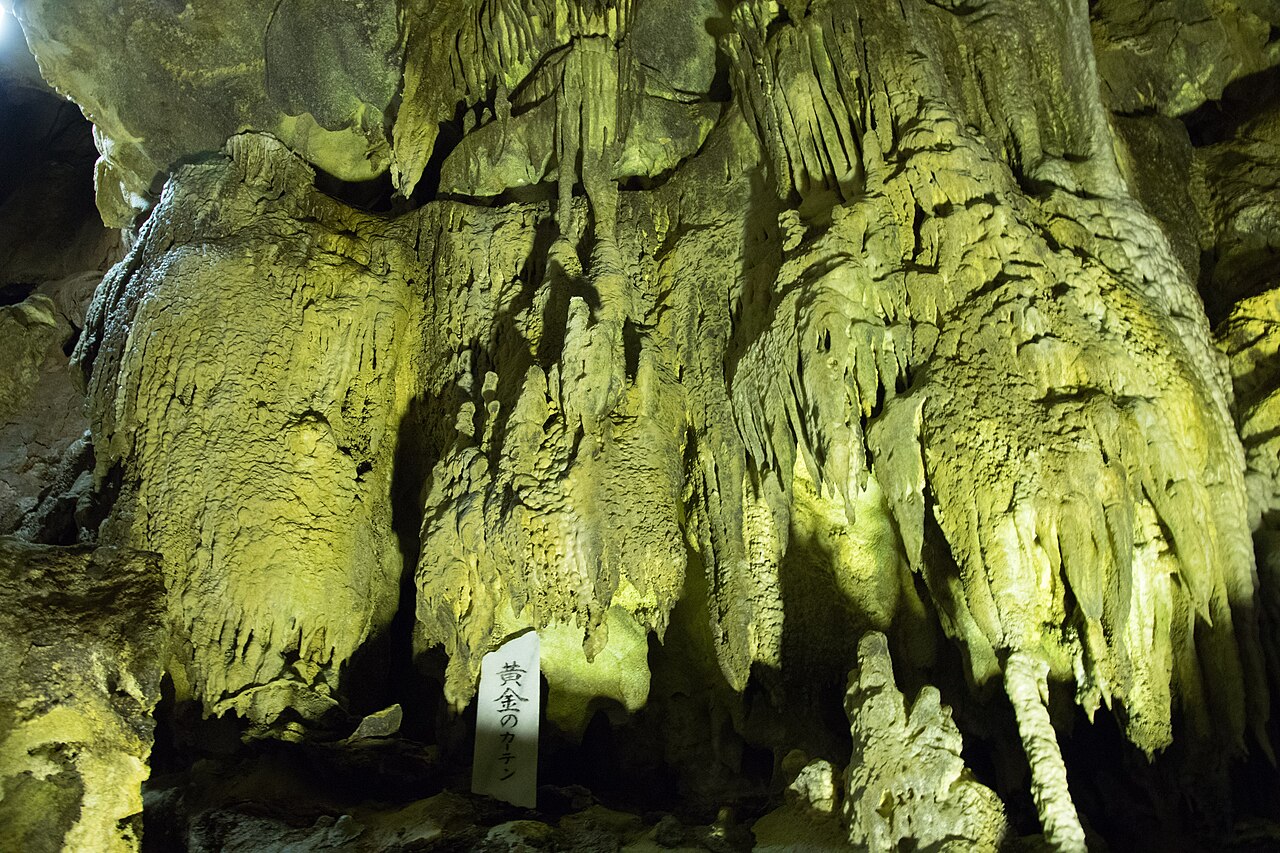
Twenty minutes east of Miharu by car, Abukuma-do (あぶくま洞, “Abukuma Cave”) is Tohoku’s largest limestone cave. The show cave is 600 m long with stalactites, stalagmites, and a set of impressively-lit terminal chambers; admission ¥1,200; year-round. The drive out through the Abukuma plateau is pleasant even without the cave, and it pairs naturally with a morning at the Takizakura and an afternoon at the cave.
Where to stay
Miharu has only a handful of minshuku (family-run inns) and one or two small ryokan, and during the Takizakura bloom they are fully booked a year in advance. The practical base is Koriyama — twelve minutes by train, full selection of business hotels and mid-range places. A few things to know when booking:
- Book the date, not the hotel. Koriyama rates triple during the bloom week, and everything within 200 m of the station is usually gone by mid-March. Anything available is worth taking.
- Stay on the east side of Koriyama Station (Eki-higashi) if you have the choice. That side is quieter, has the JR local-line entrance on your doorstep, and gets you to the morning shuttle at Miharu 10 minutes faster.
- Onsen alternative: Bandai-Atami Onsen is 10 minutes by train west of Koriyama in the other direction. Two or three traditional ryokan with rotenburo (open-air baths) and a much nicer evening than a business hotel. Plan on a 40-minute morning commute to Miharu.
General-availability searches: Booking.com Koriyama search and Agoda Koriyama search. Both have broader inventory during the cherry window than the hotels that appear on Japanese-language sites; book the moment the bloom forecast narrows.
Eating in Miharu
Miharu’s food does not try to compete with Koriyama’s and does not need to. Two local specialities worth looking for:
Miharu-soumen: hand-pulled thin wheat noodles, served cold in summer and in hot broth (called nyumen) in spring. A handful of small places around Miharu Station do a lunchtime set for ¥900-¥1,200. The noodle itself is thinner than Hyogo’s famous Ibonoito by about 20% and has a cleaner texture.
Miharu-goma doll confectionery: a couple of local sweet shops sell horse-shaped wagashi (Japanese confections) inspired by the wooden Miharu-goma, in seasonal flavours. They are more interesting as gifts than as food, but the senbei versions are genuinely good with green tea.
If you want a proper dinner, get the 20:00 train back to Koriyama — the dining scene is on an order of magnitude more options, and Koriyama does a particular style of deep-dish gyoza (called Koriyama-maru-gyoza) that is a good way to end a cherry-tree day.
Cherry-season strategy for a typical three-day visit
If you have two or three days centred on Koriyama during the bloom week:
- Day 1: Morning shinkansen into Koriyama. Afternoon train to Miharu, shuttle to the Takizakura, walk the perimeter. Return to the tree for the evening light-up. Back to Koriyama for dinner.
- Day 2: Morning: Miharu-goma workshops at Takashiba Dekoyashiki. Lunch at Miharu Station. Afternoon: Lake Sakura drive and Commutan Fukushima. Evening: second Takizakura light-up visit (the second night is almost always better than the first — you know where to stand).
- Day 3: Abukuma Cave in the morning, Bandai-Atami Onsen for lunch and a bath. Afternoon shinkansen back to Tokyo.
If you want to extend the trip north, Aizu-Wakamatsu is 75 minutes west of Koriyama by train and has the samurai-era Tsuruga castle (also with cherries); if you want to extend south, Iwaki on the Pacific coast is 90 minutes via the Banetsu-to Line with Onahama’s working fish market and the Aquamarine Fukushima aquarium.
FAQ
Can you see the Miharu Takizakura in one day from Tokyo?
Yes, technically — shinkansen to Koriyama (80 minutes), local train to Miharu Station (12 minutes), shuttle bus to the tree (25 minutes), and reverse the route. Budget three hours of travel each way, plus 1-2 hours at the tree. It is a long day with a tight schedule, and if the bloom is off you have nothing to fall back on. Overnight in Koriyama if you can.
When is peak bloom in a typical year?
Mid to late April, usually between 15 and 22 April. The tree is a late-blooming beni-shidare variety, later than the Somei-yoshino cherries in Tokyo by 2-3 weeks. The Miharu Tourism Association publishes a daily bloom-status update in late March and April on their Japanese-language site.
Is the admission fee charged outside the bloom season?
No. The ¥300 bloom-season admission covers the fenced viewing area and the temporary volunteer staffing during peak. Outside the bloom window there is no gate and no fee; you can walk up to the tree at any time.
How does it compare to the other two “Three Great Cherries” of Japan?
The Usuzumi-zakura in Neo, Gifu is older (around 1,500 years) and paler in colour — the name means “ink-coloured,” referring to the grey cast the petals take on just before falling. The Yamataka Jindai-zakura in Hokuto, Yamanashi is the oldest cherry tree in Japan at around 2,000 years, but its crown has been reduced by conservation work and the bloom is now a supporting element rather than the main event. The Takizakura is the youngest of the three but currently the most dramatic in silhouette and scale.
Can you photograph the tree with no other people in the frame?
During peak bloom, effectively no — you are sharing the viewing platform with 10,000 people a day. If you want a clean foreground, come during the first hour after gates open (around 06:00-07:00) or after 20:30 during the light-up. Telephoto shots from the hillside opposite also work; there’s a small paddy-level path on the east side of the tree that gives you a low angle with fewer heads.
Is the area safe and fully reopened since 2011?
Yes. Miharu is in the central-prefecture basin, 60+ km inland from the Fukushima Daiichi site. Radiation levels throughout the town have been below background for years; the town never entered the evacuation zone. The tree itself was monitored during the post-accident period and has been open every spring since 2011.
What are the light-up times and does the ¥300 ticket cover the evening?
The evening light-up runs during the bloom window from around 18:00 to 21:00, exact dates posted by the Miharu Tourism Association in late March. A single ¥300 day ticket covers both daytime and evening viewing; the gate usually closes briefly between 17:30 and 18:00 to clear the afternoon crowd before re-opening for the illumination.