
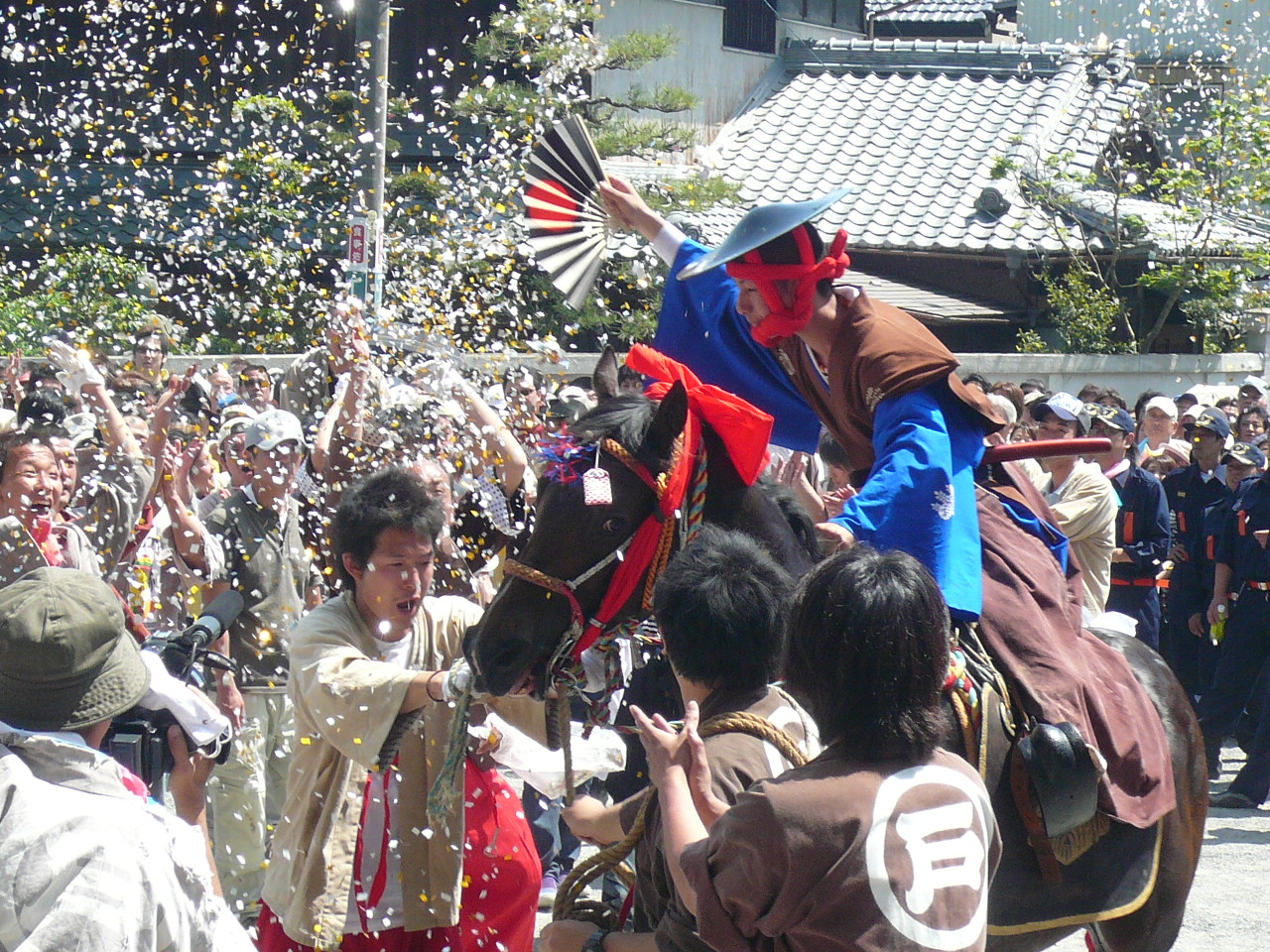
The Tado Festival (多度祭, Tado Matsuri) is one of the older and more physically dramatic Shinto festivals still running in Japan. The central ritual — known as Ageuma Shinji (上げ馬神事, “Rising Horse Rite”) — involves young men in samurai armour spurring their horses up a 100-metre packed-earth slope that ends in a two-metre vertical wall, the jump over which is supposed to predict the year’s rice harvest. Successful jumps mean a good year; refusals mean drought. The festival runs on May 4-5 every year at Tado Taisha (多度大社, “Tado Grand Shrine”) in northern Mie Prefecture, and the tradition has been continuously performed since the Kamakura period — roughly 700 years — though the origin story traces back 1,000-plus years to the 6th century.
In This Article
- Quick facts
- What Tado Taisha actually is
- The Ageuma Shinji ritual in detail
- The animal welfare context (you can’t avoid this)
- Other festivals and rituals at Tado Taisha
- The broader Tado visit (outside festival days)
- Getting there and combining with Kuwana/Mie
- Where to stay
- Is Tado Taisha worth visiting?
- FAQ
- When is the festival exactly?
- Can I watch the Ageuma rite in person?
- How crowded does the festival get?
- Is the animal welfare debate visible to visitors?
- Can I touch or feed the sacred horse?
- Is there any English support?
- Is the shrine suitable for kids?
- What else is there to do nearby?
Tado is also (unavoidably, in 2020s coverage) in the middle of a live controversy. Animal-welfare campaigners have protested the festival’s treatment of the horses during the Ageuma rite — the climbing surface is hard-packed earth, the wall is physically punishing, and injuries have occurred almost every year. In response, the shrine has modified the rite multiple times since 2021 (reducing jump height, cushioning the landing zone, restricting participant ages), but the specific form of the ritual remains contentious. Any visitor to the festival in 2026+ will encounter both the traditional spectacle and the protest presence.
Quick facts
- Where: Tado Taisha Shrine, 1681 Tado-cho Tado, Kuwana-shi, Mie 511-0106. Northern Mie, 40km north-west of Nagoya.
- Getting there: Kintetsu Nagoya Line from Nagoya to Kuwana, transfer to Yoro Railway to Tado Station, 5-minute walk. 70-80 minutes total from Nagoya. By car: Tokai-Kanjo Expressway, exit Ogaki IC, 30 minutes.
- Hours: Shrine grounds open 24/7 year-round. Festival-specific: May 4 evening (preliminary rites) and May 5 full-day from 09:00 (Ageuma rite typically runs 13:00-16:00).
- Cost: Shrine entry free. Festival day viewing free but seating is specific: paid reserved seats near the climbing slope ¥3,000-5,000, general standing room free.
- When to go: For the Ageuma festival: May 4-5. Otherwise, year-round visiting; New Year (hatsumode) is heavily attended, autumn foliage is quieter and photogenic.
- Official: Tado Taisha official (Japanese), Mie tourism.
What Tado Taisha actually is
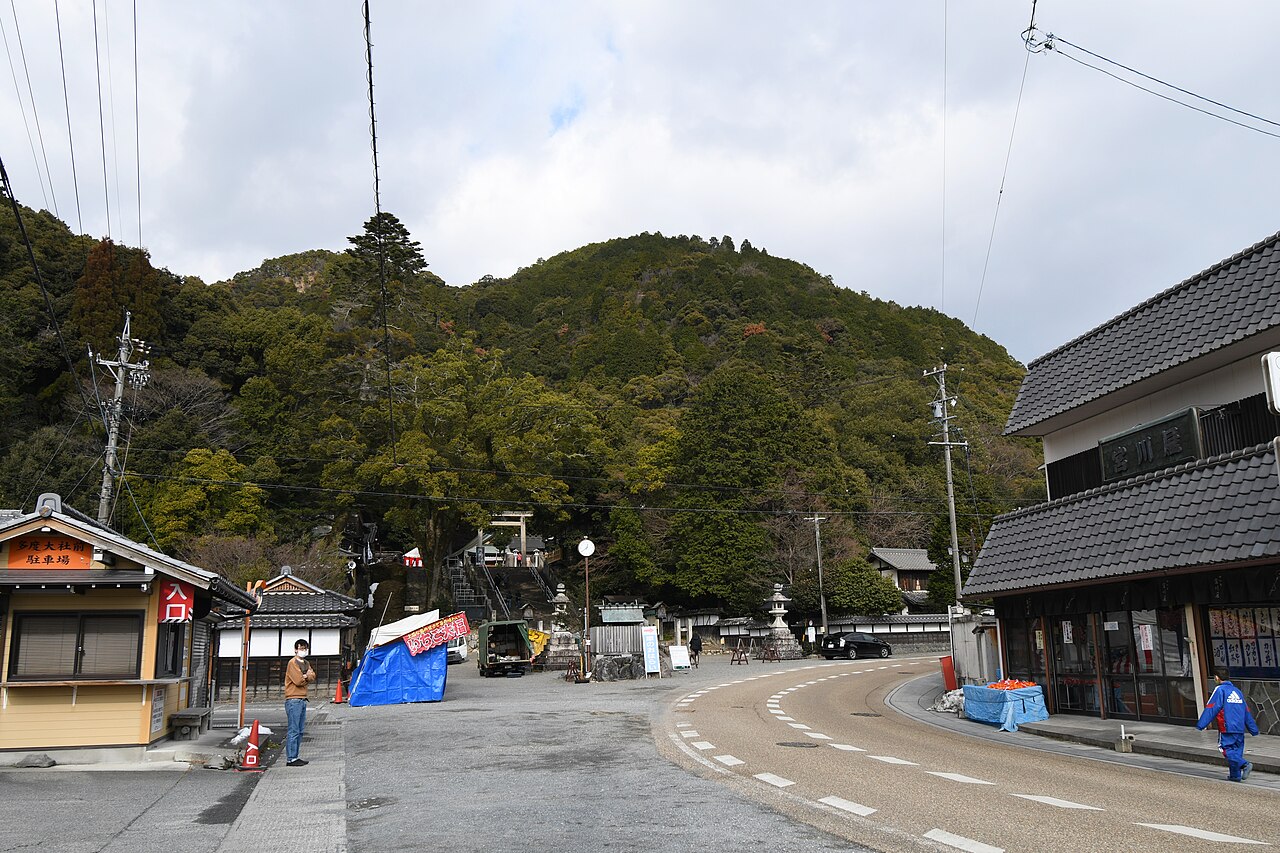
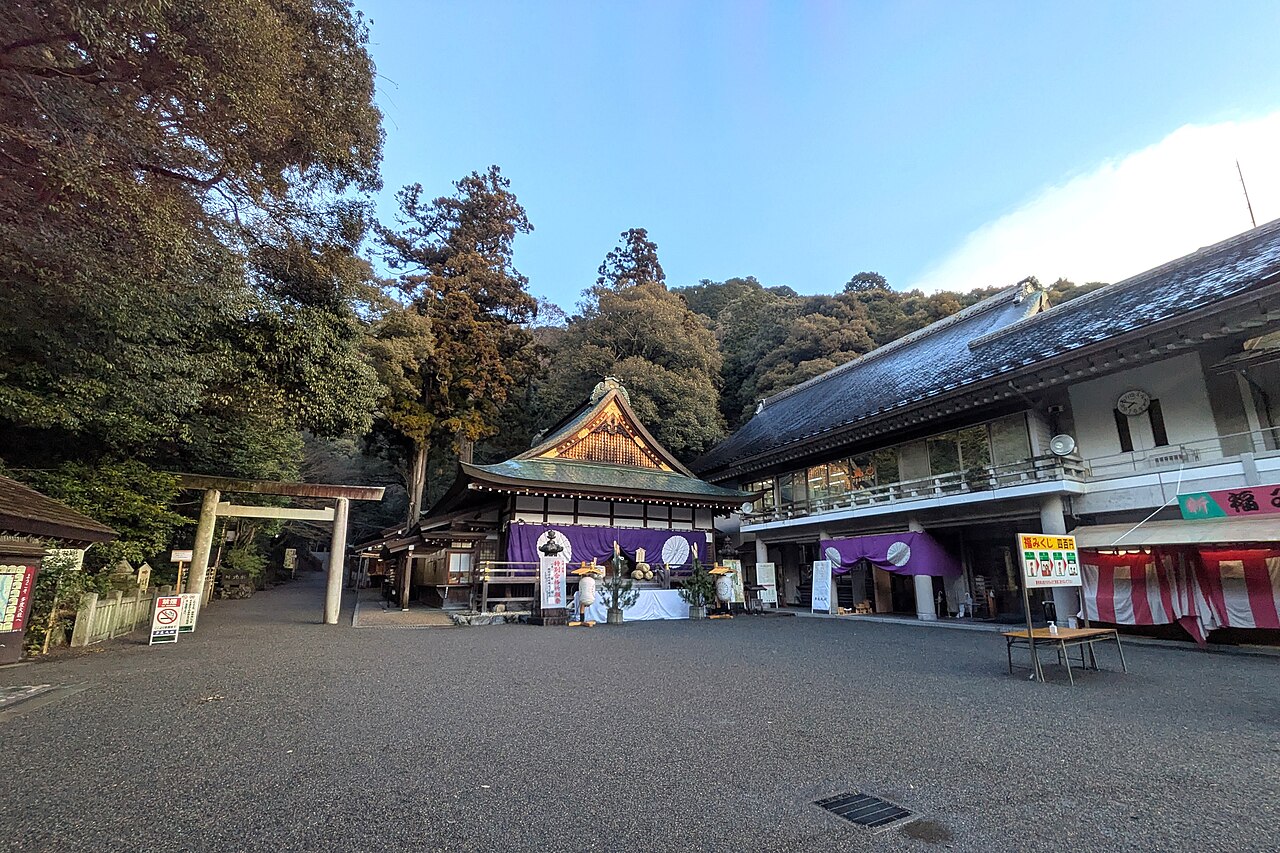
Tado Taisha is a Shinto grand shrine ranking just below the Ise Grand Shrine in northern Mie’s religious hierarchy. The main shrine is built into the base of Mt Tado (多度山, 403m) and dedicated to the deity Amatsuhikone-no-mikoto, a child of the sun goddess Amaterasu who is specifically the “horse protector” in Japanese Shinto mythology. This is why the horse connection runs through every aspect of the shrine — Tado is considered the place you pray to for horse-related prosperity, which has translated over the centuries into (in order) cavalry blessings for medieval warriors, farm-horse blessings for Edo-era peasants, and motorsport blessings for modern motorcycle and car enthusiasts.
Historical record puts the shrine’s founding at 459 CE, during the reign of Emperor Yuryaku — which if accurate would make Tado one of the oldest surviving Shinto shrines in Japan, pre-dating even Ise. Documentary evidence is strong from the 9th century onwards, when the shrine appears in the Engishiki (the 927 CE register of officially-recognised shrines) with elevated national rank.
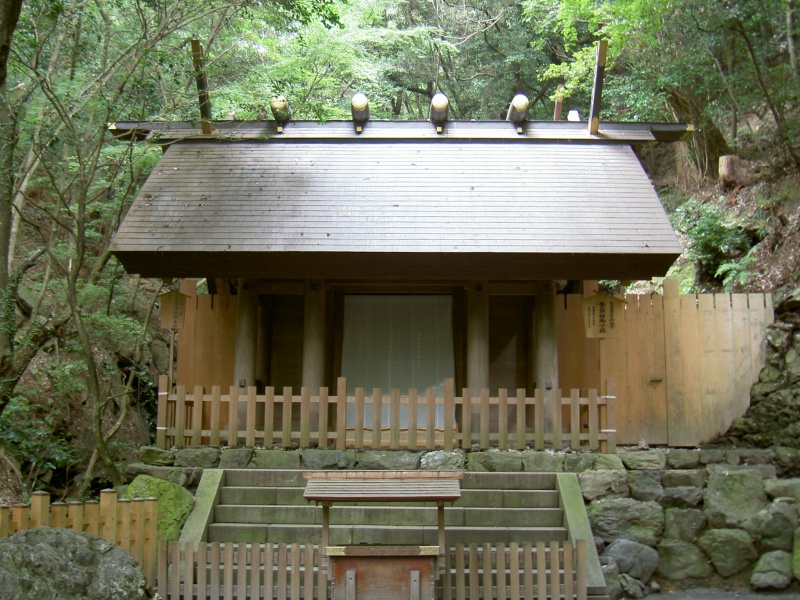
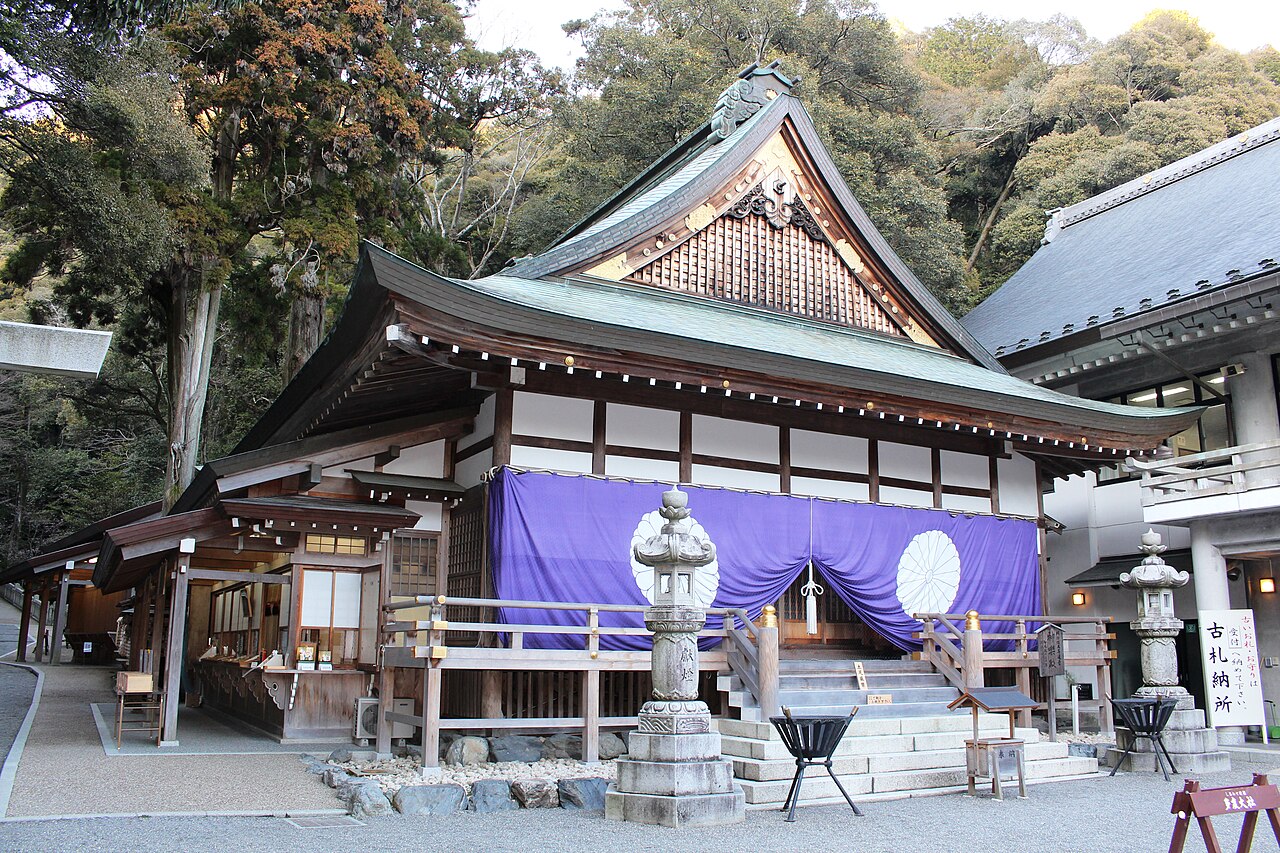
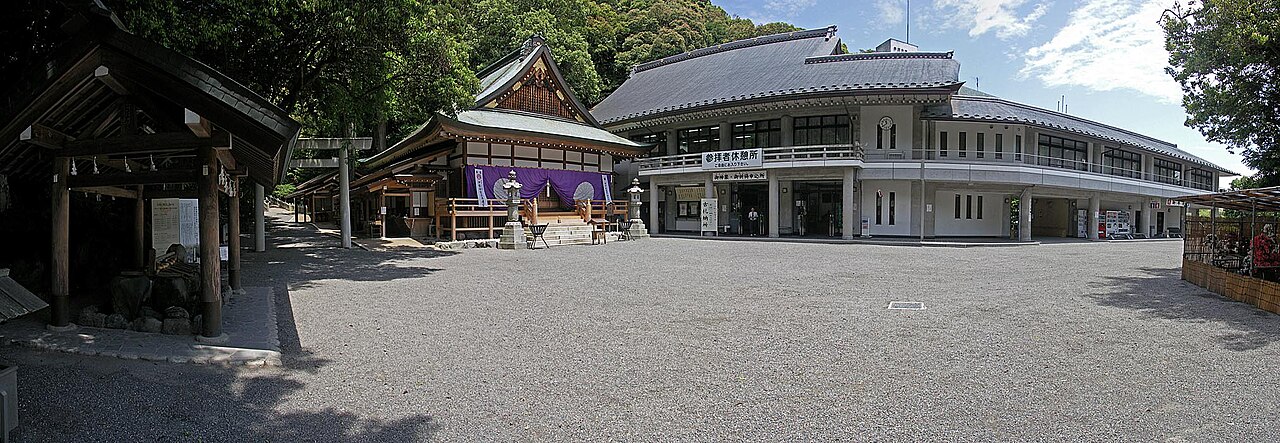
The shrine complex has four main structures worth knowing:
- Honden (本殿) — the main sanctuary.
- Haiden (拝殿) — the worship hall open to the public.
- Gakuraden (楽舎殿) — the ceremonial music and dance hall, specifically used during the Ageuma festival.
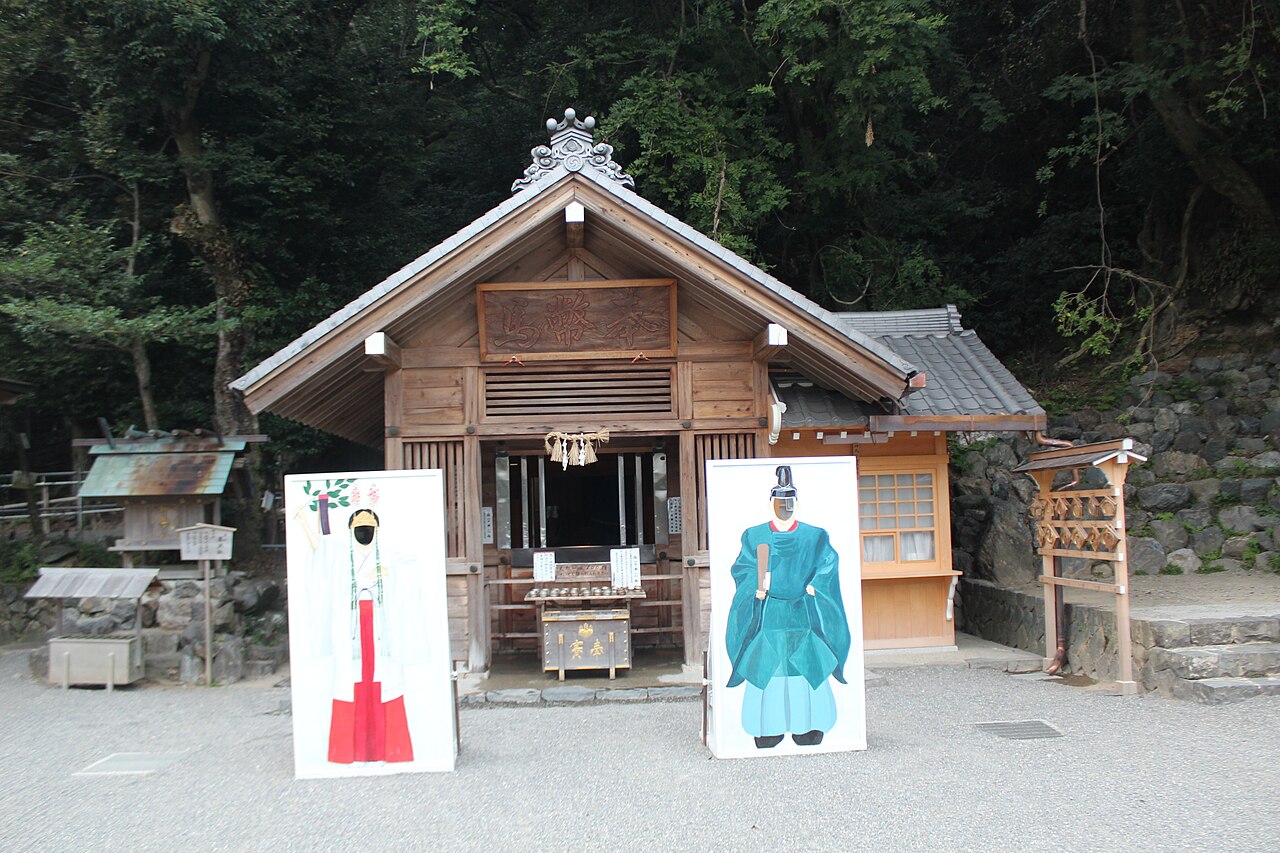
- Jinmesha (神馬舎) — the sacred horse stable, where the shrine’s designated sacred white horse is kept.
The Ageuma Shinji ritual in detail
The horse-jumping rite runs on May 5, typically starting around 13:00 and continuing until the final horse has jumped (usually 16:00-17:00). The specific structure:
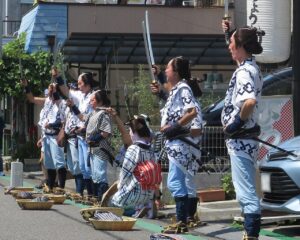
- Six riders represent six local neighbourhoods (specifically: Kohama, Nishisato, Nakajima, Kuba-no-machi, Hoshino-machi, and Gojo). Each wears a full set of Edo-period samurai armour with a distinctive colour scheme identifying the neighbourhood.
- Each rider, in turn, lines up at the base of the 100-metre climbing slope — a hard-packed earth track that rises through the shrine’s south approach with an average grade of about 18%.
- On a signal, the rider spurs the horse into a full charge up the slope.
- At the top is a 2-metre vertical embankment wall. The horse attempts to jump over it into a level area above.
- The divination reading: if the horse clears the wall cleanly, the neighbourhood’s harvest will be good; if the horse refuses the jump or strikes the wall, the harvest will be poor.
The full sequence takes about 3 hours with all six neighbourhoods jumping. Between runs, the local neighbourhood association performs a small thanksgiving ceremony. The atmosphere is what you’d expect from a 1,000-year-old ritual — tense, loud, with a crowd that’s been in place since before dawn.
The animal welfare context (you can’t avoid this)
The Ageuma ritual has been controversial in modern Japanese public discourse since around 2020. The specific concerns: horses have sustained injuries nearly every year — most commonly leg and shoulder injuries from striking the vertical wall. In 2022 and 2023, separate incidents were widely reported in Japanese media. Animal-welfare organizations have petitioned the Mie prefectural cultural-properties board (which oversees the festival’s Intangible Cultural Property status) to suspend or reform the rite.
The shrine’s response has been significant reform rather than cessation:
- The 2-metre wall height has been reduced to approximately 1.5 metres (prior to 2021 it was sometimes as high as 2.5m).
- The landing zone has been padded with straw matting.
- Veterinarians are now present throughout the festival to assess horses pre- and post-jump.
- Age restrictions on the horses (minimum 5 years, maximum 10 years) have been implemented.
- The crowd seating has been reconfigured to remove direct front-of-wall positions where historical spectators had stood.
For a visiting tourist, the practical implications: you will see both the traditional ritual and the protest presence. The festival continues with official sanction but with a meaningfully different public perception than it had pre-2020. You can make your own judgement about whether to attend; the shrine welcomes visitors regardless, and the festival itself is a genuine piece of continuous Japanese folk religion.
Other festivals and rituals at Tado Taisha
Beyond the Ageuma headliner, Tado runs a substantive year-round calendar:
New Year (January 1-3) — hatsumode (first-visit-of-year), one of the top five New Year destinations in the Tokai region. Expect crowds and 60-90 minute queues for the main worship hall.
Setsubun (February 3) — the standard Japanese bean-throwing ritual, with Tado’s specific version involving the shrine priest firing arrows into the four cardinal directions.
Horse Day (May 5, combined with the main festival) — smaller equine rites before the afternoon Ageuma.
Autumn Thanksgiving (October) — harvest-gratitude ceremonies, modest scale.
Every 17th of the month — a small monthly ceremonial market (engei-bi) with local craftspeople selling handmade goods in the shrine’s south approach.
The broader Tado visit (outside festival days)
Even without the festival, Tado Taisha rewards a visit:
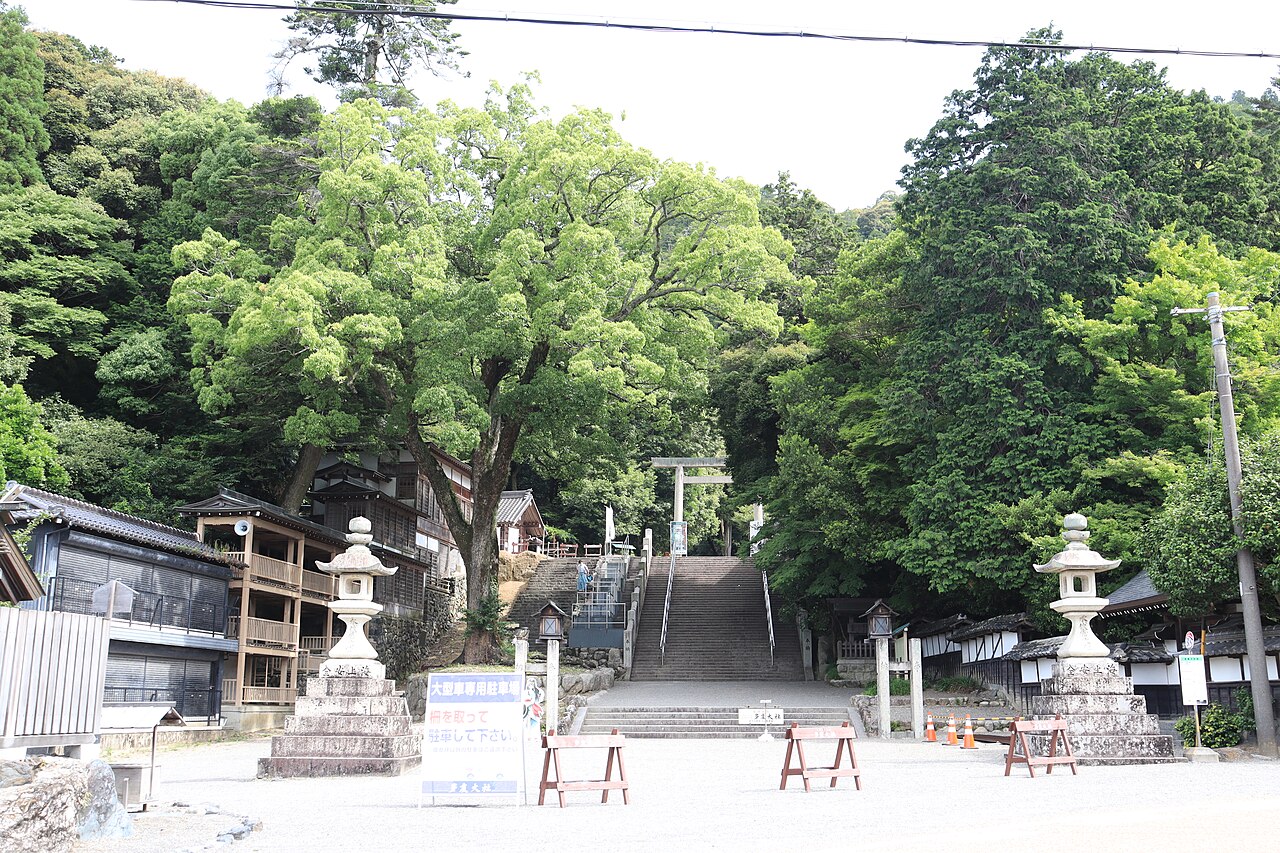
The shrine precinct walk — about 30-40 minutes for a full circuit, including the main hall, the sacred stable, the Gakuraden, the treasure hall (¥200 entry), and the trail up to the upper shrine.
Mt Tado hike — a 90-minute climb from the shrine to the 403m summit via a well-marked trail. Panoramic view of the Ibi River delta and, on clear days, the Kiso Sansen river-mouth system. Moderate difficulty.
Treasure Hall (Shuho-kan) — a small museum displaying shrine artefacts, including the ceremonial saddle used in the Ageuma rite (when not in use) and several sets of samurai armour donated by Edo-period clan families. ¥200 entry, open weekends only.
The motorbike blessings — a specifically modern Tado tradition. Because of the shrine’s horse-deity connection, motorbike riders treat Tado as a pilgrimage site for vehicle safety prayers. On summer weekends you’ll see 50-100 motorcycles in the car park, with riders taking their bikes to the priest for a kito (blessing ceremony). The shrine charges ¥5,000 per vehicle for a formal blessing with Shinto bell-and-fan ritual.
Getting there and combining with Kuwana/Mie
From Nagoya: Kintetsu Nagoya Line to Kuwana (20 min, ¥450), transfer to the small Yoro Railway line to Tado Station (15 min, ¥270), 5 min walk to the shrine. Total time 70-80 minutes, ¥720 one-way.
From Tokyo: Tokaido Shinkansen Hikari to Nagoya (100 min), then Kintetsu + Yoro as above. About 3 hours total; a day trip is physically possible if you start early and don’t linger.
From Osaka: Tokaido Shinkansen to Nagoya (50 min Hikari), then Kintetsu + Yoro. 2 hours 30 min total.
Natural combines:
- Nagashima Spa Land (30 min east) — the coaster park is 15km from Tado. Do a Tado morning, Nagashima afternoon; practical for families.
- Kuwana city — the nearest proper town, worth a short stop for the Kuwana Shichiri-no-watashi (historical post-town).
- Ise Grand Shrine (90 min south) — if you’re doing a serious Mie shrine-focused itinerary, Ise and Tado can be combined on a two-day trip.
- Laguna Gamagori (90 min east) — the other big Aichi family attraction.
Where to stay
No accommodation at Tado itself; base in either:
Nagoya — full hotel inventory at ¥8,000-18,000 per night. 70-minute commute to Tado each way.
Kuwana — smaller selection, ¥7,500-12,000 business hotels. 30 minutes to Tado. Makes sense if you’re doing a Tado+Nagashima combined stay.
For festival dates (May 4-5), book at least 2-3 months ahead — all northern Mie accommodation fills by early March. Booking.com’s Kuwana listings and Nagoya listings cover both.
Is Tado Taisha worth visiting?
For Shinto-festival enthusiasts specifically — yes, but with awareness of the welfare controversy. The Ageuma rite is genuine continuous folk-religion practice, and the combination of the festival calendar, the horse-deity theology, and the dramatic scale makes this a substantive cultural experience.
For general Mie travellers — worth a half-day stop en route between Nagoya and Ise. The shrine itself (outside festival dates) is quiet and photogenic, with fewer tourists than the big Ise complex.
For first-time Japan visitors — probably skip unless you’re in the region for the festival specifically. Ise Grand Shrine covers similar territory at a larger scale and with better English support.
For motorsport enthusiasts — surprisingly relevant. The shrine’s modern role as a vehicle-blessing destination makes it a specifically contemporary point of interest for motorcycle travellers doing Japan.
FAQ
When is the festival exactly?
May 4 (preliminary rites from evening) and May 5 (main Ageuma afternoon) every year. Timing is fixed — not Old Calendar dependent.
Can I watch the Ageuma rite in person?
Yes, free entry to the shrine grounds. General standing room is first-come-first-served — aim to be on site by 10:00 for a good spot. Paid reserved seating near the climbing slope runs ¥3,000-5,000 and can be booked through the shrine’s website from late March each year.
How crowded does the festival get?
Very. Around 300,000-400,000 visitors over the two days, which is substantially more than the shrine’s normal daily capacity. Expect 90-minute queue for the main worship hall, tight standing room at the climbing slope, and slow departing trains on the Yoro Railway from 17:00 onwards.
Is the animal welfare debate visible to visitors?
Yes — protesters are present at the festival, the shrine’s modifications are marked with signage, and local tourism materials now include welfare-context pages. You will not be able to attend and not be aware of the debate.
Can I touch or feed the sacred horse?
No. The Jinmesha horse is kept behind a fence and is not part of an interactive attraction. You can photograph him during standard daytime hours.
Is there any English support?
Thin. The main shrine signage is Japanese-only; festival-day announcements are Japanese; printed materials have basic English. The shrine’s English webpage is adequate for pre-visit context. Google Translate’s camera function handles the signage fine.
Is the shrine suitable for kids?
On non-festival days: yes, low-key and safe. On festival days: mixed — the Ageuma rite itself is intense and has historically included injuries; young children (under 8) may find it scary or upsetting. The pre-festival rituals and food-stall atmosphere on May 4 evening are better-suited for families than the main-day jumping.
What else is there to do nearby?
Mt Tado hike (90 min), Yoro Park (15 km west, with waterfalls), Nagashima Spa Land (30 min east for a family theme park day), the Kuwana Shichiri-no-watashi historic post town. The Tado area has enough to fill a full day if you’re not tied to the festival.



.jpg)
.jpg)

.jpg)