Ashikaga Gakko (足利学校, Ashikaga Gakkō) is the oldest standing academic institution in Japan. The site in central Ashikaga has been in continuous educational use since at least the 9th century — the earliest documentary evidence puts a founding date around 839 or 842 CE — which makes it older than Oxford, Cambridge, Bologna, and every other university-level institution still standing in Europe. By the mid-16th century, the school had 3,000 students, a library of Confucian classics that was the most comprehensive in Japan, and enough international reputation that the Jesuit missionary Francis Xavier described it in a 1549 letter to Rome as “the largest and most famous academy in Eastern Japan.”
In This Article
- Quick facts
- The 1,200-year history in broad strokes
- What you actually see on a visit
- The Analects read-aloud sessions
- Combining with the rest of Ashikaga
- Getting there from Tokyo
- Where to stay
- Autumn at the school (the specific season to target)
- Is Ashikaga Gakko worth a trip?
- FAQ
- Is there English signage?
- Can I attend the Confucian rituals?
- How long should I allocate?
- Is there a combined ticket with Banna-ji?
- When are the Confucian rites exactly?
- Is it suitable for kids?
- How does it compare to other historic Japanese schools?
- Can I see the original library books?
The current site — rebuilt in its Edo-period layout during a 1990 restoration — is one of the quieter major cultural attractions in Tochigi Prefecture, not because it isn’t interesting but because it sits in a small city (Ashikaga, population 145,000) that most foreign travellers skip on their way between Tokyo and Nikko. For anyone interested in Japanese educational history, Confucian philosophy in East Asia, or medieval-to-early-modern Japanese intellectual culture, Ashikaga Gakko is one of the more substantial sites you can visit. 75 minutes from Tokyo by train, ¥420 to enter, and you’ll have the whole compound to yourself on most weekdays.
Quick facts
- Where: Ashikaga Gakko, 2338 Shoheicho, Ashikaga-shi, Tochigi 326-0817. Central Ashikaga, 5 minutes’ walk from Banna-ji Temple.
- Getting there: JR Ryomo Line Ashikaga Station → 10 min walk south. Tobu Isesaki Line Tobu-Ashikagashi Station → 8 min walk north. From Tokyo: 75-90 min via Oyama or Asakusa.
- Hours: April-September 9:00-16:30 (last entry 16:00). October-March 9:00-16:00 (last entry 15:30). Closed Mondays (Tuesday if Monday is a public holiday), December 29 – January 4, and second Wednesday of October and February.
- Cost: ¥420 adult / ¥220 high school / free under 15. Combined ticket with nearby Banna-ji Temple ¥600.
- When to go: Autumn (mid-October to mid-November) for the garden’s koyo foliage. Spring (early-April) for cherries. Summer mornings to avoid the Ashikaga heat. Sunday mornings April-July and September-November for the free Analects read-aloud session.
- Official: Ashikaga Gakko official, Ashikaga City Tourism.
The 1,200-year history in broad strokes
The exact founding date is disputed among Japanese educational historians. Traditional accounts credit either Ono no Takamura (802-853) or Prince Shimotsuke (before 839) with the original establishment; the earliest documentary evidence that references the school by name is from around 850 CE. By either reading, Ashikaga Gakko predates every extant European university by at least 150 years.
The early-medieval school declined through the late Heian and early Kamakura periods. The revival that created the famous Ashikaga Gakko came in 1432, when Uesugi Norizane, lord of Shimotsuke Province, invited Zen scholar-monks from Engaku-ji in Kamakura to take over the academy, donated his personal library (which included Song Dynasty Confucian texts that were genuinely rare in Japan at the time), and set the curriculum on Chinese Confucian and classical-philosophy lines. This 1432 refoundation is the basis for the school’s surviving institutional documents.
The school’s peak came in the mid-16th century under the patronage of the Hojo clan of Odawara. By 1549 it housed 3,000 students — an astonishing figure for the period, comparable to the largest contemporary Chinese academies and substantially larger than any European university of the era. Xavier’s Jesuit letter back to Rome described Ashikaga as the most prominent of eleven Japanese “universities and academies” he knew of.
Specifically what was being taught: Chinese classical literature, Confucian thought (specifically the Four Books and Five Classics), the I Ching (for divination as a practical art), Chinese medicine, military strategy, and secular Buddhist philosophy. Buddhist theology was explicitly excluded — the school was a Confucian institution even though its teachers were Zen monks, and the curriculum distinguished between Zen monastic training (elsewhere) and secular Confucian-classical education (here).
After the Meiji Restoration (1868), the Japanese government abolished the Confucian academic system and Ashikaga Gakko closed. Half the site was converted into a local elementary school; the library was scattered, though substantial portions survived in the Uesugi family holdings and at the Tokyo National Museum. In 1928 the remaining buildings received National Historic Site protection. The modern restoration — rebuilding the core Edo-period layout on the documented footprint — was completed in 1990 after a decade of archaeological and textual research.
What you actually see on a visit
The current site covers about 8,000 square metres and follows the 1660-1680 layout documented in Edo-period records. A visit takes 60-90 minutes if you go through the exhibition carefully; 30 minutes if you’re just looking at the gate and the main hall.
The major buildings and features in walking order:
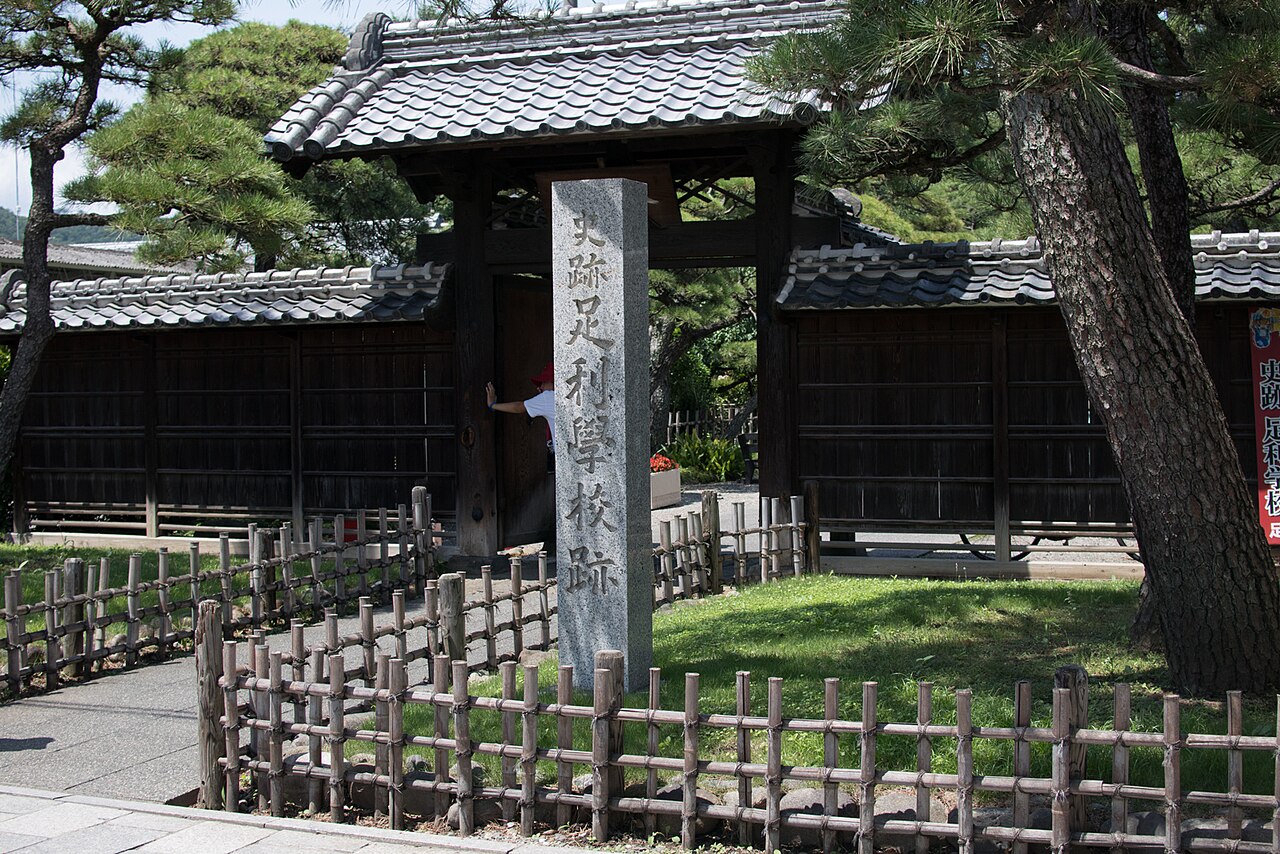
Nyutoku-mon Gate (入徳門, “Entering Virtue Gate”) — the outer entrance gate, marked by a stone plinth inscribed “nyutoku.” Traditional arrangement: students bowed here before entering.
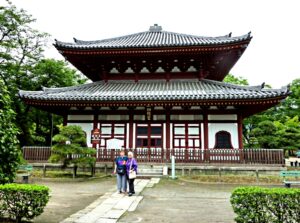
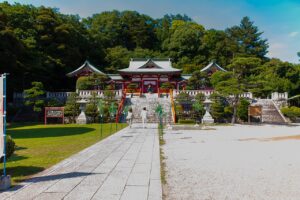
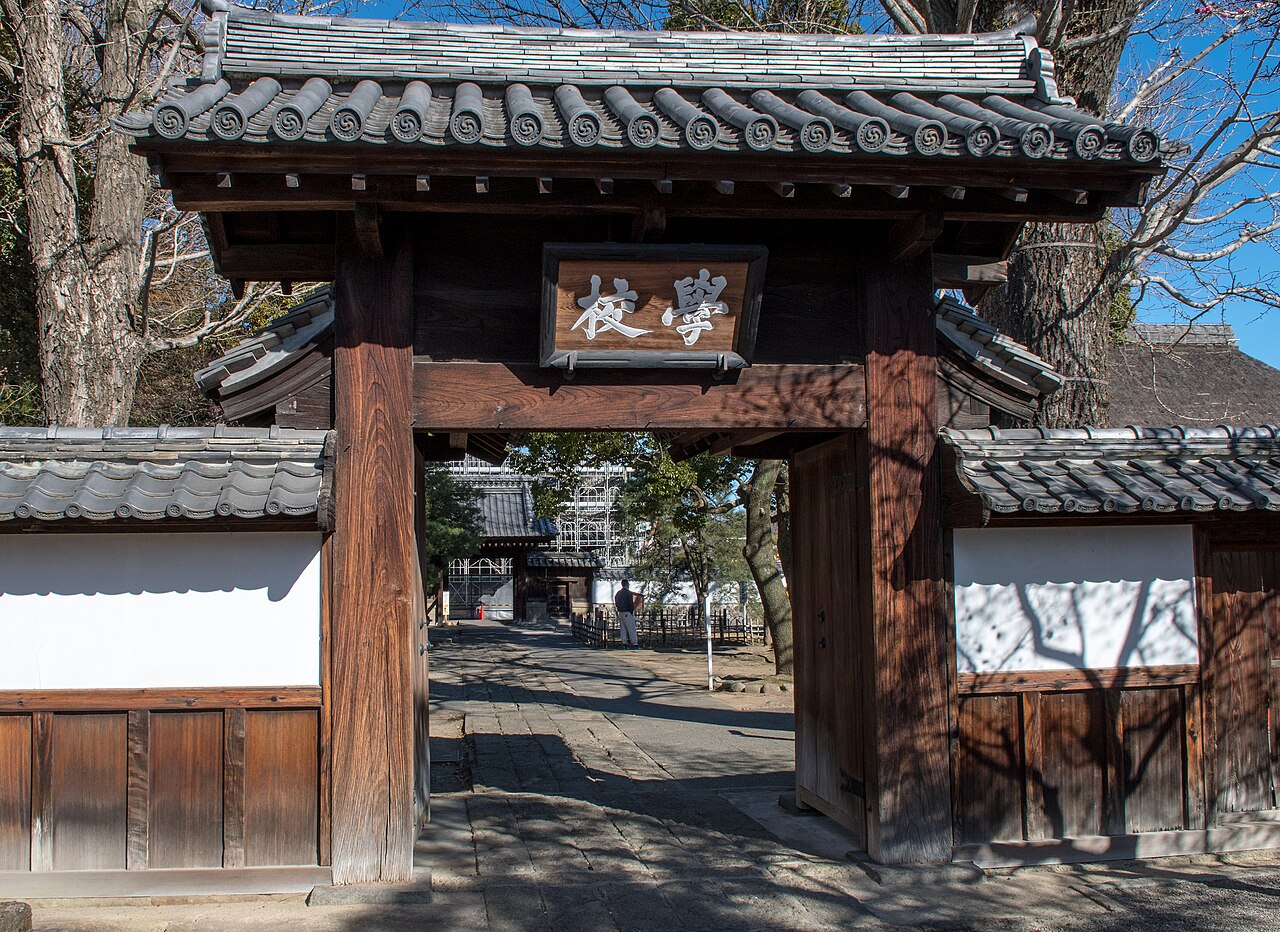
Gakko-mon Gate (学校門) — the main school gate, 1668 original fabric on the stone plinth, 1990 reconstructed upper structure. This is the most-photographed spot at the site.
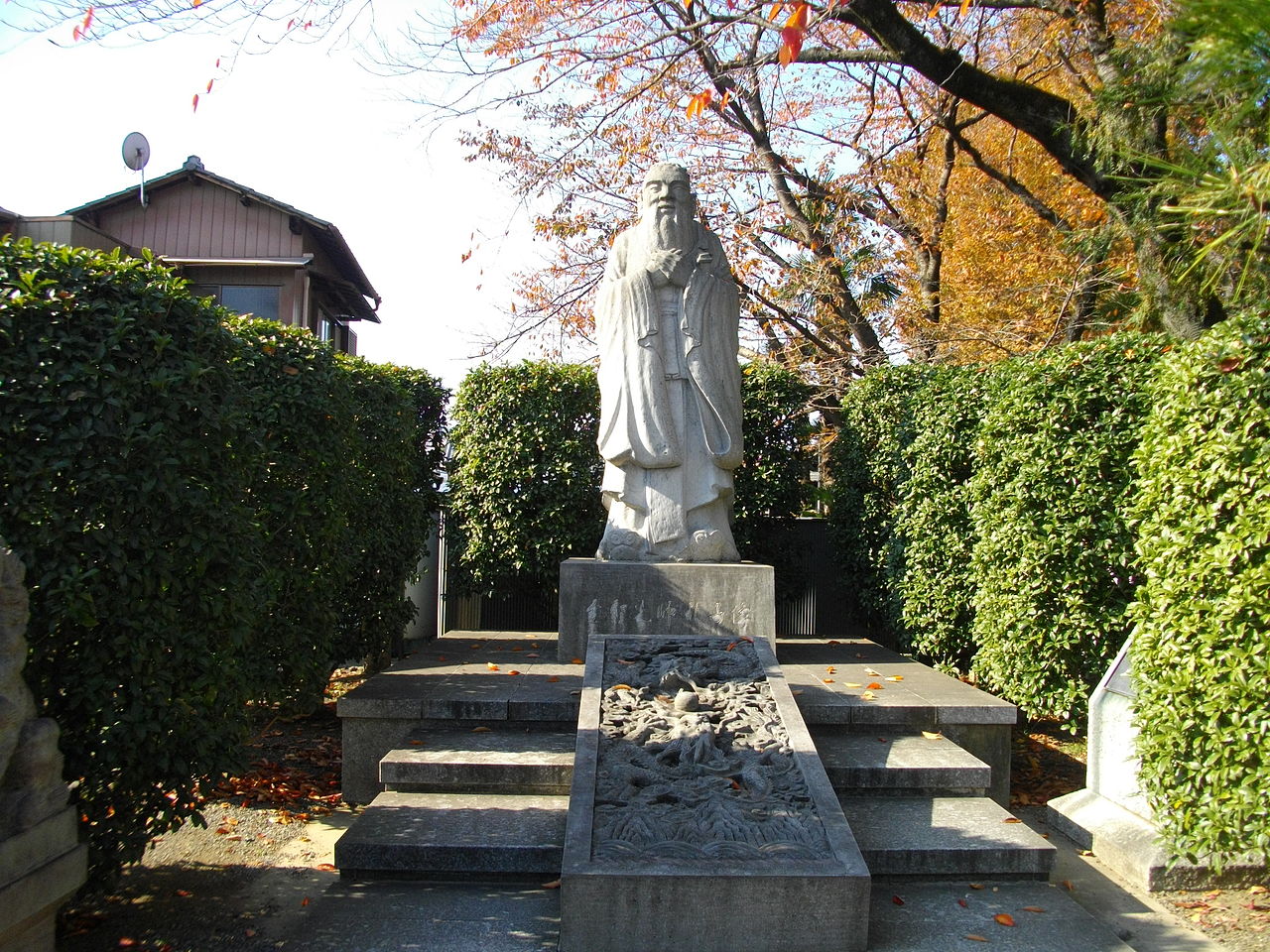
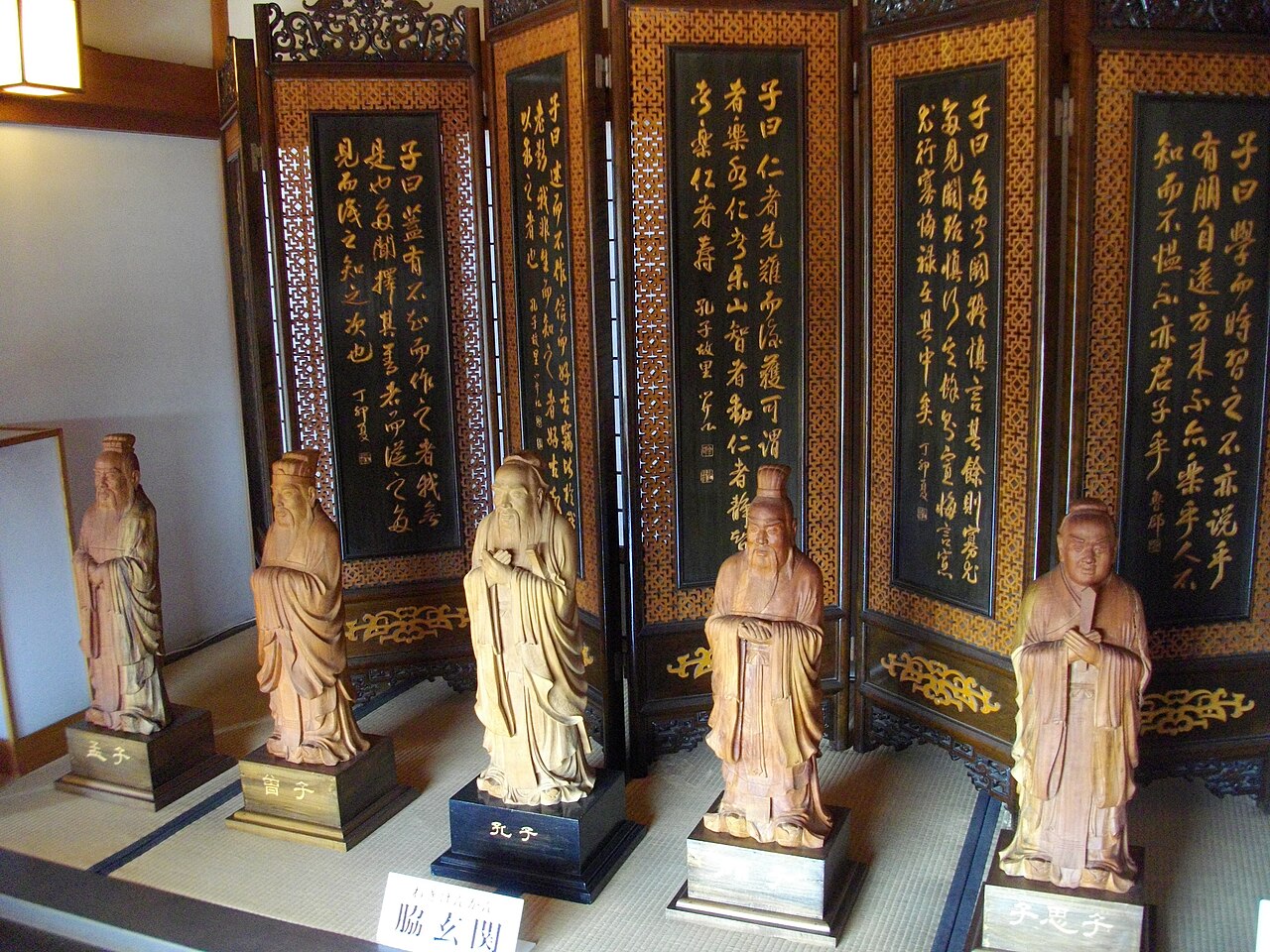
Koshibyo Confucian Temple (孔子廟) — the central ceremonial hall dedicated to Confucius. Active Confucian ritual practice is still performed here twice a year (spring and autumn equinoxes). The enshrined Confucius statue is a 16th-century original.
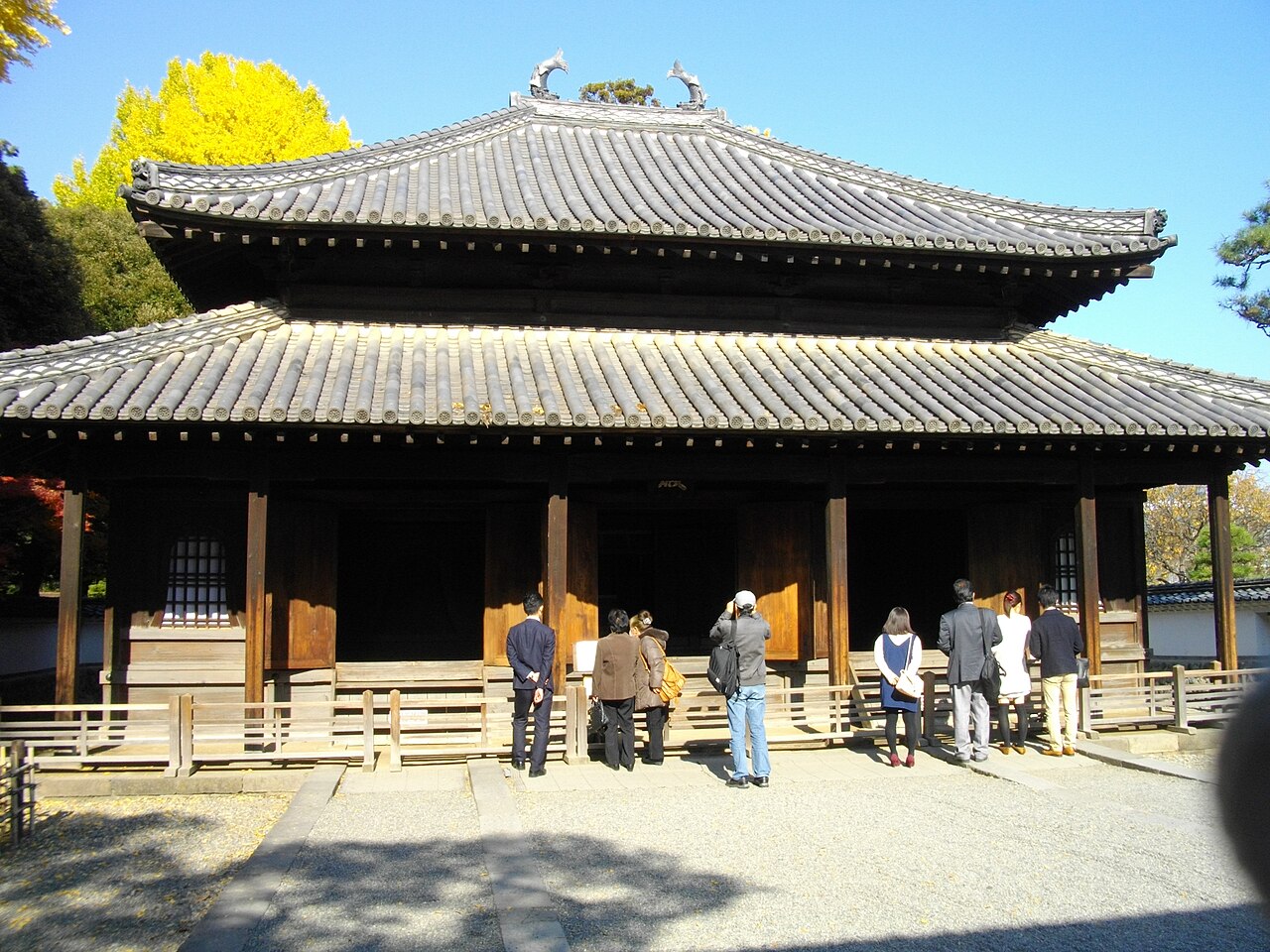
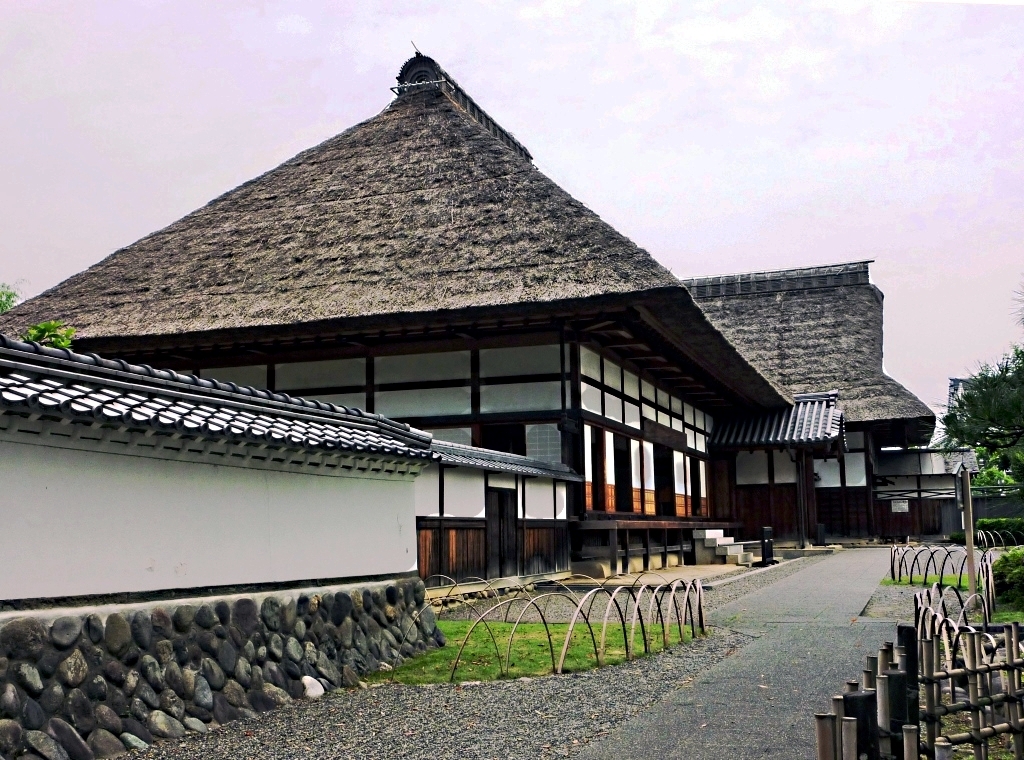
Hojo (方丈) — the main residence and teaching hall. You can enter, remove shoes, walk through the tatami rooms, and see the reconstructed 17th-century academic office. English audio guides are available for ¥200 rental.
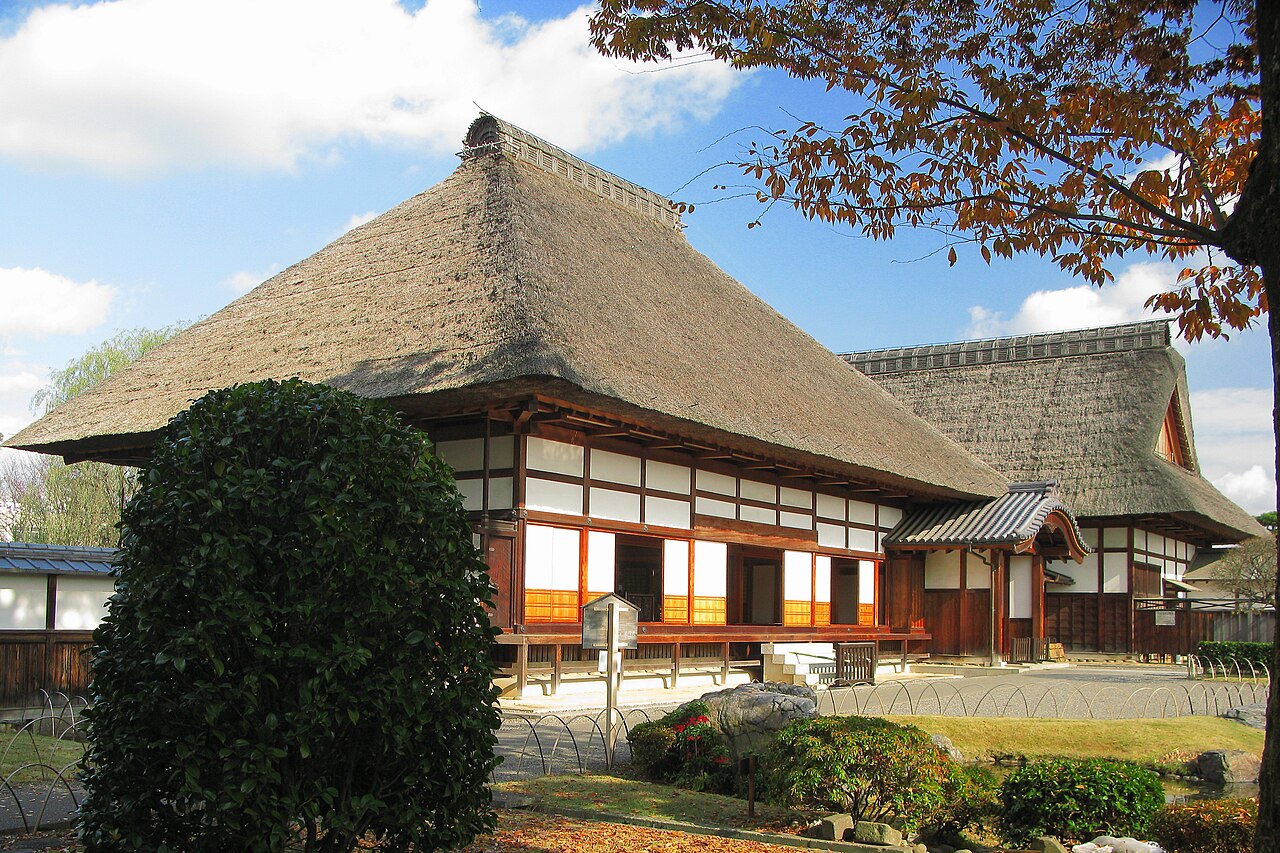
Library Wing (文庫) — the reconstructed version of the famous Ashikaga Gakko library. Displays include about 200 facsimile volumes of the original collection (the originals are held at the Tokyo National Museum and the National Diet Library). The library is the specific thing that made the school significant — it was the largest single Chinese-classics collection in Japan in the 15th-16th centuries.
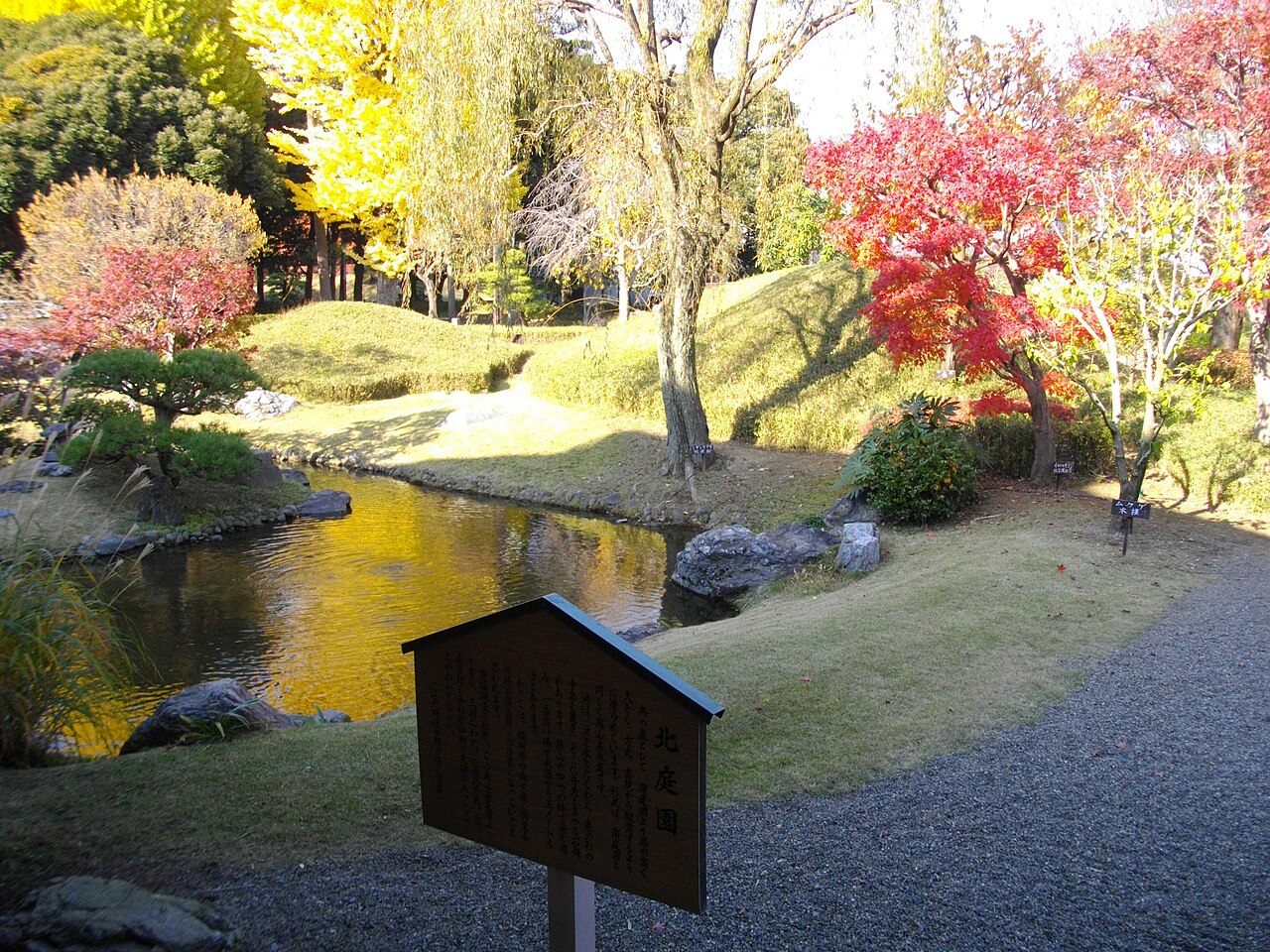
Northern Garden (北庭園) — a dry-stone Zen garden behind the main compound, laid out on early-Edo-period plans recovered from the 1990 archaeological excavation. Genuinely beautiful in autumn when the maples turn; one of the quieter garden spaces in Tochigi.
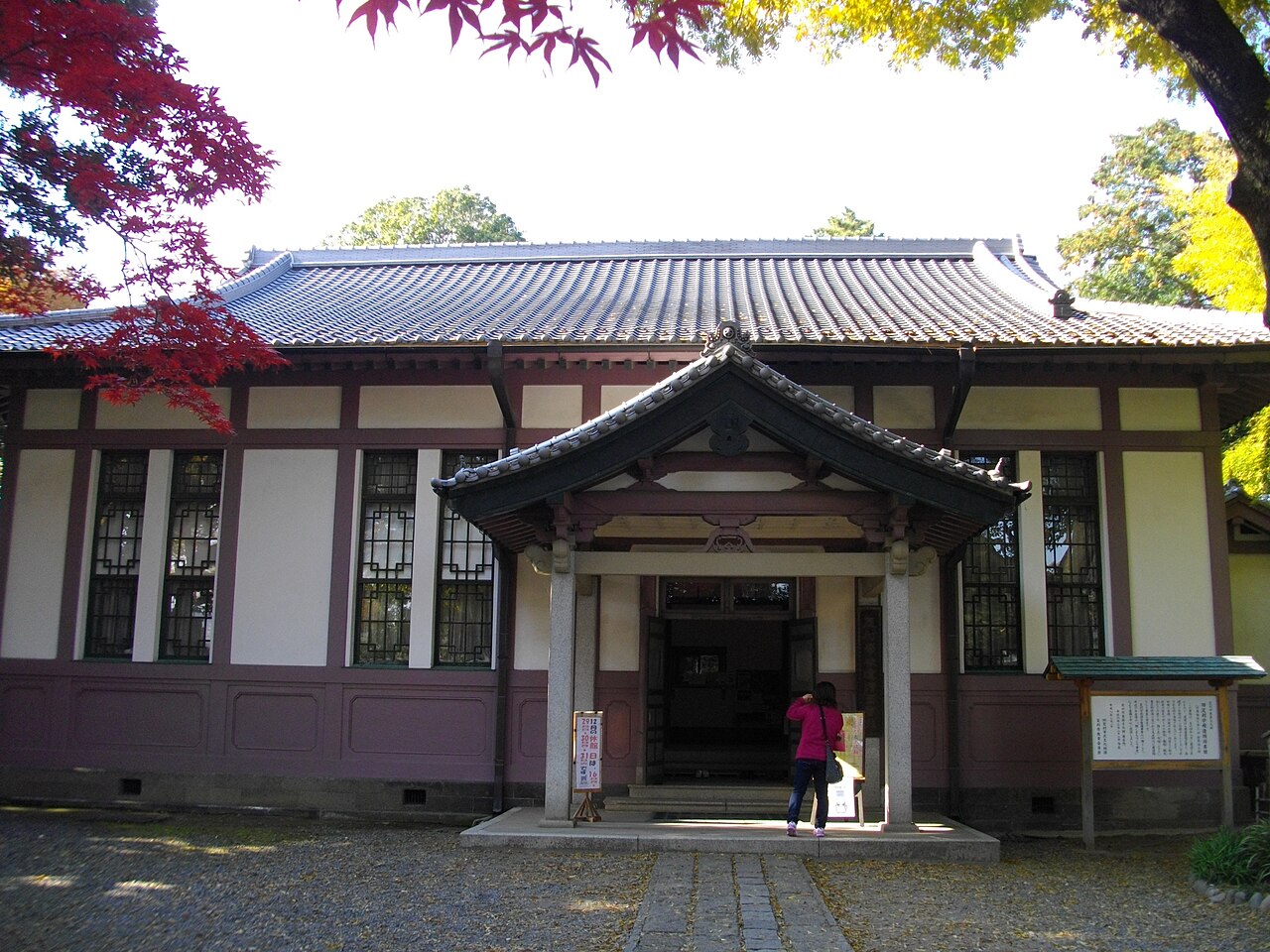
Admin & Exhibit Building — the visitor-centre component, with modern exhibits covering the school’s history, the surviving library collection, and the 1990 restoration process. English captions are thin but adequate.
The Analects read-aloud sessions
Worth specifically mentioning: the school runs a free Analects of Confucius read-aloud programme (論語素読) on Sundays from April to July and September to November. The programme is genuinely instructional — a Japanese-language lecturer reads passages from the Analects, explains classical-Chinese pronunciation, and invites participants to read along. Sessions run 10:00-11:00 and 14:00-15:00, free with regular entry.
For a foreign visitor with no Japanese, the programme is mostly a curiosity — you won’t follow the content. But for anyone interested in classical Chinese or Japanese academic tradition, it’s one of the few places you can observe continuous East Asian scholarly practice in a real historical setting.
Combining with the rest of Ashikaga
Ashikaga Gakko sits in a dense central-Ashikaga cultural triangle. Natural combines:
Orihime Shrine — 15 minutes’ walk across the Watarase River. The city’s hilltop weaver-deity shrine with matchmaking stairs.
Banna-ji — directly adjacent, sharing a wall with the school. The Ashikaga clan’s 1196 family temple, National Treasure status, free entry. Do Ashikaga Gakko and Banna-ji together as a 2-3 hour culture block.
Ashikaga Flower Park — 15 minutes by train west. Famous for the 150-year-old wisteria tree (peak April 20 – May 10).
Keisokuji Temple and the 33-Kannon Pilgrimage — the broader Ashikaga temple network.
Sakasagawa Walking Course — the quiet northern-Ashikaga footpath.
For a proper one-day Ashikaga culture circuit: Ashikaga Gakko + Banna-ji in the morning (combined ticket ¥600), Orihime Shrine after lunch, Flower Park in the afternoon. Full day, 10,000-12,000 steps, three significant cultural sites.
Getting there from Tokyo
Two main rail options, both about 75-90 minutes door-to-door from central Tokyo:
JR route: JR Utsunomiya Line or Tohoku Line to Oyama Station, transfer to JR Ryomo Line for Ashikaga Station. From there, 10-min walk south across the Watarase River. ¥2,200 one-way.
Tobu route: Tobu Isesaki Line direct from Asakusa (central Tokyo) to Tobu-Ashikagashi Station. 90 minutes, ¥1,200 one-way. Slightly cheaper; station is 8 minutes’ walk north from the school.
By car: Tohoku Expressway to Sano-Fujioka IC, 20 minutes on local roads. Paid parking at the Ashikaga Gakko lot (¥300 for 2 hours) or at Banna-ji’s free lot next door.
Where to stay
Ashikaga’s hotel inventory is thin — see our Keisokuji Temple guide for the local business-hotel options. Better bases for a longer trip:
Tokyo — day trip basis. 90-minute train means you can leave central Tokyo at 09:00 and be at the school by 11:00.
Utsunomiya — regional capital 40 minutes north, broad business-hotel inventory at ¥7,500-14,000.
Nikko — if you’re combining Ashikaga with Nikko, stay in Nikko for the ryokan/onsen experience. Ashikaga becomes a stopover day on the route.
Booking.com’s Ashikaga listings cover the local options.
Autumn at the school (the specific season to target)
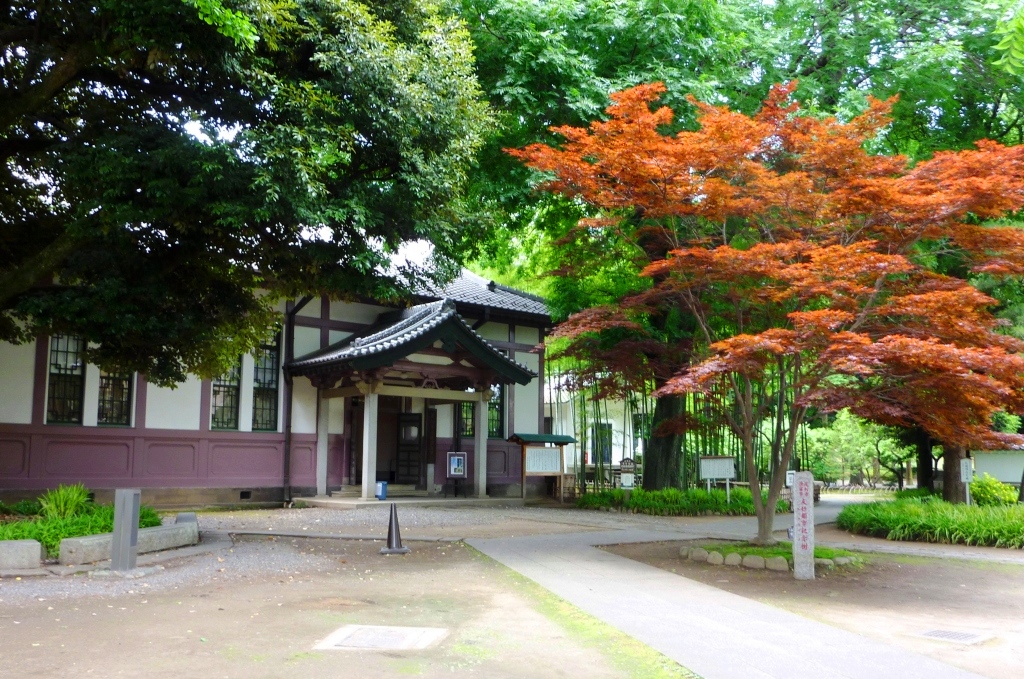
The school’s peak visual season is autumn. The Northern Garden’s maples and the outer precinct’s Japanese zelkova turn red-and-gold from mid-October through the first week of November. Mid-week mornings in peak foliage give you the compound essentially to yourself — you can photograph the gate, the garden, and the main hall without waiting for other visitors to leave the frame.
Specific timing: October 25 – November 5 is the classic window in most years. The city of Ashikaga publishes a foliage-percentage tracker starting mid-October on its tourism website.
Is Ashikaga Gakko worth a trip?
For anyone interested in East Asian educational history, Confucian philosophy, or Japanese intellectual-tradition continuity — unambiguously yes. This is the single most significant surviving site of Japanese pre-modern scholarly practice. The combination of “oldest academic institution” + “actively-performed ritual tradition” + “restorable Edo-period architecture” is not available anywhere else in Japan.
For general Japan culture travellers — worth it as part of a day-trip Ashikaga circuit. Combined with Banna-ji, Orihime Shrine, and the Flower Park (in bloom season), it’s a substantial day out.
For first-time visitors on a short Tokyo-Kyoto itinerary — probably skip. The site is modest-scale and the context requires pre-reading to appreciate; travellers with limited time will get more from Kyoto temples.
For photographers — autumn weekday mornings specifically. The combination of classical wooden architecture, red maples, and rock-garden geometry is reliable and uncrowded.
For educators, classics students, or anyone in the humanities — this is a pilgrimage-worthy site. The Japanese academic-historical community treats Ashikaga Gakko with the reverence that other traditions reserve for their oldest seats of learning.
FAQ
Is there English signage?
Improving. The main exhibits have English captions; the garden and outer-precinct features are mostly Japanese-only. An English audio guide (¥200) covers the main route; ask at the entrance ticket office. For deeper context, the school’s English website is reasonable for pre-visit reading.
Can I attend the Confucian rituals?
The main sekiten ceremonies (spring and autumn equinoxes) are observable from the outer Koshibyo courtyard. The actual rites are performed by invited participants — local Japanese scholars and clergy — and you watch rather than participate. The Sunday read-aloud sessions are open to all visitors, free with entry.
How long should I allocate?
Minimum 60 minutes for a reasonable walk-through. 90 minutes if you do the exhibit-hall videos and spend time in the library display. 2 hours if you’re combining with the Confucius read-aloud session on a Sunday morning.
Is there a combined ticket with Banna-ji?
Yes, ¥600 for both (vs ¥420 Gakko + ¥0 Banna-ji standalone — the Banna-ji main grounds are always free, but the combined ticket includes the Banna-ji museum). Worth it if you want the full museum visit at Banna-ji; otherwise the standalone Ashikaga Gakko ticket is sufficient.
When are the Confucian rites exactly?
Second Saturday of April (spring shakusai) and second Saturday of October (autumn shakusai). Both start at 10:00 and run about 90 minutes. Observation platform opens 09:30 on ritual days.
Is it suitable for kids?
Mixed. The architectural and garden portions are fine for any age; the exhibit halls and library displays are text-heavy and in Japanese. Kids will appreciate the “Kanji test” activity the school runs (a worksheet challenge with prizes for correct answers); teens interested in history will get substantive content. Very young children will find it dry compared with Ashikaga Flower Park.
How does it compare to other historic Japanese schools?
Ashikaga Gakko is uniquely the oldest and has the most continuous institutional identity. Other major historic academic sites include: Shizutani School (Okayama Prefecture, founded 1670) — the second-oldest surviving academic building; Meirinkan in Hagi (founded 1718) — a Tokugawa-era Choshu-domain school; and the various Yushima Seido schools in Tokyo — later Tokugawa Confucian academies. Ashikaga’s claim is the longest continuous history and the most important medieval-period library; the others are specifically Edo-period creations.
Can I see the original library books?
Not in Ashikaga. The original Ashikaga Gakko library was dispersed after the Meiji closure; the most significant surviving volumes (including the school’s copy of the Sung-dynasty Analects commentary, a genuine institutional treasure) are held at the Tokyo National Museum and occasionally on display. The Ashikaga site has high-quality facsimiles that show the physical appearance of the books; for the actual manuscripts you need Tokyo.