There’s a specific kind of Japanese shrine you only find in the regional textile towns. Not the big mountain shrines of Kyoto or the pilgrimage megasites of Ise — the smaller industrial-heritage shrines that the silk-weaving and cotton-spinning towns built during the Edo and Meiji periods to house the gods of their specific trades. Orihime Jinja (足利織姫神社, Ashikaga Orihime-jinja) in Tochigi’s Ashikaga city is one of these, and it’s the best-known: a working textile-industry guardian shrine, built in 1705, dedicated to the weaver goddesses, and now doubling as one of eastern Japan’s more popular matchmaking shrines — specifically because the name “Orihime” is also the name of the celestial weaver-princess in the Tanabata Star Festival legend, and her specific mythology involves a cross-galactic love story.
In This Article
- Quick facts
- What the shrine actually is
- The Tanabata festival overlay
- The matchmaking stairs
- What to see around the precinct
- Combining with the rest of Ashikaga
- Getting there
- Where to stay
- Is Orihime Shrine worth visiting?
- FAQ
- When is the Tanabata festival?
- Can I buy matchmaking amulets?
- Is there a goshuin stamp?
- How long should I spend there?
- Is the 229-step climb genuinely challenging?
- Is Ashikaga safe to walk alone at night?
- What’s the best season for photos?
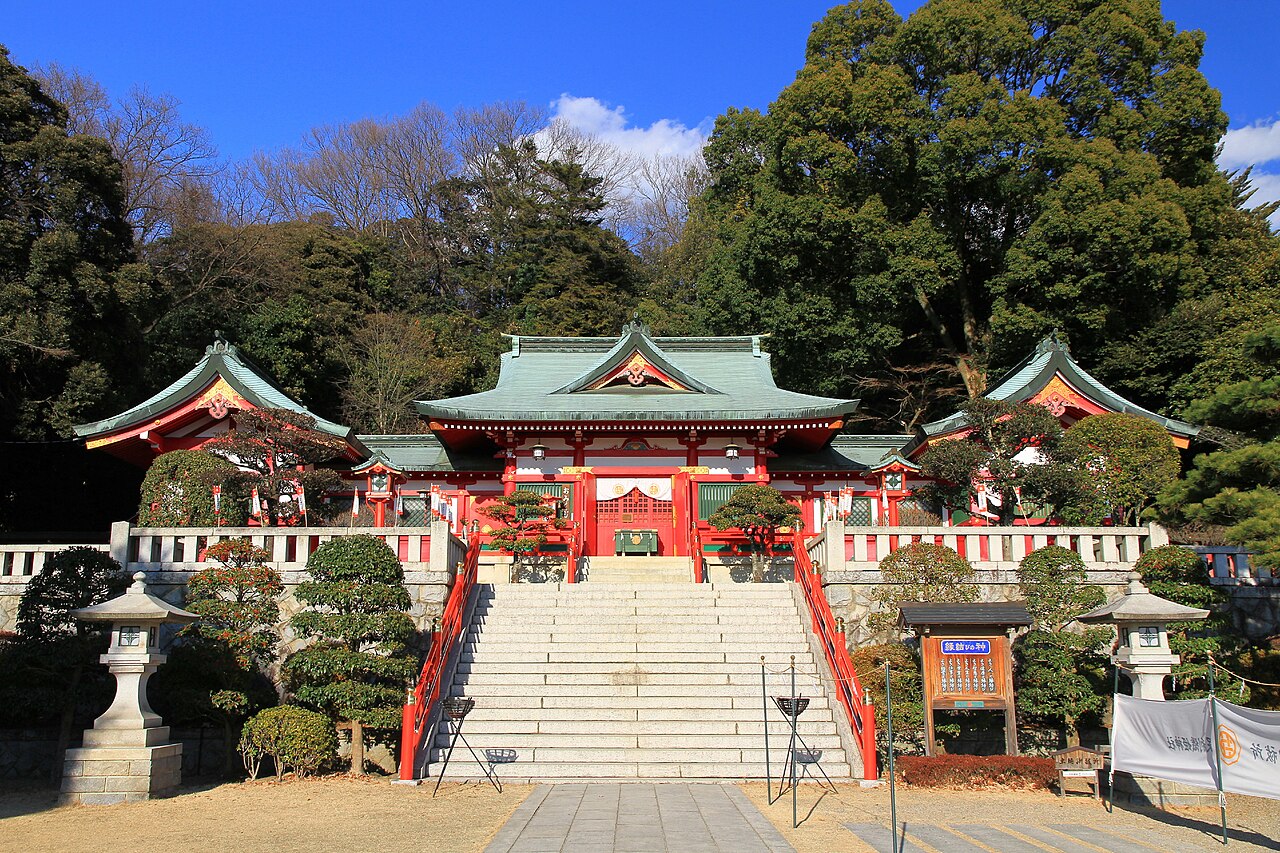
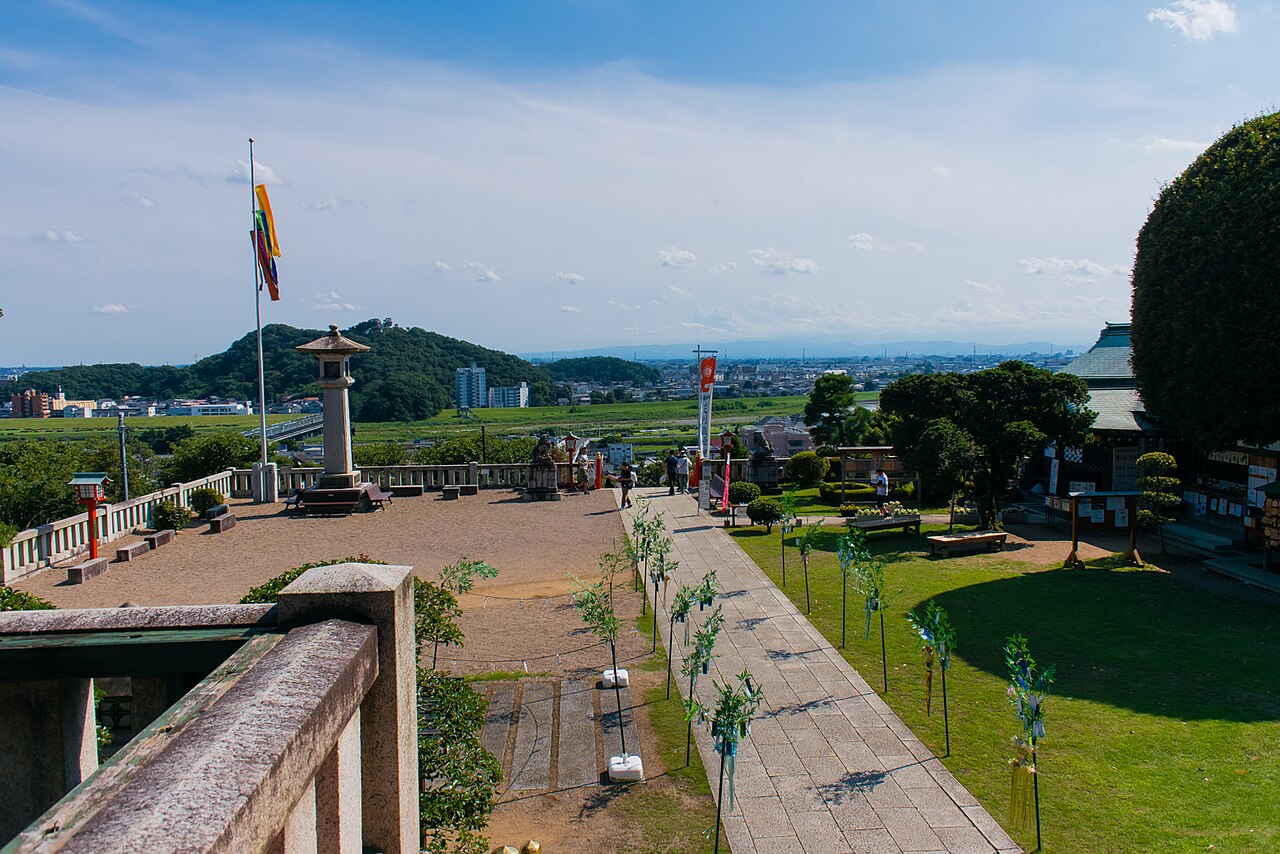
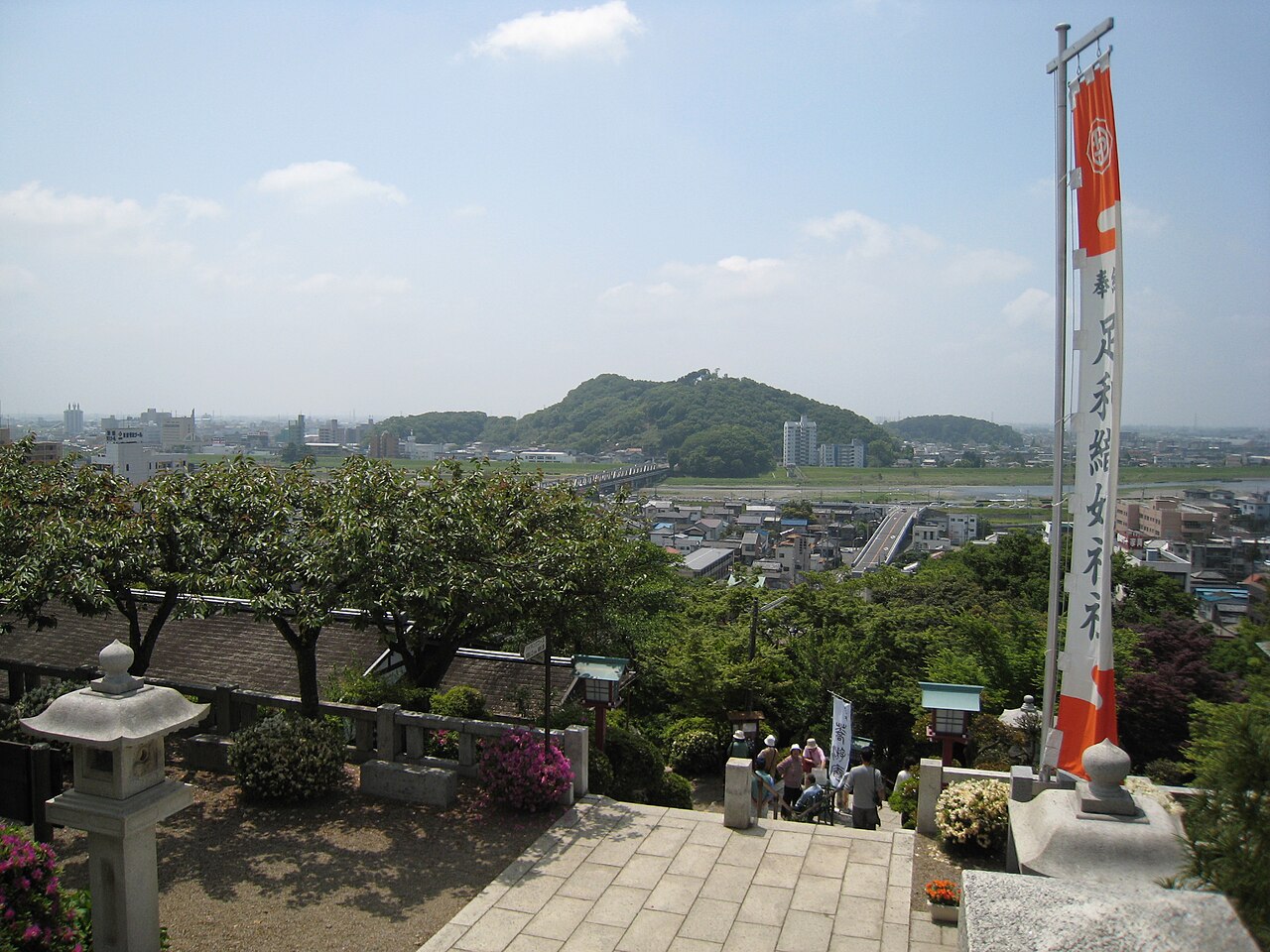
The shrine sits at the top of a 229-step hillside stairway on Mt Orihime, overlooking central Ashikaga and the Watarase River. The walk up is the whole point — the stairs are known as the Enmusubizaka (縁結び坂, “matchmaking stairs”) and are counted in specific increments that supposedly correspond to different aspects of a relationship. You’d think that’s invented-for-tourism but it isn’t; the counting tradition dates back to the early Showa period. At the top: a bright vermilion-painted shrine compound, a panoramic view across the Ashikaga basin, and — if you’re there in summer — hundreds of paper tanzaku wishes tied to bamboo poles during the July Tanabata festival.
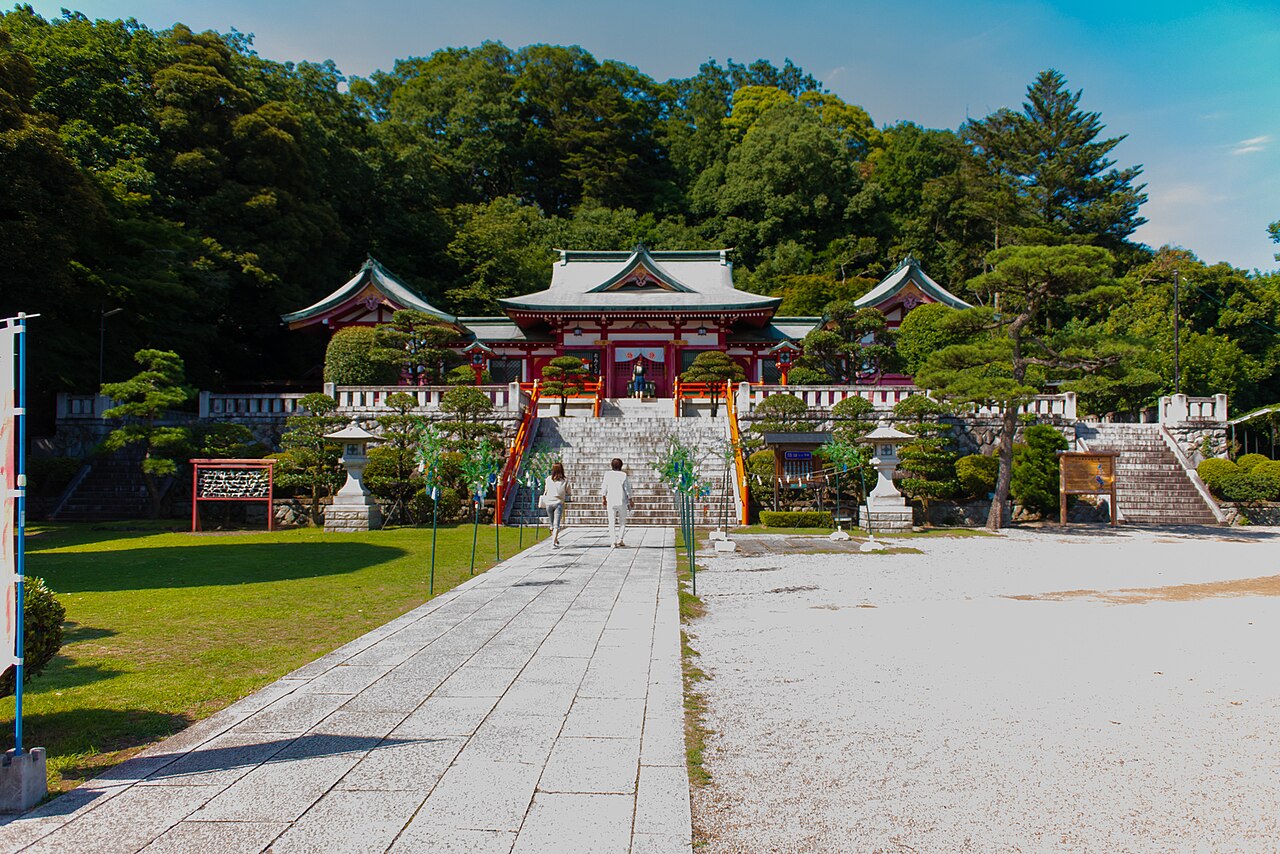
Quick facts
- Where: Orihime Jinja, 3-3681 Nishimiyacho, Ashikaga-shi, Tochigi 326-0817. Central Ashikaga, on the hill above the Watarase River.
- Getting there: JR Ryomo Line to Ashikaga Station (2 hours from Tokyo via Oyama transfer, ¥2,200). From the station: 15 min walk across the Watarase River bridge, then 229-step climb. Or 5 min by taxi to the shrine’s vehicle entrance (ramp road access for cars).
- Hours: Grounds open 24/7 year-round. Main shrine office 9:00-16:00 (for amulets, goshuin stamps).
- Cost: Free entry. Goshuin stamp ¥500 at the shrine office. Omamori (amulets) ¥500-1,500, with the matchmaking one being the specific must-buy.
- When to go: July 1-7 for the Tanabata festival; April for cherry blossoms on the approach; sunset year-round for the city view. Avoid midsummer afternoons (the stairs get brutally hot and offer no shade).
- Official: Orihime Shrine (Japanese), Ashikaga City Tourism.
What the shrine actually is
Orihime Jinja enshrines two female weaving deities: Ame-no-mihoko-no-Mikoto (天御鉾命) and Ame-no-yachichi-hime-no-Mikoto (天八千千姫命). Both figures appear in the Kojiki (712 CE) as textile deities who wove ceremonial garments for the sun goddess Amaterasu at the Kanhatahatado-jinja sub-shrine of Ise. In 1705, the local Ashikaga clan lord Tadatoshi Toda decided the town’s silk-weaving industry needed a dedicated guardian shrine, and he petitioned Ise to transfer the spirits of these two deities to a new shrine at Ashikaga. The transfer was granted, the shrine built, and Ashikaga’s weavers had their industrial-protection deity.
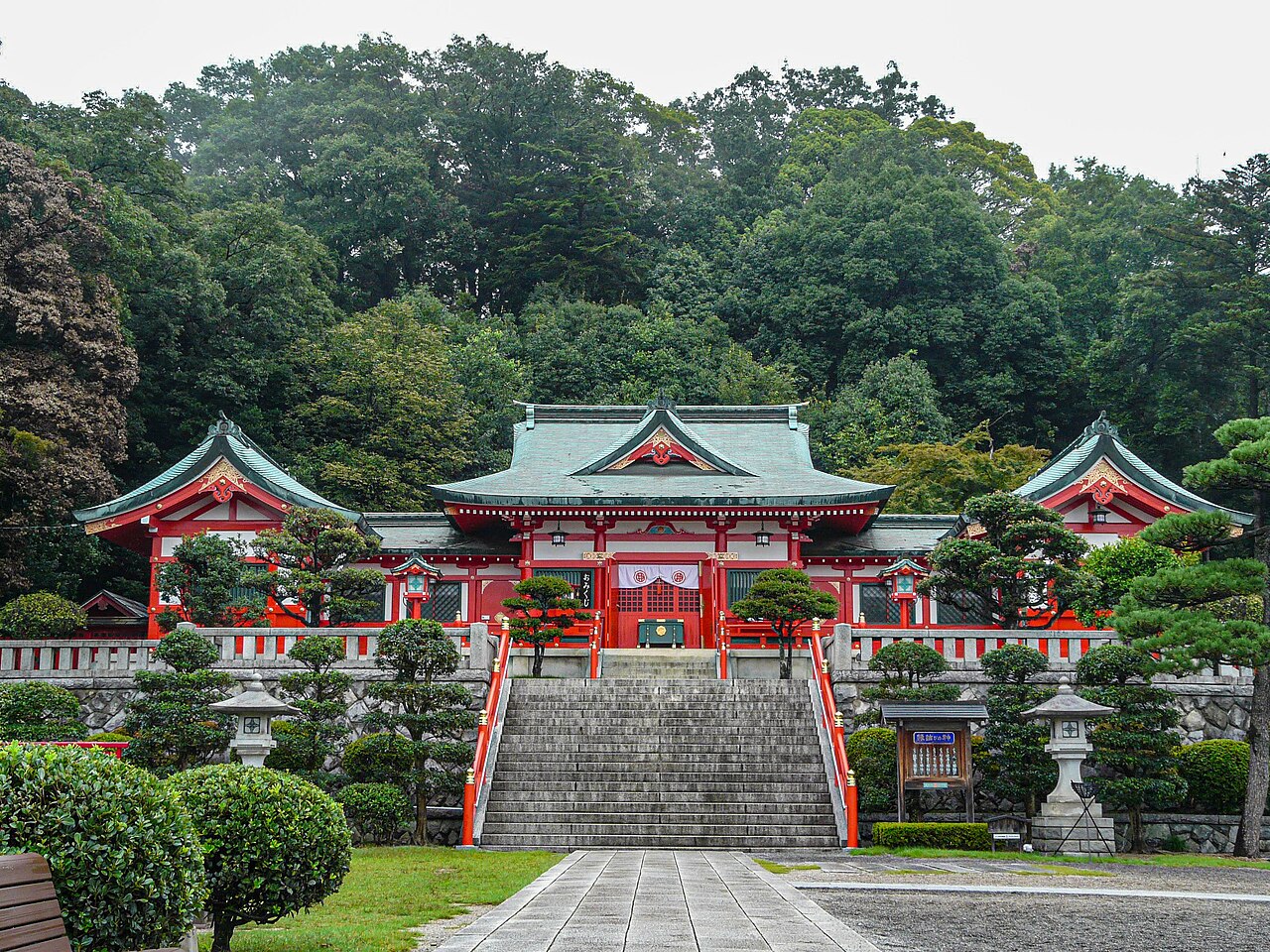
The shrine’s connection to Ashikaga’s silk history is direct. The city was a major silk-textile production centre from the 8th century through the 20th century — the local technique called Ashikaga-meisen (足利銘仙, “Ashikaga special-grade”) was a specific pre-dyed, pattern-woven silk cloth used for everyday kimono in the Meiji and Taisho periods, and by 1910 Ashikaga was producing roughly 20% of Japan’s domestic silk textile output. The industry declined after WWII but the shrine survives as the most visible memorial to that industrial history.
The Tanabata festival overlay
Here’s where the shrine’s tourism appeal intersects with Japanese folk tradition. The name “Orihime” is also the common Japanese name for the star Vega in the Tanabata (七夕, Star Festival) legend. The myth: a celestial weaver-princess and her cowherd lover were allowed to meet only once a year, on the seventh day of the seventh month, across the Milky Way. The July 7 festival celebrates this meeting and involves writing wishes (especially relationship wishes) on coloured paper strips and tying them to bamboo branches.
Orihime Jinja, because of its name, has been a Tanabata pilgrimage shrine since at least the 1910s — people come specifically on or around July 7 to tie bamboo wishes to the shrine’s dedicated bamboo poles. In the 2000s, the shrine formalised the tradition into a week-long festival (July 1-7) with evening illumination, tea ceremonies, a small market of textile-themed crafts, and the annual dedication ceremony of new kimono cloth to the shrine’s weaving deities.
A specific footnote: the shrine is one of the few places in Japan where Tanabata is genuinely observed on the Gregorian calendar July 7 rather than on the Old Lunar Calendar date (which varies year-to-year and typically falls in early-to-mid August). Most Japanese towns do Tanabata on the old-calendar date; Ashikaga does both, with the July-7 event being the more tourism-oriented and the August old-calendar event being the more local-traditional.
The matchmaking stairs
The Enmusubizaka (縁結び坂) is the 229-step stairway that climbs from the Watarase River bank up to the shrine gate. The count is deliberate and the stairs are divided into six coloured sections, each associated with a different “good fortune” aspect — passage through all six is supposed to confirm matchmaking luck in different dimensions (love, business relationships, family harmony, study, health, general prosperity).
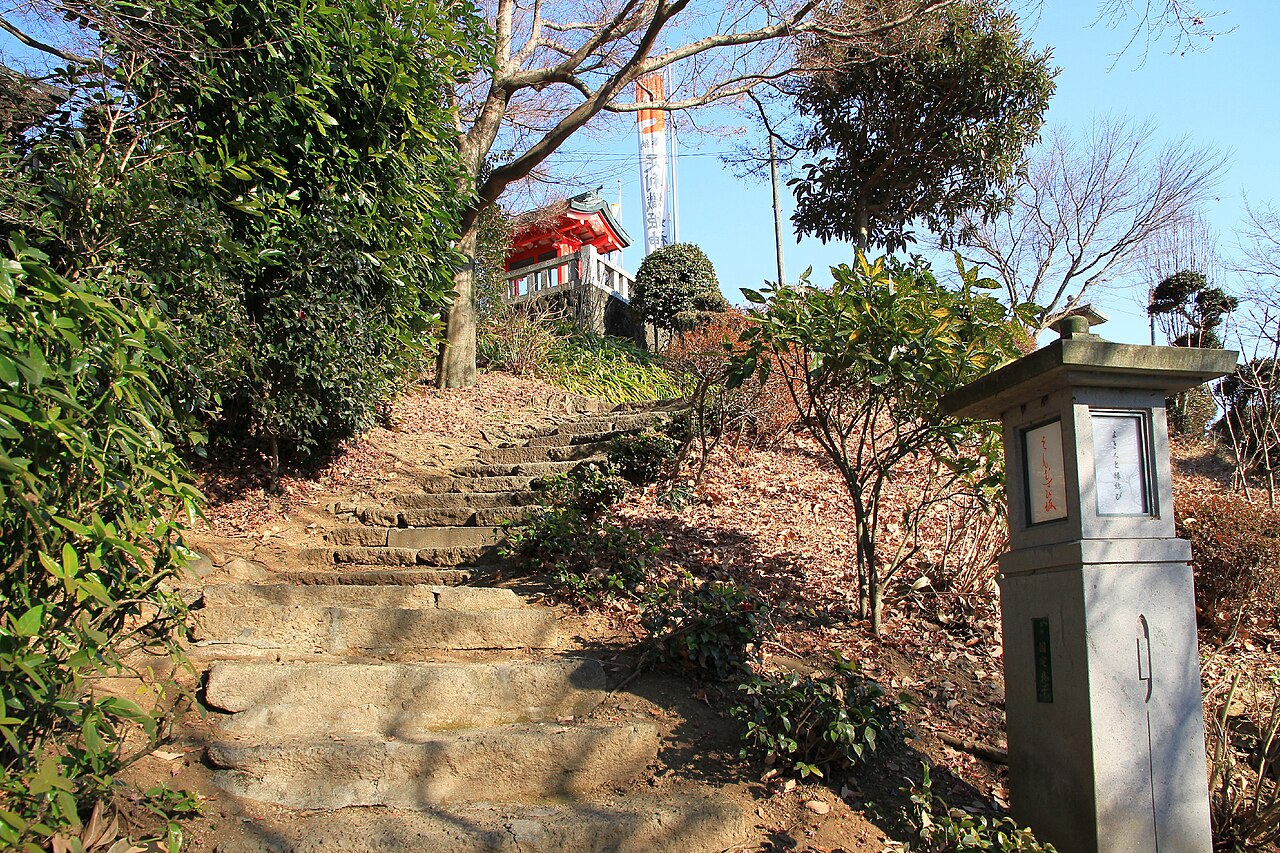
The climb takes 8-10 minutes at a moderate pace, longer if you stop for the viewpoint benches (there are four of them, spaced along the ascent). Older visitors and anyone with mobility issues can skip the stairs entirely — the shrine also has a vehicle road approach from the east that cars can use to reach the upper car park directly. Both options end at the same torii gate.
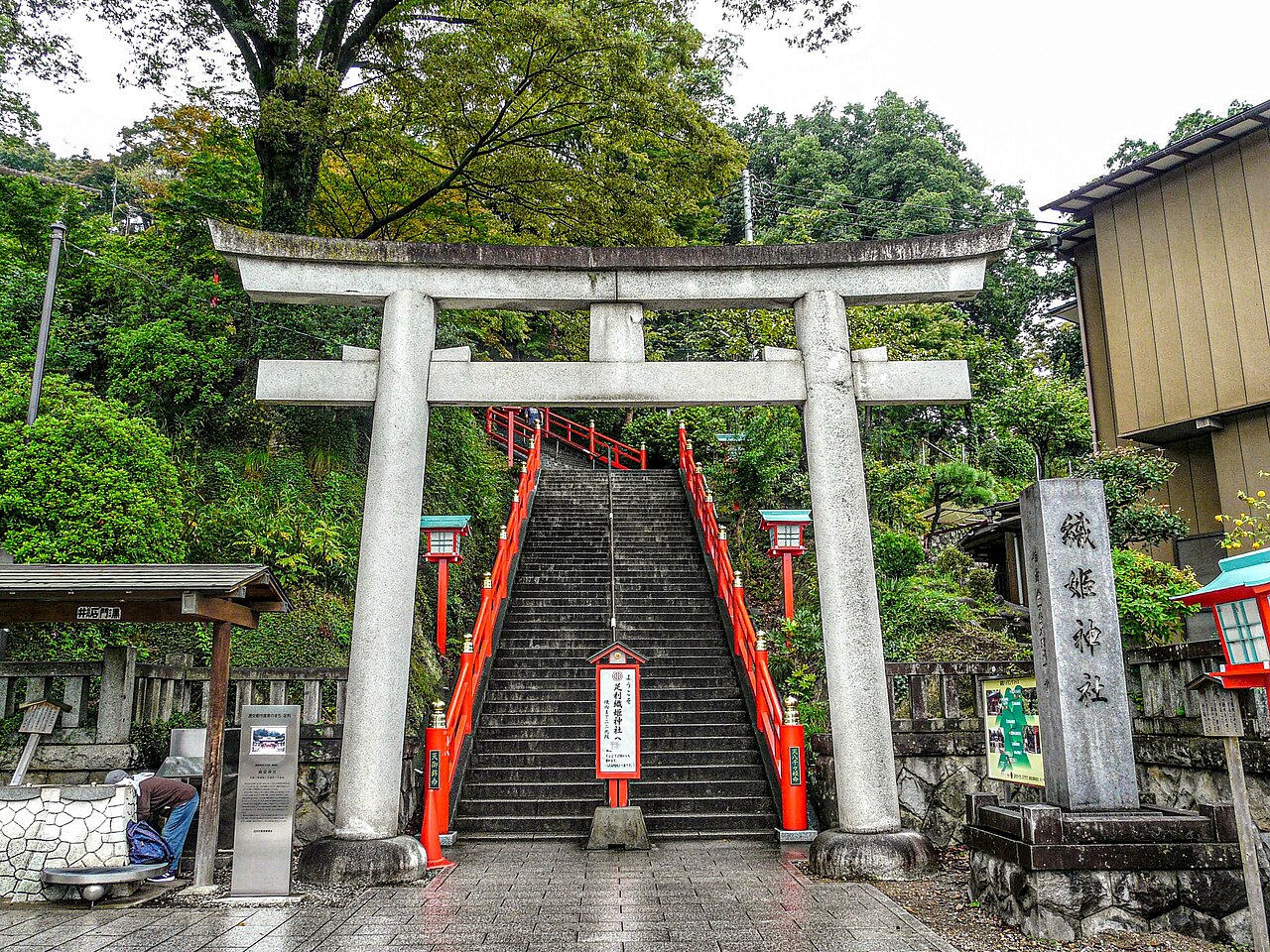
The matchmaking reputation is a real thing with a real customer base — the shrine records suggest Orihime Jinja processes about 15,000-20,000 matchmaking ema (wooden prayer tablets) per year, mostly from couples wishing to get engaged or have children. The shrine claims a famous “seven marriages fulfilled” statistic, which is marketing rather than metric, but Orihime does have a genuine following in Tokyo and the northern Kanto for this specific type of prayer.
What to see around the precinct
Beyond the main hall, the shrine grounds contain several smaller features worth a look:
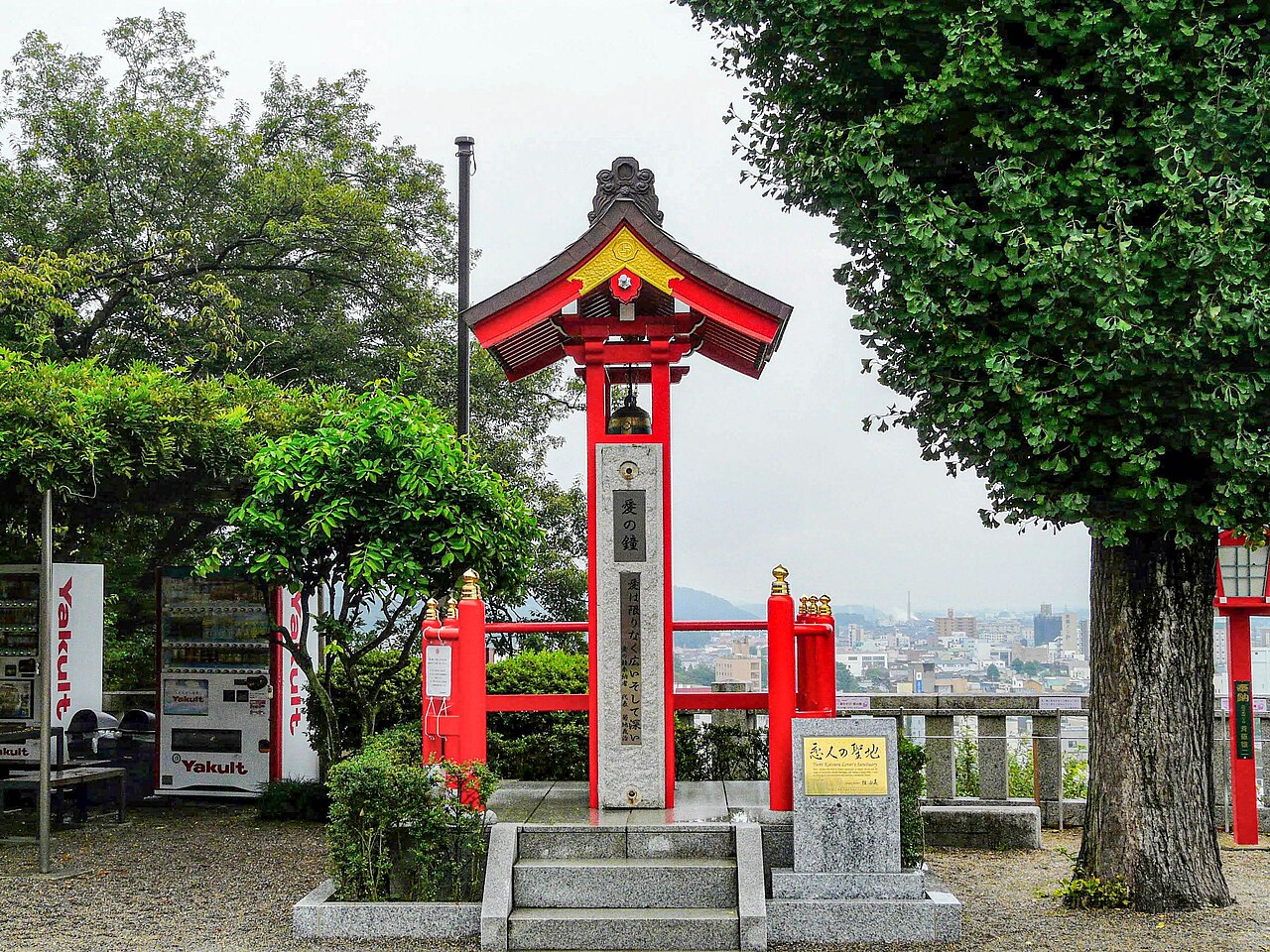
Ai-no-Bell (愛の鐘, “Love Bell”) — a bronze bell that visitors ring in pairs for relationship wishes. The bell’s inscription is a haiku about weaving, fittingly.
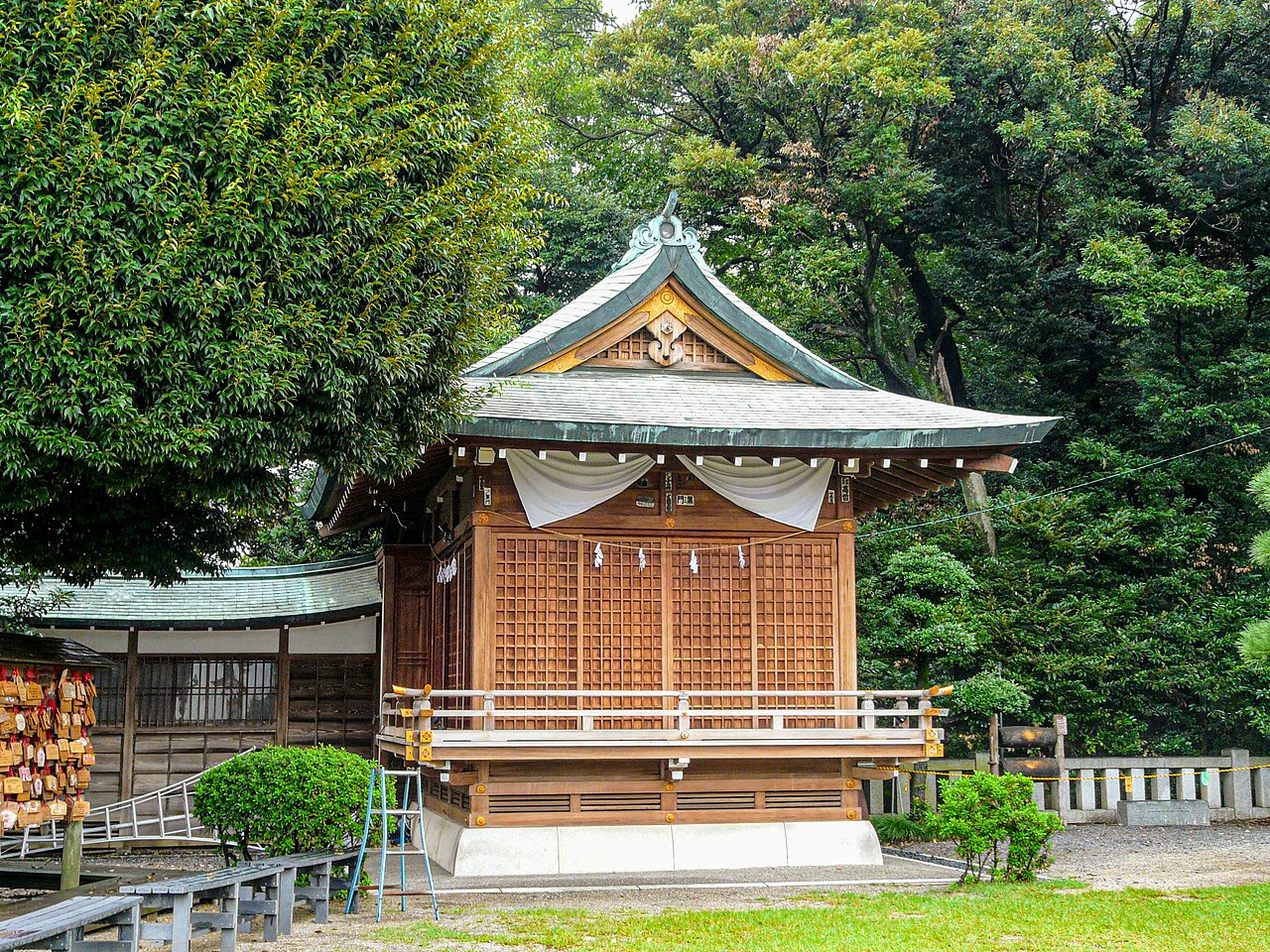
Kagura-den (神楽殿) — the traditional Shinto dance hall where sacred dance performances are held on festival days (especially July 7 and during the September autumn festival). Open-fronted wooden structure with a raised stage.
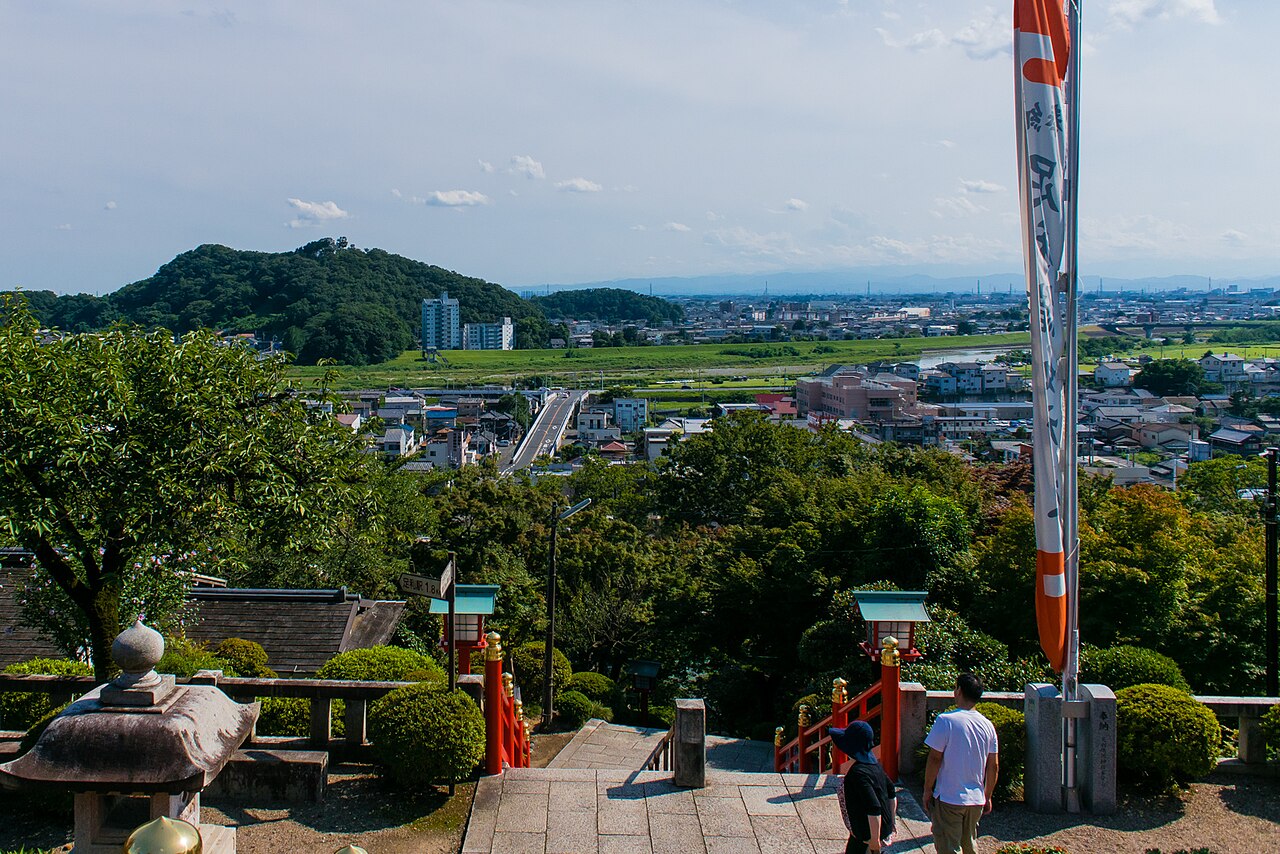
The city viewpoint — from the precinct’s east-facing edge, you get a clean panoramic view across Ashikaga, with the Watarase River in the middle distance and the Nikko mountains on the northern horizon on clear days. Best at sunset; the shrine’s own lighting comes on around dusk and frames the view nicely.
Combining with the rest of Ashikaga
Orihime Jinja makes the most sense as part of a broader Ashikaga day trip. Natural combines:
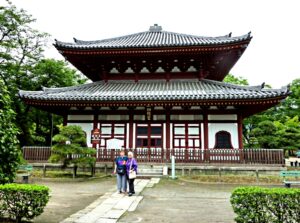
Banna-ji — the main Ashikaga clan temple, a 15-minute walk from the Orihime Shrine stairs. National Treasure status, free entry, one of the key surviving examples of late-medieval Japanese Zen architecture. Essential pairing.
Ashikaga Gakko (Japan’s oldest educational institution) — five minutes further east from Banna-ji.
Ashikaga Flower Park (a 15-minute train ride from central Ashikaga) — home to a 150-year-old wisteria tree, peak bloom April 20-May 10. Genuinely spectacular; nationally-famous Instagram subject.
The Ashikaga 33-Kannon Pilgrimage — we cover this route and nearby Keisokuji Temple separately. Orihime Jinja is the terminus of the northern section of the pilgrimage for some traditional walking routes.
Getting there
From Tokyo: JR Utsunomiya Line or Tohoku Line to Oyama Station, then transfer to the JR Ryomo Line for Ashikaga Station. Total 2 hours, ¥2,200. Alternatively, Tobu Isesaki Line direct from Asakusa to Tobu-Ashikagashi Station, 90 minutes, ¥1,200. Both stations are within walking distance of the shrine.
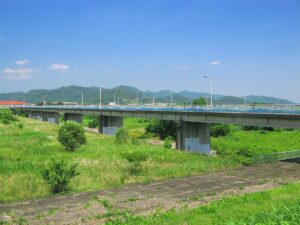
From Ashikaga Station: cross the Watarase Bridge (5 min walk) to the base of the Enmusubizaka stairs. Then a choice — walk up the 229 steps (8-10 min climb), or take the west-side approach road if you have a car or need mobility access. The shrine’s small car park (free, 20 spaces) sits at the top, reached via the east ramp road from Nishimiyacho.
From Tobu-Ashikagashi Station: 15-min walk north, cross the river, start the climb.
Where to stay
Ashikaga has thin accommodation — see our Keisokuji Temple guide for the local business-hotel options. Better overnight bases for Ashikaga are:
Oyama (20 min east by train) — the regional hub with broader hotel inventory.
Utsunomiya (40 min north) — Tochigi’s capital city with full-range business hotels (¥7,000-14,000) and the famous gyoza dining scene.
Kusatsu or Ikaho onsen (2 hours west into Gunma) — traditional hot-spring towns if you want a rural ryokan option as part of the same trip.
Booking.com’s Ashikaga listings cover the immediate options.
Is Orihime Shrine worth visiting?
For travellers already in Ashikaga — yes, absolutely. Combined with Banna-ji and Ashikaga Gakko, the shrine completes a proper half-day Ashikaga cultural triangle. Free, open year-round, genuinely photogenic.
For Tanabata-timed trips in early July — the shrine is specifically worth planning around. The festival is less crowded than Tokyo’s Sumida Tanabata but has a more authentic folk-religion feel, and the night illumination is photogenic.
For anyone interested in Japanese industrial history — the silk-weaving connection makes this a unique shrine category. If you’re curious about the gap between Japan’s famous spiritual sites (Kyoto, Ise, Nikko) and its working industrial past, Orihime is one of the best single-visit illustrations you can find.
For day-trippers from Tokyo — it’s a 2-hour train each way, which makes it a slightly more committed day than most Kanto destinations. Worth it if you’re building a full Ashikaga day including Banna-ji and the Flower Park; too much for the shrine alone.
For a broader Tochigi trip, pair Ashikaga with Nasu’s imperial highlands for a two-day northern prefecture loop, or with Nikko for a culture-heavy weekend.
FAQ
When is the Tanabata festival?
July 1-7 each year, with the main festival day on July 7 itself. The shrine sells coloured paper strips (tanzaku) for ¥300-500 where you can write wishes and tie them to the bamboo. Evening illumination runs until 21:00 during the festival week. Outside July, the shrine is open and visitable year-round but without the festival programming.
Can I buy matchmaking amulets?
Yes — the enmusubi (matchmaking) omamori is the shrine’s signature amulet. ¥800 for the basic paper-wrapped version, ¥1,200 for the woven-silk cloth version (the latter specifically evokes the shrine’s silk-industry heritage and is a more meaningful souvenir). Buy at the shrine office during staffed hours (9:00-16:00).
Is there a goshuin stamp?
Yes, ¥500. The Orihime Jinja stamp is distinctive — it depicts a pair of weaving hands in the centre. Hand-stamped and hand-dated at the shrine office.
How long should I spend there?
45-60 minutes for the full visit — climb the stairs (10 min), walk the precinct (20 min), enjoy the viewpoint (10 min), descend (5 min). Longer if you’re doing the goshuin stamp queue or if there’s a festival.
Is the 229-step climb genuinely challenging?
Moderate, but not extreme. The steps are proper width, well-maintained, with multiple rest benches. Most visitors in reasonable health manage it without difficulty. Anyone with knee issues or mobility limitations should use the east ramp road to the upper car park instead; it’s signed from Route 293 and adds nothing to the shrine experience.
Is Ashikaga safe to walk alone at night?
Yes, unambiguously. Small-city Japan is one of the safer walking environments globally; Ashikaga specifically is quiet after 22:00 but has no notable safety issues. The Orihime Shrine stairs are unlit and should be avoided after dark for footing reasons, but the town centre is fine.
What’s the best season for photos?
Early April (cherry blossoms on the Enmusubizaka) or early July (Tanabata bamboo during the festival). November has clear-air autumn light and fewer visitors. Avoid midsummer afternoons (the vermilion paint washes out in direct high sun and the stairs are sweaty).